
Reviewed · MOUNT ETNA TOURS & SUMMIT
Trekking at 3000 meters on Etna
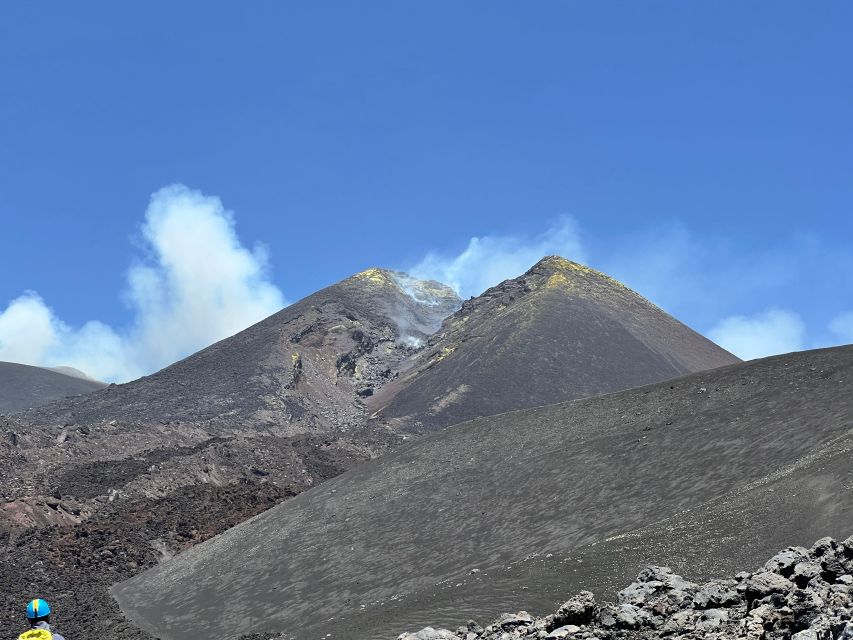
Etna at 3,000m turns a normal hike into pure geology. You’re walking where the volcano recently wrote the rules, from cable-car altitude up into crater country and back down through moonlike terrain.
I love the practical guiding here: qualified alpine and volcanological guides lead you step by step, and they pace the group so you’re not just surviving the climb. I also love the route itself, especially the chance to walk on fresh lava from the 2002 eruption and then enter a 2002 lava-flow channel.
One consideration: your hike includes a cable car up, but the return cable car ticket isn’t included, so your final cost rises fast. Also, the altitude and wind mean this is not a casual stroll, even when the schedule looks straightforward.
In This Review
- Key things to know before you go
- Etna at 3,000m: why this hike feels different
- From cable car to 2002 lava: the climb’s main rhythm
- Walking inside an effusive crater channel at 2,700m
- Summit-crater edges and the view over Valle del Bove
- Laghetto cone and the return down to the starting point
- What’s included (and what you still need to bring)
- Price and value: $59 plus the cable car reality check
- Fitness, weather, and safety: who this tour fits best
- Should you book this tour or skip it?
- FAQ
- FAQ
- How long is the Etna Craters excursion at 3000 meters?
- Is the return cable car ticket included in the price?
- What languages are available for the live guide?
- What gear is included for the trek?
- Where do I meet the guide?
- Who should not join this tour?
Key things to know before you go
- 3000m summit altitudes: you’ll be up high enough that wind and cold can change fast
- Lava from specific eruptions: 2002 flows, plus views connected to the 2001 activity around Laghetto
- Guides with volcanic focus: you get crater-by-crater context, not just walking
- Safety gear included: helmet, high-collar shoes, poles, and a windbreaker help you travel lighter
- Food savings while you’re there: a discount applies to sandwiches, snacks, and drinks
More ways up the volcano from Catania
- Catania: Mount Etna Morning or Sunset Day Trip with Tasting
★ 4.8 · 4,028 reviews - Catania: Sunset Jeep Tour of Mount Etna and Lava Flow Caves
★ 4.8 · 2,113 reviews - Sicily: Etna and Alcantara Gorges Full-Day Tour with Lunch
★ 4.8 · 1,766 reviews - Mount Etna: Guided Trek 3,000 Meters to the Summit
★ 4.8 · 1,407 reviews
Etna at 3,000m: why this hike feels different
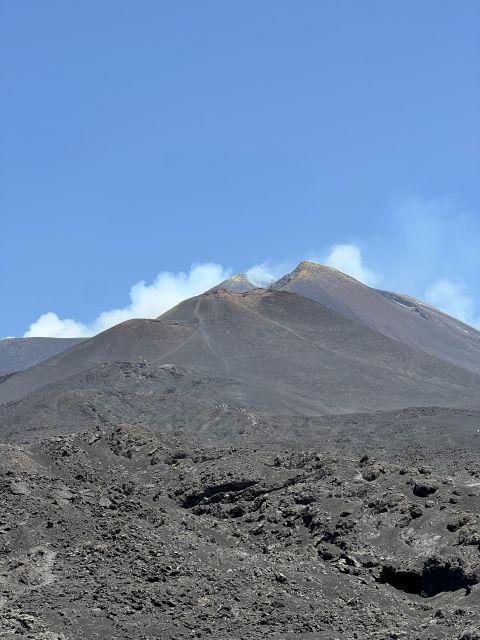
This is the kind of trek where your brain keeps switching between two modes: hiking and “wait, this is real.” You’re above Etna’s mid-elevation zones and moving through areas tied to the latest major lateral activity, which makes the scenery feel current rather than museum-still.
What makes it especially interesting is the mix of terrain. You start with a cable car lift, then shift into walking routes shaped by the 2002 eruption. Later, you get crater edges and viewpoints that connect to older eruptive centers you can recognize just by how the terrain folds.
Value-wise, this tour is built around more than a walk. You’re paying for qualified guidance, safety preparation, and gear that matters when you’re on uneven, volcanic ground at height.
From cable car to 2002 lava: the climb’s main rhythm
You begin at Bar Ristorante Crateri Silvestri and you’ll need to enter the bar to meet the team. After a safety briefing, you go up by cable car from about 1,900 meters to around 2,500 meters. That lift is not just convenience—it gets you quickly into the altitude zone where the crater world starts.
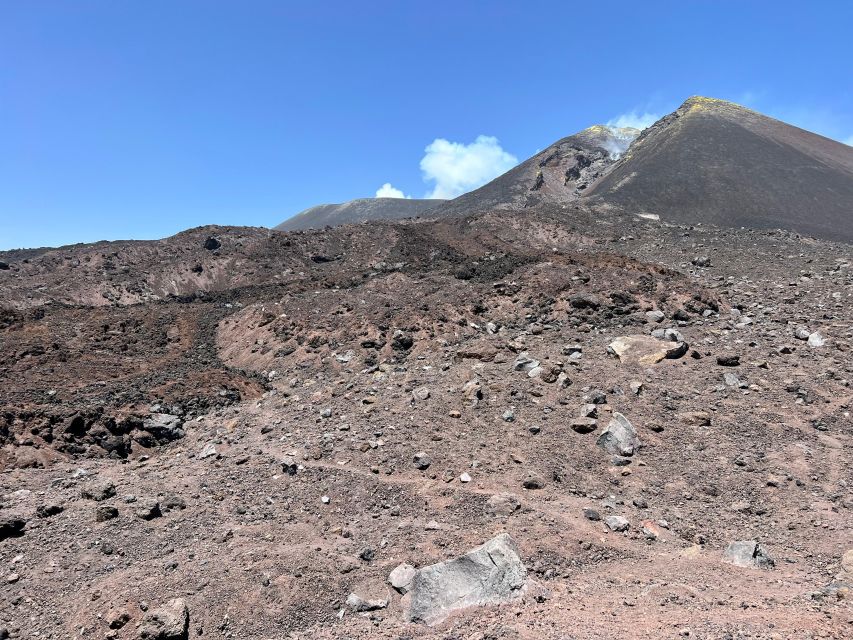
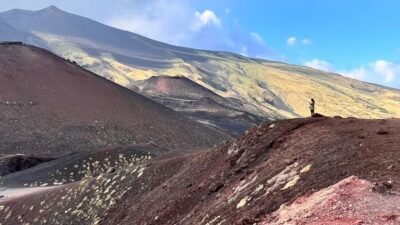
At roughly 2,500 meters, the trek begins in a north-west direction across lava that came from the 2002 eruption. This stretch is where you feel the “walking on geology” factor most clearly. Fresh lava can be sharp, uneven, and unpredictable underfoot, so the included high-collar hiking shoes and trekking poles aren’t just extras.
The pace here matters. The guides are trained for alpine conditions, and they can adjust movement to the group so you’re not sprinting over fragile ground. In past groups, this kind of pacing shows up with guides such as Giuseppe and Edo, who keep the hike moving while making sure people actually make it to the viewpoints comfortably.
The practical takeaway: if you’re even slightly unsure about your fitness, don’t fake it. Tell the guide early how you feel, and you’ll usually get real support.
Walking inside an effusive crater channel at 2,700m
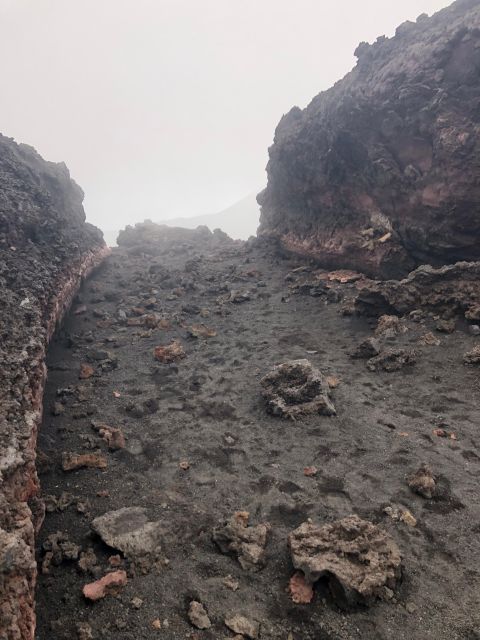
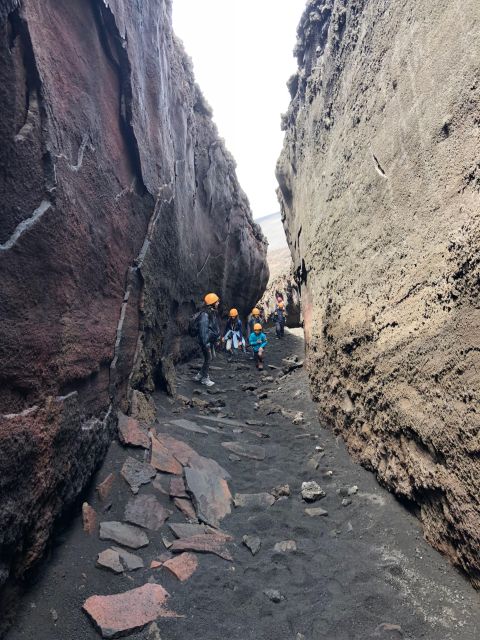
At about 2,700 meters, the route shifts again: you enter the effusive crater of 2002 and walk inside a lava-flow channel created during that eruption. This part is the “how did nature build this?” moment. The channel gives you a more enclosed feeling than typical crater edges, and it also changes how you step because the ground is more structured but still volcanic.
Expect this to feel like walking through a natural corridor. Your head tilts up for views, but your feet keep doing the work. You’ll want to keep your attention on footing, especially if the wind picks up.
This is also where a volcanology guide changes the experience. Instead of just spotting cones and rocks, you get a working explanation for what you’re seeing—effusive activity, crater formation, and why the terrain looks the way it does. That context makes the science part click without turning the hike into a lecture.
Around this segment, the schedule includes a short break. That matters at altitude, because it helps you reset before the climb toward the higher explosive craters.
Summit-crater edges and the view over Valle del Bove
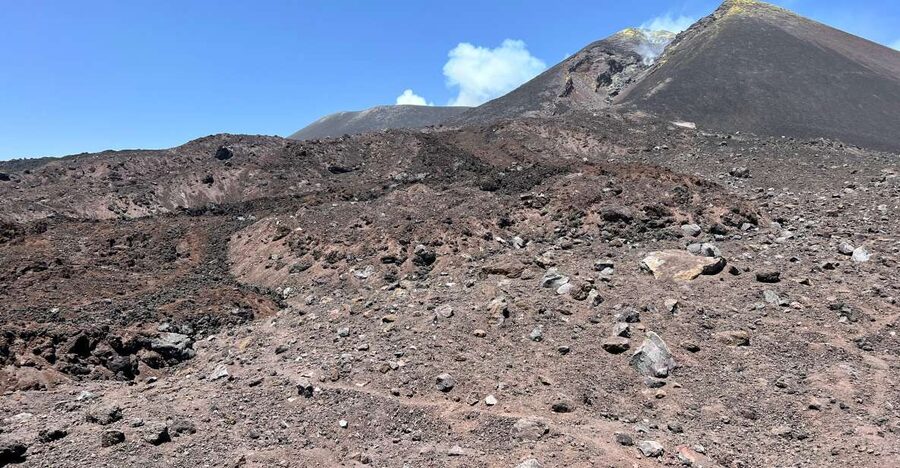
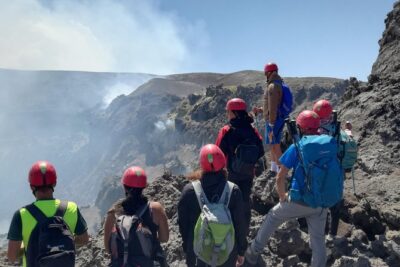
After the channel walk and a breather, you continue climbing until you reach the highest point of the explosive craters formed in 2002 on Etna’s southern slope. Here you’ll be able to walk along the edge of the craters, and you can also admire the summit craters up close, including the latest lava flows.
This section is the main reason people remember the day. Up here, your distance perception changes—what looked dramatic from below becomes layered and three-dimensional. You’re not just seeing a volcano; you’re seeing how multiple events stack and overlap.
You’ll then move through moonlike terrain toward a major viewpoint. One highlight is overlooking the extraordinary caldera of Belvedere della Valle del Bove, tied to ancient eruptive centers. Even if you don’t know every term, the view teaches you quickly: you can read the valley shape like a history book made of stone.
The energy here tends to be intense. The air can feel sharper, and the ground can pull at your concentration. If you get vertigo, this is exactly the area where you’ll have to think hard—this tour isn’t listed as suitable for people with vertigo.
If you’re doing this for the photos, give yourself time to look both ways. The best shots usually come from small shifts in angle, not from rushing to the biggest view.
A few we would gladly point a friend toward in Catania
Laghetto cone and the return down to the starting point
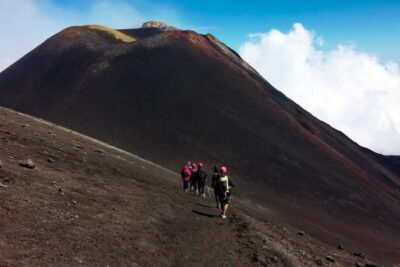
From the Valle del Bove overlook, you keep going across the volcanic terrain, skirting the imposing eruptive cone of the Laghetto Crater, born with the 2001 eruption. The cone passage brings a different feel from the earlier 2002 sections. You’re seeing how the later activity fits into the broader Etna system, and the terrain helps you connect dots.
After that, you reach the cable car terminal, which gets you back comfortably to the starting area. This return ride is a big relief after hours of wind, footing changes, and high-altitude breathing. And it’s also a chance to reset with a snack or drink, where the tour includes a 20% discount for sandwiches, snacks, and drinks.
One small but real tip: don’t save all your energy for the final minutes. Save a little focus for the return segments, because fatigue can make your steps sloppy.
What’s included (and what you still need to bring)
This excursion gives you several items that make a difference at 3,000 meters:
- hiking shoes with a high collar
- new socks
- a windbreaker
- trekking poles
- protective helmet
It also covers the guide service with either volcanological or mountain guidance. That’s important because volcanic terrain isn’t just “hikeable”; it’s unpredictable enough that gear and trained leadership matter.
Still, you should come prepared with recommended personal items:
- long pants
- cap
- gloves
- sunglasses
- protective creams
- scarf
Even with provided gear, bring your own comfort basics. Gloves and a scarf are the two that often save the day when wind goes up. And sunscreen at altitude is not optional—you’re stronger on the mountain when your skin isn’t getting cooked.
Price and value: $59 plus the cable car reality check
The listed price is $59 per person, and for a guided, high-altitude volcano trek, that can be fair—especially because you get real safety and comfort gear included. Where people get surprised is the cable car math.
The return cable car ticket is not included, and the cable car journey costs €52.00. That doesn’t make the tour “bad value,” but it does mean your total budget is meaningfully higher than the base price suggests. If you’re comparing options, do it using the full number you’ll pay.
Still, this setup can be worth it. You’re not just paying to be on Etna—you’re paying for:
- a guide team with volcanology and alpine experience
- crater-level route planning
- included trekking poles, helmet, windbreaker, and shoes
If you already own solid mountain footwear and a helmet, you might wonder if the gear is necessary. But at altitude, the combination of proper fit and protection is often what keeps a day comfortable instead of stressful.
So here’s the honest value verdict: the $59 covers a lot of the work behind the scenes, but you should treat the cable car return as part of the true cost.
Fitness, weather, and safety: who this tour fits best
This is a moderately exhausting hike, and it’s designed for people who can walk on uneven ground. The route includes multiple altitude gains, crater edges, and sections that can feel demanding due to wind and exposure.
Based on the provided “not suitable” list, you should skip this tour if you:
- have mobility impairments
- have heart problems
- have vertigo
- have respiratory issues
- have epilepsy
- are pregnant
- have high blood pressure
- are at risk from altitude sickness
- have low fitness
- are a child under 6
- are over 95 years
That list is strict for a reason. At 3,000 meters, your body already works harder, and the volcanic terrain adds risk. If you’re unsure, you’re better off checking with your doctor than toughing it out.
Weather is another practical factor. Etna can be windy, and the included windbreaker helps, but you still need proper layers like gloves and a scarf. The mountain can change quickly, so plan on dressing for cold and wind, not just warm sunshine.
One more tip: bring your best attitude about pacing. A guide can make the difference between a “grind” and a “progress.” If you push too hard early, you’ll feel it later near the craters.
Should you book this tour or skip it?
Book it if you want a guided, crater-focused Etna trek that goes past the basic viewpoints. I like that the day is structured around volcanic features tied to real eruptions—walking on 2002 lava, entering a 2002 lava channel, and connecting to older activity around Valle del Bove and Laghetto. It’s a hands-on way to understand how Etna changes over time.
Skip it if you’re looking for an easy walk, if you’re sensitive to heights, or if you know altitude and wind affect your health. Also skip if you dislike buying additional essential transport, since the return cable car is a major part of the cost.
My decision rule is simple: if you can handle several hours of uphill walking on uneven ground and you’re comfortable at altitude, this is a strong value. If not, you’ll enjoy Etna more with a lower-stress option.
FAQ
FAQ
How long is the Etna Craters excursion at 3000 meters?
The guided walk is about 4 hours, and the overall experience is a one-day tour.
Is the return cable car ticket included in the price?
No. The return cable car ticket is not included, and the cable car journey costs €52.00.
What languages are available for the live guide?
The live tour guide is available in English and Italian.
What gear is included for the trek?
You’ll receive hiking shoes with a high collar, new socks, a windbreaker, trekking poles, and a protective helmet.
Where do I meet the guide?
You meet at Bar Ristorante Crateri Silvestri, and you need to enter inside the bar.
Who should not join this tour?
It’s not suitable for children under 6, pregnant women, people with mobility impairments, heart problems, vertigo, respiratory issues, epilepsy, visual impairments, altitude sickness, high blood pressure, low fitness, or people over 95 years.
If you want, tell me your fitness level and travel month, and I’ll help you judge whether this day on Etna will feel like a fun challenge or a rough grind.
More Hiking & Trekking in Catania

More Tour Reviews in Catania
More Etna Summit Treks We Have Walked
Just added: the newest Catania tours in our notebook
- Transfer Catania / Agrigento Airport★ 5.0 · 3 reviews
- Sicily private shore excursion – Etna and Taormina with personal driver★ 3.5 · 3 reviews
- Sunset Trekking on Mount Etna★ 5.0 · 3 reviews
- Private Transfer from Catania to Palermo or vice-versa with stop★ 5.0 · 3 reviews
- From Syracuse: Mount Etna Volcano Morning Trekking Tour★ 5.0 · 3 reviews
- Catania: Guided Street Food Tour with Tastings★ 5.0 · 3 reviews
Mount Etna Tours & Summit, compared.
 ★ 4.8Catania: Mount Etna Morning or Sunset Day Trip with TastingFrom $704,028 reviews
 ★ 4.8Catania: Sunset Jeep Tour of Mount Etna and Lava Flow CavesFrom $712,113 reviews
 ★ 4.8Etna and Alcantara Gorges Full-Day Tour with LunchFrom $1051,766 reviews
 ★ 4.7Etna: summit craters trekking with volcano guide 3350mtFrom $771,712 reviews
 ★ 4.9Catania: Mount Etna Trekking Tour Beyond the Tourist TrailsFrom $811,596 reviews
 ★ 4.8Mount Etna: Guided Trek 3,000 Meters to the SummitFrom $1131,407 reviews
 ★ 4.8Catania: Etna Sunset Tour with Pickup and Drop-offFrom $711,348 reviews
 ★ 4.8Etna Sunset Tour: Volcano trek, Cave & tasting from CataniaFrom $701,290 reviews
Browse the lists this tour appears in