
Reviewed · CITY TOURS
The city of Sant’Agata
Catania worships Saint Agatha everywhere you turn. This guided route strings together six major places tied to her martyr story—so you’re not just looking at buildings, you’re following a chain of devotion you can actually see. I like how the stops move from one meaningful site to the next, keeping the theme clear.
My favorite part is the human touch: a guide who can turn art, architecture, and ritual into something you can picture. I also love that the tour can include special access (think passageways and even underground mummification chambers in some visits). One possible drawback: the timing is tight, with each stop running roughly 15 to 45 minutes, so you’ll need to decide where you want extra time.
In This Review
- Key highlights to look for
- Why Sant’Agata in Catania feels different than a standard church tour
- Your 2–3 hour route from Piazza Sant’Agata la Vetere to the Duomo
- Stop 1: Chiesa Sant’Agata la Vetere and the sarcophagus tradition
- Stop 2: Santuario Sant’Agata al Carcere and the Roman cell story
- Stop 3: Chiesa di San Biagio in Sant’Agata alla Fornace and the furnace link to fire safety
- Stop 4: Basilica Collegiata and the artistic candelore
- Stop 5: Museo Diocesano Catania and the silver fercolo + terrace view
- Stop 6: Basilica Cattedrale di Sant’Agata and the Chapel of Sant’Agata
- Price and value: what you’re really paying for at $96.74
- Logistics that matter: meeting point, pace, and comfort
- Who should book this Sant’Agata tour?
- Should you book Etna ‘Ngeniousa’s Sant’Agata route?
- FAQ
- How long is the Sant’Agata city tour in Catania?
- Where does the tour start and end?
- What is the price per person?
- Does the tour include admission tickets?
- What language is the tour offered in?
- How big are the groups?
- Do I need a printed ticket?
- Is there free cancellation?
- Is it near public transportation?
Key highlights to look for
- Small group size (max 8 travelers) for quieter, more personal explanations.
- Admission tickets included at every stop, so you’re not constantly paying again.
- A linked route through sacred spaces, from a presumed first burial site to the cathedral chapel.
- Art you can get close to, including candelore in a baroque church.
- Museo Diocesano viewpoints, plus the silver fercolo and reliquary bust tied to processions.
- Possible behind-the-scenes access, like special rooms and underground areas (when offered).
A few we would gladly point a friend toward in Sicily
- City Sightseeing Palermo Hop-On Hop-Off Bus Tour
★ 3.0 · 179 reviews - WalkingTour CATANIA – discovering the city of lava with a licensed guide
★ 4.5 · 133 reviews - Off the Beaten Track in Palermo: Private City Tour
★ 5.0 · 67 reviews - Messina City and Coast Tour
★ 4.5 · 61 reviews
Why Sant’Agata in Catania feels different than a standard church tour
Sant’Agata isn’t a distant saint. In Catania, she’s the emotional and cultural center—especially when the buildings you visit are physically tied to her story. Instead of bouncing randomly between landmarks, this tour keeps one focus: where tradition places key moments of her martyrdom and how the city remembers it.
You also get a practical advantage. With just 2–3 hours on the clock, the pace is structured. That’s great if you’re short on time, or if you want a guided path that helps you understand what you’re seeing before you move on.
And yes, you’ll still get beauty—baroque details, museum objects, and a terrace view—but the real value is the storyline. You’ll leave with clearer context for why Catania built these spaces the way it did, and why people keep returning to them.
Your 2–3 hour route from Piazza Sant’Agata la Vetere to the Duomo
The tour runs about 2 to 3 hours and follows a downhill logic through the center: it starts at Piazza Sant’Agata la Vetere (Catania CT) and ends at Piazza del Duomo. That matters because you’re not trekking all over town in circles.
You’ll also see that the schedule is built around “meaningful stops” rather than long transit breaks:
- Chiesa Sant’Agata la Vetere: about 45 minutes
- Santuario Sant’Agata al Carcere: about 30 minutes
- Chiesa di San Biagio in Sant’Agata alla Fornace: about 15 minutes
- Basilica Collegiata: about 15 minutes
- Museo Diocesano Catania: about 45 minutes
- Basilica Cattedrale di Sant’Agata: about 20 minutes
Tickets are included at every stop, so you can spend your mental energy on interpretation instead of logistics. The group stays small (up to 8), and the tour is offered in English, which keeps the explanations on track.
Stop 1: Chiesa Sant’Agata la Vetere and the sarcophagus tradition
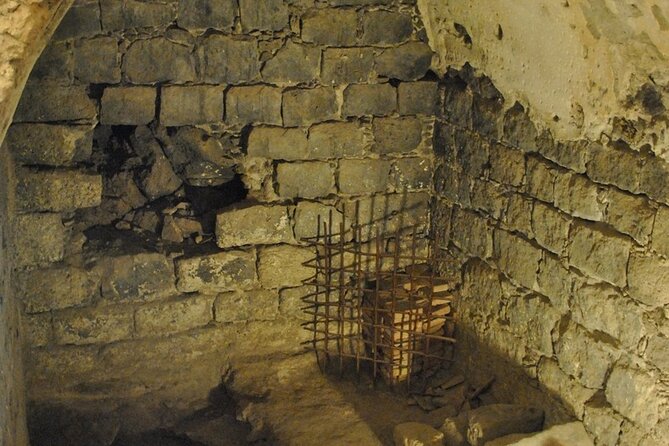
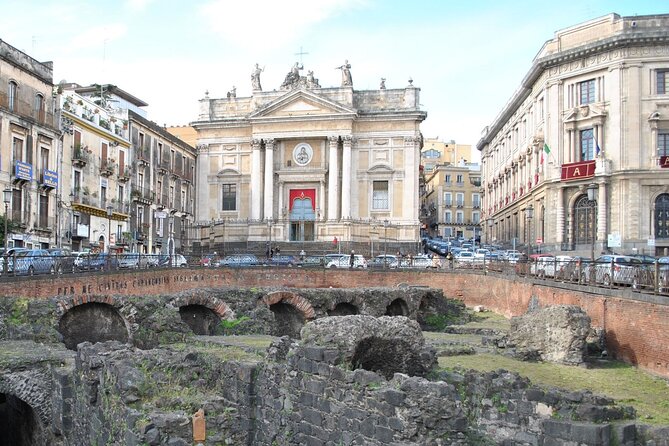
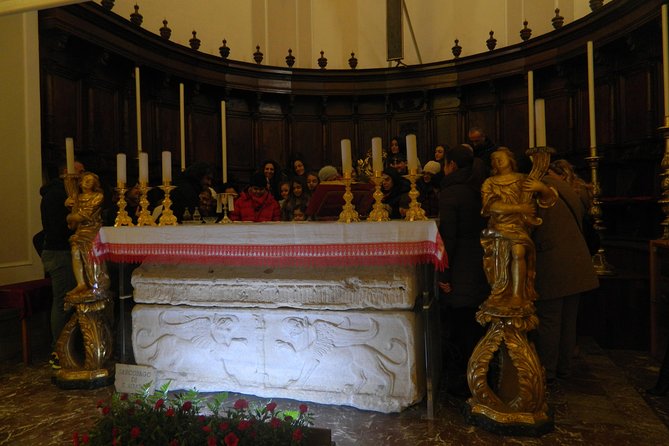
This first church is called Chiesa Sant’Agata la Vetere, and it’s one of the oldest in the city. The key reason it kicks off the route is simple: it preserves a sarcophagus connected to tradition about what’s considered the first burial of Saint Agatha.
If you like layers—literally—this is where you get them. The site also includes archaeological stratification tied to her martyrdom tradition. In plain terms, it’s not just a pretty church stop. It’s a place where the story has been built into the ground and carried forward through generations.
What I like about making this your first stop: it gives you a foundation. When you later see prisons, furnaces, and relic-related art, you’ll understand what tradition is trying to anchor.
A consideration: because this stop gets the longest time slot (about 45 minutes), arrive ready to focus. If you tend to rush, you might feel like you’re leaving before the church starts to “click.”
Stop 2: Santuario Sant’Agata al Carcere and the Roman cell story
Next is Santuario Sant’Agata al Carcere, described as the central place of the Agatine cult in Catania. Here, the big draw is the sanctuary’s preservation of the Roman cell that tradition identifies as the prison where the martyr was held.
This stop works because it’s physical. You’re not just hearing about confinement as an idea. You’re looking at a space that tradition treats like a specific location, and that changes the tone of the story immediately.
The time here is about 30 minutes, which is enough for the main explanations without turning it into a long, slow visit. If you’re the type who likes to connect symbolism to real spaces, this is a strong point in the tour.
Possible drawback: if you’re expecting a museum-style exhibit with lots of interactive elements, you may find it more devotional and historical than modern. That’s not a flaw; it’s just a different style.


Stop 3: Chiesa di San Biagio in Sant’Agata alla Fornace and the furnace link to fire safety
Now you shift to Chiesa di San Biagio in Sant’Agata alla Fornace. This is traditionally tied to what’s considered the last martyrdom of Saint Agatha. The standout element is the furnace, and the church’s story connects it to Sant’Agata’s patronage against dangers of fire, including dangers linked to eruptions of Mount Etna.
That’s a big reason this stop lands well in Catania. The city lives with volcano reality. So even if you’re only visiting as a tourist, you’re stepping into a local mindset: faith isn’t floating in theory—it’s linked to survival and safety.
This part of the route is short (about 15 minutes). That’s good if you want momentum. But if you’re emotionally attached to the topic, you may wish you could linger longer on the symbolism.
Stop 4: Basilica Collegiata and the artistic candelore
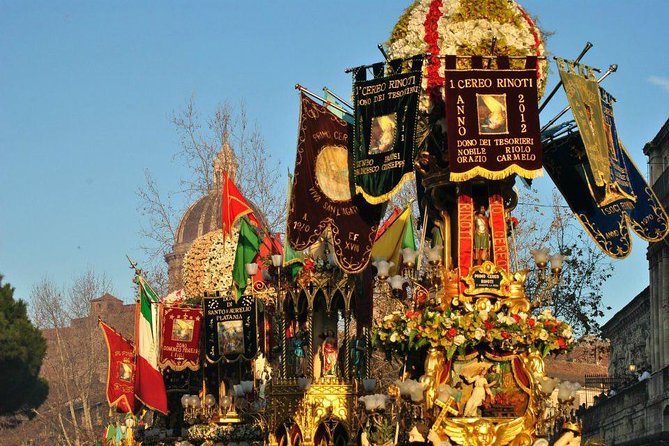
At Basilica Collegiata, the tone turns artistic. The church is described as baroque, and you’ll be able to admire closely an artistic candelore dedicated to Sant’Agata—created by guilds of trade and the city districts.
The word might sound unfamiliar at first, but the concept is straightforward: Catania’s identity is organized around groups—trades and neighborhood communities—and they express devotion through objects that are made to be seen.
Why I like putting this stop here: after the darker story elements (burial and prison), you get a shift into communal art. It shows you how tradition gets celebrated, crafted, and carried by different parts of the city.
Time is about 15 minutes, so it’s a focused look rather than a long art lecture. If you enjoy taking photos, do it early in the stop—so you’re not waiting for your turn at the end.
Stop 5: Museo Diocesano Catania and the silver fercolo + terrace view
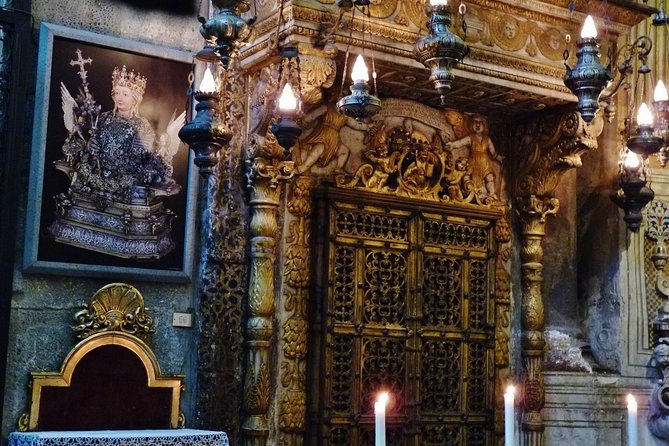
This is one of the best value blocks of the whole route because you get objects, processional meaning, and a view.
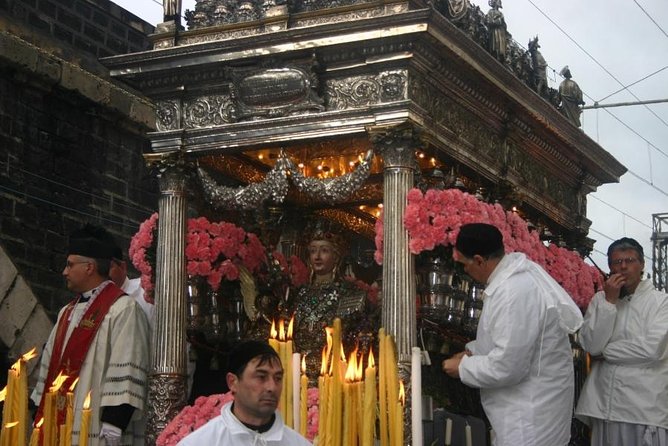
At Museo Diocesano Catania, you can see the silver fercolo, which holds the reliquary bust of Sant’Agata used in procession. You’ll also have a chance to look at precious furnishings and votive offerings dedicated to the patron saint.
Then there’s the bonus you’ll remember after you’ve gone back to your hotel: the tour includes time to enjoy the terrace overlooking the city. Even if you’ve seen viewpoints before, this one is tied to the same theme. You’re looking out at the place where this devotion lives.
The museum stop runs about 45 minutes, so it gives you room to slow down. If you want a specific focus—reliquary details, processional objects, or the terrace views—this is where you can do it.
One more note from what you might experience on the day: some groups report special rooms, passageways, and underground mummification chambers during visits. That kind of access can seriously change your understanding of how the city treats sacred remains and sacred space. Even if you don’t get every extra area, the standard museum experience here already has enough depth to justify the time.
Stop 6: Basilica Cattedrale di Sant’Agata and the Chapel of Sant’Agata
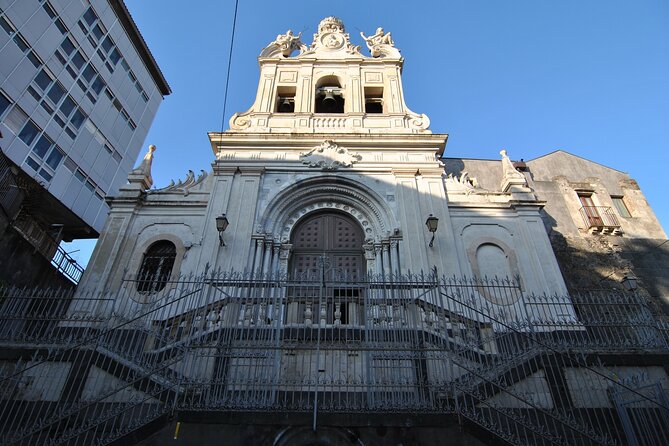
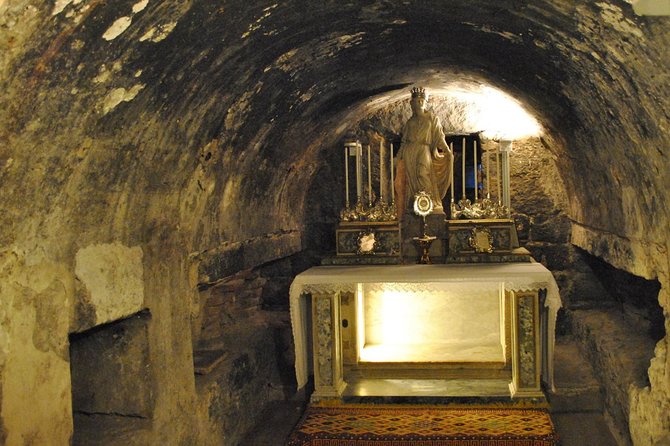
The tour ends at Basilica Cattedrale di Sant’Agata, including a visit to the cathedral and specifically the Chapel of Sant’Agata.
This is a classic “finish strong” stop. Earlier locations build the narrative through places tied to tradition—burial, imprisonment, and the furnace. The cathedral and chapel wrap that story into a central spiritual setting you can see and feel as the culmination.
Time is about 20 minutes, so keep your eyes open for key chapel details early. With shorter stops at the end, it’s easy to feel like you’re only arriving after you’ve already started “wrapping your brain” for the finale.
Price and value: what you’re really paying for at $96.74
At $96.74 per person, the main question is whether you’re getting more than a basic sightseeing walk. In this case, you are.
Here’s the practical value:
- Admission tickets are included for all the major stops. That alone can make a guided route cheaper than buying individual tickets piecemeal.
- The tour keeps to a tight 2–3 hour plan, which is efficient if you’re managing a full itinerary in Catania.
- The group size (max 8) is small enough that you’re more likely to get a real explanation than a generic script.
- You’re not just seeing churches. You’re also hitting a diocesan museum with key reliquary-related objects and a terrace view.
Group discounts exist, which can add even more value if you’re traveling with friends or your family can share the group price. If you’re going solo, it still tends to be worth it because you’re buying structure: a route with a clear theme and included entry.
Logistics that matter: meeting point, pace, and comfort
The tour starts at Piazza Sant’Agata la Vetere and ends at Piazza del Duomo. That end point is handy because it puts you near the main hub of the cathedral area, making it easier to continue your day without backtracking.
It’s also described as being near public transportation, which is useful in Sicily when you don’t always want to rely on long walks at the wrong moment.
Because time per stop is fixed, I recommend you go in with a simple strategy:
- Pick one or two stops where you’ll linger in your own quiet way (I’d choose the museum and maybe the first church).
- At the shorter stops (the 15-minute ones), focus on the single most important object or theme and move on. You’ll feel more satisfied.
Comfort matters too. You’ll be in and out of churches and museum spaces, so wear shoes that don’t punish your feet after a couple of hours.
Who should book this Sant’Agata tour?
This is a great match if you:
- Want a clear, story-driven tour tied to how Catania thinks and remembers
- Like religious art, devotional objects, and the meaning behind them
- Prefer a small group and a guide who can connect the dots
- Have limited time and want tickets handled for you
It’s also a good choice if you’re the type who gets more out of travel when you know what you’re looking at. Instead of guessing at symbolism, you’ll walk in with context.
If you only want a quick photo walk, this may feel a bit structured. The payoff is in learning and paying attention.
Should you book Etna ‘Ngeniousa’s Sant’Agata route?
I’d book it if your goal is to understand Catania’s heart, not just tick off churches. The itinerary is tightly focused on Saint Agatha’s local tradition, the price includes admissions, and the small group format makes the explanations feel connected rather than generic. Plus, if your visit includes the special access areas mentioned in feedback, you’ll likely get a level of closeness that most tourists never see.
So, if you can do 2–3 hours in the city center and you’re even a little interested in how faith shapes art and public identity, this one makes a lot of sense.
FAQ
How long is the Sant’Agata city tour in Catania?
It lasts about 2 to 3 hours.
Where does the tour start and end?
The tour starts at Piazza Sant’Agata la Vetere, 95124 Catania CT, Italy and ends at Piazza del Duomo, 95100 Catania CT, Italy.
What is the price per person?
The price is $96.74 per person.
Does the tour include admission tickets?
Yes. Admission tickets are included for every listed stop.
What language is the tour offered in?
The tour is offered in English.
How big are the groups?
The tour has a maximum of 8 travelers.
Do I need a printed ticket?
You get a mobile ticket.
Is there free cancellation?
Yes. You can cancel for a full refund up to 24 hours before the experience starts.
Is it near public transportation?
Yes, it’s listed as being near public transportation.
More City Tours in Sicily


More Tour Reviews in Sicily





Just added: the newest Sicily tours in our notebook
- Etna / Taormina★ 5.0 · 3 reviews
- Bikes★ 5.0 · 3 reviews
- Taormina shore tour – for small group cruise passengers★ 5.0 · 3 reviews
- Vegan Cooking Class in Catania with Lunch and Dinner★ 5.0 · 3 reviews
- Make & Taste Sicilian Desserts in Palermo – Learn Cannoli & More★ 5.0 · 3 reviews
- Sicilian Villages & Ricotta Tasting – including Lunch from Cefalu★ 4.0 · 3 reviews
City Tours, compared.
 ★ 4.6Catania: Heart of the City Guided Walking TourFrom $23708 reviews
 ★ 4.7Catania: City Highlights Walking TourFrom $14666 reviews
 ★ 4.8Catania: The heart of the City – Tour guidato in ItalianoFrom $23267 reviews
 ★ 4.9Palermo: Markets and Monuments City Center Walking TourFrom $41238 reviews
 ★ 3.0City Sightseeing Palermo Hop-On Hop-Off Bus TourFrom $22179 reviews
 ★ 4.5WalkingTour CATANIA – discovering the city of lava with a licensed guideFrom $24133 reviews
 ★ 5.0Palermo Airport ⇄ Palermo City: Private Transfer ServiceFrom $50121 reviews
 ★ 4.9Catania Street Food Tour: Fish Market & City CentreFrom $55104 reviews