
Reviewed · SYRACUSE & ORTIGIA
Syracuse and Ortygia by tuk-tuk 2-hour tour
Tuk-tuk time gives you quick bearings in Syracuse. This short ride strings together the big-name sights of Syracuse and Ortigia without turning your day into a long shoe test. I like the steady rhythm of photo-stop pacing paired with real explanations, and it helps a lot that guides such as Francesco and Marco actually connect the landmarks to the story of the city. One thing to keep in mind: the English commentary can be uneven depending on the guide, so if you need very clear narration, plan to ask questions early.
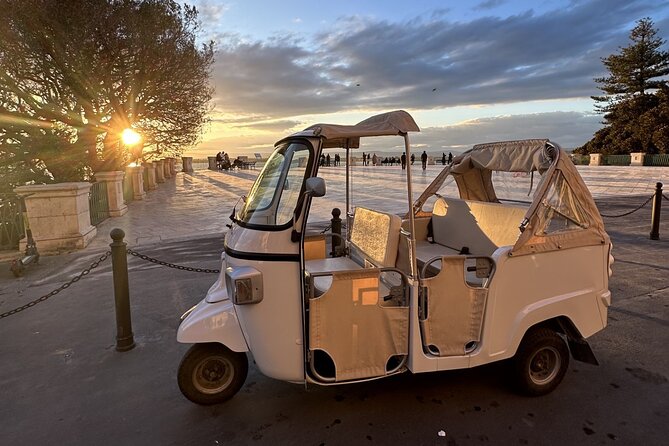
Pickup is offered, you get a mobile ticket, and it’s set up as a private tour for just your group (up to four). The open-air tuk-tuk also helps on warm afternoons, and you’ll still get the comfort of a driver handling the moving between neighborhoods. The only snag: with four people onboard, the seating can feel tight for bigger frames.
You’ll also hit the places that make Syracuse feel like layers on layers—Greek-era roots, then churches, then modern faith—and you’ll spend real time at a couple of key stops. Piazza Duomo includes the cathedral, and the route also makes room for the Santuario Madonna delle Lacrime and its famous Marian painting tied to 1953. Still, because the whole tour is about two hours, it’s not for people who want long stays in each site.
In This Review
- Key highlights you’ll feel right away
- Why Syracuse and Ortigia work so well in a 2-hour tuk-tuk
- Price and value: what $204.81 per group really buys you
- Pickup, timing, and how to avoid common day-of hassles
- Stop-by-stop: Piazza Duomo to Madonna delle Lacrime
- Piazza Duomo (cathedral visit and ancient roots)
- Fonte Aretusa (a classic Syracuse stop)
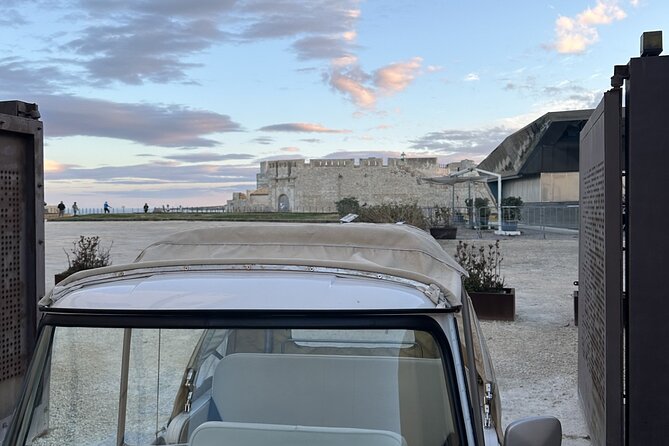
- Maniace Castle (quick photos and a viewpoint feel)
- Temple of Apollo (Greek-era photo stop)
- Piazza Archimede (Fountain of Diana)
- Chiesa Di San Filippo Apostolo and the Giudecca Jewish quarter
- Basilica Santa Lucia al Sepolcro (Caravaggio painting and Saint Lucia)
- Parrocchia San Giovanni Evangelista e San Marziano (short photo pause)
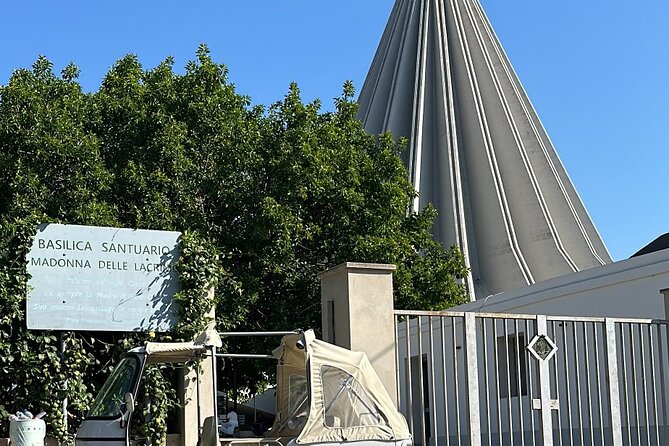
- Santuario Madonna delle Lacrime (the 1953 Marian story and Pope John Paul II)
- What makes this route feel better than just wandering
- Guide matters: what you can expect from Francesco, Marco, and Tony
- Who should book this tuk-tuk tour (and who should skip it)
- So, should you book the Syracuse and Ortigia tuk-tuk tour?
- FAQ
- FAQ
- Is this a private tour?
- How long is the Syracuse and Ortigia tuk-tuk tour?
- Is pickup included?
- What sites do you stop at?
- Are admission tickets included?
- Can I cancel and get a full refund?
Key highlights you’ll feel right away
- Private tuk-tuk for up to four: you’re not packed into a big bus crowd.
- A fast Syracuse “first look”: temples, fountains, and churches in one loop.
- Piazza Duomo and the cathedral stop: you get a longer visit here than the photo points.
- Madonna delle Lacrime sanctuary visit: a meaningful stop with local importance.
- Many stops are photo stops with short visits: ideal if you like overviews.
- English narration may vary by guide: Francesco, Marco, and Tony are often praised, but clarity can differ.
Deeper into Ortigia and old Syracuse
- Syracuse: Boat Tour with Captain Mirko, Snorkeling & Caves
★ 4.7 · 746 reviews - Siracusa: Ortigia Boat Tour with Marine Grotto & Snorkeling
★ 4.7 · 726 reviews - Siracusa: Ortigia & Sea Caves Boat Tour w/ Prosecco & Fruit
★ 4.8 · 723 reviews - Syracuse: Ortigia Island & Sea Cave Boat Tour with Prosecco
★ 4.7 · 418 reviews
Why Syracuse and Ortigia work so well in a 2-hour tuk-tuk
Syracuse and Ortigia can feel a bit like two different worlds that still share the same ocean breeze. In a normal walking plan, you end up spending a lot of time just getting from one side to the other. Here, the tuk-tuk handles the transitions, so you can focus on the sights.
What I like about this format is that it’s built for the way most people travel. You’re on vacation, the day is limited, and you want a strong overview before you choose what deserves a deeper visit later. Two hours is long enough to see a meaningful cross-section, but short enough that you won’t feel stranded if your feet start complaining.
This is also a good “orientation tour.” If it’s your first afternoon in the area, you’ll come away with a mental map of where the waterfront viewpoints, religious landmarks, and historic squares sit relative to each other.
Price and value: what $204.81 per group really buys you
The price is listed as $204.81 per group, up to four people, for about two hours. On the surface, that can sound steep—until you remember you’re paying for a private vehicle plus a guided route that hits multiple neighborhoods efficiently.
Here’s the practical value math I’d use: if you’re traveling as a couple or small family, dividing the cost across your group makes the per-person price far more reasonable than a public tour. And compared with hiring a car or trying to coordinate multiple taxis, a tuk-tuk for a tight highlights route often comes out as good use of time.
Also, note the admission detail that affects value: the stop at Piazza Duomo has a cathedral visit, but admission ticket is not included. The rest of the listed stops are marked as free entries. That means you can plan your budget with fewer surprises—just be ready to pay for the cathedral portion if you want to go inside.
Pickup, timing, and how to avoid common day-of hassles
Pickup is offered, but you’ll confirm the exact pick-up time and place after booking. That’s a normal setup for this kind of short private tour, and it’s especially helpful if you’re coming from a train station or ferry area.
The timing structure is also clear: each stop is brief, with one longer visit at the start location. That matters because you’ll know what kind of experience you’re getting. You’re not buying a tour where you disappear for an hour at a single museum. You’re buying a tour that moves you along a prepared circuit so you can see a lot.
One comfort tip from real experience: the open-air setup can be great when it’s hot out. Still, do think about seating. If you’re four people traveling together, it can get snug, so if you’re concerned about space, consider doing three instead of four when possible.
Stop-by-stop: Piazza Duomo to Madonna delle Lacrime
This route is designed like a highlight reel with a few “real stops” mixed in. Here’s what to expect at each part, and what’s worth your attention.
A few we would gladly point a friend toward in Syracuse
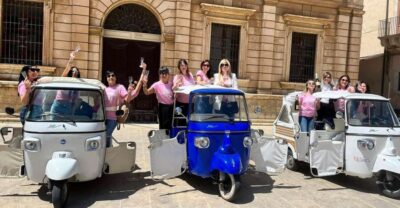
Piazza Duomo (cathedral visit and ancient roots)
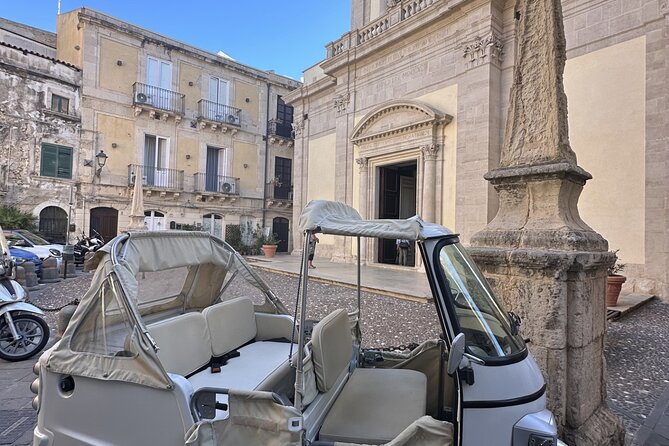
You start at Piazza Duomo, where you visit the cathedral of Syracuse. The key detail here is that it’s formerly the temple of Athena, so you’re standing on a site with a long, layered past.
You get about 20 minutes here, and admission isn’t included. If you want to get photos plus a quick look inside, this is the part of the tour where you’ll feel the most satisfied with the time you spend—because it’s not only a view, it’s the actual religious centerpiece of the square.
Practical tip: if the lighting looks good, take a minute to frame the cathedral façade and then decide whether you want to head inside right away. The tour moves on quickly.
Fonte Aretusa (a classic Syracuse stop)
Next is Fonte Aretusa for a short stopover. The time is around 10 minutes, and entry is free.
This is one of those places that works well as a quick “yes, I’m here” moment. In a short tour, you don’t want to waste too much time arguing with maps, and fountains are perfect landmarks for that.
Maniace Castle (quick photos and a viewpoint feel)
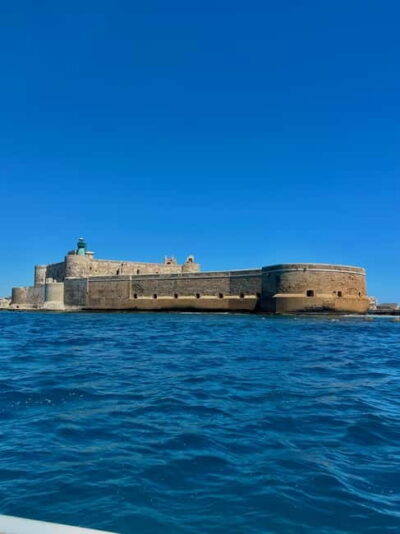
Then you get a photo stop at Maniace Castle, about 15 minutes. Entry is free.
This is a good moment for perspective. Even if you don’t spend time walking around, the view helps you understand the geography of the area and why people keep coming back for waterfront and castle views.
Temple of Apollo (Greek-era photo stop)
You’ll also pause for a photo stop at the Temple of Apollo (Tempio di Apollo), a Greek temple dating to the sixth century B.C. The stop is around 10 minutes, and it’s free.
This is one of the “wow” contrasts in the whole route: modern streets, then the sense of ancient architecture underneath the same sun. Even a short stop gives you enough time to capture the scale and the style.
Good to know: this is a photo stop, not a long exploration. If you want a deeper architectural walkthrough, you’ll likely want to do more later on your own.
Piazza Archimede (Fountain of Diana)
Next comes Piazza Archimede for a quick photo stop at the Fountain of Diana, goddess of hunting. You get about 5 minutes, and it’s free.
This one is fast by design. In a two-hour tour, you’re mostly collecting landmarks, and fountains like this help you remember the character of the squares.
Chiesa Di San Filippo Apostolo and the Giudecca Jewish quarter
After that, there’s a photo stop with a visit connected to the Jewish quarter, the Giudecca. The stop is about 5 minutes and entry is free.
This part can be meaningful because you’re not only seeing monuments—you’re also getting a glimpse of the neighborhood history embedded in the city’s layout. In a short ride, even a small visit can help you realize you’re in a place shaped by many communities.
Basilica Santa Lucia al Sepolcro (Caravaggio painting and Saint Lucia)
Then you visit Basilica Santa Lucia al Sepolcro for about 15 minutes. Entry is free, and the highlight here is the display of a Caravaggio painting dedicated to Saint Lucia, the patron saint of Syracuse.
This is a “real” stop in terms of interest. It’s not just a quick exterior view—this is where the tour leans into art and religious meaning. If you’re the kind of traveler who loves a single strong indoor highlight, you’ll appreciate this stop.
Parrocchia San Giovanni Evangelista e San Marziano (short photo pause)
You’ll get another quick photo stop at Parrocchia San Giovanni Evangelista e San Marziano, around 5 minutes, and it’s free.
In an overview tour, these quick pauses do a job: they fill in the map with recognizable church landmarks and help you understand how the historic neighborhoods are threaded together.
Santuario Madonna delle Lacrime (the 1953 Marian story and Pope John Paul II)
Finally, you visit the Santuario Madonna delle Lacrime for about 15 minutes. Entry is free.
This sanctuary is tied to a painting of the Virgin Mary associated with tears reported in 1953, and it was inaugurated in 1994 by Pope John Paul II. Even if you’re not traveling as a faith-focused pilgrim, this stop gives you a sense of why locals care deeply about this place.
Practical tip: if there’s a quiet moment inside, take it. A short tour is still time, and this stop is one of the best places to slow down for a minute.
What makes this route feel better than just wandering
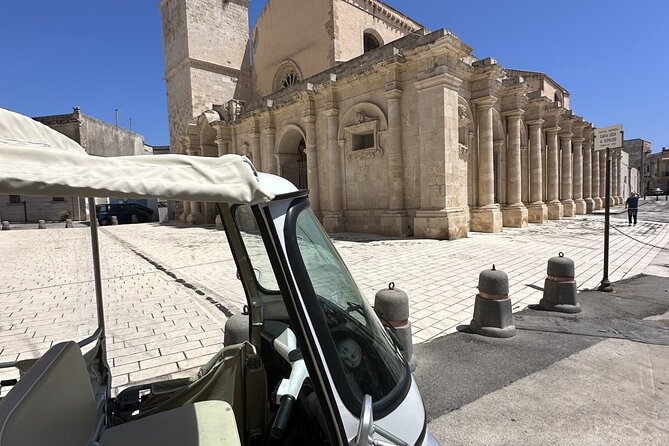
I’ve found that a highlight tour like this is most useful when it gives you structure. You arrive without overthinking the order of stops, and you don’t waste time hunting for where things are.
This tour’s structure also supports a great travel strategy: do the overview now, then decide what’s worth your next hour. After you’ve seen the cathedral roots, the Greek temple photo stop, the waterfront-type viewpoints, and the sanctuary, you’ll know what kind of Syracuse you want to return for.
It’s also a nice balance between eras. You’re moving from older Greek layers into Christian landmarks and then into a 20th-century religious story. That makes the city feel less like a list of places and more like a living place with continuity.
Guide matters: what you can expect from Francesco, Marco, and Tony
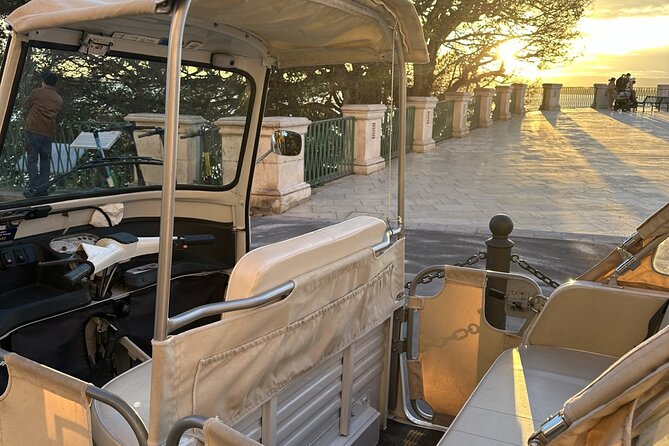
The biggest theme in the experience reports is that the best guides keep it fun and clear. Names that come up often include Francesco, Marco, and Tony, and they’re praised for being engaging, friendly, and willing to answer questions.
One practical thing to protect yourself: English narration can vary. The tour is offered in English, but clarity and delivery may depend on the specific guide and the system used for translation or audio. If you prefer smooth explanations without interruptions, I’d treat this like a “confirm first” situation—ask whether the guide’s English is comfortable for a detailed conversation.
On the positive side, you can get a lot out of this format if you treat it like an interactive ride. Ask where to go next, ask what’s worth seeing longer, and don’t be shy about requesting extra photo time if the timing still works for the circuit.
Who should book this tuk-tuk tour (and who should skip it)
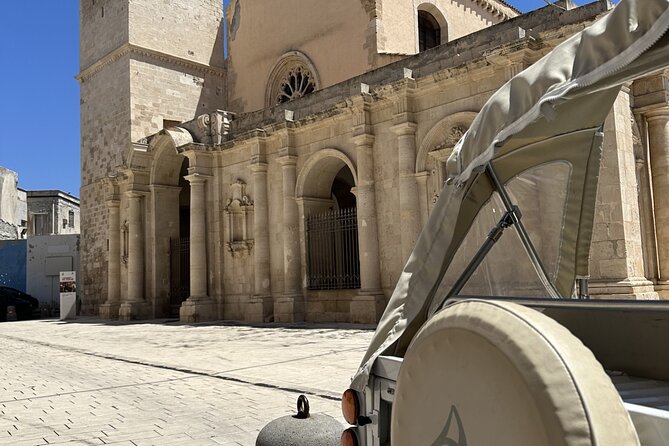
This tour fits best if you want a fast, high-impact introduction to Syracuse and Ortigia.
You’ll likely enjoy it if:
- you have limited time and want to see many highlights in about two hours
- you’d rather ride and learn than do a heavy walking day
- you’re traveling in a small group (up to four) and want privacy
- you appreciate a mix of architecture, churches, and iconic viewpoints
You might want a different option if:
- you’re hoping for a deep, slow historical experience at one site
- you’re very sensitive to English clarity and you need uninterrupted narration
- you need plenty of seating space for four people, since the setup can feel snug
If your plan is to combine this with longer independent time later, it works especially well. You’ll finish with enough context to choose what to revisit.
So, should you book the Syracuse and Ortigia tuk-tuk tour?
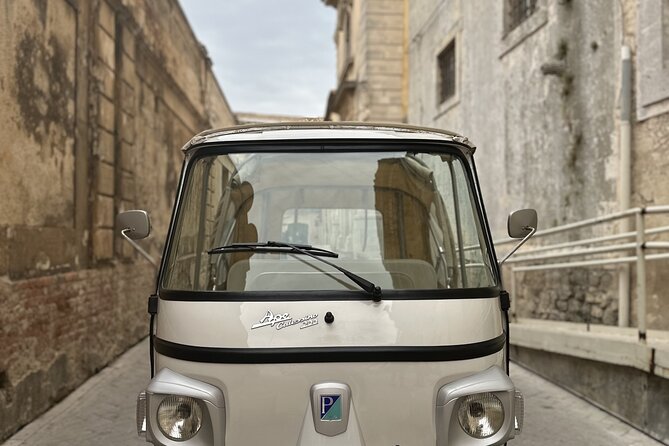
If you want a quick “first look” that saves your energy and gives you enough context to explore smarter afterward, I think this is a strong booking. The private group setup, the mix of ancient and religious stops, and the fact that most stops are short means you can pack a lot of meaning into a small time window.
My main caution is language consistency. English is offered, but delivery can vary by guide and setup. If you’re counting on crystal-clear commentary, reach out in advance and be ready to use questions during the ride.
FAQ
FAQ
Is this a private tour?
Yes. It’s listed as a private tour/activity, and only your group will participate.
How long is the Syracuse and Ortigia tuk-tuk tour?
The tour duration is about 2 hours.
Is pickup included?
Pickup is offered. After booking, you’ll receive confirmation with the pick-up time and place.
What sites do you stop at?
You’ll stop at Piazza Duomo (cathedral visit), Fonte Aretusa, Maniace Castle (photo stop), Temple of Apollo (photo stop), Piazza Archimede (Fountain of Diana photo stop), Chiesa Di San Filippo Apostolo with a visit to the Giudecca area, Basilica Santa Lucia al Sepolcro, Parrocchia San Giovanni Evangelista e San Marziano (photo stop), and Santuario Madonna delle Lacrime.
Are admission tickets included?
The cathedral visit in Piazza Duomo is listed as 20 minutes with admission ticket not included. The other listed stops are marked free.
Can I cancel and get a full refund?
Yes. Free cancellation is available up to 24 hours in advance for a full refund. If you cancel less than 24 hours before the start time, the amount paid won’t be refunded.
More Tours in Syracuse
More Tour Reviews in Syracuse
More of Syracuse and Ortigia
Just added: the newest Syracuse tours in our notebook
- Tour of Syracuse by Ape Calessino★ 3.0 · 3 reviews
- Syracuse Showdown Scavenger Hunt★ 5.0 · 3 reviews
- Sicily Boats Avola: Plemmirio boat tour 4 people 4 hours★ 5.0 · 3 reviews
- Groovy Geneva Scavenger Hunt★ 5.0 · 3 reviews
- Syracuse: Ortigia & Sea Caves Boat Tour with Local Skipper★ 5.0 · 3 reviews
- Siracusa: Neapolis’s Archaeological Park small group tour★ 5.0 · 3 reviews
Syracuse & Ortigia, compared.
 ★ 4.7Syracuse: Tour of Ortigia Island & Caves with Local SkipperFrom $231,060 reviews
 ★ 4.7Syracuse: Boat Tour with Captain Mirko, Snorkeling & CavesFrom $35746 reviews
 ★ 4.7Siracusa: Ortigia Boat Tour with Marine Grotto & SnorkelingFrom $47726 reviews
 ★ 4.8Siracusa: Ortigia & Sea Caves Boat Tour w/ Prosecco & FruitFrom $35723 reviews
 ★ 5.0Tour of the island of Ortigia and exploration of sea caves with baths.From $24668 reviews
 ★ 4.7Syracuse: Ortigia Island & Sea Cave Boat Tour with ProseccoFrom $23418 reviews
 ★ 5.0Boat tour of Ortigia Island and sea cavesFrom $24407 reviews
 ★ 4.6Catania: Syracuse, Ortigia, and Noto Tour with BrunchFrom $112404 reviews
Browse the lists this tour appears in