
Reviewed · SYRACUSE & ORTIGIA
Siracusa Tour: Ortigia by Night in English
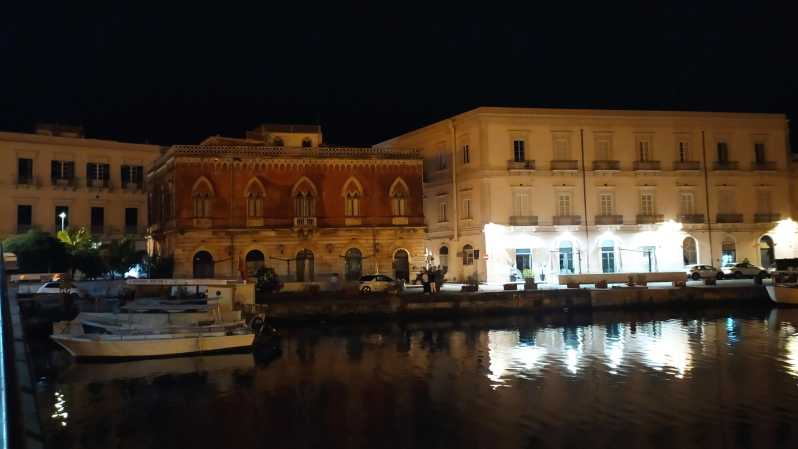
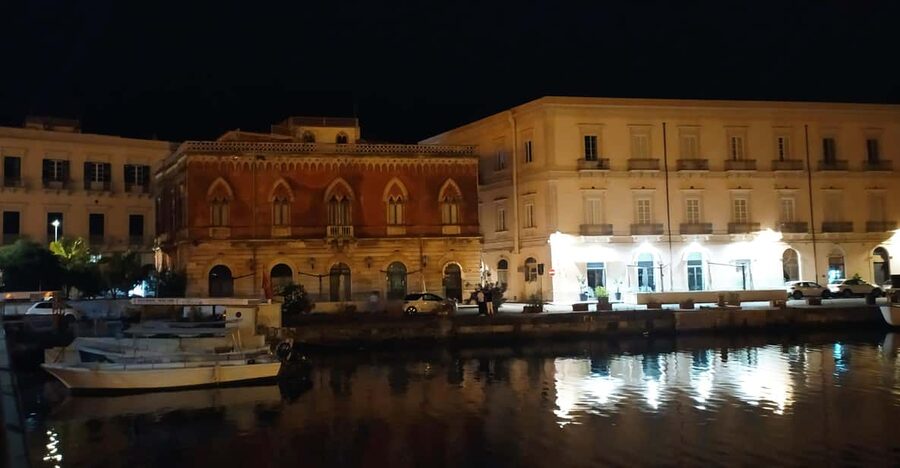
Ortigia glows after dark. On this English night walk, the streets feel like a set built for stories, with guide Galina bringing Greek myths and local legends to the stones as you move. I love the dim street-lamp lighting that softens the monuments, and I love seeing the remains tied to the Greek temples of Apollo and Athens up close rather than from a distance. The one drawback is simple: this is a walking tour, so plan for uneven stones and bring comfortable shoes (it is not suitable for wheelchair users).
You’ll spend about 2 hours meandering through Ortigia, the historic heart of Siracusa, with stops that mix temple ruins, Gothic and Baroque corners, and quiet piazzas. The route starts at Tempio di Apollo (Apollonion) and winds through narrow lanes before finishing at Fonte Aretusa.
In This Review
- Key highlights worth planning for
- Ortigia by night: why the mood changes everything
- Your 2-hour walk: Apollo to Fonte Aretusa
- Stop-by-stop: what you’ll see on the route
- Stop 1: Tempio di Apollo (Apollonion)
- Stop 2: Via Dione (about 10 minutes)
- Stop 3: Palazzo Montalto (about 5 minutes)
- Stop 4: Via della Maestranza (about 10 minutes)
- Stop 5: Via della Giudecca (about 10 minutes)
- Stop 6: Church of Saint John Baptist (about 5 minutes)
- Stop 7: Via Roma (about 5 minutes)
- Stop 8: Piazza Duomo (about 10 minutes)
- Finish: Fonte Aretusa
- The guide factor: English storytelling that actually helps you see
- Price and value: what $192.58 buys you in real life
- Practical tips so your night walk feels easy
- Should you book Ortigia by Night in English?
- FAQ
- How long is the Ortigia by Night tour?
- Where does the tour start and end?
- Is the tour offered in English?
- What’s included in the price?
- What should I bring?
- Is the tour suitable for wheelchair users?
Key highlights worth planning for
- Temple of Apollo to Fonte Aretusa: a full loop that feels like a guided “story trail.”
- Street lamps as your lighting crew: the monuments look different when the sun goes down.
- Myths and legends explained in English: the guide connects sites with the stories people tell about them.
- Greek + Gothic + Baroque in one walk: you see how many eras share the same small space.
- Short, focused stops: you get time to look, listen, and move on without getting bogged down.
- Great for small groups: it works well for groups around 7 to 8, with a guide who can handle different interests.
Deeper into Ortigia and old Syracuse
- Syracuse: Tour of Ortigia Island & Caves with Local Skipper
★ 4.7 · 1,060 reviews - Tour of the island of Ortigia and exploration of sea caves with baths.
★ 5.0 · 668 reviews - Boat tour of Ortigia Island and sea caves
★ 5.0 · 407 reviews - Siracusa Boat excursion island of ortigia and sea caves
★ 5.0 · 147 reviews
Ortigia by night: why the mood changes everything
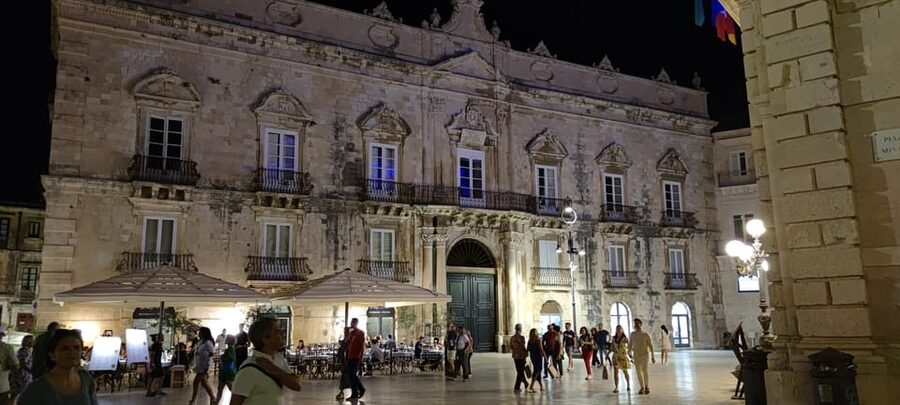
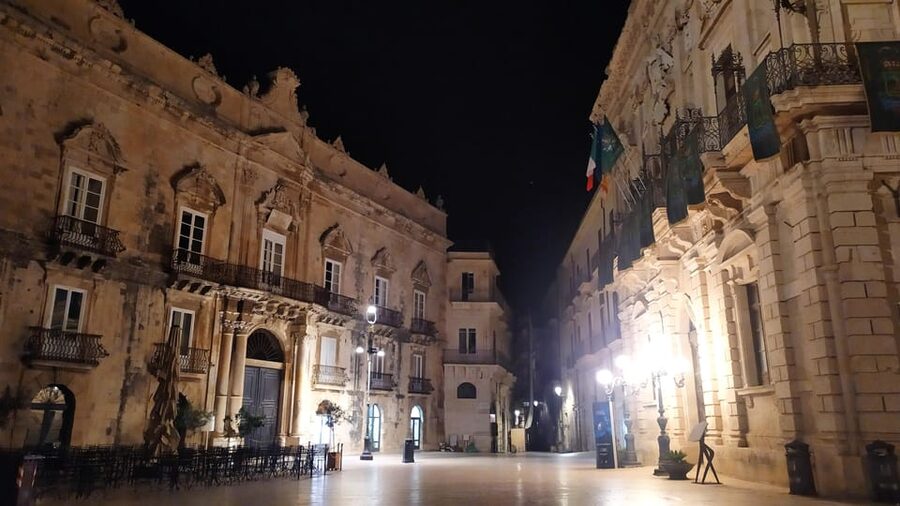
Daytime in Ortigia is pretty, but night has a different tempo. The alleys go quieter, the piazzas feel more intimate, and the street lamps do something daylight can’t: they frame the monuments like stage props. That matters because you’re not just sightseeing. You’re learning how the place was used, imagined, and remembered.
This tour leans hard into atmosphere. You’ll be guided through the oldest part of Siracusa while listening to myths, legends, and history tied to what you’re seeing. Instead of collecting facts like postcards, you start to understand how the Greek past, the medieval layers, and the Baroque style overlap in real streets.
Your 2-hour walk: Apollo to Fonte Aretusa
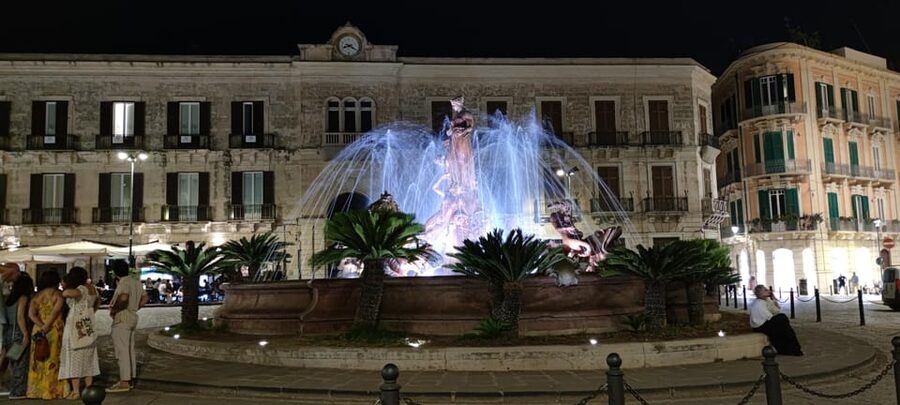
Expect a smooth pace, with quick guided moments at several points and enough time to stop, look, and take photos. The start point is the ruins of Tempio di Apollo (Apollonion), and the tour ends at Fonte Aretusa. That end matters because Fonte Aretusa is one of the island’s most recognizable symbols, and it gives the walk a satisfying finish.
Logistically, plan on meeting on your own since hotel pickup and drop-off aren’t included. Also, food and drinks aren’t included, so if you’re pairing this with dinner later, grab something earlier or plan a post-tour meal.
The price is listed at $192.58 per group (up to 1). On paper that can sound steep, but you’re paying for an in-person English guide plus a structured route through multiple landmarks in a compact area. If you’re traveling in a small group, it can feel like good value because the guide can keep everyone oriented and answer questions on the spot.
Stop-by-stop: what you’ll see on the route
Here’s how the walk breaks down, and what I’d focus on at each stop.
Stop 1: Tempio di Apollo (Apollonion)
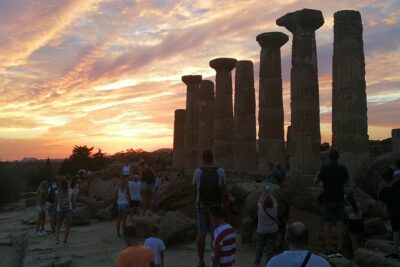
You begin at the ruins of the Greek Temple of Apollo, and that’s the right starting move. It anchors the entire tour in the oldest story layer, so when the guide later talks about myths and shifting power, you’re hearing it with context in front of you.
At night, you’ll see the stone differently. Shadows deepen, details sharpen, and the scale hits harder because the lamps don’t try to brighten everything equally. If you take photos, stand back for a quick wide shot first, then step in for textures and edges.
A few we would gladly point a friend toward in Sicily


Stop 2: Via Dione (about 10 minutes)
From the temple area, the route moves into the street fabric of Ortigia. Via Dione is one of those lanes where the “how people lived” part of history becomes real. The guide’s job here is to connect a stretch of street to the larger myth-and-memory theme, so listen closely rather than treating it like just transit.
This is a good time to ask small questions. When your guide can tie a story to a street name or a landmark’s role, the place stops feeling abstract.
Stop 3: Palazzo Montalto (about 5 minutes)
Palazzo Montalto is brief on the schedule, but that’s not a bad thing. Short stops help you keep momentum on a night walk, and it also keeps attention on the main visual cues: architectural rhythm, façade details, and the way older buildings carry newer styles.
Since the tour is built around different styles, this stop is about recognizing the Gothic and Baroque blend you’ll see again and again in Ortigia. Even a few minutes can teach your eye what to look for—like ornament placement, window shapes, and how light catches the stone.
Stop 4: Via della Maestranza (about 10 minutes)
Via della Maestranza gives you more time in a traditional corridor of the island. This is where the tour feels most like a walk through layers: you’re not just looking at one monument, you’re moving along the routes that link them.
If you’re prone to rushing, slow down here. At night, the “soft glow” effect makes it easier to see how buildings frame the street and create little pockets of atmosphere.
Stop 5: Via della Giudecca (about 10 minutes)
Via della Giudecca is another lane stop that rewards attention. The guide’s storytelling is key, because without context you might treat it as another narrow street. With the context, you start to notice that Ortigia’s layout is part of the cultural history, not just a convenient route for tourists.
This stop also helps you understand why Gothic and Baroque palaces sit beside Greek-era remains. Ortigia didn’t get rebuilt from scratch. It absorbed eras, one after another, in the same tight space.
Stop 6: Church of Saint John Baptist (about 5 minutes)
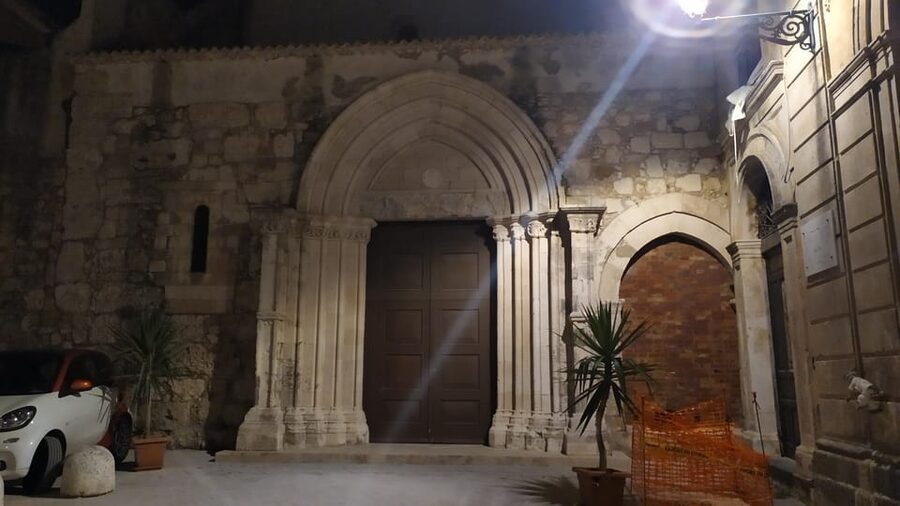
The Church of Saint John Baptist is a quick stop, so don’t expect a long interior visit. What you can gain is an architectural snapshot and the chance to hear the guide’s explanation of why that site matters in the broader picture.
At night, churches can feel dramatic even from the outside. The guided time is meant to help you connect the look to the stories and style shifts you’ve already started noticing.
Stop 7: Via Roma (about 5 minutes)
Via Roma is short in the schedule, which is smart on a night tour. It functions more like a bridge between major sights than a full destination.
Use this stop to regroup. If your camera battery dies or you need a quick breather, this kind of short segment is a great moment to pause without falling behind.
Stop 8: Piazza Duomo (about 10 minutes)
Piazza Duomo is one of the tour’s more atmospheric stretches. It’s a natural place for the guide to pull threads together because piazzas act like story stages: multiple styles and histories meet in one visible space.
This stop is also where you’ll likely feel the value of doing it at night. The square doesn’t feel like an item on a list. It feels like a lived-in public room, with the monuments lit in a way that makes them easier to read.
Finish: Fonte Aretusa
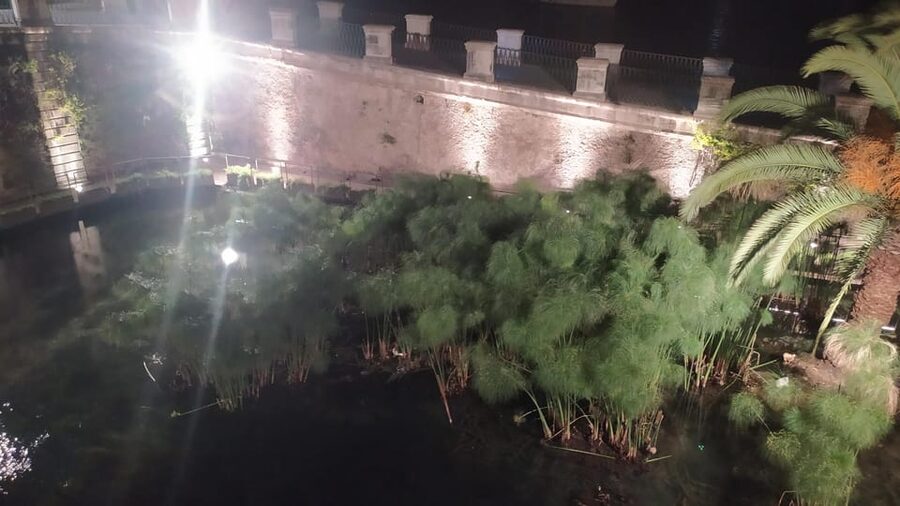
The walk ends at Fonte Aretusa, which gives the whole route a symbolic finish. It’s not just a random photo spot. It’s the kind of landmark that helps Ortigia leave a final impression.
If you’re heading straight to dinner after, plan a little buffer. You’ll want a minute to take in the fountain area and reset your timing.
The guide factor: English storytelling that actually helps you see
The biggest win on this tour isn’t the number of stops. It’s how the guide connects them into one coherent narrative. The English guide experience here is consistently praised, especially one guide named Galina with Galya Sicily Tour. People value that she’s friendly, attentive to different interests, and able to shape the stories to the group.
Here’s how to get your money’s worth with any guide on this kind of night walk:
- Ask one question early. Once you know the guide’s storytelling style, you’ll follow the rest of the route faster.
- Look, then listen. Don’t just walk with your eyes down. Pause, let the architecture register, then absorb the explanation.
- Trade trivia for context. The best part of myths and legends is understanding what people used to believe and how those beliefs shaped the places they built.
If you’re traveling with family or a mixed-interest group, this tour is a good match. Reviews mention Galina adapting well for groups of 7 and 8, which is exactly what you want from a night experience: everyone stays engaged without anyone getting left behind.
Price and value: what $192.58 buys you in real life
The listed price is $192.58 per group (up to 1). Because the group-size detail is unusual in the listing, treat that as a prompt to check what you’re actually reserving. Still, the value logic is straightforward.
You’re buying:
- a professional local tourist guide
- 2 hours of guided walking and interpretation
- multiple landmark stops packed into a small area
- an English narration focused on myths, legends, and how the architecture evolved
If you’ve ever tried to do Ortigia on your own, you know the problem. You can see the buildings, but you miss why they matter. A guide helps you translate the stone into meaning. That’s where the money tends to feel justified—especially on a night tour, when you can’t rely on daylight to “explain” the details for you.
Practical tips so your night walk feels easy
A few small things make a big difference here.
Wear comfortable shoes. Ortigia’s streets can be uneven, and you’ll be on foot for about 2 hours.
Bring a camera if you like nighttime photos. Street lamps create a soft glow that’s perfect for shots, but you’ll want to be quick and steady because you’re moving through multiple stops.
If you care about timing, think about how you’ll get there before the start at Tempio di Apollo. Since hotel pickup isn’t included, plan to arrive with enough slack so you don’t feel rushed.
And if you’re hungry, don’t wait for the tour to solve it. Food and drinks aren’t included, so plan a snack before or dinner right after.
Should you book Ortigia by Night in English?
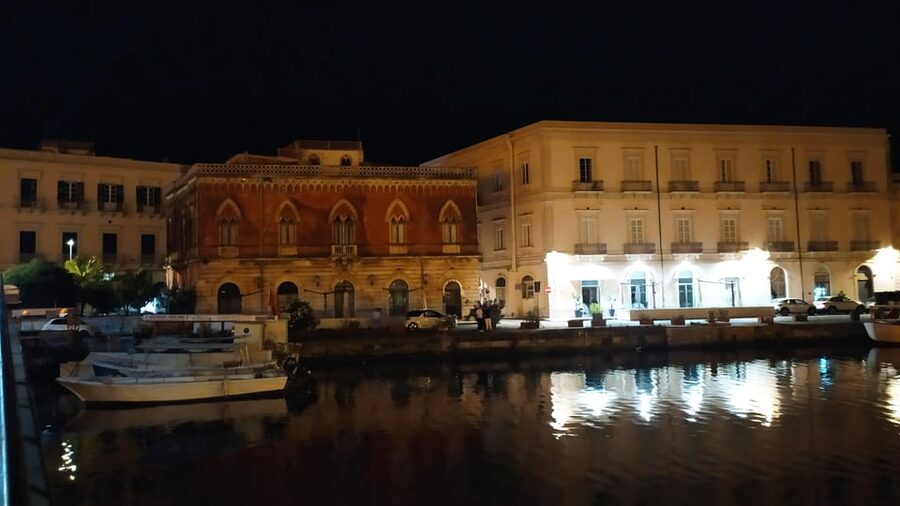
I’d book this tour if you want Ortigia to feel like a story you can walk through. Starting at the Greek Temple of Apollo and ending at Fonte Aretusa gives the walk a strong shape, and the night lighting makes the monuments more readable and more atmospheric. The biggest strength is the guide-led mythology and context—exactly what turns architecture into understanding.
Skip it if you don’t handle walking well or you need wheelchair accessibility. This is built as an on-foot experience, and the value comes from moving between stops and listening as the setting changes.
FAQ
How long is the Ortigia by Night tour?
The tour duration is 2 hours.
Where does the tour start and end?
It starts at the ruins of the Greek Temple of Apollo (Tempio di Apollo / Apollonion) and finishes at Fonte Aretusa.
Is the tour offered in English?
Yes, the tour is in English with a live tour guide.
What’s included in the price?
Included is a professional local tourist guide.
What should I bring?
Bring comfortable shoes (there is walking) and a camera for photos.
Is the tour suitable for wheelchair users?
No, it is not suitable for wheelchair users.
If you want, tell me your travel dates and who’s in your group, and I’ll help you decide whether this is the best use of your time in Siracusa versus swapping in something during the day.
More Tours in Sicily





More Tour Reviews in Sicily

More of Syracuse and Ortigia
Just added: the newest Sicily tours in our notebook
- Etna / Taormina★ 5.0 · 3 reviews
- Bikes★ 5.0 · 3 reviews
- Taormina shore tour – for small group cruise passengers★ 5.0 · 3 reviews
- Vegan Cooking Class in Catania with Lunch and Dinner★ 5.0 · 3 reviews
- Make & Taste Sicilian Desserts in Palermo – Learn Cannoli & More★ 5.0 · 3 reviews
- Sicilian Villages & Ricotta Tasting – including Lunch from Cefalu★ 4.0 · 3 reviews
Syracuse & Ortigia, compared.
 ★ 4.7Syracuse: Tour of Ortigia Island & Caves with Local SkipperFrom $231,060 reviews
 ★ 4.7Syracuse: Boat Tour with Captain Mirko, Snorkeling & CavesFrom $35746 reviews
 ★ 4.7Siracusa: Ortigia Boat Tour with Marine Grotto & SnorkelingFrom $47726 reviews
 ★ 4.8Siracusa: Ortigia & Sea Caves Boat Tour w/ Prosecco & FruitFrom $35723 reviews
 ★ 5.0Tour of the island of Ortigia and exploration of sea caves with baths.From $24668 reviews
 ★ 4.7Syracuse: Ortigia Island & Sea Cave Boat Tour with ProseccoFrom $23418 reviews
 ★ 5.0Boat tour of Ortigia Island and sea cavesFrom $24407 reviews
 ★ 4.6Catania: Syracuse, Ortigia, and Noto Tour with BrunchFrom $112404 reviews
Browse the lists this tour appears in