
Reviewed · PALERMO CITY TOURS
Scopri il Cuore di Palermo: arte, monumenti e mercati
Palermo pulls you in with myths you can actually see. This 2-hour guided walk strings together major monuments and local street life, so the city’s past feels practical, not dusty. I especially love how the tour connects big names and big ideas with what you’ll taste in the markets, and it ends with a cathedral you can read like a timeline.
My other favorite part is the stop at Palermo Cathedral, where you see how the building evolved from pagan temple to mosque and then into a Christian church. One thing to consider: food and drinks are not included, and some monument/museum entrances may cost extra, so you’ll want to budget for snacks if you get hungry in Capo Market.
In This Review
- Key points to know before you go
- Meeting at Via Cavour 133A: your fast start in Palermo’s center
- Sant’Ignazio: where the architecture leads you into the underground past
- Teatro Massimo and the Florio legends: Palermo’s Belle Époque drama
- Santa Rosalia, Beati Paoli, pirates, and crocodiles: why Palermo loves strange stories
- Capo Market street food: Arab-origin streets and real local tastes
- Palermo Cathedral UNESCO: reading the building like a timeline
- Price and what you’re really paying for (about $23 for 2 hours)
- Should you book this Palermo center tour?
- FAQ
- How long is the tour?
- Where does the tour start?
- Is food included?
- What’s included in the price?
- Do I need to pay for other monument or museum entrances?
- What language is the tour in?
- Is cancellation possible?
Key points to know before you go
- Teatro Massimo: you’ll hear ghostly legends plus stories of Belle Époque Palermo and the powerful Florio family
- Santa Rosalia and the plague miracle: learn why the city celebrates La Santuzza
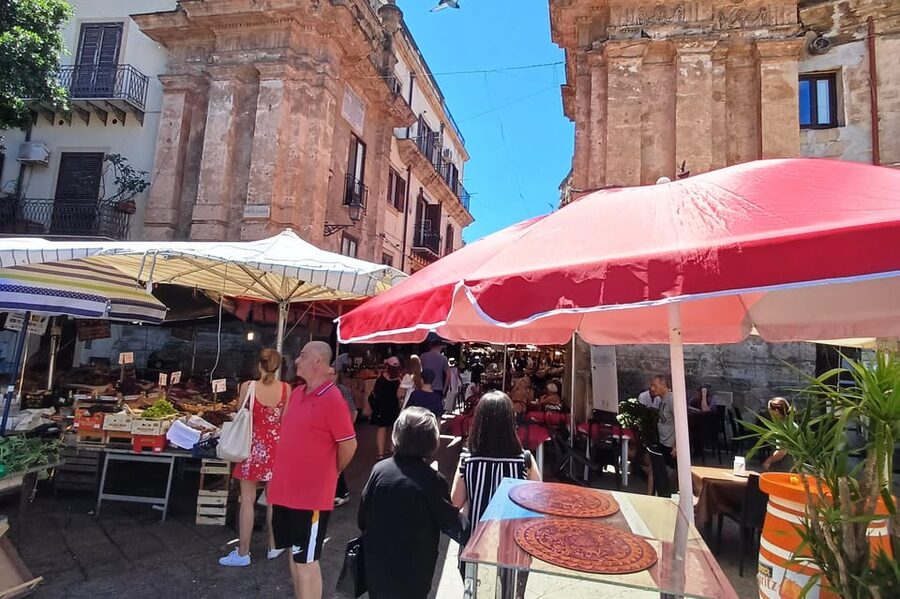
- Capo Market (Arab-origin): walk through a living market and follow the guide’s food picks
- Beati Paoli myths: a dark, mysterious side of Palermo beyond the main attractions
- UNESCO Palermo Cathedral: you’ll understand the layers, from bell towers to the spectacular sundial
- A very concrete value add: restaurant, café, ice-cream, and nightlife tips for after the tour
The rest of what Palermo puts on
- Palermo: NO Mafia Walking Tour
★ 4.8 · 2,431 reviews - Palermo: Hop-on Hop-off Bus Tour 24-hour Ticket
★ 3.9 · 2,410 reviews - Palermo Original Street Food Walking Tour by Streaty
★ 5.0 · 2,105 reviews - Segesta, Erice and Salt Pans Full-Day Excursion from Palermo
★ 4.2 · 1,791 reviews
Meeting at Via Cavour 133A: your fast start in Palermo’s center
The tour meets at Via Cavour 133A, right in front of the Banca d’Italia. This matters because Palermo’s historic center can feel like a maze at first, and being in the right spot saves you time before you even start walking.
You’ll be with a local, licensed guide, and you should look for the guide’s recognition badge when you arrive. The tour is in Italian, so if your Italian is basic, the experience still works for visuals and atmosphere, but you may miss some of the story threads.
What I like about this setup is that you’re not just collecting photos. You’re getting a storyline early, which makes the rest of the walk click. The guide’s job is to connect what you see (churches, theaters, markets) with why Palermo became Palermo: the city’s mix of cultures, faiths, and power struggles.
Duration is about 2 hours, which is a sweet spot for a first-or-second visit. It’s also enough time for a real sense of place, as long as you keep your pace with the group and don’t spend too long at every doorway. If you tend to stop and read every plaque, you’ll want to treat this as a guided “orientation tour,” not a slow museum day.
Sant’Ignazio: where the architecture leads you into the underground past
You start with one of Palermo’s scenic focal points: the area around Sant’Ignazio, including its archaeological museum. The point of this stop isn’t just to admire a church facade. It’s to get your eyes trained on what Palermo does best: layering time on top of time.
Sant’Ignazio is a strong opener because it sets the “how Palermo thinks” framework. The city is full of places where your brain expects one era, then surprises you with another. Starting here primes you for the bigger shifts you’ll see later, especially at the Cathedral.
Also, it’s a good moment to get oriented for the walk ahead. You’ll be moving toward the grand monuments and then into lively streets and markets. If you’re the type who likes to know what’s coming, the guide’s rhythm here helps you anticipate the contrast between formal architecture and everyday street life.
A practical note: museum and monument entrances are not listed as included beyond free entry to the Cathedral. So if you end up paying for entry at Sant’Ignazio depending on the route that day, that’s normal. Plan a few extra euros so you don’t feel caught off guard.
Teatro Massimo and the Florio legends: Palermo’s Belle Époque drama
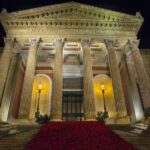
Next comes one of Italy’s real showpieces: Teatro Massimo, the largest opera house in Italy. Even if you’re not an opera person, you’ll feel the scale the moment you’re near it. This stop is the tour’s “big theater moment,” and it carries a lot of meaning.
Here’s what you’ll get from the guide that makes Teatro Massimo more than a photo stop. You’ll hear legends that feel ghostly and old-fashioned, tied to the building and its fame. You’ll also learn how this theater connects to Belle Époque Palermo and the Florio family, a name that shows up whenever you look at how Palermo’s wealth and culture took shape.
The value for you is simple: the guide gives context so you can understand why a theater would become a symbol. In Palermo, arts aren’t floating in the air. They’re funded, controlled, and used, and the guide makes that clear without turning it into a textbook.
And because the tour includes myths, this is also where you learn to read the city’s storytelling style. Palermo loves a dramatic narrative: power, faith, secrecy, and sudden reversals. Teatro Massimo is the perfect stage for that theme.
Tip: wear comfortable shoes. The streets around the theater area can be tight and you’ll be stopping for explanations.
Santa Rosalia, Beati Paoli, pirates, and crocodiles: why Palermo loves strange stories
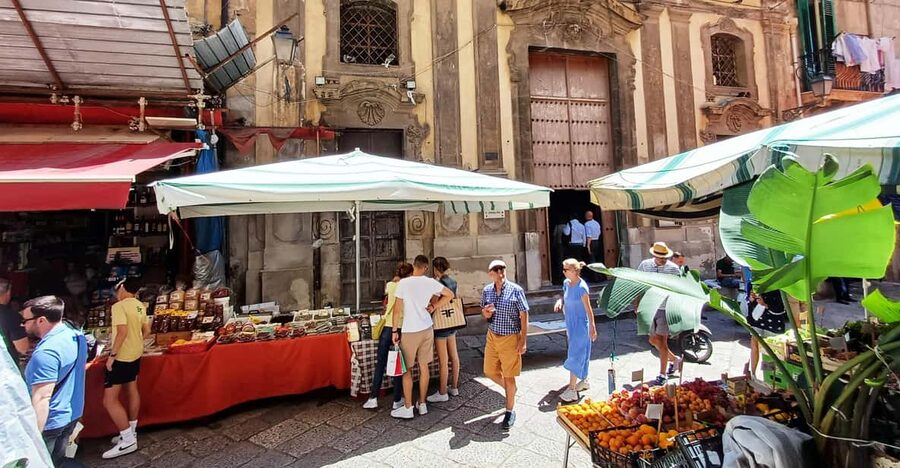
After Teatro Massimo, the tour leans harder into myth and legend, and that’s one of the reasons this experience works. You’ll hear about Santa Rosalia, the patron saint of the city, famous for freeing Palermo from the plague. The guide also explains why people affectionately call her La Santuzza.
Then you’ll move into darker, stranger threads, including stories tied to the mysterious sect of the Beati Paoli. These aren’t random scary tales. They reflect how Palermo preserved tension and intrigue through storytelling, especially in eras when official history didn’t cover everything people believed.
The tour also mentions entertaining claims like when Palermo had pirates and crocodiles, plus other odd details. Whether every element is literal is less important than what the guide is doing: turning Palermo into a place where imagination and local memory share the same streets.
I like this approach because it helps you understand the city’s energy. You’ll see it later when you walk past churches and old buildings and realize people are still living inside the stories.
One consideration: if you want pure art history with dates and documents, this may feel more like a guided story walk than a lecture. But if you want the city to feel human and alive, the balance is a big plus.
Capo Market street food: Arab-origin streets and real local tastes
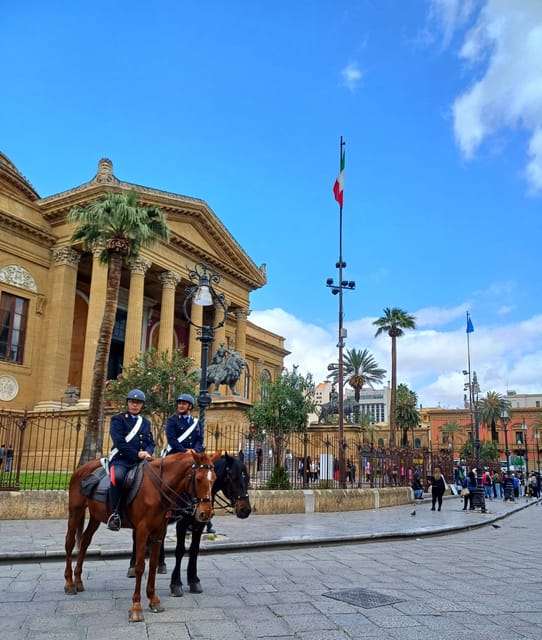
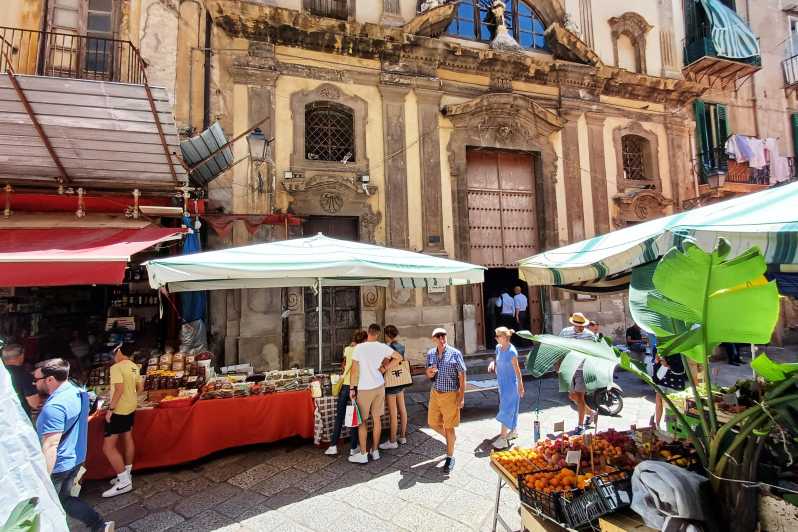
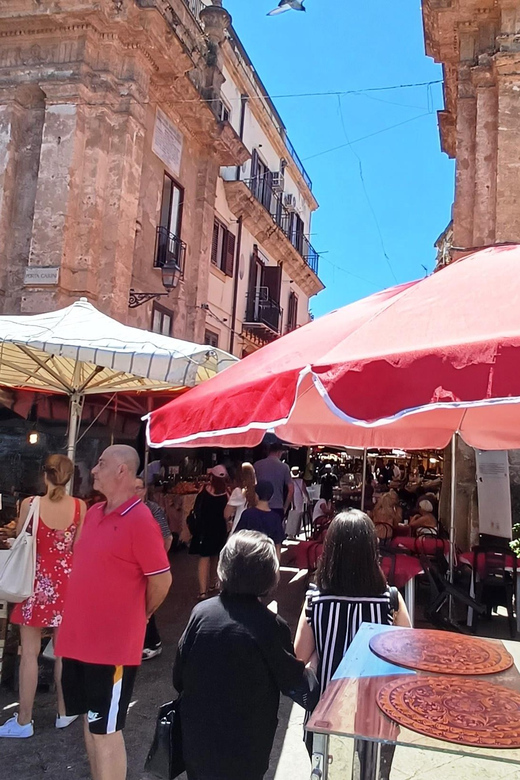
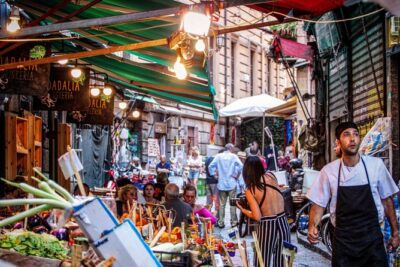
Now comes the part you’ll feel in your stomach. You walk through Capo Market, described as having Arab origin, and you’re in a place that feels like Palermo in real time. This stop is where the tour’s practical value really shows.
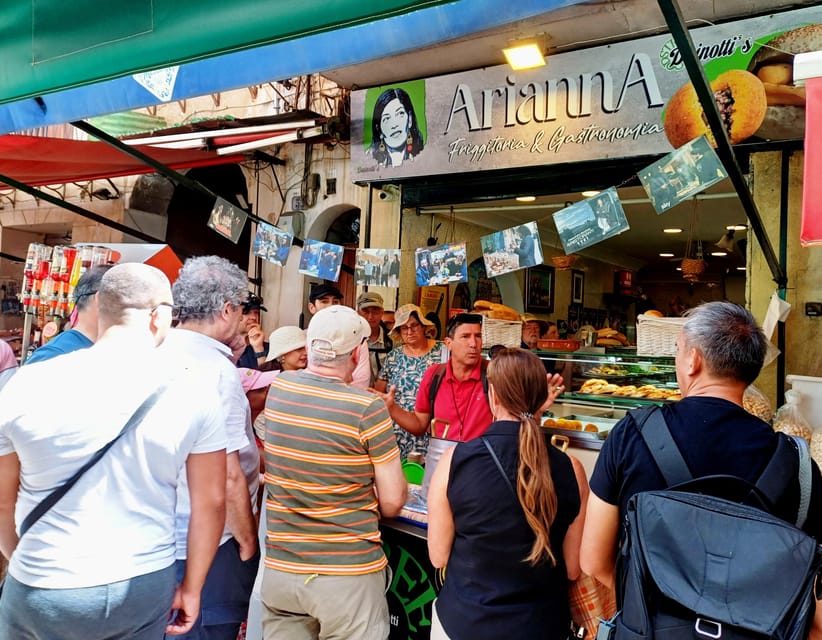
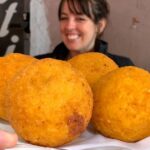
The guide brings you toward authentic Sicilian flavors, including some of the best street food options connected with Arianna Dainotti, who is linked to Alessandro Borghese’s 4 Restaurants. You’ll also try Sicilian desserts such as the Angeliche. This is the kind of food stop where the guide matters because market food is not always obvious if you don’t know what to look for.
What’s especially useful: the guide gives you best tips on restaurants, cafés, ice-cream parlors, and nightlife. That’s not just fun information. It helps you plan the next hours after the tour, when you’re actually hungry and deciding what’s worth paying for.
Since food and drinks are not included, you’ll be making your own choices at the stalls. For me, that’s a good thing because you can spend according to your appetite and budget. Just be ready for the fact that you’ll likely want more than one bite once you smell everything.
Two quick reminders:
- Bring cash if you use cash-friendly vendors.
- Go slow and follow the guide’s suggestions first, then branch out after you see what looks good.
Capo is not a “sit down and wait” type of experience. It’s a walk, a taste, and a sensory crash course.
Palermo Cathedral UNESCO: reading the building like a timeline
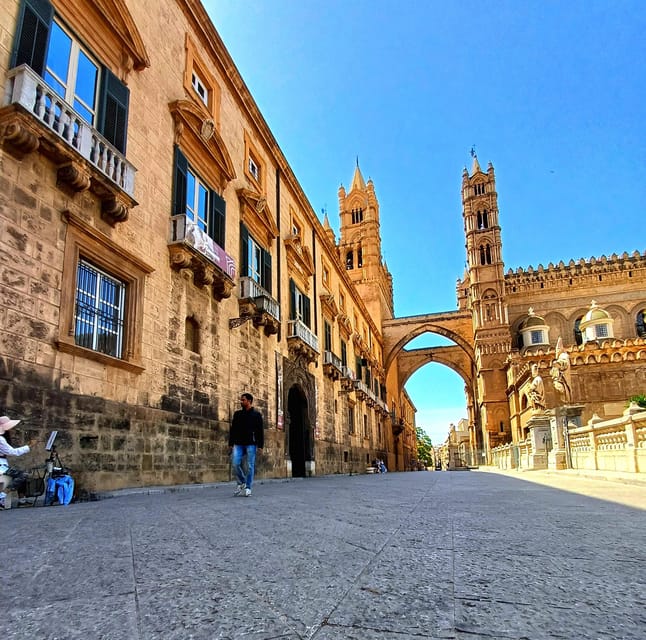
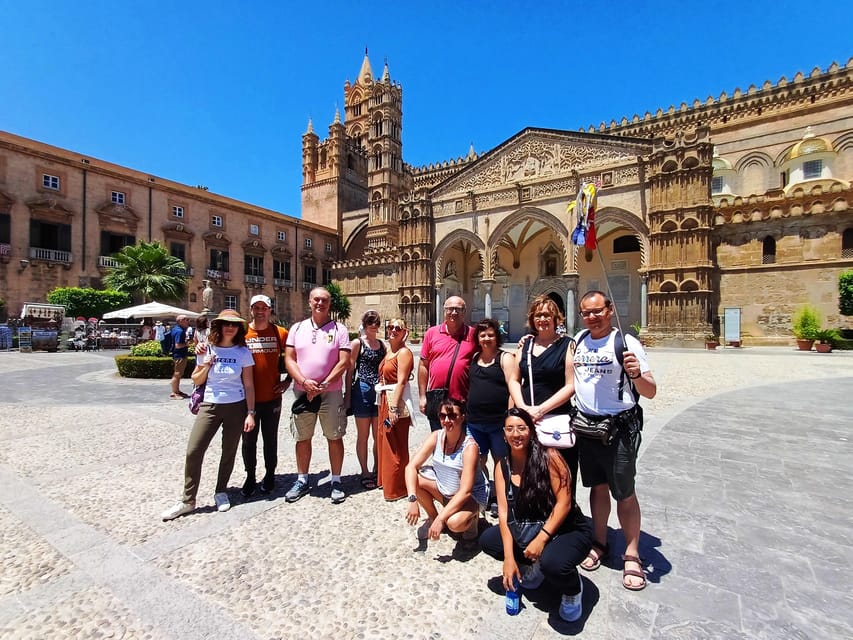
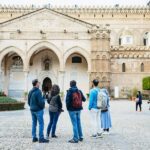
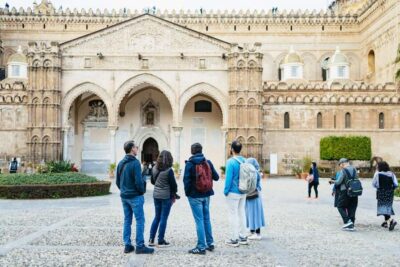
The tour ends at Palermo Cathedral, a UNESCO site dating back to the early 12th century. This stop is the final payoff for all the story threads you heard earlier, because the Cathedral physically shows how Palermo changed religious power over time.
You’ll admire the iconic bell towers, then learn how the architecture reflects an evolution: a pagan temple, later a mosque, and then a Christian church. That kind of layered transformation is the core idea of the tour, and it’s why the Cathedral is the anchor.
You’ll also see details that make the building feel specific, not generic. Inside are the tombs of kings and emperors, and you’ll learn about the spectacular sundial. These details turn the Cathedral into more than a landmark. It becomes a place where you can understand how people measured time, power, and belief.
A big practical advantage: the tour includes free entry to the Cathedral. That alone can make this experience feel good value compared with tours that force you to pay extra just to step inside.
One more benefit: because the tour is short, the guide gives you a guided route inside rather than leaving you to wander. You’ll know where to look, what matters, and what stories tie to each visible feature.
Price and what you’re really paying for (about $23 for 2 hours)
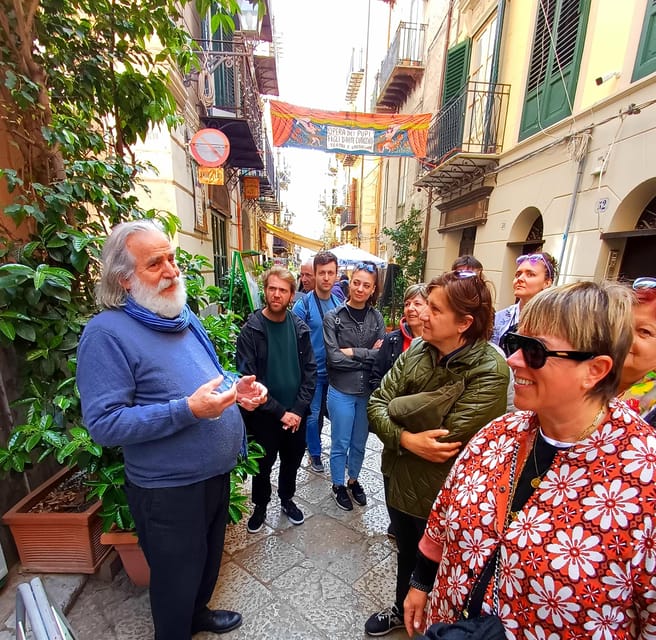
At about $23 per person for a 2-hour walk, the price is mainly for three things: a licensed guide, a focused route, and free entry to the Cathedral.
You’re not just paying for the Cathedral ticket; you’re paying for interpretation. Palermo’s biggest monuments can overwhelm you if you show up without context. Here, you get a way to connect Teatro Massimo, Santa Rosalia, market culture, and the Cathedral’s layered past into one coherent walk.
Food is not included, and some museum/monument entrances may cost extra. That’s not a flaw; it’s honest. It means you can sample what you want in Capo Market rather than being forced into a fixed meal plan.
For me, the value is strongest if:
- it’s your first time in Palermo’s historic center, or
- you want a story-driven introduction that also gives you places to eat afterward.
If you already know Palermo very well and want deep time at each site, you might find the pace a bit fast. But for most people, 2 hours is exactly what you want: enough structure to guide you, and enough freedom to continue on your own afterward.
Should you book this Palermo center tour?
I’d book it if you want a fast, story-rich introduction to Palermo’s landmarks and markets, with clear, practical guidance for what to eat and where to go next. The mix of Teatro Massimo, Santa Rosalia, Beati Paoli, and the walk through Capo Market makes it more than a checklist tour.
I would hesitate if you need a fully self-contained plan with food included, or if you only travel in English and feel lost in Italian explanations. Also, if you want lots of museum time, remember this is a 2-hour format with a lot of walking and short stops.
If you’re visiting Palermo and want your first day (or half day) to feel connected, this is a smart way to get oriented and start tasting the city right away.
FAQ
How long is the tour?
The tour lasts about 2 hours.
Where does the tour start?
The meeting point is Via Cavour 133A, in front of the Banca d’Italia. The guide has a recognition badge.
Is food included?
No. Food and drinks are not included.
What’s included in the price?
You get a local licensed guide and free entry to the Cathedral.
Do I need to pay for other monument or museum entrances?
Entrance tickets to museums and monuments are not included, so you may need to pay for certain stops depending on what’s visited.
What language is the tour in?
The tour is in Italian.
Is cancellation possible?
Yes. Free cancellation is available up to 24 hours in advance for a full refund.
More Tour Reviews in Palermo
More Palermo, Start to Finish
Just added: the newest Palermo tours in our notebook
- Private Transfer from/to Trapani★ 5.0 · 3 reviews
- Private Tour from Palermo to Monreale, Santa Rosalia and Mondello★ 5.0 · 3 reviews
- Palermo: Cannolo & Cassata MasterClass★ 5.0 · 3 reviews
- Camporeale: Sallier de La Tour Wine Discovery Tour★ 4.6 · 3 reviews
- Sicily … A Love of a Lifetime★ 4.5 · 3 reviews
- Sicilian Cooking Class in Palermo – Private Option★ 5.0 · 3 reviews
Palermo City Tours, compared.
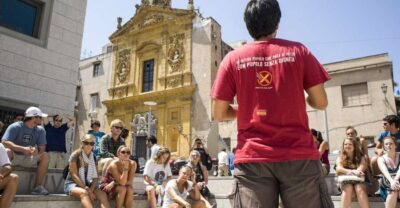 ★ 4.8Palermo: NO Mafia Walking TourFrom $402,431 reviews
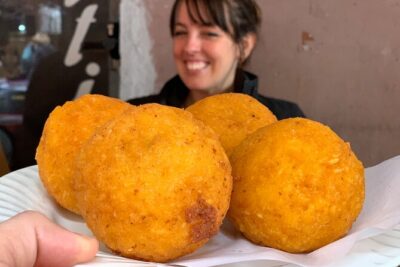 ★ 5.0Palermo Original Street Food Walking Tour by StreatyFrom $832,105 reviews
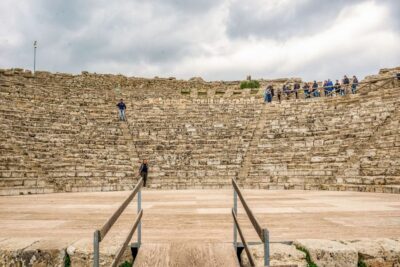 ★ 4.2Segesta, Erice and Salt Pans Full-Day Excursion from PalermoFrom $821,791 reviews
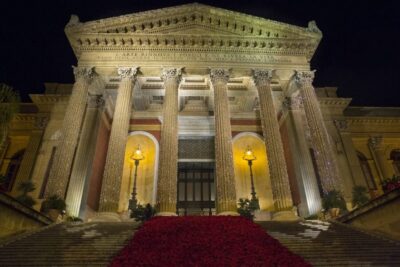 ★ 4.5Palermo: Teatro Massimo Opera House Guided TourFrom $141,573 reviews
 ★ 4.9Palermo: Street Food and History Walking TourFrom $571,486 reviews
 ★ 4.2From Palermo: Monreale and Cefalù Half-Day TripFrom $711,354 reviews
 ★ 4.2Palermo: Agrigento and the Valley of the Temples Day TourFrom $771,240 reviews
 ★ 5.0Palermo No Mafia walking tour: discover the Anti-mafia culture in SicilyFrom $391,011 reviews