
Reviewed · WINE & VINEYARD TOURS
Pasta Class Cook Traditional -Sciacca-Wine included-Shuttle extra
Dinner becomes a lesson in flour.
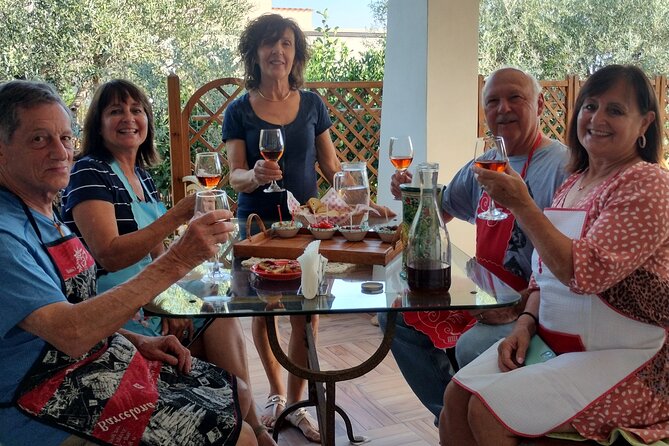
This Sciacca pasta class is built around a warm welcome in a real home kitchen, starting with a glass of wine and a guided look at local Saccense cooking. I like how hands-on it is: Accursia and Vincenzo show you the dough basics and the tools, and you don’t just watch. A second big plus is that you get to taste the pasta you make, cooked by them, with dishes like Tagliatelle alla Norma and tomato-based tagliatelle on the menu.
One thing to think about: transport can make or break the day. The tour starts at a specific countryside meeting point in Sciacca, and a shuttle is extra, so if you do not want to drive, plan that piece early.
In This Review
- Key Highlights You Can Plan Around
- A Warm Sciacca Kitchen Welcome at 4:00 pm
- Fresh Pasta Dough: The Skill That Transfers to Your Own Kitchen
- Shaping Tagliatelle and Learning From Saccense Traditions
- What You’ll Eat: Tagliatelle alla Norma Plus Tomato-Sauce Favorites
- The Garden Visit: Seeing Where Ingredients Come From
- Group Size, Tools, and the 2-Hour Rhythm That Works
- Price and Value: What $54.44 Really Covers
- Who This Pasta Class Suits Best in Sicily
- Good to Know Before You Go: Allergies, Italian, and Weather
- Should You Book This Sciacca Pasta Class?
- FAQ
- Where is the meeting point?
- What time does the class start, and how long is it?
- Is the class taught in English?
- What’s included in the price?
- Is a shuttle included?
- How many people are in the group?
- Do I need to speak Italian?
- What if the weather is bad?
Key Highlights You Can Plan Around
- Wine on arrival in the kitchen, so you settle in before the rolling pin appears
- Fresh pasta dough by hand, with practical guidance and the tools you’ll actually use
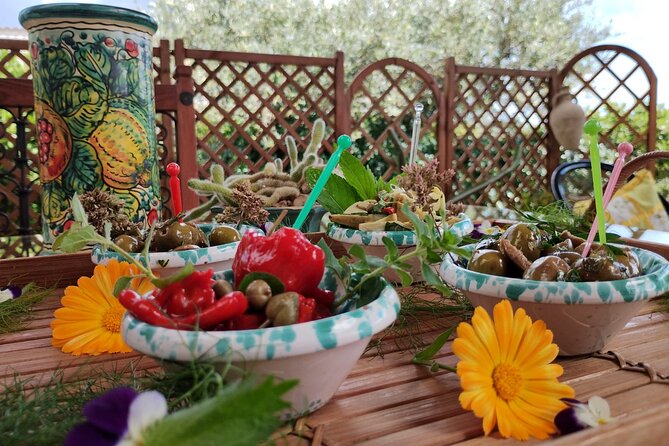
- Garden-grown food feel, including aperitif and items prepared from their own produce
- Tagliatelle alla Norma on the meal plan, plus classic tomato-sauce tagliatelle
- Maximum 4 travelers, which keeps questions flowing and hands-on time from slipping
- Take-home pasta, so your work doesn’t stop when class ends
More cellars and vines near Agrigento
- Agrigento: Wine tasting and walk in the vineyards.
★ 4.6 · 10 reviews - Wine tasting under the Stars in the vineyards of Agrigento
★ 5.0 · 3 reviews
A Warm Sciacca Kitchen Welcome at 4:00 pm
You meet in Sciacca at Strada Regia Raganella, 99, 92019, and the class starts at 4:00 pm. It’s the kind of time slot that fits nicely if you want a slower late afternoon before dinner plans, or if you want this activity to be your main food moment.
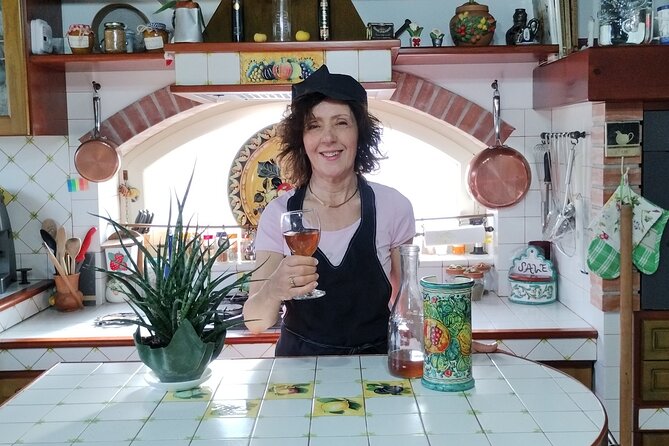
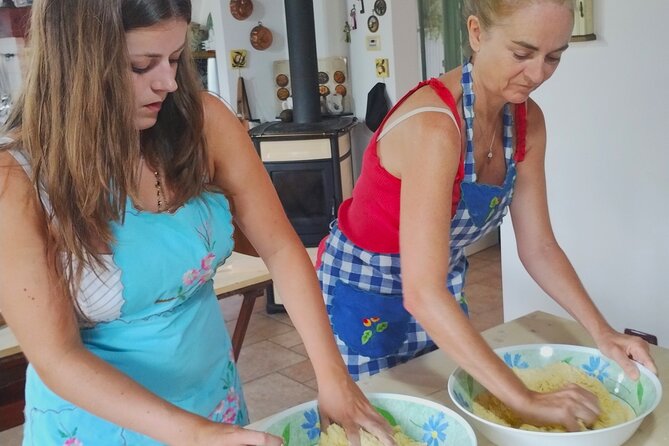
Expect a short, friendly start: you’re welcomed into the kitchen with a glass of wine included. From there, the focus turns to Saccense food culture. The hosts connect what you’re doing to why it matters locally, using the dishes you’ll prepare as the thread. It makes the whole thing feel less like a cooking demo and more like learning a craft that’s part of everyday life.
The setting is also worth noting. The experience is in an air-conditioned space, which can matter in Sicily when the sun is still doing its thing. And because the group is capped at four travelers, you’re not lost in the crowd. That small number is practical: you get time for your questions and more chances to work at the counter instead of standing back.
Fresh Pasta Dough: The Skill That Transfers to Your Own Kitchen
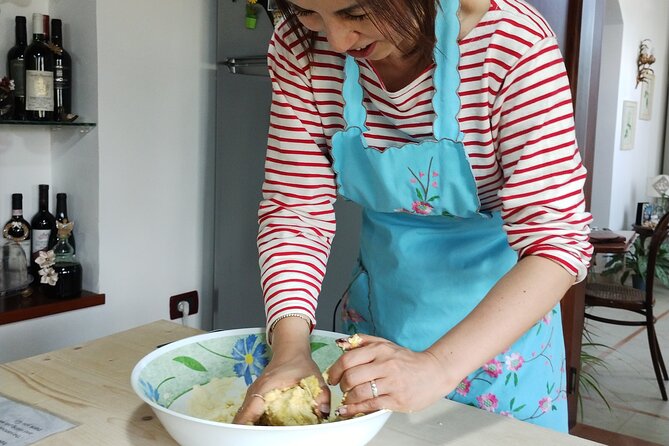
The core of the class is fresh pasta, taught as technique first and recipe second. The hosts walk you through making the dough and working it by hand, using fresh ingredients and simple, repeatable moves.
Here’s what I like about this approach for you as a visitor: pasta dough is one of those things where a tiny change can affect everything. If you learn the feel—how it comes together, when it needs rest, how it behaves when you shape—it becomes much easier to recreate later at home. The class is set up to teach that feel, not just the steps.
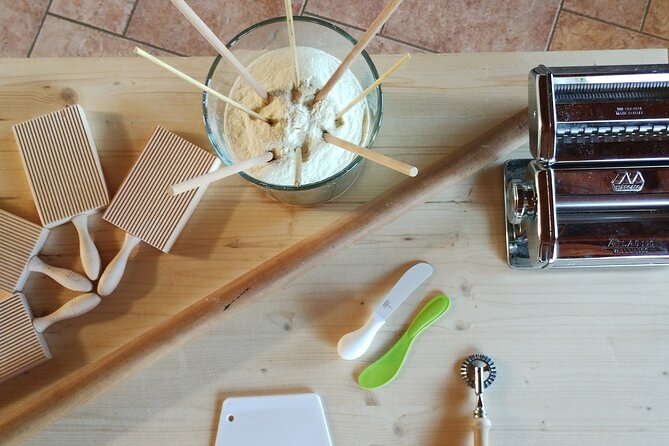
You’ll also learn about the tools used most often. Even if you’re not bringing special Italian kitchen equipment with you, this matters because the hosts focus on what’s actually used in their process. And in the small-group format, there’s room to correct small errors early, before your dough is past saving.
A second practical win: language isn’t a barrier. English is offered, and the hosts make it clear that you don’t need strong Italian to follow along. You’ll learn from gestures, demonstrations, and the simple rhythm of cooking: measure, mix, rest, shape, taste. In other words, you can show up with confidence even if you only know a few food words.
If you have allergies or food intolerances, report them in advance. Fresh pasta is ingredient-heavy, so this is the kind of detail that really must be handled before you arrive.
Shaping Tagliatelle and Learning From Saccense Traditions
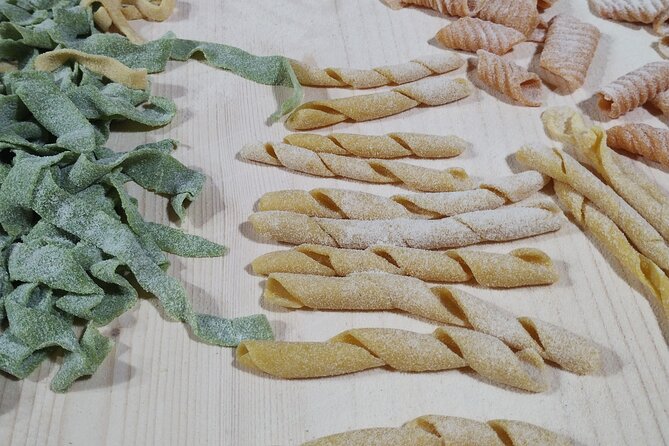
Once the dough work is underway, the class shifts into shaping. The menu points to tagliatelle, including the classic tomato-sauce version and a Sicilian-style pasta with aubergines.
A key part of the experience is that it’s not only one shape. One of the standout themes from the teaching style is variety: you may work with different shapes and tooling as you go, and you get coached on the differences in how dough should handle. In at least one full class, people were taught five different pasta shapes with different techniques and tools. Even if your exact shapes vary, the message stays the same: you leave knowing more than one way to shape dough.
You’ll also get the satisfaction piece: the fresh pasta you make is cooked by the host for tasting. That means you’re not stuck worrying whether your final rounds were perfect. You get to see what the finished pasta should feel like on the plate, which helps you connect your hands-on work to the result.
This is where the Saccense history thread matters. Instead of talking abstractly, the hosts connect tradition to what ends up on your plate. You learn why certain combinations show up locally—like aubergines with tomato and pasta—because those are familiar flavors within the region’s food habits.
What You’ll Eat: Tagliatelle alla Norma Plus Tomato-Sauce Favorites
This meal isn’t an afterthought. It’s part of the teaching arc, and it’s built around recognizable Sicilian comfort food.
The sample menu includes:
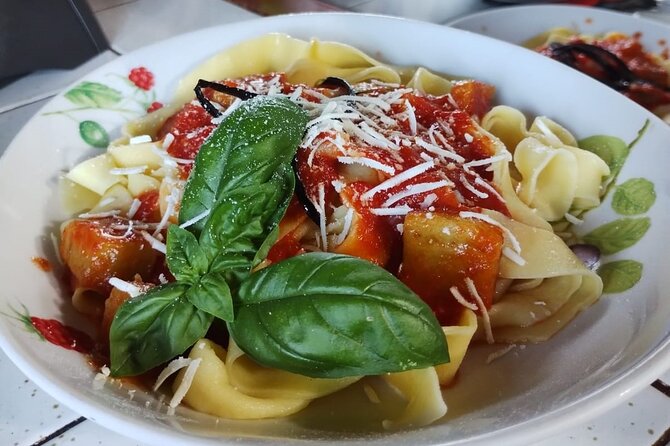
- Tagliatelle alla Norma: fresh pasta with tomato sauce and aubergines
- Tagliatelle with tomato sauce: a simpler, classic tomato-based preparation
You should also expect an aperitif-style start beyond just wine. In past sessions, there has been aperitif and hors d’oeuvres, and the hosts show off the idea of garden-to-table. That garden angle is not just decoration: it supports the flavor story of the dishes you’re making.
What makes this valuable for you is that you don’t just learn pasta mechanics. You learn how the pasta fits into the broader meal: how sauce consistency matters, how aubergines change the texture and taste profile, and how the dish comes together as a whole.
And yes, there’s a practical side. When your class includes tasting what your hands created, you can later translate that to ordering in Italy or cooking at home with less guesswork.


The Garden Visit: Seeing Where Ingredients Come From
A big part of the appeal here is that the food doesn’t feel generic. The hosts show a garden and connect it directly to the ingredients used during your class.
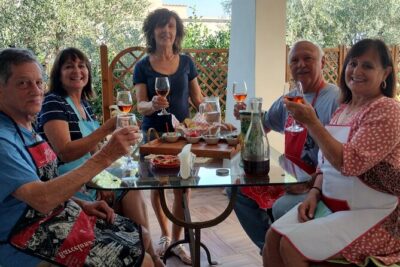
In multiple accounts, the garden tour is described as a favorite moment. You walk through the growing space and see the produce source, then you eat with that context in mind. It makes the cooking feel more grounded, because you understand the raw material behind the final dish.
This is also where the experience feels more personal than typical cooking school setups. You’re not only paying for instructions. You’re buying into a family rhythm—food grown, drinks shared, and pasta made together in the host’s home world.
If you’re the kind of traveler who likes to understand what you’re tasting instead of just chasing landmarks, this garden component is a strong reason to choose this class over a more standardized workshop.
Sometimes there’s also an option to buy handmade aprons. Even if you skip it, it’s a nice reminder that this isn’t just a one-day performance.
Group Size, Tools, and the 2-Hour Rhythm That Works
The experience runs for about 2 hours, starting at 4:00 pm. That length matters. It’s long enough to go beyond dough theory and into actual shaping and tasting, but short enough that you won’t feel trapped when your schedule is tight.
The max group size is four travelers, and that’s a real quality-of-life detail. In a smaller group, it’s easier for the hosts to correct technique and harder for you to feel like you’re standing in the way. It also makes it easier to ask quick questions like:
- Is this dough too dry?
- Should I rest longer?
- How do I avoid uneven thickness?
Air-conditioning helps keep the experience comfortable, especially in warmer months.
You’ll leave with the pasta you made. That take-home piece is more than a nice souvenir. It’s practical: you can cook your pasta later and remember the method you learned, instead of only recalling it as a fun photo moment.
Price and Value: What $54.44 Really Covers
The posted price is $54.44 per person, and it’s positioned as a short, small-group class in Sciacca.
What helps the value equation here:
- Wine is included, so you’re not hunting down a separate drink purchase
- You make fresh pasta, and it’s cooked for you to taste
- The menu includes specific dishes like Tagliatelle alla Norma
- The class includes more than instruction; it also includes a home setting and a garden-food context
- The group size stays small (max 4), which makes the teaching time feel more personal
Now, the one cost detail to watch: shuttle is extra. If you need transport, ask what pickup options you can use. If you’re comfortable driving yourself, it may be straightforward. If driving in countryside areas stresses you out, this is the one variable that can change how smooth the experience feels.
If you’re traveling with anyone who needs a private lesson, you’ll want to ask in advance. The class format described is for a small group, but private options are possible if you request them early.
Who This Pasta Class Suits Best in Sicily
This class works especially well if you want your Sicily day to feel human-sized, not rushed. It’s a great fit for:
- Couples who like shared activities and want a homey meal outcome
- Food lovers who care about technique and local ingredients
- Travelers who enjoy learning crafts they can repeat later
- Anyone who wants a smaller group experience where questions aren’t awkward
It also fits for people who don’t speak Italian well. You can handle it with English support and the universal language of cooking tasks.
For families, it could work too, depending on ages and patience for hands-on work. The class is in a home kitchen, so you’ll want to use your judgment based on your kids’ comfort level.
If you’re someone who strongly prefers scheduled sightseeing over cooking, you might find this too food-centric. But if you’re happy to swap one viewpoint for a dinner you helped make, this is a smart choice.
Good to Know Before You Go: Allergies, Italian, and Weather
A few practical points matter so you start relaxed instead of worried.
First: food allergies and intolerances should be reported in advance. Fresh pasta and sauces are ingredient-specific, and this is the kind of detail the hosts need early.
Second: Italian is not required. The teaching is set up for people who don’t speak the language, as long as you’re willing to participate. You don’t need to be fluent; you just need to be present and curious.
Third: the class requires good weather. The cancellation policy says if it’s canceled due to poor weather, you’ll be offered a different date or a full refund. That matters because if you’re in Sicily on a tight schedule, you’ll want to keep some flexibility in the afternoon.
Finally, service animals are allowed. For accessibility, the experience allows companions of guests with disabilities, but companions are not allowed to use the benefits of the participants. If you’re coming with accessibility needs, it’s smart to message ahead so you can confirm what works best for your situation.
Should You Book This Sciacca Pasta Class?
If you want a small-group, hands-on experience that ends with food you helped make, I think it’s an easy yes. The strongest reasons to book are the wine start, the fresh pasta skill-building, and the garden-to-table feeling tied to local ingredients.
It’s also a solid value at $54.44 because you get more than a meal. You get technique, tasting, and take-home pasta in about two hours.
Just plan for one potential snag: transport. If shuttle pickup helps you, arrange it early since the shuttle is extra. And if weather is uncertain on your dates, keep a little flexibility in your schedule.
FAQ
Where is the meeting point?
You’ll meet at Strada Regia Raganella, 99, 92019 Sciacca AG, Italy. The activity ends back at the same meeting point.
What time does the class start, and how long is it?
The class starts at 4:00 pm and runs for about 2 hours.
Is the class taught in English?
Yes. The experience is offered in English.
What’s included in the price?
Wine is included, and you’ll learn to make fresh pasta during the lesson. The pasta you prepare is cooked by the host for you to taste, and you can take away what you created.
Is a shuttle included?
No. Shuttle is extra, so you’ll want to plan your transport ahead of time.
How many people are in the group?
This activity has a maximum of 4 travelers, which keeps the class more hands-on.
Do I need to speak Italian?
No. It’s not essential that you know Italian well. No great language skills are required as long as you’re willing to participate.
What if the weather is bad?
This experience requires good weather. If it’s canceled due to poor weather, you’ll be offered a different date or a full refund.
More Wine Tours in Agrigento

More Tour Reviews in Agrigento



More Sicilian Wine and Vineyards
Just added: the newest Agrigento tours in our notebook
- Scala dei Turchi: Aperitif on a boat at sunset★ 4.3 · 3 reviews
- From Agrigento to Siracusa: Valley of Temples & Roman Villa★ 5.0 · 3 reviews
- Private Tour : Agrigento & Scala dei Turchi★ 5.0 · 3 reviews
- Wine tasting under the Stars in the vineyards of Agrigento★ 5.0 · 3 reviews
- Private tour from Palermo to Agrigento and Piazza Armerina★ 4.0 · 4 reviews
- E-BIKE TOUR AGRIGENTO: Valley of the Temples & Old Town with meal included★ 5.0 · 4 reviews
Wine & Vineyard Tours, compared.
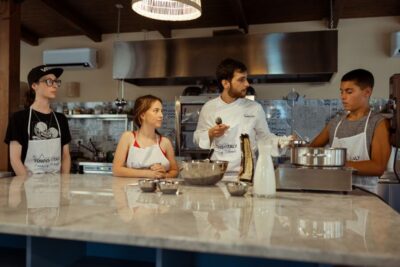 ★ 4.9Palermo: Pizza and Gelato Cooking Class with Dinner and WineFrom $71951 reviews
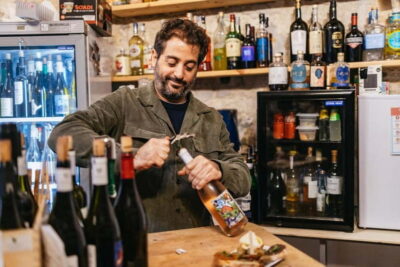 ★ 4.8Palermo: Wine Tasting with Snacks at Bottega MonteleoneFrom $52722 reviews
 ★ 5.0Palermo Food Tour: 10+ Tastings of Arancini, Cannoli, Wine & MoreFrom $91521 reviews
 ★ 5.0Etna, Wine and Alcantara Tour – From TaorminaFrom $139464 reviews
 ★ 4.7Taormina: Guided Etna Wine Tasting Half-Day TourFrom $68444 reviews
 ★ 5.0Private 6-Hour Tour of Three Etna Wineries with food&wine tastingFrom $375417 reviews
Palermo: Pasta & Tiramisu Cooking Class with Flowing WineFrom $56405 reviews
★ 5.0Private 6-Hour Tour of Three Etna Wineries with food&wine tastingFrom $375417 reviews
Palermo: Pasta & Tiramisu Cooking Class with Flowing WineFrom $56405 reviews
 ★ 4.9From Taormina: Full-Day Etna, Wine & Alcantara Canyons TourFrom $116390 reviews
Browse the lists this tour appears in