
Reviewed · SYRACUSE & ORTIGIA
Pantalica nature history and archeology
Pantalica hits hard with tombs and living plants. This UNESCO Pantalica nature reserve pairs big archaeological moments with real outdoor time—especially the 5,000 rock tombs that make the Bronze Age necropolis the largest in Europe. I also love how the walk stays practical and not rushed, while you’re learning what the plants actually did for people (medical and toxic uses included). The one thing to factor in is that this is a hike-first experience, so if you want a mostly seated visit, you’ll probably feel a bit constrained by the walking.
The good news: the route is capped at about 5 km total and the group stays small (max 12). Still, you’ll want good weather—and in warm months, that means timing your day so you’re not disappointed if the swim in Calcinara gets skipped.
In This Review
- Key highlights (what makes it worth your time)
- Pantalica Nature Reserve: A UNESCO Site That’s Actually Walkable
- Starting Point at Piazza San Sebastiano (Ferla) and What the Timing Feels Like
- The Route Limit: Up to 5 km of Walking (So You Can Plan Realistically)
- Prehistoric Pantalica: The Bronze Age Necropolis You’ll Remember
- Byzantine Rock Churches: San Micidiario and San Nicolicchio
- The Anaktoron (Prince’s Palace): Local Power in the XII Century BC
- A Greek Trench and the Area’s Working History
- Nature Walk: Iblea Endemic Flora, Orchids, and Mediterranean Scrub
- Calcinara Swim and Active Karst Caves (When the Weather Plays Along)
- Price and Value: What $85.97 Buys You in Real Terms
- Who This Tour Fits Best (and Who Might Prefer Another Plan)
- A Quick Word on the Guide: Gregorio Chiarenza’s Style
- Should You Book Pantalica for This Guided Hike?
- FAQ
- How long is the Pantalica nature, history, and archaeology tour?
- Where does the tour start, and what time does it begin?
- How much walking will I do?
- What’s included, and can I get trekking poles?
- Is the tour affected by weather?
- If weather is good, can I swim or visit caves?
- How big is the group?
Key highlights (what makes it worth your time)
- UNESCO Pantalica + Bronze Age necropolis in one connected route
- Byzantine rock churches at San Micidiario and San Nicolicchio
- History layers from the XII century BC Anaktoron to the later Ciccio Pecora railway
- Plant walks with real-world uses, from officinal to toxic
- Optional swim and karst caves if conditions are right
Deeper into Ortigia and old Syracuse
- Syracuse: Tour of Ortigia Island & Caves with Local Skipper
★ 4.7 · 1,060 reviews - Tour of the island of Ortigia and exploration of sea caves with baths.
★ 5.0 · 668 reviews - Boat tour of Ortigia Island and sea caves
★ 5.0 · 407 reviews - Siracusa Boat excursion island of ortigia and sea caves
★ 5.0 · 147 reviews
Pantalica Nature Reserve: A UNESCO Site That’s Actually Walkable
Pantalica is one of those Sicilian places where history isn’t behind glass. You walk through the same limestone-and-marl country where people carved tombs into rock, built churches into cliffs, and later used the valley for work and travel.
What makes this tour work is the mix. You get archaeological stops with clear context, then you shift to the living setting—plants, river bends, and the limestone terrain shaped by the Anapo and its Calcinara tributary. It’s not a museum day; it’s a “read the land” day, with enough time outside to feel the place instead of just seeing it.
And yes, it’s UNESCO for a reason: thousands of prehistoric cave tombs, plus later communities layering their own stories onto the same dramatic gorge country.
Starting Point at Piazza San Sebastiano (Ferla) and What the Timing Feels Like
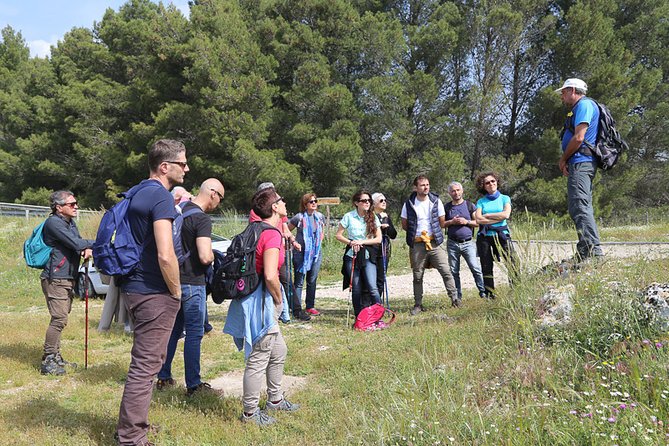
The tour meets at Piazza San Sebastiano in Ferla (starting 9:30 am), and it returns you back to that same meeting point. Expect roughly 3 hours total, and think of it as a morning hike with built-in interpretation.
You’re capped at 12 travelers, which matters here. In a site like Pantalica, crowds can turn “wow” into “hurry.” A small group keeps the pace humane and lets you ask questions as you see the tombs, churches, and plant specimens along the way.
Also, if you’re the type who likes to pause for views, this tour gives you that rhythm. The route is described as simple and non-binding in style, but it still involves walking across uneven terrain.
The Route Limit: Up to 5 km of Walking (So You Can Plan Realistically)
The walk route is capped at a maximum of 5 kilometers. That’s a key detail for deciding if this fits your energy level. It’s not a long-distance trek, but it’s also not a flat stroll.
This is where I’d be honest with your planning:
- If you can handle a hilly, rocky path for a few hours, you’ll be fine.
- If you prefer gentle surfaces, bring sturdy shoes and expect some uneven ground.
Trekking poles are available on request, which can make a difference for stability on slopes.
Prehistoric Pantalica: The Bronze Age Necropolis You’ll Remember
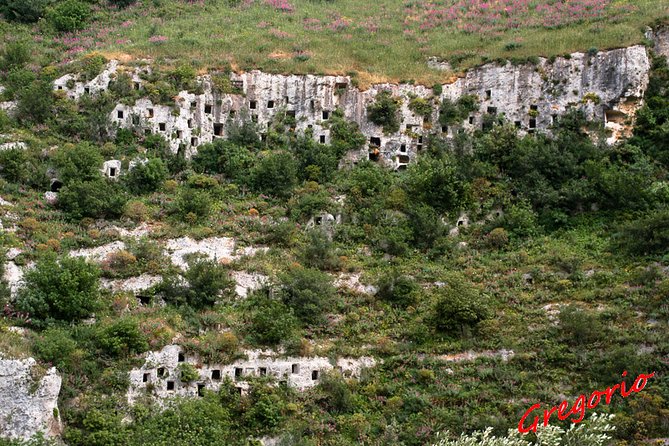
The headline stop is the necropolis: the largest final Bronze Age necropolis in Europe, with about 5,000 artificial cave tombs. Standing near those rock-cut openings makes the scale sink in fast. It’s one thing to read numbers; it’s another to look at how people turned cliffs into a full burial landscape.
What I like about this part is that it’s not treated as a random pile of caves. You get the sense that this was planned community space—rock architecture driven by ritual and long-term settlement patterns.
If you’re the type who enjoys “How did they do that?” moments, this will hold your attention. The tombs are close enough to feel physical, but large enough to make your brain do math.
A few we would gladly point a friend toward in Sicily


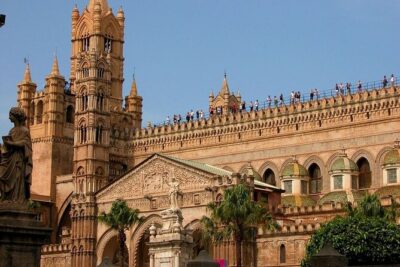
Byzantine Rock Churches: San Micidiario and San Nicolicchio
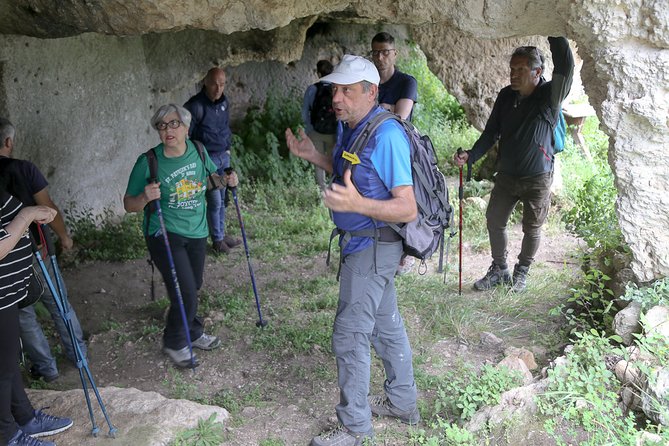
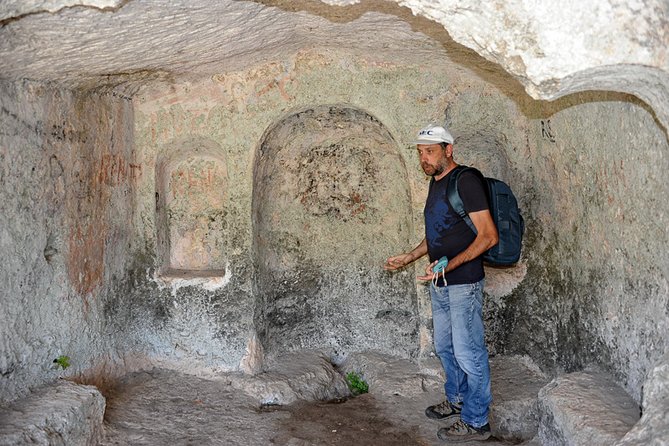
Then the story shifts forward in time. You’ll visit the Byzantine villages of San Micidiario and San Nicolicchio, including 4th-century rock churches.
This section changes the mood. Bronze Age tombs are about depth and memory. The Byzantine churches feel more like presence—signs that real communities stayed here, worshipped here, and shaped the site into their own world.
Even if you’re not a “church history” person, these rock churches are visually arresting because the architecture is literally integrated into the cliff. You’re not just looking at ruins—you’re seeing where worship happened and how geology became building material.
The Anaktoron (Prince’s Palace): Local Power in the XII Century BC
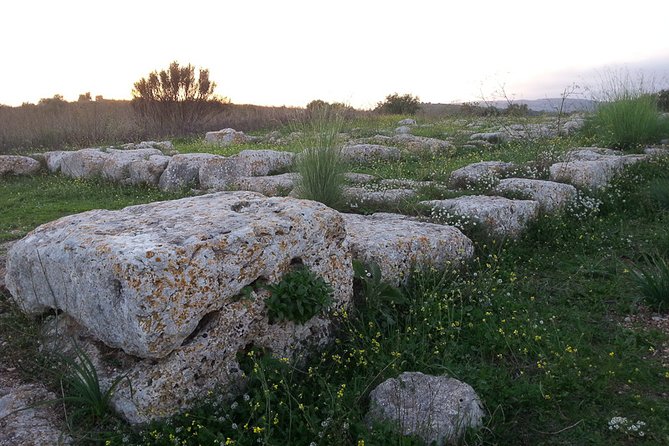
The Anaktoron—the prince’s palace—helps you connect the tomb landscape to political power. This was the seat of local control in the XII century BC, and it gives context to why the necropolis mattered.
Here’s the practical takeaway: without something like the Anaktoron, the necropolis can feel like an isolated spectacle. With it, you start to understand the social structure behind the rock carving. It’s a reminder that people weren’t only burying the dead—they were building systems for the living.
If you like archaeology that explains relationships (who held power, who lived where, what mattered), this stop does a lot of work.
A Greek Trench and the Area’s Working History
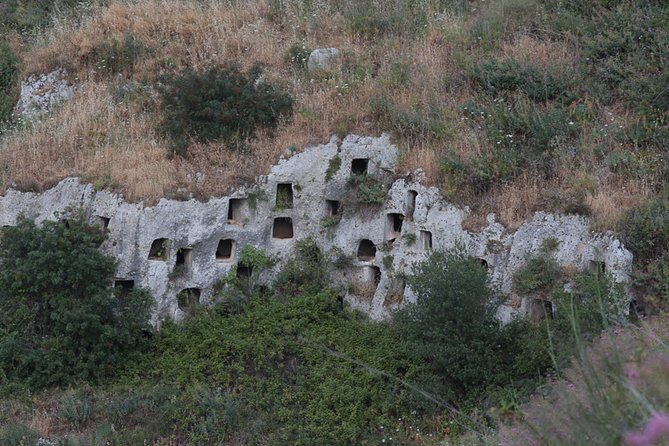
You’ll also see remains of a Greek trench. It’s a smaller feature than the tombs and churches, but it’s important because it signals land management—people shaping movement, water, or defense in a way that leaves a trace you can still spot.
Then there’s the narrow gauge railway, Ciccio Pecora, which operated until the last century. That jumps the timeline again, showing how the same valleys that held ancient communities also supported more recent labor and transport.
For me, this is a big part of the tour’s charm: you see continuity, not just a single era. Pantalica didn’t stop changing after prehistoric times. It kept being useful.
Nature Walk: Iblea Endemic Flora, Orchids, and Mediterranean Scrub
The tour isn’t only about archaeology. It also treats the reserve as a living classroom.
You’ll encounter Iblea endemic flora, spontaneous orchids, and typical Mediterranean scrub plants. The setting matters too: the area is described as a limestone-marl massif from the Miocene, bordered by the Anapo river and the Calcinara tributary. That geology is part of why you get the plant mix you do.
And here’s a detail I genuinely appreciate: for each plant, you’ll learn its therapeutic, officinal, phytoalimurgical, and toxic uses. That turns a nature walk into something more grounded. You’re not just spotting greenery—you’re understanding human knowledge tied to plants.
(Quick safety note: learning toxic uses doesn’t mean you should touch anything. Admire it, and keep your hands to yourself like you’re in a good herb museum.)
Calcinara Swim and Active Karst Caves (When the Weather Plays Along)
If weather permits, you can do two extra nature moments:
- Bath in the cool waters of Calcinara
- Visit an active karst cave in the area
This is the part where flexibility matters. If the weather is right, the gorge turns from scenic into refreshing and unforgettable. If conditions aren’t ideal, you still get the archaeology and plant program, but those add-ons may change.
Karst caves are especially interesting because they hint at how water and rock formed the terrain in the first place. Even from the outside, Pantalica’s limestone country tends to feel like it’s been shaped by hidden systems—water routes, cracks, and underground flow.
Price and Value: What $85.97 Buys You in Real Terms
At $85.97 per person for about 3 hours, this tour isn’t the cheapest way to see Pantalica—but it also isn’t just a generic ticket. You’re paying for guided interpretation across multiple time periods and for a botany-focused explanation that most “look-and-then-go” tours skip.
The value shows up in three places:
- Small group size (max 12) means better attention on-site.
- Focused route that hits major features without eating your whole day.
- Guide expertise spanning archaeology and plant uses, which makes the scenery feel like it has meaning.
Also, the tour includes trekking poles on request, and it’s set up with a mobile ticket, which reduces friction on the day.
Who This Tour Fits Best (and Who Might Prefer Another Plan)
This tour fits best if you want a morning that mixes outdoor time with real explanation.
You’ll probably love it if:
- You enjoy walking with a purpose (not sprinting between stops).
- You care about both archaeology and the natural environment.
- You like when a guide connects what you’re seeing to why it matters.
It may be less satisfying if:
- You want a fully indoor museum-style visit.
- You have very limited mobility and can’t handle uneven paths for several hours.
The good line in your favor is that the tour is described as suitable for both families and experienced adventurers, and most travelers can participate.
A Quick Word on the Guide: Gregorio Chiarenza’s Style
The guide for this experience is Gregorio Chiarenza. The vibe you’ll get from his approach is practical and story-driven, covering nature, history, and archaeology with explanations that aim to make the place click.
You also get the feeling he keeps his promises: nature facts are paired with tangible site stops, and the route is paced so you can absorb the key features without feeling herded.
If you like guides who mix clear info with a little wit, this is a strong match.
Should You Book Pantalica for This Guided Hike?
I’d book this tour if you’re trying to choose between a quick stop and a real understanding of Pantalica. The combination of prehistoric rock tombs, Byzantine rock churches, Anaktoron, and the botany lesson gives you more than a checklist of ruins.
Book it especially if you like the idea of learning how plants and people interacted—plus the bonus option of a Calcinara swim and karst cave visit when weather allows.
You might skip (or at least rethink your expectations) if you hate hiking, don’t plan for uneven ground, or need an experience that’s mostly seated. In Pantalica, the land is the stage. This tour is built to help you read that stage—one stop at a time.
FAQ
How long is the Pantalica nature, history, and archaeology tour?
It runs for about 3 hours (approx.).
Where does the tour start, and what time does it begin?
The meeting point is Piazza San Sebastiano in Ferla, and it starts at 9:30 am.
How much walking will I do?
The walking route has a maximum length of 5 kilometers.
What’s included, and can I get trekking poles?
The tour includes trekking poles on request. Breakfast is not included.
Is the tour affected by weather?
Yes. The experience requires good weather. If it’s canceled due to poor weather, you’ll be offered a different date or a full refund.
If weather is good, can I swim or visit caves?
If weather permits, you can bathe in the cool waters of Calcinara and visit an active karst cave.
How big is the group?
The tour has a maximum of 12 travelers, which helps keep it more manageable on-site.
More Historical Tours in Sicily




More Tour Reviews in Sicily


More of Syracuse and Ortigia
Just added: the newest Sicily tours in our notebook
- Etna / Taormina★ 5.0 · 3 reviews
- Bikes★ 5.0 · 3 reviews
- Taormina shore tour – for small group cruise passengers★ 5.0 · 3 reviews
- Vegan Cooking Class in Catania with Lunch and Dinner★ 5.0 · 3 reviews
- Make & Taste Sicilian Desserts in Palermo – Learn Cannoli & More★ 5.0 · 3 reviews
- Sicilian Villages & Ricotta Tasting – including Lunch from Cefalu★ 4.0 · 3 reviews
Syracuse & Ortigia, compared.
 ★ 4.7Syracuse: Tour of Ortigia Island & Caves with Local SkipperFrom $231,060 reviews
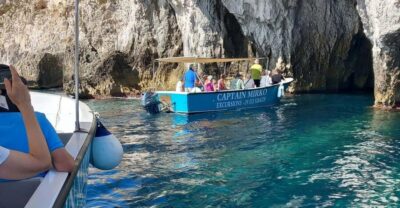 ★ 4.7Syracuse: Boat Tour with Captain Mirko, Snorkeling & CavesFrom $35746 reviews
 ★ 4.7Siracusa: Ortigia Boat Tour with Marine Grotto & SnorkelingFrom $47726 reviews
 ★ 4.8Siracusa: Ortigia & Sea Caves Boat Tour w/ Prosecco & FruitFrom $35723 reviews
 ★ 5.0Tour of the island of Ortigia and exploration of sea caves with baths.From $24668 reviews
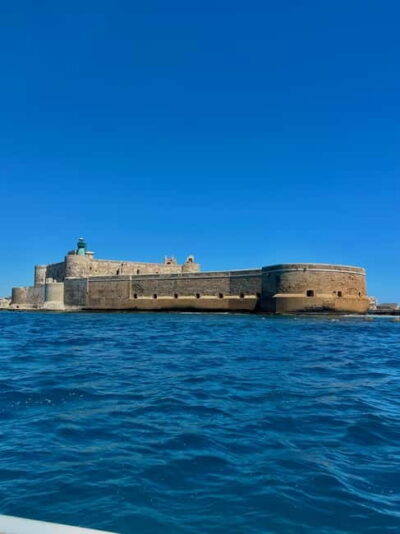 ★ 4.7Syracuse: Ortigia Island & Sea Cave Boat Tour with ProseccoFrom $23418 reviews
 ★ 5.0Boat tour of Ortigia Island and sea cavesFrom $24407 reviews
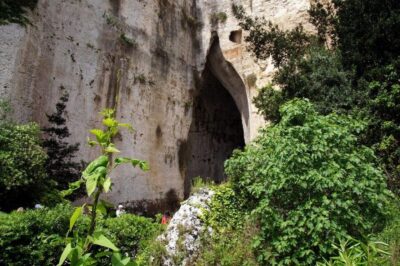 ★ 4.6Catania: Syracuse, Ortigia, and Noto Tour with BrunchFrom $112404 reviews
Browse the lists this tour appears in