
Reviewed · PALERMO CITY TOURS
Palermo Walking Tour with Audio and Written Guide by a Local
Palermo is better on your own time. This self-guided route strings together major Arab-Norman and city-center sights with a multi-language audio guide and written notes you can follow step by step. It’s also one of the cheapest ways I’ve seen to cover a lot of ground while still making detours when you want a photo, coffee, or just a slower pace.
What I like most is the audio guide that feels easy to use while you’re walking, plus the built-in navigation help through Google Maps. You’re not stuck waiting for a group to move, and you can spend longer where you care—then speed up when you don’t. The one real drawback: you’ll need a smartphone with internet to access the guide, and at least one part of the experience can involve logging in with details from your voucher.
In This Review
- Key highlights before you set off
- A self-guided Palermo walk you can steer yourself
- Before you start: what the audio and written guide actually gives
- Stop 1: Chiesa di San Giovanni degli Eremiti (and the Arab-Norman layer cake)
- Stop 2: Norman Palace (Palazzo dei Normanni) and the underground Punic-Roman bits
- Stop 3: Palermo Cathedral (Cattedrale di Palermo) and Santa Rosalia’s chapel
- Stop 4: Teatro Massimo, Italy’s largest opera house
- Stop 5 and 6: Quattro Canti and Piazza Pretoria
- Stop 7 and 8: La Vucciria market and the Kalsa neighborhood
- Stop 9 and 10: Palazzo Abatellis and the Museo delle Maioliche rooms
- Time, tickets, and how to budget this 7-hour day
- Who this Palermo route fits best (and who might prefer something else)
- Should you book this Palermo walking tour with audio and written guide?
- FAQ
- How long is the Palermo walking tour?
- What language options are available?
- Do I need tickets for the monuments?
- What is the price of the experience?
- Where do I start, and where does it end?
- What do I need to use the digital guide?
- Can I listen through speakers or headphones?
- Are there limits on group size?
- Can I cancel and get a full refund?
Key highlights before you set off
- Audio + written guidance in several languages, so you can read or listen depending on your mood
- Google Maps integration helps you find each stop without constant map-tapping
- UNESCO Arab-Norman Palermo route, starting at the Church of San Giovanni degli Eremiti
- Real Palermo flavor with a historic market stop at La Vucciria
- Two-ticket free zones: several stops along the way are free, so you can control costs
- A strong ending indoors with majolica tiles at the Museo Delle Maioliche Stanze Al Genio
The rest of what Palermo puts on
- Palermo: NO Mafia Walking Tour
★ 4.8 · 2,431 reviews - Palermo: Hop-on Hop-off Bus Tour 24-hour Ticket
★ 3.9 · 2,410 reviews - Palermo Original Street Food Walking Tour by Streaty
★ 5.0 · 2,105 reviews - Segesta, Erice and Salt Pans Full-Day Excursion from Palermo
★ 4.2 · 1,791 reviews
A self-guided Palermo walk you can steer yourself
This is a long, satisfying day out on foot—about 6 to 7 hours—built around Palermo’s mix of Christian, Islamic, and Norman influences. The pacing is flexible because the experience is self-guided: you follow the route and audio, but you decide when to linger.
At $7.21 per person, you’re paying mostly for the guide itself: the route logic, the story at each stop, and the practical tips. It’s not a full-service paid guide inside every museum, so if you want to enter every paid site, plan for additional ticket costs along the way.
Before you start: what the audio and written guide actually gives
You’ll receive a digital guide made for use on your phone. I like that it includes both audio and written information, in multiple languages (English plus Spanish, Italian, German, and French). That matters because some of these places are easier to understand if you can pause and read a key point before moving on.
Navigation support is part of the system: it’s connected with Google Maps, and it’s designed so you can follow directions without guessing. There’s also an emphasis on practical sightseeing—history, curiosities, and tips for monuments—plus best advice for local restaurants with authentic food. That restaurant tip value can add up, especially if it’s your first day in Palermo and you don’t yet know where to aim.
One thing to be ready for: you need a smartphone with internet connection to use the guide, and the voucher will include details to activate it. If your data signal is weak in any pockets of the city (it can happen), that’s when having offline backups can save your day—though the experience itself specifically calls for an internet connection.
Stop 1: Chiesa di San Giovanni degli Eremiti (and the Arab-Norman layer cake)
You start at the Church of Saint John of the Hermits on Via dei Benedettini. This stop is a strong opening because it sets up Palermo’s complicated identity in one place: the complex has religious roots going back through different eras.
The church sits on a site that once held a monastery dedicated to Saint Hermes. During Muslim domination, a mosque was there. Later, it was entrusted to the Benedictines, becoming a key religious center—and the abbot even served as the king’s confessor during that time period.
What makes this work as a walking-tour start is that it gives you a framework. When you later see other Norman-Arab influences around Palermo, you’re not just looking at pretty architecture—you’re recognizing the pattern the guide helps you notice. Ticket isn’t included here, so you’ll decide on arrival whether to pay the €7 admission or simply enjoy it from the outside and move on.
Stop 2: Norman Palace (Palazzo dei Normanni) and the underground Punic-Roman bits
Next is the Norman Palace, also called the Royal Palace. The big headline is that it’s widely treated as the oldest royal palace in Europe, and it carries layers beneath it too.
The palace stands on earlier structures dating back to Punic-Roman times. If you can access the underground areas during your visit, you may even see remains of the first Punic settlements. That’s the kind of detail I love because it turns a palace from a single-era story into a timeline you can almost walk through.
This stop takes about 2 hours in the route plan, which is realistic if you want to read what you can and not feel rushed. Ticket is not included, with admission listed at €17, so budgeting matters here if you care about interior exploration.
A few we would gladly point a friend toward in Palermo
Stop 3: Palermo Cathedral (Cattedrale di Palermo) and Santa Rosalia’s chapel
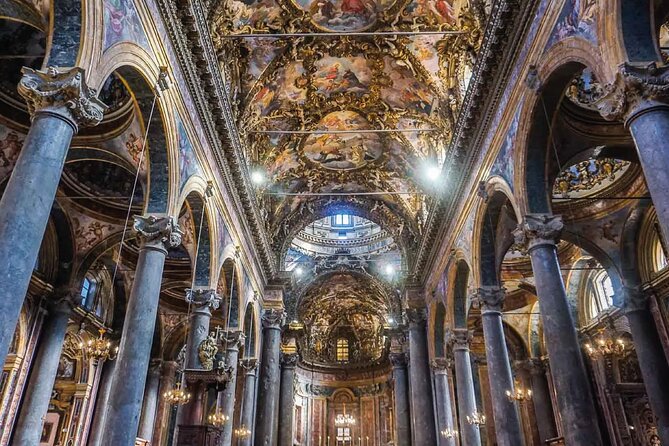
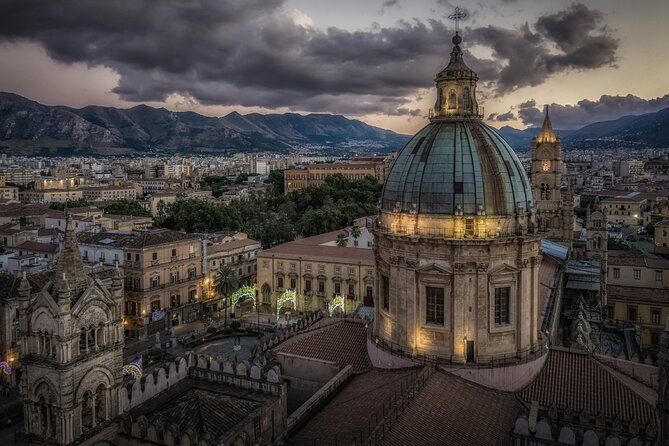
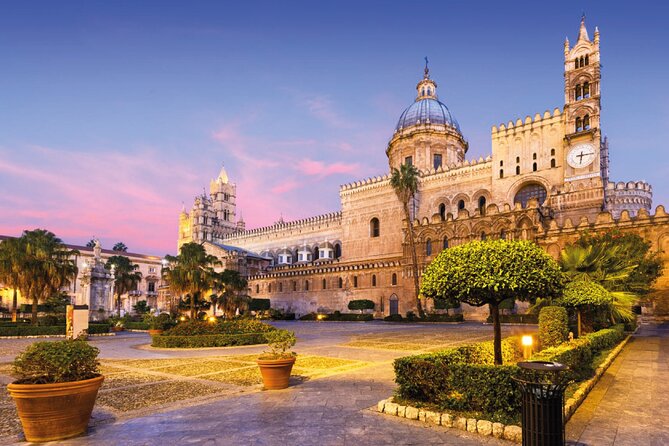
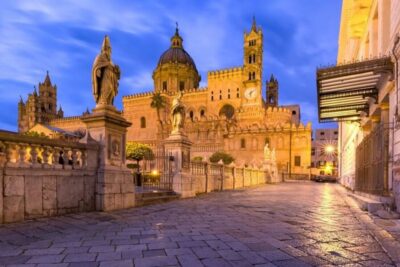
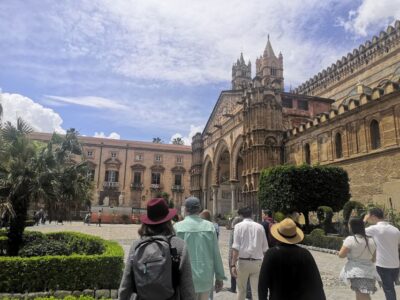
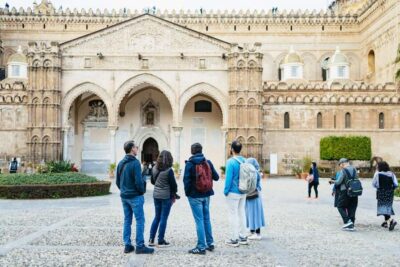
Palermo Cathedral is the spiritual and historical centerpiece, and the route gives it a short, focused slot—about 25 minutes. The cathedral is recognized as a UNESCO World Heritage site, and it blends Byzantine, Islamic, and Latin elements.
It’s also active as a worship space. Inside, you’ll find the Diocesan Museum and a chapel tied to the city’s patron saint, Santa Rosalia. The cathedral also houses the tombs of the Norman kings, so even with limited time, there’s a lot tied to it.
Good news: admission is free for the stop as listed. That makes it one of the easiest places to include without thinking about tickets. If you’re trying to keep this day affordable, this is where you’re likely to feel the best value.
Stop 4: Teatro Massimo, Italy’s largest opera house
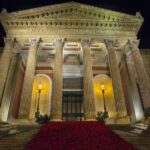
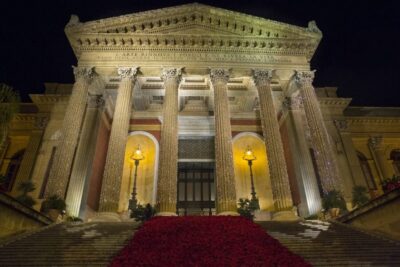
From cathedral grandeur, you shift to a neoclassical stage giant: Teatro Massimo. The route gives about 1 hour, which is enough to appreciate the architecture and get oriented without turning it into a long museum marathon.
Teatro Massimo is the largest opera house in Italy and the third in Europe. It sits in a strategic spot between the old city and northern expansion, so it also feels like a hinge point in Palermo’s layout. The building was designed by Giovanni Battista Filippo Basile.
Ticket isn’t included here, listed at €12. So you’ll want to decide whether you’re visiting for the building’s exterior and atmosphere, or for interior access. Either way, this is a stop that makes Palermo feel like more than just churches and street life.
Stop 5 and 6: Quattro Canti and Piazza Pretoria
The walk then reaches the historic intersection zone: Quattro Canti, also called Piazza dei Quattro Canti. This is built around the city’s 17th-century planning, where two main streets cross—Via Maqueda (named for the viceroy who commissioned it) and Via Vittorio Emanuele, known locally as the Cassaro. That crossroads is what divided the city into four districts called Mandamenti.
The guide keeps this stop short—about 15 minutes—which is about right for taking in the layout and the architectural symmetry. It’s a visual way to understand how Palermo was organized rather than just learned through reading.
Next is Piazza Pretoria, also about 15 minutes. It’s famous for the fountain in the middle of the square, and it carries a nickname: Piazza della Vergogna or Square of Shame. The humor there is part of Palermo’s charm—this is a place known for beauty that’s also remembered through a slightly cheeky label.
Both of these stops are listed as free, so you can treat them like short, satisfying “breaks” in your walking day rather than budget decisions.
Stop 7 and 8: La Vucciria market and the Kalsa neighborhood
Now you hit the part of Palermo that feels most lived-in: La Vucciria. The route plans about 25 minutes here and frames it as one of the city’s major historic markets, located in the Loggia district.
La Vucciria is set between Via Roma, Piazza San Domenico, and Via Vittorio Emanuele. Its name is tied to French—boucherie—meaning butcher’s shop, which hints at what the market used to be before it evolved into the broader street-market world it is today.
I like giving this kind of stop enough time to actually look. Even if you don’t buy anything, you can learn the street rhythm: what people eat, what’s being sold, and where locals naturally drift. It’s also a good place to grab a quick snack if you find something that looks safe and fresh.
After that comes La Kalsa, one of Palermo’s oldest neighborhoods dating back to the era of Islamic domination. The guide emphasizes an “oriental atmosphere” that still comes through, helped by Arab-Norman styled monuments. This is another free stop, and it’s short—about 15 minutes—so it works as a palate cleanser between market energy and the more formal architecture ahead.
Stop 9 and 10: Palazzo Abatellis and the Museo delle Maioliche rooms
The route then turns more architectural and indoor. First up: Palazzo Abatellis in Piazza Magione, taking about 1 hour in the plan.
This is a Gothic-Renaissance building from the 15th century built for Francesco Abatellis, designed by Matteo Carnilivari. The mix of Gothic structure and Renaissance influence is the point here, and the guide’s role is to help you see how the style language shifts instead of treating it like one flat facade.
Ticket isn’t included for Palazzo Abatellis (noted as not included), so again, you’re deciding based on what you want from the day.
Finally, the tour ends at Museo Delle Maioliche Stanze Al Genio—the majolica tile museum. This stop takes about 1 hour, and it’s a private collection spread across eight rooms. The guide explains the organization by era and geographical origin, with tiles mainly from Campania and Sicily produced between the 15th and 19th centuries.
The tiles are described as being used for floors in noble and bourgeois homes. I like that detail because it changes majolica from a decorative trivia topic into a clue about everyday luxury and domestic design. Even if you’re not a tile person, the room-by-room approach helps you slow down and look closely.
This is the final destination listed for the activity, at Via Giuseppe Garibaldi, so it’s also where you’ll likely plan your meal after you finish.
Time, tickets, and how to budget this 7-hour day
Here’s the honest math. The guide costs $7.21, but several major stops require tickets on your side. Based on what’s listed:
- Chiesa degli Eremiti: €7 (not included)
- Palazzo dei Normanni / Norman Palace: €17 (not included)
- Teatro Massimo: €12 (not included)
- Palermo Cathedral, Quattro Canti, Piazza Pretoria, La Vucciria, and La Kalsa are listed as free stops in the route plan
- Palazzo Abatellis and the majolica museum are marked as not included for admission
So your total day cost depends on what you choose to enter. If you want a low-cost version, you can treat paid stops as optional and lean hard on the free architecture and street life. If you want the full interior experience, plan to add those ticket prices before you commit.
The value angle is this: the guide is cheap relative to what you’d pay for a live guided day, and the route keeps you from bouncing randomly around town. You’re essentially buying structure and storytelling, then paying for any entrances you decide are worth it.
Who this Palermo route fits best (and who might prefer something else)
I think this works best if you like these things:
- You want a clear walking plan but still prefer to move at your pace.
- You enjoy architecture and you’d rather have explanations available when you’re ready than hear everything all at once.
- You’re comfortable using a smartphone-based guide with internet access.
If you’re the kind of person who wants a live guide’s face-to-face answers, real-time adjustments, and zero tech fuss, you might feel constrained by the digital format. And one of the practical considerations from the experience setup is that you’ll need to access the guide via your phone and voucher details, so if your device battery or connection is shaky, you’ll want a backup plan.
That said, it’s a smart choice when you want to cover a lot of Palermo without turning the day into a strict timetable.
Should you book this Palermo walking tour with audio and written guide?
Yes—if you want a cost-effective way to see major sights in one go, while keeping control of your pace. I especially like it for first-time Palermo days because the sequence moves from Arab-Norman beginnings to cathedral power, then into streets, markets, and a tile finale indoors.
Book it if:
- You’re happy with a self-guided format and using a phone as your guide
- You want audio plus written info in multiple languages
- You like mixing big monuments with street-level stops like La Vucciria
Consider another option if:
- You’d rather avoid smartphone access and login-type steps
- You only plan to do one or two paid attractions and prefer a very short outing
FAQ
How long is the Palermo walking tour?
It’s scheduled for about 6 to 7 hours.
What language options are available?
The experience is offered in English, and the audio-guide and text are available in multiple languages: English, Spanish, Italian, German, and French.
Do I need tickets for the monuments?
Some admissions are listed as not included (Chiesa degli Eremiti, Norman Palace, Teatro Massimo, and also Palazzo Abatellis and the majolica museum). Other stops are listed as free (including Palermo Cathedral, Quattro Canti, Piazza Pretoria, La Vucciria, and La Kalsa).
What is the price of the experience?
The price is $7.21 per person.
Where do I start, and where does it end?
You start at the Church of Saint John of the Hermits on Via dei Benedettini, 16, Palermo. The experience ends at the Rooms at the Museum of majolica Genius on Via Giuseppe Garibaldi, 11, Palermo.
What do I need to use the digital guide?
You’ll need a smartphone with internet connection. Activation and usage details are provided in your voucher.
Can I listen through speakers or headphones?
Yes. The audio can be heard through your speakers, and if you have headphones, you can use them.
Are there limits on group size?
The experience has a maximum of 104 travelers.
Can I cancel and get a full refund?
Yes. Free cancellation is available, and you can cancel up to 24 hours in advance for a full refund.
More Tours in Palermo

More Tour Reviews in Palermo
More Palermo, Start to Finish
Just added: the newest Palermo tours in our notebook
- Private Transfer from/to Trapani★ 5.0 · 3 reviews
- Private Tour from Palermo to Monreale, Santa Rosalia and Mondello★ 5.0 · 3 reviews
- Palermo: Cannolo & Cassata MasterClass★ 5.0 · 3 reviews
- Camporeale: Sallier de La Tour Wine Discovery Tour★ 4.6 · 3 reviews
- Sicily … A Love of a Lifetime★ 4.5 · 3 reviews
- Sicilian Cooking Class in Palermo – Private Option★ 5.0 · 3 reviews
Palermo City Tours, compared.
 ★ 4.8Palermo: NO Mafia Walking TourFrom $402,431 reviews
 ★ 5.0Palermo Original Street Food Walking Tour by StreatyFrom $832,105 reviews
 ★ 4.2Segesta, Erice and Salt Pans Full-Day Excursion from PalermoFrom $821,791 reviews
 ★ 4.5Palermo: Teatro Massimo Opera House Guided TourFrom $141,573 reviews
 ★ 4.9Palermo: Street Food and History Walking TourFrom $571,486 reviews
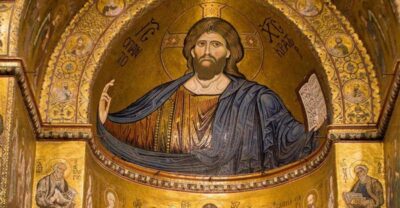 ★ 4.2From Palermo: Monreale and Cefalù Half-Day TripFrom $711,354 reviews
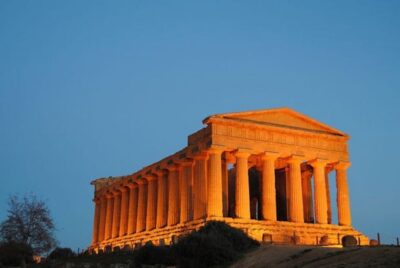 ★ 4.2Palermo: Agrigento and the Valley of the Temples Day TourFrom $771,240 reviews
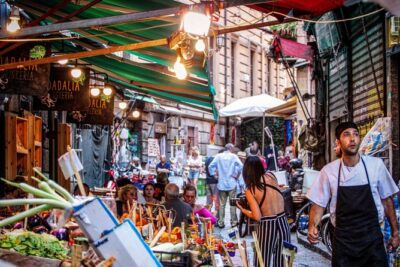 ★ 5.0Palermo No Mafia walking tour: discover the Anti-mafia culture in SicilyFrom $391,011 reviews
Browse the lists this tour appears in