
Mafia history lives in street corners. In Palermo’s Kalsa neighborhood, this 3-hour walk connects Falcone and Borsellino to the real places where ordinary people resisted Cosa Nostra. I like how the guide turns big names into street-level moments, and you move through Kalsa at an easy evening pace.
What really sold me is the format: 10 important stops, including three major crime sites, tied together with clear, human storytelling. I also appreciate the extras you leave with, like a book and movie recommendation list and a Food Map of Kalsa to help you eat like a local after the walk.
One practical consideration: it’s about 1.6 km (1 mile) outdoors and it’s not suitable for wheelchair users. Comfortable shoes matter, because you’ll be standing and walking for the full loop.
In This Review
- Key things I’d look for before you go
- Why a nighttime walk in Palermo’s Kalsa changes the story
- Meeting at Ciccio Passami l’Olio and getting your bearings quickly
- The route: 10 stops, three major crimes, and the rhythm of the walk
- A helpful way to think about the middle of the tour
- Falcone and Borsellino in context: the neighborhood behind the headlines
- Cosa Nostra: myths, origins, and why that matters to your understanding
- The cafe stop: when it’s time to reset
- What’s included (and why the extras help after the walk)
- Price and logistics: is $41 good value for 3 hours?
- Comfort checklist: what to bring and what to leave behind
- Who should book this anti-mafia heroes walking tour?
- Should you book Palermo Anti-Mafia Heroes Evening Walking Tour?
- FAQ
- How long is the Palermo Anti-Mafia Heroes Evening Walking Tour?
- How far do you walk?
- What language is the tour guide?
- Where does the tour meet?
- What’s included in the price?
- Are refreshments included?
- Is the tour wheelchair accessible?
Key things I’d look for before you go
- Kalsa at night, with names that matter: Falcone and Borsellino’s neighborhood context is built into the route.
- 10 key sites, including three major crime locations: the story has structure, not random stops.
- Mostly shaded walking plus a bathroom break: the route is short, but you still plan for comfort.
- A cafe stop halfway through: time to reset, not just march and listen.
- English guide who leaves space for questions: the best moments are when you can ask what you’re unsure about.
- Bring your curiosity about myths vs real origins: the tour separates what Cosa Nostra claimed from what’s actually known.
The rest of what Palermo puts on
- Palermo: NO Mafia Walking Tour
★ 4.8 · 2,431 reviews - Palermo: Hop-on Hop-off Bus Tour 24-hour Ticket
★ 3.9 · 2,410 reviews - Palermo Original Street Food Walking Tour by Streaty
★ 5.0 · 2,105 reviews - Segesta, Erice and Salt Pans Full-Day Excursion from Palermo
★ 4.2 · 1,791 reviews
Why a nighttime walk in Palermo’s Kalsa changes the story
Palermo doesn’t explain its past the way a museum does. It leaves it in the layout of neighborhoods, in the way streets connect, and in the public reminders people chose to keep. That’s what makes this evening walking tour feel different from a standard sightseeing route.
In Kalsa, the spotlight stays on the anti-mafia struggle and the people who pushed back—especially through the lives and legacy of Giovanni Falcone and Paolo Borsellino. You’re not just hearing names; you’re seeing how a neighborhood shaped them, and how later movements tried to reclaim public space from fear.
I also like the tone. The tour focuses on real locations and real consequences, but it never turns the group into an audience for spectacle. Instead, you’re guided toward a simple takeaway: Cosa Nostra wasn’t inevitable, and ordinary Sicilians helped undermine it.
Meeting at Ciccio Passami l’Olio and getting your bearings quickly
Your tour starts in front of the restaurant Ciccio Passami l’Olio. Across from the restaurant, in the park, there’s a blue plaque marking the birthplace of Giovanni Falcone, and your guide will be waiting by that plaque.
That matters more than it sounds. Starting at a specific, physical marker helps you anchor the evening’s themes right away. You get a clear beginning point for the Falcone connection before you start walking into Kalsa streets and learning how different events link together.
Practical tip: arrive a few minutes early so you’re not rushed. The starting point is easy to miss if you’re scanning for a big group. Once you spot the plaque area, you’ll find the guide.
The route: 10 stops, three major crimes, and the rhythm of the walk
The walk is about 1.6 km (1 mile), and it’s mostly shaded, which is a lifesaver in Palermo, especially if you’re out later in the evening but still moving through warm air. Duration is about 3 hours, and the pace is designed for steady listening rather than a fast power-walk.
The tour includes 10 important sites. You’ll visit:
- Three major crime sites, tied to mafia violence and its ripple effects.
- Other key locations connected to the anti-mafia movement’s push for urban recuperation and renewal.
- Places in Kalsa that help show how the neighborhood environment connects to the broader anti-mafia fight.
Because the itinerary is site-based, you get a “where you are” story each time: what happened there, why it matters, and how it fits into the larger pattern. It’s not just dates. It’s cause-and-effect—how organized crime built control, how people resisted, and how the public face of the city changed afterward.
A helpful way to think about the middle of the tour
Halfway through, you’ll have access to a bathroom. Plan on using it then, even if you don’t feel you need it yet. It keeps the rest of the walk comfortable and reduces that annoying, distracted feeling of thinking about logistics during the storytelling.
A few we would gladly point a friend toward in Palermo
Falcone and Borsellino in context: the neighborhood behind the headlines
Falcone and Borsellino are famous worldwide, but fame can flatten people into symbols. This tour does a better job of keeping them human by placing their early lives in Kalsa and connecting them to the long, messy struggle against Cosa Nostra.
You’ll hear how Kalsa is more than a backdrop. The tour frames the area as a place where ordinary life and extraordinary danger existed side by side. That’s a key point for understanding why the anti-mafia story isn’t only about famous court cases. It’s also about pressure, fear, and the hard work of turning local courage into public action.
And because the walking route repeatedly comes back to Kalsa’s fabric—streets, public spaces, and sites tied to renewal—you get a clearer sense of how a neighborhood absorbs trauma and then tries to heal.
Cosa Nostra: myths, origins, and why that matters to your understanding
One of the tour’s most practical goals is clarity. The guide offers an overview of the history of Cosa Nostra, including its actual origins, compared with the myths that grew around it.
That matters for you because myths are sticky. They can make organized crime feel like a mythic force beyond human influence, something like fate or folklore. The tour pushes the opposite direction: it helps explain Cosa Nostra as an aberration with shallow historical roots, not something that magically belonged to Sicily forever.
By the end, the message is straightforward: the island’s strength comes from resilience and courage, and the anti-mafia fight is part of that story—not a side chapter.
The cafe stop: when it’s time to reset
Midway through, there’s a local cafe stop. Refreshments aren’t included, but you’ll have the option to buy something while you catch your breath.
I like this break for two reasons. First, the tour is only about a mile, but listening for 3 hours can wear you down. Second, it gives you time to reflect on what you just heard before the last stretch of sites.
If you want the simplest plan: bring a little cash or card you’re comfortable using for a drink. Even a small purchase keeps you relaxed and lets you sit without feeling rushed.
What’s included (and why the extras help after the walk)
At $41 per person, you’re paying for more than a guide and a route. The included items are designed to extend the experience beyond those 3 hours.
You get:
- A walking tour with a live English-speaking guide
- A book and movie recommendation list
- A Food Map of Kalsa
The recommendation list is useful if you want to keep going at your own pace. It also helps you avoid a common problem after dark-history tours: you think you understood everything, then you try to read about it and the sources don’t match the tone you just heard. A curated list helps keep your next step consistent.
The Food Map of Kalsa can be a surprisingly good value add. It nudges you to connect the anti-mafia story to daily life. You leave with a path to keep experiencing Kalsa as a real neighborhood, not a set.
Price and logistics: is $41 good value for 3 hours?
$41 for a 3-hour walking tour with 10 site visits, a live English guide, and extra take-home materials is a fair deal if your goal is meaning, not just photos. You’re paying for structured storytelling with real locations, not a casual stroll.
Here’s how I’d judge the value for you:
- If you want context about Falcone, Borsellino, and the anti-mafia movement, the price makes sense because the guide does the heavy lifting.
- If your priority is only seeing famous landmarks, you might prefer a different tour with faster visual payoff.
- If you’re comfortable walking about 1 mile (mostly shaded) and you like learning from a live narrator, you’ll likely feel the time is well used.
Also, since refreshments aren’t included, add a small extra budget if you plan to buy something at the cafe. That’s the one cost you might expect on top of the ticket price.
Comfort checklist: what to bring and what to leave behind
You’ll get the most out of the tour if you show up ready to walk and stand comfortably.
Bring:
- Comfortable shoes
- Outdoor clothing (evenings can change quickly)
Avoid:
- Luggage or large bags
- Walking frames or crutches
- Bare feet
Good to know:
- The route is mostly shaded
- A bathroom is available halfway through
Not suitable for:
- Wheelchair users
If you’re traveling with extra items, pack lightly. Keeping your bag small makes the whole experience smoother.
Who should book this anti-mafia heroes walking tour?
I think this tour fits best if you like history that’s connected to places, not just pages. It’s ideal for you if:
- You want to understand the real locations tied to mafia violence and the anti-mafia push afterward.
- You’re curious about how Kalsa shaped major figures like Falcone and Borsellino.
- You value a guide who explains the difference between myths and documented origins.
- You enjoy asking questions and getting answers in plain language.
It may not be the best choice if you need step-by-step physical accessibility support or if you’re only looking for short photo stops.
Should you book Palermo Anti-Mafia Heroes Evening Walking Tour?
If you want a responsible, street-level way to understand Palermo’s anti-mafia story, I’d book it. The combination of 10 important sites, three major crime locations, and the Falcone-Borsellino neighborhood context is exactly the kind of structured learning that makes a trip feel earned.
My final check for you is simple:
- If you can handle a mostly shaded 1-mile walk over about 3 hours, and you’re okay with learning through narration rather than rushing through attractions, this will likely be a highlight.
- If you want a fully “relax and sightsee” evening, you might find the subject matter heavy. But the storytelling is designed to be clear and reflective, and the cafe stop gives you a breather.
Either way, you’ll come away with a stronger sense of how Cosa Nostra is explained as something abnormal, and how Palermo’s people fought back in real public space.
FAQ
How long is the Palermo Anti-Mafia Heroes Evening Walking Tour?
The tour lasts about 3 hours.
How far do you walk?
You’ll walk about 1.6 km (1 mile), mostly shaded.
What language is the tour guide?
The tour guide speaks English.
Where does the tour meet?
Meet in front of the restaurant Ciccio Passami l’Olio. The guide waits by the blue plaque in the park across from the restaurant, marking the birthplace of Giovanni Falcone.
What’s included in the price?
The tour includes the walking tour, a guide, a book and movie recommendation list, and a Food Map of Kalsa.
Are refreshments included?
No. There is a local cafe stop midway through, and refreshments are optional.
Is the tour wheelchair accessible?
No, it is not suitable for wheelchair users.
More Tours in Palermo
More Tour Reviews in Palermo
More Palermo, Start to Finish
Just added: the newest Palermo tours in our notebook
- Private Transfer from/to Trapani★ 5.0 · 3 reviews
- Private Tour from Palermo to Monreale, Santa Rosalia and Mondello★ 5.0 · 3 reviews
- Palermo: Cannolo & Cassata MasterClass★ 5.0 · 3 reviews
- Camporeale: Sallier de La Tour Wine Discovery Tour★ 4.6 · 3 reviews
- Sicily … A Love of a Lifetime★ 4.5 · 3 reviews
- Sicilian Cooking Class in Palermo – Private Option★ 5.0 · 3 reviews
Palermo City Tours, compared.
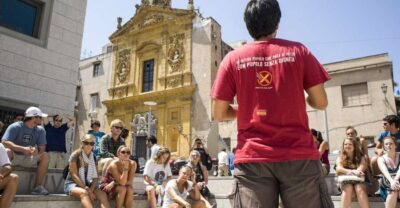 ★ 4.8Palermo: NO Mafia Walking TourFrom $402,431 reviews
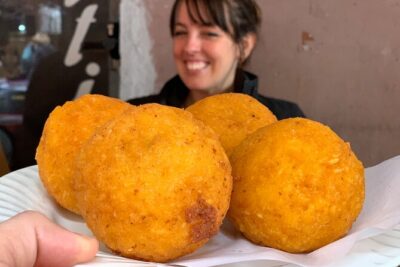 ★ 5.0Palermo Original Street Food Walking Tour by StreatyFrom $832,105 reviews
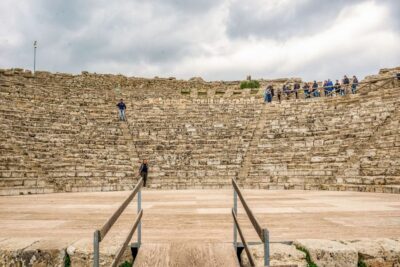 ★ 4.2Segesta, Erice and Salt Pans Full-Day Excursion from PalermoFrom $821,791 reviews
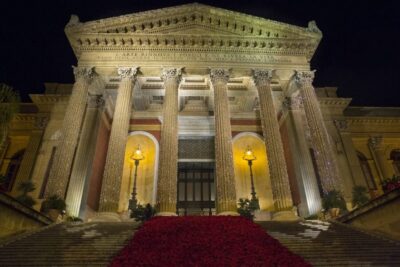 ★ 4.5Palermo: Teatro Massimo Opera House Guided TourFrom $141,573 reviews
 ★ 4.9Palermo: Street Food and History Walking TourFrom $571,486 reviews
 ★ 4.2From Palermo: Monreale and Cefalù Half-Day TripFrom $711,354 reviews
 ★ 4.2Palermo: Agrigento and the Valley of the Temples Day TourFrom $771,240 reviews
 ★ 5.0Palermo No Mafia walking tour: discover the Anti-mafia culture in SicilyFrom $391,011 reviews
Browse the lists this tour appears in