
Palermo feels like a movie set when you walk it with a guide. This 3-hour center-city walk connects UNESCO sites, iconic squares, and the older street markets with the stories that make the city click. It’s designed for you to see Palermo as more than photos: history, daily life, and a few good legends folded into every corner.
What I like most is the focus on meaning, not just names. You’ll hear why Teatro Massimo matters, how Palermo Cathedral reflects centuries of mixing, and what the markets reveal about the city’s identity. I also love the practical local layer, including stops where you can sample street food and get real suggestions on what to eat and drink in the area.
The main drawback to plan around is that the tour is Italian only, and the cathedral has modest-clothing expectations. You’ll also be walking a fair amount, even though the experience is wheelchair accessible.
In This Review
- Key highlights you’ll actually feel
- Starting at Teatro Massimo: the big stage of Palermo
- UNESCO Palermo Cathedral: architecture that explains the city
- Opera dei Pupi stop: puppet opera with real cultural weight
- Mercato del Capo: Arab-origin market energy and street-food taste
- Cassaro: the oldest street that keeps running through time
- Quattro Canti: the historic center’s film set crossroads
- Piazza Bellini: coffee and sweets with a monastery connection
- Piazza Pretoria and the Ballarò–Vuccirìa area: ending with famous views
- Price and value: what $41 buys you in 3 hours
- Who should book this Palermo monuments and markets walk
- Quick booking decision: should you do it?
- FAQ
- How long is the Palermo monuments and markets walking tour?
- Is the tour available in English?
- Where do I meet the guide?
- Is the tour wheelchair accessible?
- Do I need to pay entrance fees for the monuments?
- Is food included in the price?
Key highlights you’ll actually feel
- Teatro Massimo start: Belle Époque grandeur tied to the historic Florio family story
- UNESCO Palermo Cathedral: multiple architectural styles, plus Frederick II’s tomb and the 1130 coronation
- Opera dei Pupi context: you’ll pass by this famous Sicilian puppet opera landmark (UNESCO)
- Mercato del Capo street-food moment: Arab-origin market energy with a short tasting stop
- Piazza Pretoria finale near Ballarò and Vuccirìa: the famed fountain area plus monastery/church/palace views
The rest of what Palermo puts on
- Palermo: NO Mafia Walking Tour
★ 4.8 · 2,431 reviews - Palermo: Hop-on Hop-off Bus Tour 24-hour Ticket
★ 3.9 · 2,410 reviews - Palermo Original Street Food Walking Tour by Streaty
★ 5.0 · 2,105 reviews - Segesta, Erice and Salt Pans Full-Day Excursion from Palermo
★ 4.2 · 1,791 reviews
Starting at Teatro Massimo: the big stage of Palermo
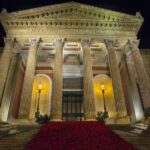
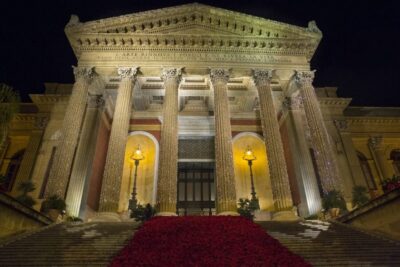
Your tour kicks off at Teatro Massimo, the largest opera house in Italy, a classic symbol of Palermo’s Belle Époque era. The guide doesn’t treat it like a random landmark. You learn how the theatre connects to the historic Florio family, who played a big role in Palermo’s 19th-century rise.
This is a smart first stop because it sets the tone. Palermo can feel layered and confusing if you rush in on your own, but starting with a major cultural anchor helps you understand why people here still talk about arts, power, and local pride.
Also, it’s a good way to settle your footing. Before you step into the tight lanes of the historic center, you get a clear orientation and a sense of how the city “moves” from one important place to the next.
Guides on this experience are often praised for being attentive and passionate, including guides like Antonella and Fabrizio. That matters here, because the theatre is beautiful on the outside, but the story makes it more than a photo stop.
UNESCO Palermo Cathedral: architecture that explains the city
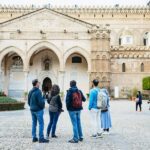
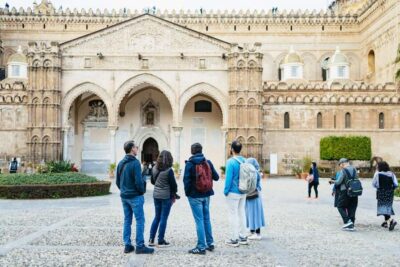
Next comes Palermo Cathedral, a UNESCO site that’s all about layers. The guide explains how different architectural styles show up in one place, reflecting Sicily’s complex, multi-ethnic history. This isn’t an abstract history lesson either. You’ll get the human reason behind the mixing: Palermo was a crossroads, and the cathedral tells that story in stone.
Two details are especially worth knowing before you go in. The guide points out that the first king of Sicily was crowned here in 1130. You’ll also learn about Frederick II’s connection, including the tomb that’s inside.
Before you enter, plan your outfit. The tour notes that you need modest clothing for cathedral entry. This is the kind of rule that can slow you down if you show up dressed for the beach, so fix it early.
If you’re worried about timing, think of the cathedral stop as the tour’s “anchor moment.” Everything after this starts to make more sense, because you’ve already seen how Palermo built identity out of centuries of change.
Opera dei Pupi stop: puppet opera with real cultural weight
You’ll pass in front of the most famous Opera dei Pupi theatre, also UNESCO. Even if you’re not a puppet-opera expert, this stop helps you understand that Sicilian culture isn’t only grand cathedrals and palaces.
Opera dei Pupi comes from a tradition where storytelling, performance, and local identity are tied together. When the guide connects it to what you’ve already seen at Teatro Massimo and what you’ll see in the markets later, the city starts feeling like one continuous narrative instead of separate sights.
This is also a good example of why the guide matters. The route is only a few hours long, so you want someone who can turn a quick view into useful context. The strong reviews you’re using as a guide signal that the explanations are deep and passionate, including attention to hidden meaning behind places.
Mercato del Capo: Arab-origin market energy and street-food taste
Then the tour shifts from UNESCO monuments to the street-level Palermo that many people come for: the markets. You’ll visit Mercato del Capo, described as an ancient market of Arab origin, known for its lively atmosphere and fish restaurants.
This is the moment where Palermo becomes more “lived in.” The guide sets you up to notice details: how the market rhythm feels, why the area shaped local food culture, and how the old roots still show up in daily life.
There’s a short stop for street-food tasting. Food and drinks aren’t included, so treat it as a chance to taste what the guide recommends and then decide what you want to buy. If you like practical eating tips, this is one of the highest-value parts of the whole walk.
In reviews tied to this experience, people especially praise food guidance, including recommendations for top cannoli and excellent gelato, plus a focus on what’s worth ordering nearby. So if you’ve been thinking about where to eat after the tour, this stop often gives you a shortlist.
Cassaro: the oldest street that keeps running through time
From Mercato del Capo, you cross the ancient Cassaro, described as the oldest street in Palermo. This isn’t just a “walk down a street” segment. With a guide, Cassaro becomes a timeline, lined with historical places that hint at different eras of power and style.
The practical value here is orientation. When you know which street leads you through the historic center, you stop feeling lost. You also start to see repeating patterns: major squares, church fronts, and buildings that change character block by block.
The guide’s story-based approach also helps you connect the city’s visual clues to the historical themes you already heard at the cathedral and the theatre. That’s the benefit of a single guided route: you get continuity, not random stops.
Keep an eye out for the pace. A walking tour moves fast by design, and this part can feel like a “stretch” if you’re trying to photograph everything. Focus on learning what you’re looking at, and save your longer photo stops for the square segments.
Quattro Canti: the historic center’s film set crossroads
You’ll stop at Quattro Canti, often treated like Palermo’s “center” within the center. The tour frames it as a suggestive square with major historical importance, and it’s also known for being used as a film set because of its strong visual symmetry.
This is one of those places where a guide earns their keep. Without context, Quattro Canti can look like just another pretty intersection. With context, you understand why it’s an image people return to and why it feels like a Palermo “stage.”
Take a minute here to reset your senses. The streets can feel dense and noisy; the square gives you breathing room. And because the tour uses this as a narrative checkpoint, it helps you connect what you’ve learned to what you’re about to see next.
Piazza Bellini: coffee and sweets with a monastery connection
Another stop that’s both cultural and practical is Piazza Bellini. The guide points you toward a place for an excellent coffee, listed as being among the best in the world, and it’s paired with the sweets of the nuns of Santa Caterina.
This is a smart pairing: coffee gives you an immediate break, and the sweets tie the stop to local tradition. It also makes the tour feel more like a real day in Palermo instead of a “checklist walk.”
If you have a sweet tooth, this is the moment to slow down and make a choice. You’re walking through a historic city, and the guide gives you a reason for the stop beyond convenience: these treats are part of Palermo’s ongoing culture, not just a souvenir.
And yes, it can help with your energy. A 3-hour tour isn’t long, but it’s enough time that a coffee break can be the difference between enjoying the last stretch and feeling rushed.
Piazza Pretoria and the Ballarò–Vuccirìa area: ending with famous views
The tour finishes at Piazza Pretoria, near the markets of Ballarò and Vuccirìa. This ending area is all about contrast. You get the beauty of the fountain area—often called the fountain of Shame—and you also see the churches, monasteries, and palaces that shape the historic center’s skyline.
This is a great finale because it ties together the earlier themes. You’ve already seen how Palermo expresses itself through theatre and cathedral architecture, and now you’re seeing how the city lays out power and faith in its public spaces too.
It also sets you up for what to do after the tour. Since you’ll be near markets, you can keep exploring on your own with a clearer sense of where you are and what you’re looking at.
Price and value: what $41 buys you in 3 hours
At about $41 per person for a 3-hour walking tour, you’re paying mainly for two things: a guided route through important sites and the storytelling that makes the city make sense fast.
Entrance fees are not included, and food and drinks are also not included. But there’s a key detail that improves value: the cathedral entrance is free. That means a chunk of the cost goes toward the guide’s time and expertise rather than ticket expenses.
The real value comes from the guide’s style. Reviews emphasize that guides explain hidden meanings behind places and do it with passion and attention. People also note there’s little downtime, and that the tour includes useful food tips, not just general history.
If you’re short on time in Palermo, this kind of focused route is often worth it. You get a lot of major sights connected by context, plus market-area direction you can use later. If you’re visiting slowly and want to wander independently without structure, you might feel limited by the set route. But for most first-time visitors, this is a solid way to get your bearings fast.
Who should book this Palermo monuments and markets walk
This tour fits best if you want three things in one go:
- UNESCO and major historic sites without the stress of planning
- Market culture and street-food opportunities, not only museum stops
- A guide who connects Palermo to stories, legends, mysteries, and the mafia-era imagination people associate with the city
It’s also a good choice if you appreciate film-and-novel references. The tour uses those kinds of cultural links to explain the city’s vibe, and that style tends to make the places feel more alive.
One note: the tour is Italian only. If you don’t read or listen to Italian comfortably, you’ll miss the main value, since it’s built around storytelling.
On accessibility, the tour is listed as wheelchair accessible, and the guide approach is highlighted as attentive by past participants. Still, as with any historic-center walk, you’ll want to be comfortable navigating uneven sidewalks and tight streets.
Quick booking decision: should you do it?
If you want a fast, high-context introduction to Palermo’s monuments and markets, this tour is an easy yes. The mix of Teatro Massimo, UNESCO Palermo Cathedral, the Opera dei Pupi area, Mercato del Capo, Cassaro, Quattro Canti, Piazza Bellini, and Piazza Pretoria covers a lot of ground without feeling chaotic.
Book it especially if:
- you’re visiting for the first time
- you care about explanations that go beyond dates and names
- you want practical food direction in the market zone
Skip it if:
- you need an English-language tour
- you don’t want modest-clothing rules for the cathedral
- you prefer long, self-directed wandering over a structured route
If you can handle Italian and you’re ready to walk for about three hours, you’ll leave with Palermo feeling understandable, not just impressive.
FAQ
How long is the Palermo monuments and markets walking tour?
It lasts 3 hours.
Is the tour available in English?
No. This tour is in Italian only.
Where do I meet the guide?
You meet in front of Banca d’Italia. The guide will have a card with the words Guida Turistica.
Is the tour wheelchair accessible?
Yes, the experience is listed as wheelchair accessible.
Do I need to pay entrance fees for the monuments?
Entrance fees are not included. The cathedral entrance is noted as free.
Is food included in the price?
Food and drinks are not included, though there is a short stop where you can taste famous Palermo street food at Mercato del Capo.
More Tour Reviews in Palermo
More Palermo, Start to Finish
Just added: the newest Palermo tours in our notebook
- Private Transfer from/to Trapani★ 5.0 · 3 reviews
- Private Tour from Palermo to Monreale, Santa Rosalia and Mondello★ 5.0 · 3 reviews
- Palermo: Cannolo & Cassata MasterClass★ 5.0 · 3 reviews
- Camporeale: Sallier de La Tour Wine Discovery Tour★ 4.6 · 3 reviews
- Sicily … A Love of a Lifetime★ 4.5 · 3 reviews
- Sicilian Cooking Class in Palermo – Private Option★ 5.0 · 3 reviews
Palermo City Tours, compared.
 ★ 4.8Palermo: NO Mafia Walking TourFrom $402,431 reviews
 ★ 5.0Palermo Original Street Food Walking Tour by StreatyFrom $832,105 reviews
 ★ 4.2Segesta, Erice and Salt Pans Full-Day Excursion from PalermoFrom $821,791 reviews
 ★ 4.5Palermo: Teatro Massimo Opera House Guided TourFrom $141,573 reviews
 ★ 4.9Palermo: Street Food and History Walking TourFrom $571,486 reviews
 ★ 4.2From Palermo: Monreale and Cefalù Half-Day TripFrom $711,354 reviews
 ★ 4.2Palermo: Agrigento and the Valley of the Temples Day TourFrom $771,240 reviews
 ★ 5.0Palermo No Mafia walking tour: discover the Anti-mafia culture in SicilyFrom $391,011 reviews