
Reviewed · TOURS
Naturalistic excursion to Ustica
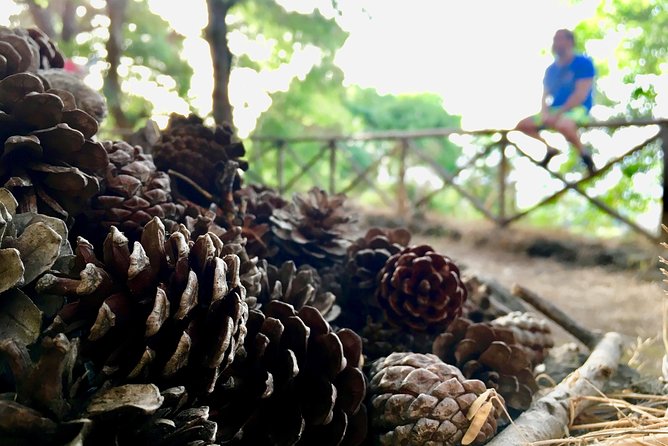
Trees teach, then the sky flashes green. This 5:30 pm naturalistic walk through Ustica’s reserve blends easy hiking with memorable hands-on moments like plant talk and a tree-hugging pause. I also like how it ends with a sunset focus instead of just stopping when it gets dark. The one thing to consider: you’re mostly outdoors on forest paths, so good walking shoes and a weather-ready attitude matter.
What makes it work so well is the tone. The guide, Vittorio, keeps it lively, with anecdotes and mini-quizzes that make you look closer. You won’t just read about nature—you’ll practice noticing it as you go.
At around two hours total, it’s a compact experience: walk in the reserve, see a tuff quarry, then wind toward sunset, before heading back by bus to the meeting point.
In This Review
- Key highlights at a glance
- Why this Ustica nature reserve walk feels personal
- Where you start, how long you’ll be out, and how you get back
- The 1.8 km cobbled mule track through Ustica’s central hills
- The “hug the trees” moment and the plant-human connection
- Tuff quarry stop: seeing the stone behind Ustica’s houses
- Ending on the path of the sunset and trying for the green ray
- Price and value: what you’re paying for at $17.35
- What to expect from the group and pacing
- Who should book this nature walk (and who might skip it)
- Should you book Naturalistic Excursion to Ustica?
- FAQ
- What time does the Ustica nature excursion start?
- How long is the experience?
- Where is the meeting point?
- Does the tour include pickup?
- Where does the tour end?
- What is included in the price?
- Is soda/pop included?
- What is the maximum group size?
- What happens if the weather is poor?
Key highlights at a glance
- A guided plant experience, not a lecture: You’ll learn which plants belong on Ustica and which ones spread as invasive visitors.
- Hands-on tree time: You’ll get an experiential moment that involves hugging trees, as part of the theme connecting plants and people.
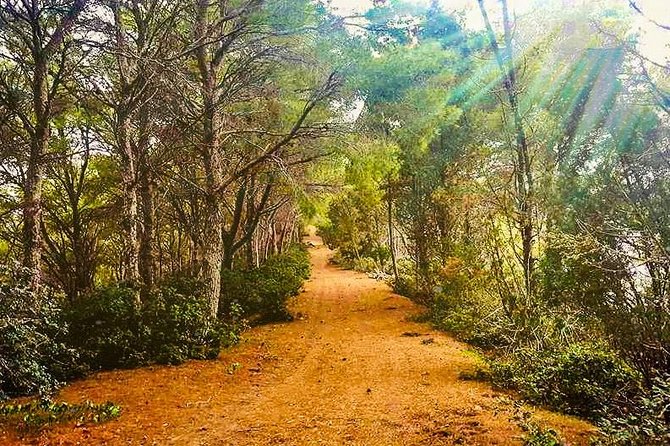
- A clear, walkable route: About 1.8 km of cobbled mule track in each direction, mostly on the plain, through two central hills.
- A tuff quarry stop: You’ll see the kind of stone once used for building houses on the island.
- Sunset lesson focused on the green ray: The end of the walk is timed and themed so you can try to spot this phenomenon.
- Small-team energy in a larger group cap: The experience can host up to 150 people, so it stays structured and easy to follow.
Still weighing it up? These Sicily tours pull the biggest crowds for a reason.
- Etna Morning Trip
★ 4.5 · 1,241 reviews - Syracuse: Tour of Ortigia Island & Caves with Local Skipper
★ 4.7 · 1,060 reviews - Tour of the island of Ortigia and exploration of sea caves with baths.
★ 5.0 · 668 reviews - Pub Crawl Palermo
★ 5.0 · 595 reviews
Why this Ustica nature reserve walk feels personal
Ustica has a way of making you slow down. This excursion uses that effect on purpose. You start in the late afternoon, when the island light is already changing, and you’re led along woodland paths where the guide turns “just trees” into something you can actually engage with.
Two things I like a lot here:
First, the plant focus feels practical. You learn the difference between plants that originate locally and those that arrived later and can behave like invasive species. That shift matters because it changes how you see what’s around you—suddenly you’re not only admiring greenery. You’re also noticing patterns.
Second, the tone stays playful. Expect anecdotes and mini-quizzes, the kind that keep you alert without turning the experience into a classroom. And yes, there’s that memorable tree moment—hugging trunks as part of the guided theme about vibrations between plants and humans. It’s odd in a good way, the sort of activity that makes a short walk feel like a story you’ll remember.
The only drawback I’d flag is weather. This is a good-outdoors experience, and the tour runs with that in mind. If conditions are poor, you may be offered a different date or a refund, so build in some flexibility.
Where you start, how long you’ll be out, and how you get back
You meet at Via Dottore Mario Randaccio, 11, 90051 Ustica PA, Italy. Start time is 5:30 pm, and the tour is about two hours (approx.).
At the end, you go back to the same meeting point. Even better for an end-of-day walk: you return by bus, not on foot. That matters if you want to enjoy the reserve without worrying about stretching your legs for the entire evening.
Pickup is offered, which can be helpful if you’re not right by the meeting area. The tour also uses a mobile ticket, so you can keep things simple on your phone.
What you should plan for: it’s a short walk with a sunset finish, not an all-day hike. Bring what you need for comfort—especially footwear you trust on cobbles and uneven paths.
The 1.8 km cobbled mule track through Ustica’s central hills
The core of the walk is a route inside Ustica’s Oriented Nature Reserve, covering the two central hills of the island. Your path follows a cobbled mule track, which is a nice detail because it gives you a sense of how travel and labor moved through these areas before modern roads.
The distance is straightforward: about 1.8 km along the route, and the same distance to come back. You’re walking almost entirely on the plain, so you’re not dealing with big elevation battles. That makes the experience approachable for most people, especially if you’re comfortable on outdoor paths.
Still, the cobbles count. This is not the same as a flat sidewalk. Plan on a steady pace rather than trying to power-walk. And because it’s in the evening, your timing matters—your guide is guiding you through the reserve with the sunset finish in mind.
One more practical note: the tour can host up to 150 travelers. That doesn’t automatically mean crowded in a bad way, because it’s a guided, structured walk. But it does mean the group moves together, so if you like lots of private space, pick a spot near the front so you stay oriented.
The “hug the trees” moment and the plant-human connection
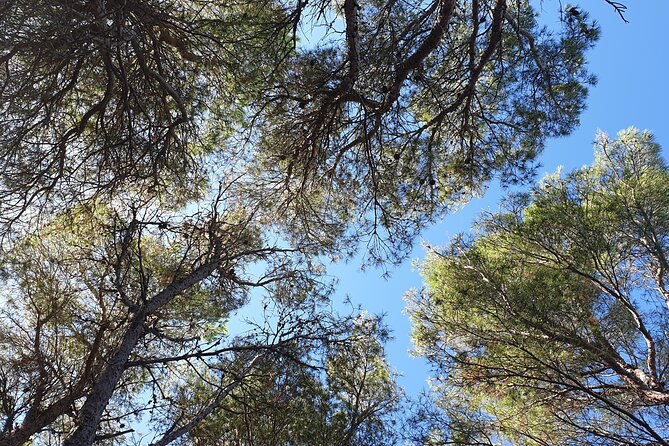
This is where the excursion becomes more than scenery. Along the wooded paths, the guide explains the idea of a relationship between plants and humans, including the notion of plant vibrations. Then comes the hands-on part: an experiential moment hugging the trees.
You might think of that as a gimmick when you first hear it. But on the ground, it changes your attention. When you put your hands on bark, you start noticing texture, shape, and the way plants are positioned in their own micro-world. It’s an activity that shortens the distance between “viewing” and “being present.”
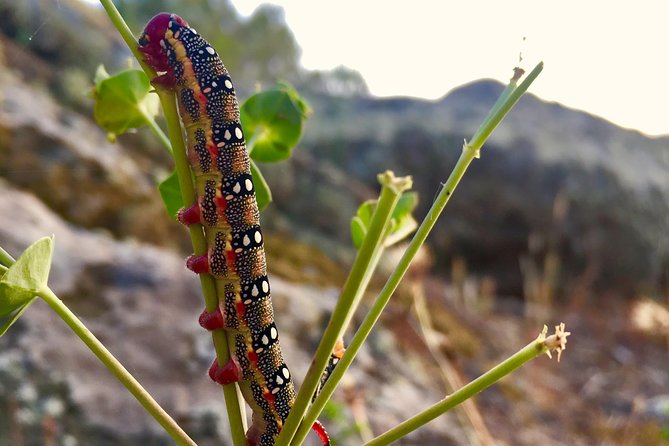
The guide also uses plant stories to highlight what’s native versus what’s invasive on Ustica. That matters because invasive plants can change the feel of a habitat over time. Once you learn what to look for, you’ll start making mental notes as you walk, not just accepting what’s in front of you.
And yes—mini-quizzes are part of the method. They’re not there to test you like an exam. They’re there to keep your brain switched on so you actually retain what you’re hearing.

Tuff quarry stop: seeing the stone behind Ustica’s houses
Halfway through the route, you’ll come across a tuff quarry. This is one of those stops that quietly deepens the experience, because it connects nature to human life on the island.
The tuff here was used to build several houses in Ustica. Even if you don’t know geology, you’ll get the point: this landscape isn’t separate from everyday life. The same earth that shapes the reserve also provided the building material that shaped homes.
For me, that stop works because it gives you a different scale of thinking. You start the walk focusing on living things—plants and the paths around them—and you end up seeing how humans used the island’s physical materials. It’s a simple way to understand place without getting lost in academic detail.
Ending on the path of the sunset and trying for the green ray
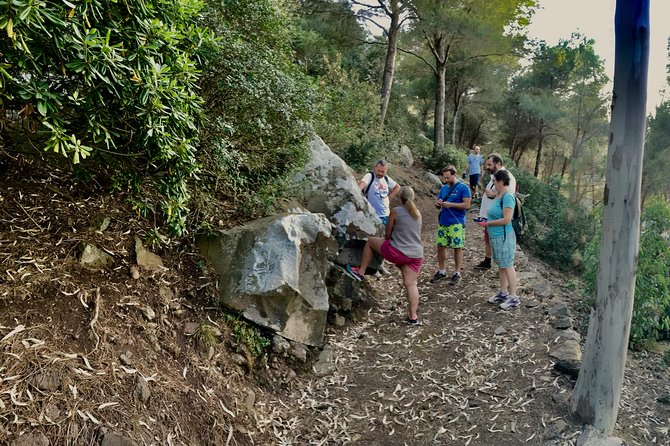
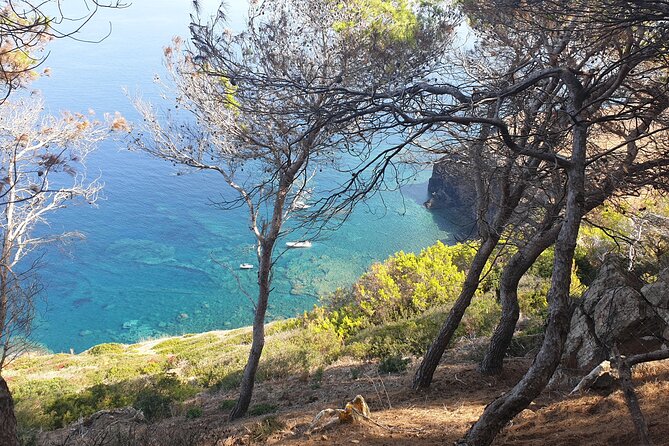
The final segment is all about timing. The walk ends with sunset, and the guide focuses on how you might see the green ray. The path is called of the sunset, which is more than a poetic label—it tells you the route is designed with that moment in mind.
Now, a quick reality check that keeps expectations reasonable: a green ray depends on the right sky conditions, and no one can promise a visible flash. But you’ll be taught how to look for it, so you’re not just standing around waiting for luck.
If you enjoy practical “how to see it” tips—simple viewing habits, what direction to watch, and how to position yourself—this is the section that delivers. The walk’s earlier plant focus sets you up to stay attentive and ready, which helps when the light starts changing fast.
When the tour is done, you return by bus back to the meeting point. So you’re not left figuring out the island after dark on your own.
Price and value: what you’re paying for at $17.35
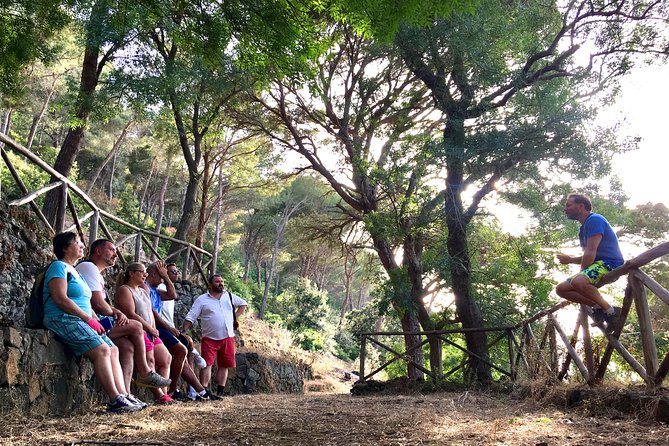
At $17.35 per person, this excursion is priced like a “short, guided experience” rather than a premium private tour. For that cost, you get several value points that add up:
- Two hours of guided interpretation, not just a self-led walk
- All fees and taxes included
- A structured route with a themed sunset finish
- Bus return, so the evening stays easy
- A guide who uses humor, anecdotes, and mini-quizzes to keep it engaging
If you’re comparing it to a basic sightseeing option that might cover only one angle—views, or museums, or a generic nature trail—this gives you a more complete package. You’re learning, moving, and ending with an actual “try this” moment.
One thing to note: soda/pop is not included. If you want a drink, bring water or plan on buying something separately before or after.
What to expect from the group and pacing
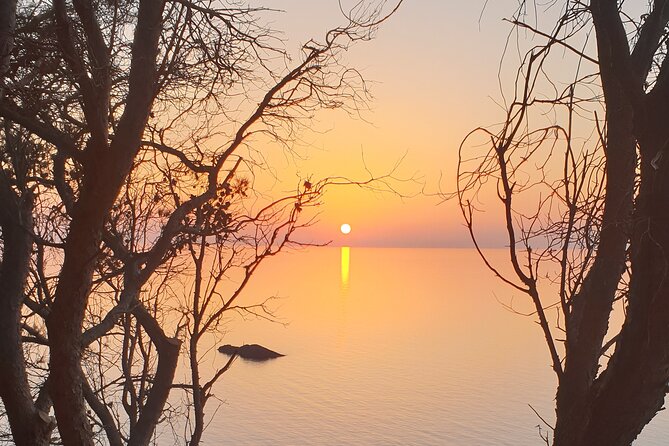
This is an organized group experience. With a maximum of 150 travelers, you can expect a well-run logistics flow—everyone has a place and a role, and you’re guided along the same general route.
The walking portion is likely the biggest time/energy cost. It’s not a long hike, but it’s outdoors and on cobbled track. If you’re someone who hates uneven surfaces, you’ll still need to decide if that’s comfortable for you.
The guide’s energy helps with pacing. The mini-quizzes and anecdotes act like natural checkpoints, so you’re less likely to feel bored or lost. And since the walk ends at sunset, the timing keeps everyone focused.
Who should book this nature walk (and who might skip it)
This tour is a strong match if you like:
- guided nature walks with real interpretation (not just photos)
- learning how to spot native vs invasive plants
- a fun guide style with mini-quizzes and stories
- a sunset-focused finale with a clear action plan on how to look
You might skip it if you:
- need fully seated or fully predictable movement (because you’re walking on outdoor paths)
- dislike any idea of tree-touching / hugging as part of a themed activity
- are traveling with limited flexibility around weather-dependent outdoor activities
In general, it suits couples, small friends groups, and solo travelers who want a meaningful evening without over-planning.
Should you book Naturalistic Excursion to Ustica?
If you want an affordable way to experience Ustica’s reserve with a real guide and a sunset finale, I’d book it. The price-to-experience ratio is solid for a two-hour guided walk that includes plant learning, a quarry stop, and a green ray viewing lesson.
Do it especially if you’re the type who likes questions, short challenges, and hands-on moments. That tree-hugging segment and the mini-quizzes are exactly the kind of thing that turns “a walk” into a memory.
The only reason I’d hesitate is weather. If the forecast looks shaky and you hate changing plans, you’ll want a little flexibility. Otherwise: it’s a smart, easy-to-join way to see Ustica after hours, guided in a way that makes you pay attention.
FAQ
What time does the Ustica nature excursion start?
It starts at 5:30 pm.
How long is the experience?
The duration is about 2 hours.
Where is the meeting point?
The meeting point is Via Dottore Mario Randaccio, 11, 90051 Ustica PA, Italy.
Does the tour include pickup?
Yes, pickup is offered.
Where does the tour end?
It ends back at the meeting point.
What is included in the price?
The price includes all fees and taxes.
Is soda/pop included?
No, soda/pop is not included.
What is the maximum group size?
The experience has a maximum of 150 travelers.
What happens if the weather is poor?
The experience requires good weather. If it’s canceled due to poor weather, you’ll be offered a different date or a full refund.
More Tours in Sicily



More Tour Reviews in Sicily

Just added: the newest Sicily tours in our notebook
- Etna / Taormina★ 5.0 · 3 reviews
- Bikes★ 5.0 · 3 reviews
- Taormina shore tour – for small group cruise passengers★ 5.0 · 3 reviews
- Vegan Cooking Class in Catania with Lunch and Dinner★ 5.0 · 3 reviews
- Make & Taste Sicilian Desserts in Palermo – Learn Cannoli & More★ 5.0 · 3 reviews
- Sicilian Villages & Ricotta Tasting – including Lunch from Cefalu★ 4.0 · 3 reviews
Tours, compared.
 ★ 4.8Palermo: NO Mafia Walking TourFrom $402,431 reviews
 ★ 4.8Catania: Sunset Jeep Tour of Mount Etna and Lava Flow CavesFrom $712,113 reviews
 ★ 5.0Palermo Original Street Food Walking Tour by StreatyFrom $832,105 reviews
 ★ 4.2Segesta, Erice and Salt Pans Full-Day Excursion from PalermoFrom $821,791 reviews
 ★ 4.8Etna and Alcantara Gorges Full-Day Tour with LunchFrom $1051,766 reviews
 ★ 4.9Catania: Mount Etna Trekking Tour Beyond the Tourist TrailsFrom $811,596 reviews
 ★ 4.5Palermo: Teatro Massimo Opera House Guided TourFrom $141,573 reviews
 ★ 4.5Agrigento: Valley of the Temples Skip-the-Line Sunset TourFrom $511,512 reviews