
Reviewed · MOUNT ETNA TOURS & SUMMIT
Mount Etna: Hike to the top 3350mt from the North Side
Etna’s active craters feel close enough to touch. On the North side, you ride up from Piano Provenzana by special 4×4 and hike to the active crater rim around 3,320–3,400 metres with certified volcanological and mountain guides. I love the practical science-led guidance that turns sulfur smells, gas emissions, and volcanic bombs into something you can actually understand. I also love how the hike puts you right on the edge of the Central Crater for close views toward the Northeast and Southeast craters. One drawback to keep in mind: if conditions (weather or volcanic risk) make the North route unsafe, the guide may change the plan.
This is a 5-hour outing priced at about $77 per person, aimed at moderately trained hikers who are comfortable on sandy, uneven ground. The day still feels well managed, with small groups and gear checks that can make you feel like the guides are paying attention to details, not just time.
In This Review
- Key highlights worth planning for
- Piano Provenzana on Etna Nord: the smart start for summit access
- The 4×4 uphill transfer: what you gain before your boots hit ash
- Central Crater rim time: where the adrenaline comes from
- Stepping around the Northeast and Southeast craters
- Piano delle Concazze: the science breaks you’ll actually remember
- What “active” looks like: sulfur colors, gas emissions, volcanic bombs
- Descent across ash and slag with real coast views
- Guides, small groups, and why safety feels managed
- Cost and value: $77 plus the 60€ cash 4×4 ticket
- What to bring (and what to wear) so the hike stays fun
- Who this hike suits best (and who should skip it)
- Should you book this Etna North summit trek?
- FAQ
- How long is the Etna North crater hike?
- Where do I meet the guide for this Etna experience?
- Is the 4×4 ride included in the price?
- What gear is included, and what do I need to bring?
- What languages are the live guides?
- Is this tour suitable for kids or people with health conditions?
Key highlights worth planning for
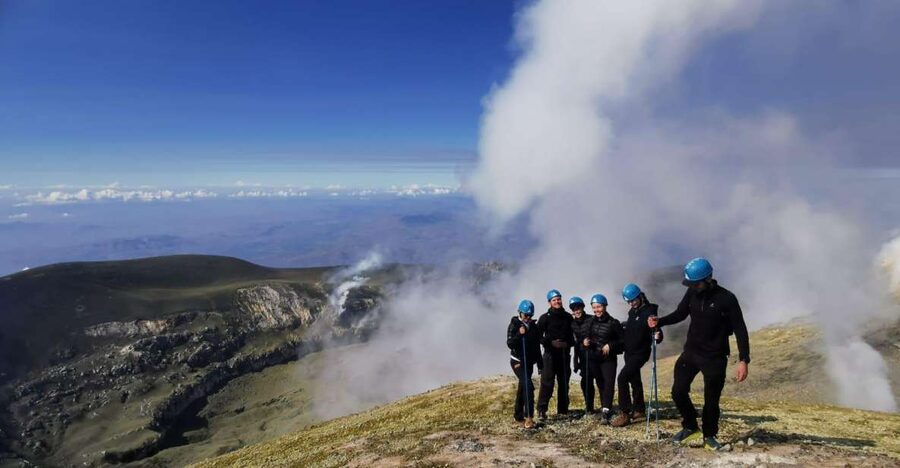
- Certified volcanological + mountain guides explaining how Etna evolves, not just what you’re seeing
- Summit crater rim access near 3,320–3,400 metres, with dramatic views toward NE and SE craters
- Lunar-feeling terrain walking through ash, slag, and lava-flow surroundings
- Safety-first gear including helmets and trekking poles (provided), plus mandatory mountain equipment
- Small-group pacing with breaks where the science talk stays tied to what’s around you
- Flexible route management if the North side can’t be done safely
More ways up the volcano from Catania
- Catania: Mount Etna Morning or Sunset Day Trip with Tasting
★ 4.8 · 4,028 reviews - Catania: Sunset Jeep Tour of Mount Etna and Lava Flow Caves
★ 4.8 · 2,113 reviews - Sicily: Etna and Alcantara Gorges Full-Day Tour with Lunch
★ 4.8 · 1,766 reviews - Mount Etna: Guided Trek 3,000 Meters to the Summit
★ 4.8 · 1,407 reviews
Piano Provenzana on Etna Nord: the smart start for summit access
Starting from Etna Nord near Linguaglossa, you begin at Piano Provenzana (around 1,800 metres). That matters because Etna isn’t a “park at the bottom and walk up” kind of mountain. The route is chosen specifically for safer summit access from this side under current conditions, which is exactly what you want when you’re aiming for the active crater area.
You’ll get the vibe fast: even before the steep part, the ground and air feel different. At these altitudes, the air can be cooler and wind can show up without much warning. That’s why the basic kit matters—wind protection, sunscreen, a hat, and long pants help you stay comfortable instead of focused on adjusting clothes every ten minutes.
The 4×4 uphill transfer: what you gain before your boots hit ash
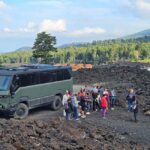
Before the main hike, there’s a short transfer by jeep/SUV—about 30 minutes—up into the higher Etna area. This isn’t included in the $77 price, and you should plan for it: the 4×4 ticket costs 60€ per person and must be paid cash on the spot.
Why this step is valuable: it saves your energy for the crater-rim walking, which is the point of the day. You also avoid spending the whole outing climbing from 1,800 metres by foot. Instead, you spend your effort where it counts—on the summit access trails, the rim edges, and the descent across volcanic surfaces.
Central Crater rim time: where the adrenaline comes from
Your hike targets the Central Crater area, with guided time on the way up. The ascent is designed in two phases: first you work your way up to around 2,825 metres near Piano delle Concazze, and then you climb for about 2 hours to the main crater rim around 3,320 metres (with the summit zone experience described as reaching roughly 3,400 metres depending on conditions).
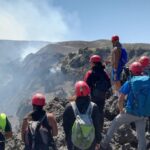
This is the heart of the day. From the rim, you’re not just looking at Etna—you’re standing next to active volcanic features. The trekking isn’t about hiking miles and miles; it’s about exposure, the sense of scale, and feeling what it means to visit an active summit.
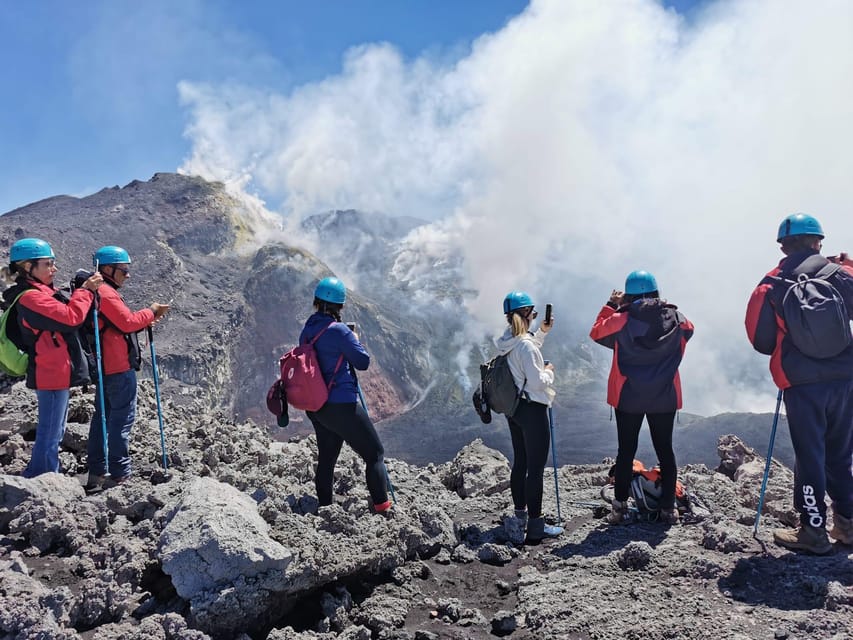
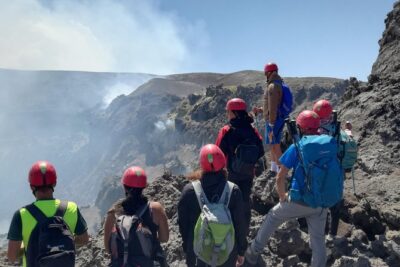
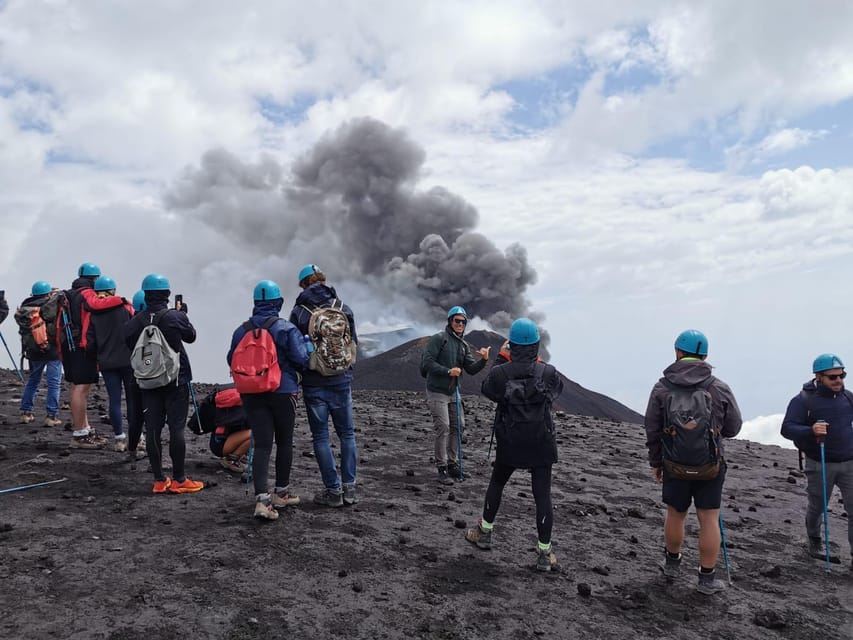
You should expect uneven footing and loose volcanic surfaces. That’s why the day includes trekking poles and helmets. If you’ve ever hiked on ash before, you know it can feel “grippy one moment, slippy the next.” Poles help a lot on that kind of ground, and helmets are reassuring when you’re moving through areas where volcanic material can be present.
Stepping around the Northeast and Southeast craters
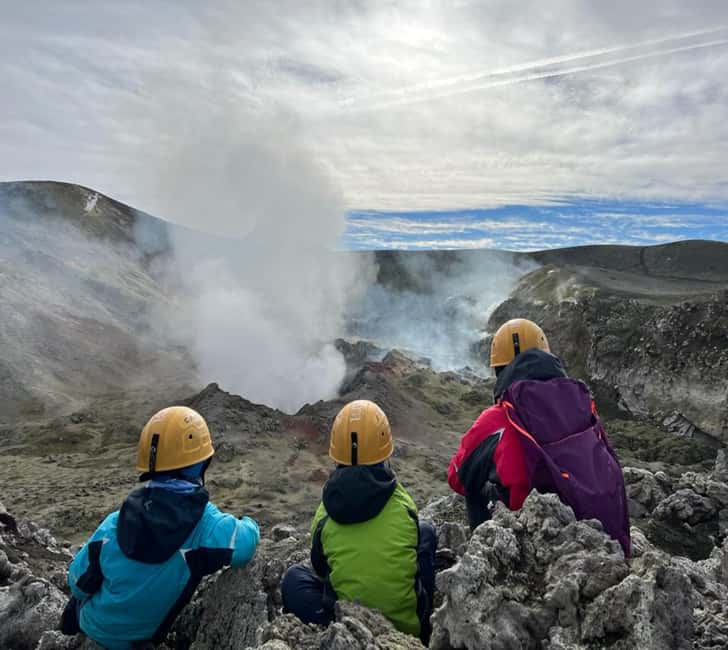
One of the reasons this trek stands out is that the guides aim to get you close to the most dramatic summit viewpoints: you face the Northeast Crater and you also admire the Southeast Crater, noted for the most recent impressive eruptions.
From a hiking standpoint, the important part isn’t only the views. It’s how the guides structure where you stand and what you look at. A volcanology guide can point out features you’d otherwise miss—things like gas venting patterns and the way different volcanic deposits show up as color changes.
From a human standpoint, this is where you may feel a bit of vertigo. The day description references a “vertiginous” experience around the Northeast Crater. If you’re comfortable hiking but not great with sheer drop-offs or windy ridges, you’ll want to take it slowly and listen closely to guide instructions. Good pacing is a safety tool here, not a morale booster.
A few we would gladly point a friend toward in Catania
Piano delle Concazze: the science breaks you’ll actually remember
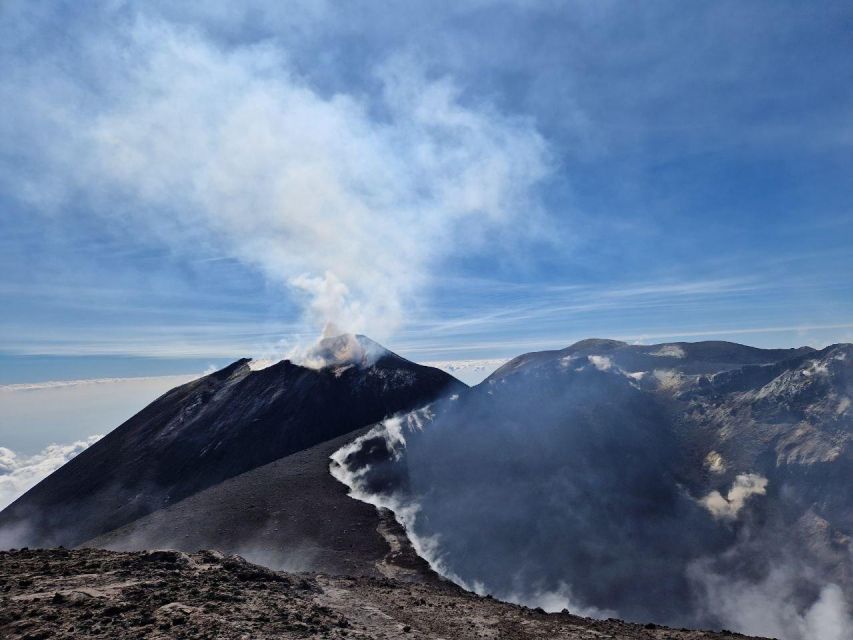
You’re not just pushed uphill for hours with no context. You get breaks where the guide explains what you’re seeing—Etna’s formation, how it behaves over time, and why this part of the volcano looks the way it does.
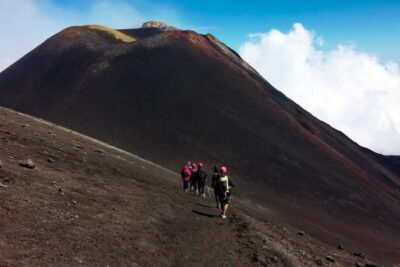
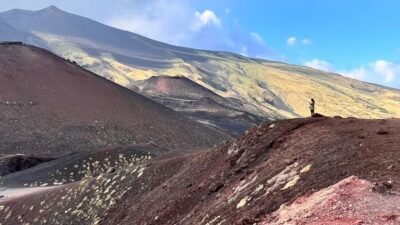
Reaching Piano delle Concazze (~2,825 metres) near the start of the main push gives you a reset point. This area helps you transition mentally from “getting up the mountain” to “being on the crater rim.” You also get a better sense of Etna’s moonscape: volcanic ash, slag, and the sharp contrast between bare volcanic ground and the harsh sky light at altitude.
This break style is one reason the day feels worth it. If you prefer tours that turn into lectures, you might still enjoy it, because the talk is tied to real features you can point at. The guides are there to connect the geology to the terrain you’re walking through.
What “active” looks like: sulfur colors, gas emissions, volcanic bombs
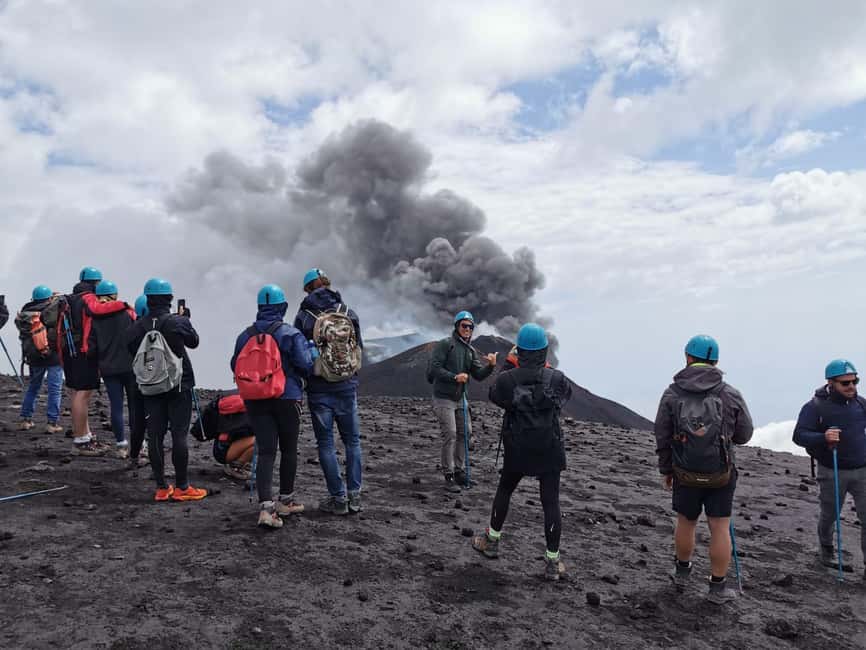
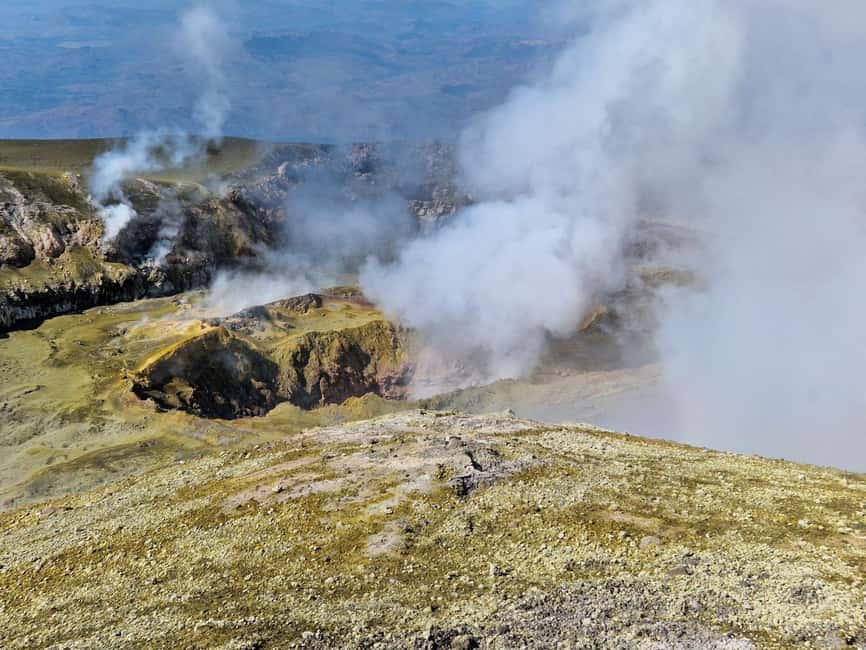
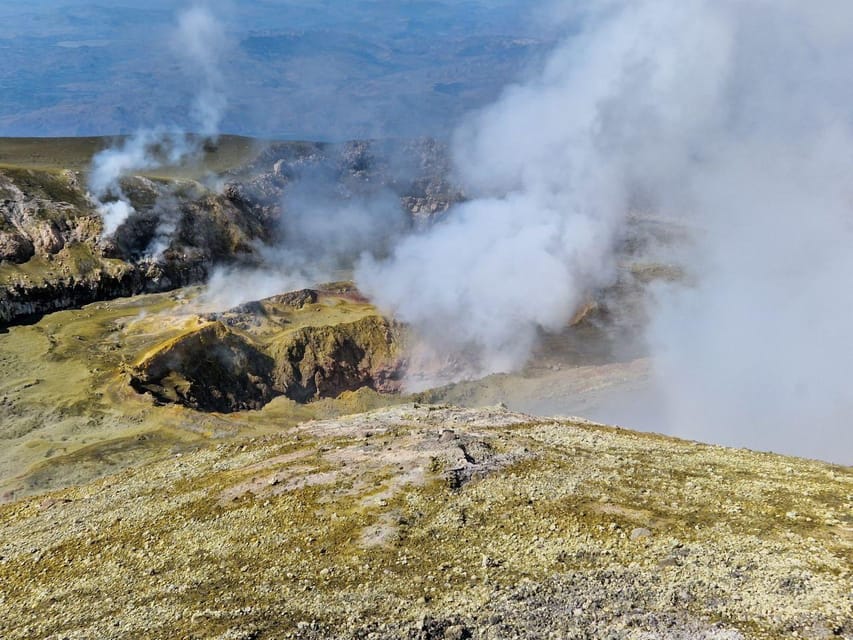
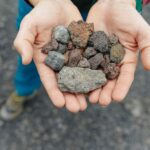
Etna at the summit is not subtle. In the crater zones, the day description includes gas emissions, volcanic bombs, and ground that can show sparkling colors from sublimation of elements—especially sulfur.
Here’s how to make that information useful for you: expect smells and textures. Even if the day isn’t constantly erupting at your feet, active volcanoes still show their current behavior through gas and freshly altered ground. When your guide points out sulfur effects and the appearance of different deposits, you’ll start seeing patterns instead of just “cool rocks.”
This is also where the guide quality shows. The reviews mention guides who did more than recite facts. For example, Massimo and Antonio are singled out for being knowledgeable and attentive, and Raphael gets praise for adjusting pace when someone needed slower steps. Those small “science plus safety” details are exactly how you end up with a memorable day instead of a confusing one.
Descent across ash and slag with real coast views
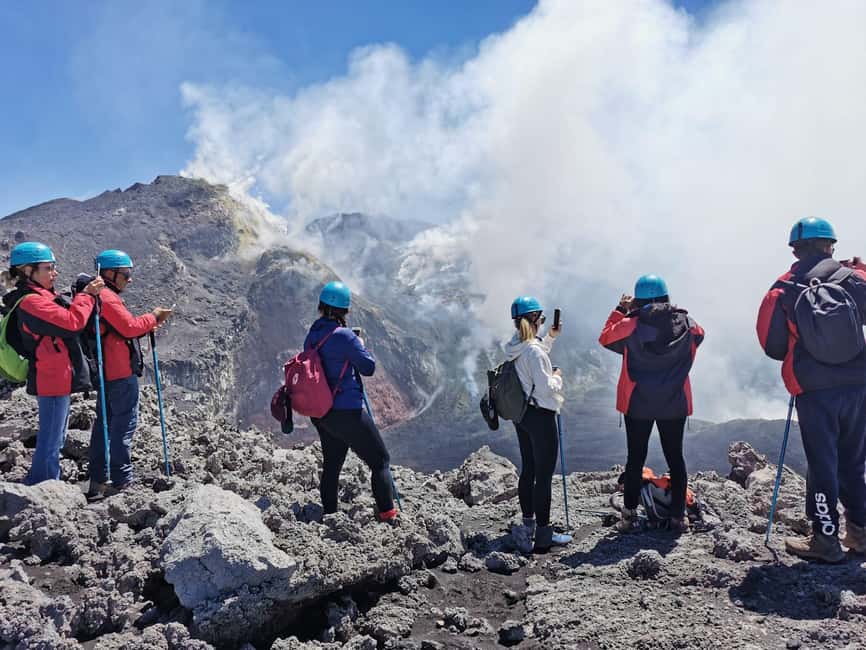
After the summit crater visit, you head back down. The descent is described as walking on fine volcanic ash and slag, but it stays panoramic thanks to the views toward the Sicilian coast.
This part matters more than people expect. Many day hikes feel easier on the way down, but volcanic terrain can be tricky: loose ash can hide footing, and slag can shift under your heel. Trekking poles are helpful here again, and your helmet is still a smart safety layer even when the “danger feeling” is lower.
Mentally, the payoff is great. You’ll likely find it easier to keep going because the scenery widens as you drop in altitude. The coast view is a nice reward after the concentrated crater focus.
Once you’re back to around 2,825 metres, you return by 4×4 to Piano Provenzana, finishing the day where you started.
Guides, small groups, and why safety feels managed
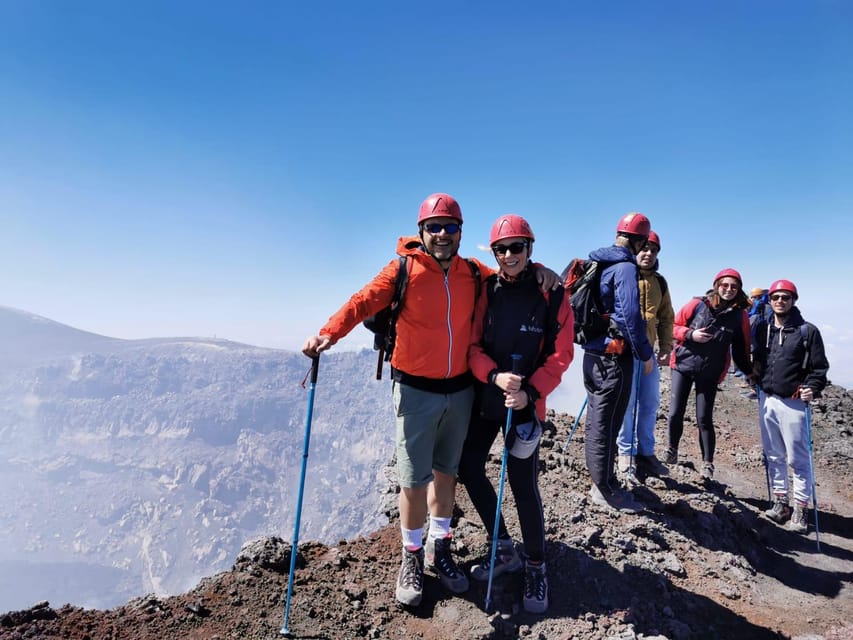
This tour is run by Ashàra Etna & Stromboli Guides, and the experience is intentionally small-group focused. You’ll meet at the Ashàra info point in front of Chiosco Bar Mareneve, Piano Provenzana (Etna Nord) in Linguaglossa. From there, equipment and rules are part of the rhythm of the day.
The day notes that proper mountain equipment is mandatory, and it includes helmets plus trekking poles and hiking boots availability (boots/poles/helmets are described as available for free). The rules also cover what not to bring: no luggage or large bags, no open-toed shoes, and no baby strollers or baby carriages.
A good sign from the reviews: guides checking gear before anyone goes up. One reviewer mentions that if someone didn’t have sunglasses, the team handled it through their supply. That’s the kind of “we don’t want preventable problems” approach that usually leads to smoother walking and less stressing on trail.
You’ll see this same theme in the praised guide names: Max and Giacomo are credited with clear explanations and a safe feeling, while Gianni, Antonio, and Massimo get repeated praise for knowledge, friendliness, and keeping the day enjoyable. When someone needed a slower pace, Raphael is mentioned for understanding and adjusting.
Bottom line: the guides aren’t just there for the crater photo. They’re there to manage movement, equipment, and expectations.
Cost and value: $77 plus the 60€ cash 4×4 ticket
At around $77 per person for a 5-hour hike, you’re paying for two things:
1) access to the summit crater area via the chosen north-side route and
2) guide capacity—both mountain guiding and volcanological explanation.
That said, the big “gotcha” cost is the 4×4:
- 60€ per person for the 4×4 segment paid in cash on the spot
- Wind jackets can be rented for 5€ if needed
So what’s the real value? It depends on how you handle cash logistics and how much you care about crater-rim access. If you want to spend your time on Etna’s active summit features (not just viewpoints), a guided approach with specialized knowledge usually pays off quickly. If you’re trying to build a tight budget without cash flexibility, you’ll want to plan ahead for that 60€.
If you’re coming prepared (wind layer, sunglasses, hat, sunscreen), you’ll likely avoid extra rental costs and enjoy the day without last-minute shopping.
What to bring (and what to wear) so the hike stays fun
The tour list is straightforward. Bring:
- Windbreaker
- Sunglasses
- Hat
- Sunscreen
- Food and drinks
- Jacket / layers
- T-shirt
- Long pants
- Socks
- Daypack
You can add common “smart hike” extras even if they’re not required: a small amount of blister care, and a phone battery pack. But the essentials you don’t want to skip are the wind layer and sun protection. At the summit altitude, wind and sun can both hit hard.
Footwear matters. Open-toed shoes aren’t allowed, and the day assumes you’re comfortable hiking on sandy or uneven terrain. If your shoes are mainly for city walking, you’ll feel it within minutes of ash underfoot.
Who this hike suits best (and who should skip it)
This excursion is aimed at moderately trained hikers. You don’t need to be a mountain athlete, but you should be comfortable with:
- uneven footing
- sandy volcanic surfaces
- a steady climb plus crater-rim walking
- some exposure near crater edges
It’s also not suitable for:
- children under 9
- pregnant women
- people with heart problems
- people with epilepsy
- people with high blood pressure
- people with recent surgeries
If any of those apply to you, don’t treat this as a “maybe.” Choose a safer Etna option that matches your medical and comfort limits.
Should you book this Etna North summit trek?
Book it if you want the real Etna experience: the active crater rim, guided volcanology explanations, and a day that mixes science with adrenaline without turning into chaos. This is the kind of hike where you’ll leave feeling like Etna makes sense—not just like you took impressive photos.
Skip it if you don’t want route flexibility, don’t like exposure near crater edges, or you’re not comfortable walking on loose volcanic ground. And make sure you’re ready for the extra 4×4 cost: the day is built around that access, and the 60€ cash payment is part of the deal.
If you’re prepared with the right layers and footwear, and you’re the type who enjoys clear explanations while walking, this is a strong pick for seeing Etna at the summit level from the North side.
FAQ
How long is the Etna North crater hike?
The tour lasts about 5 hours total.
Where do I meet the guide for this Etna experience?
You meet at the Ashàra info point in front of Chiosco Bar Mareneve, Piano Provenzana (Etna Nord), Linguaglossa.
Is the 4×4 ride included in the price?
No. The 4×4 ticket is 60€ per person and you pay cash on the spot.
What gear is included, and what do I need to bring?
Included: a volcanological or mountain guide, RCT insurance, trekking poles, helmets, and hiking boots (available for free). Bring a windbreaker, sunglasses, hat, sunscreen, food and drinks, a jacket/layers, long pants, socks, and a daypack.
What languages are the live guides?
The live tour guide speaks Italian, English, and French.
Is this tour suitable for kids or people with health conditions?
It’s not suitable for children under 9 and is also listed as not suitable for pregnant women, people with heart problems, epilepsy, high blood pressure, or recent surgeries.
More Hiking & Trekking in Catania

More Tour Reviews in Catania
More Etna Summit Treks We Have Walked
Just added: the newest Catania tours in our notebook
- Transfer Catania / Agrigento Airport★ 5.0 · 3 reviews
- Sicily private shore excursion – Etna and Taormina with personal driver★ 3.5 · 3 reviews
- Sunset Trekking on Mount Etna★ 5.0 · 3 reviews
- Private Transfer from Catania to Palermo or vice-versa with stop★ 5.0 · 3 reviews
- From Syracuse: Mount Etna Volcano Morning Trekking Tour★ 5.0 · 3 reviews
- Catania: Guided Street Food Tour with Tastings★ 5.0 · 3 reviews
Mount Etna Tours & Summit, compared.
 ★ 4.8Catania: Mount Etna Morning or Sunset Day Trip with TastingFrom $704,028 reviews
 ★ 4.8Catania: Sunset Jeep Tour of Mount Etna and Lava Flow CavesFrom $712,113 reviews
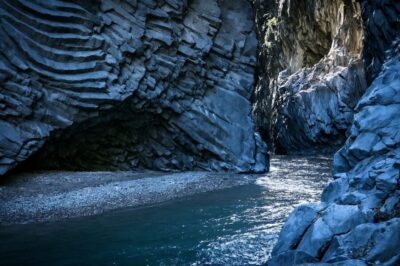 ★ 4.8Etna and Alcantara Gorges Full-Day Tour with LunchFrom $1051,766 reviews
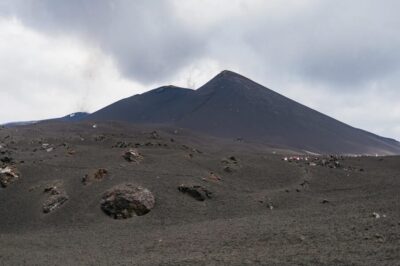 ★ 4.7Etna: summit craters trekking with volcano guide 3350mtFrom $771,712 reviews
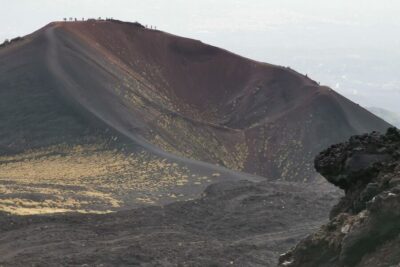 ★ 4.9Catania: Mount Etna Trekking Tour Beyond the Tourist TrailsFrom $811,596 reviews
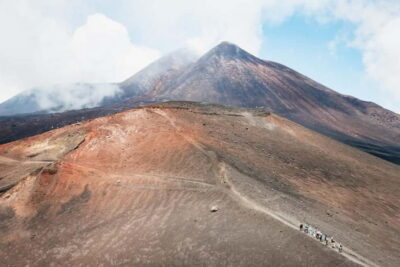 ★ 4.8Mount Etna: Guided Trek 3,000 Meters to the SummitFrom $1131,407 reviews
 ★ 4.8Catania: Etna Sunset Tour with Pickup and Drop-offFrom $711,348 reviews
 ★ 4.8Etna Sunset Tour: Volcano trek, Cave & tasting from CataniaFrom $701,290 reviews
Browse the lists this tour appears in