
Reviewed · MOUNT ETNA TOURS & SUMMIT
Mount Etna: Ascent to 2800m by 4×4
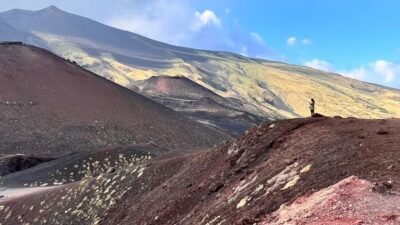
Mount Etna feels like it belongs on another planet. This 4×4 ascent takes you high fast, then adds two short walks so you can really read the volcano up close. It’s a tight 2.5 hours that still hits the key sights: lava-strewn terrain, crater viewpoints, and real explanations from a licensed guide.
I especially like how the trip blends big-drama views with hands-on geology. You’ll ride up to the Pizzi Deneri area around 2810m, then walk to a higher viewpoint near 2865m, with the Valle del Bove stretching out beneath the northeast crater.
One consideration: it can get cold up there, and parts near crater edges require attention and careful footing. If you’re traveling with kids, or you’re sensitive to heights, you’ll want to pay close attention to the safety guidance before you step near the rim.
In This Review
- Key highlights that make this Etna trip worth your time
- From Piano Provenzana to Pizzi Deneri: the 4×4 part that makes it feel special
- The viewpoint trek around 2865m: where the coast comes into focus
- Learning Etna with a volcanologist: more than facts, it’s how you read the mountain
- Valle del Bove plus panoramic coast views: why this stop hits hard
- Descending to 2200m for the 2002 eruption crater edge
- Who should book this 2.5-hour Etna ascent?
- Price and value: is $100 a fair deal?
- What to bring (and what to wear) for comfort at 2800m
- A few timing and safety notes that make the day go smoother
- Should you book Mount Etna: Ascent to 2800m by 4×4?
Key highlights that make this Etna trip worth your time
- 4×4 ride up an unpaved Etna road so you spend less time slogging and more time looking
- Pizzi Deneri (around 2810m), where the views open fast and the air gets crisp
- A short trek near 2865m with sweeping panoramas toward the Sicilian coast
- Valle del Bove viewpoint under the northeast crater for a “how is this even here?” moment
- Edge of the 2002 crater after descending to about 2200m, for a close-up look at recent volcanic scars
More ways up the volcano from Catania
- Catania: Mount Etna Morning or Sunset Day Trip with Tasting
★ 4.8 · 4,028 reviews - Catania: Sunset Jeep Tour of Mount Etna and Lava Flow Caves
★ 4.8 · 2,113 reviews - Sicily: Etna and Alcantara Gorges Full-Day Tour with Lunch
★ 4.8 · 1,766 reviews - Mount Etna: Guided Trek 3,000 Meters to the Summit
★ 4.8 · 1,407 reviews
From Piano Provenzana to Pizzi Deneri: the 4×4 part that makes it feel special
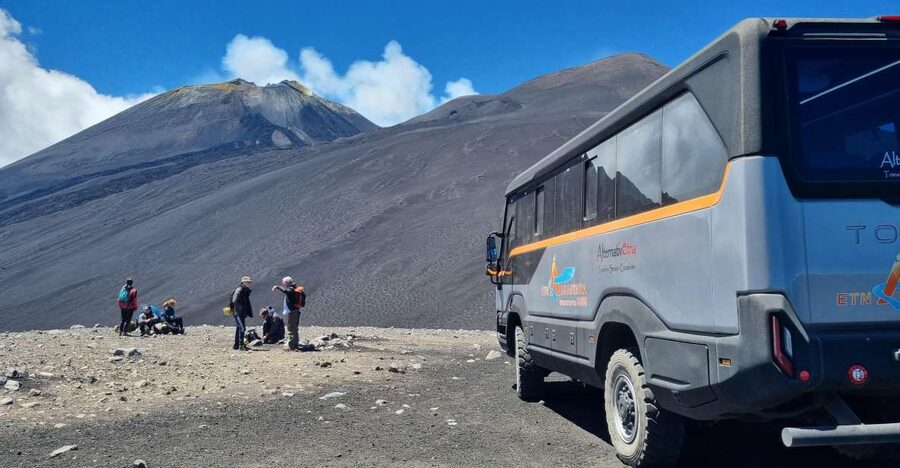
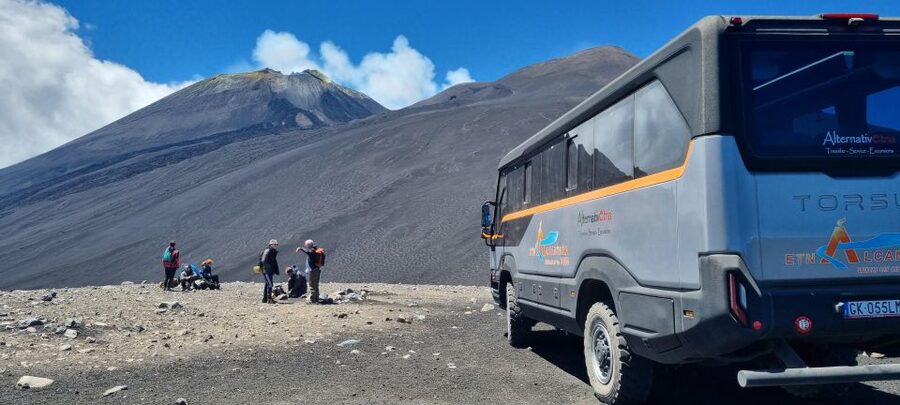
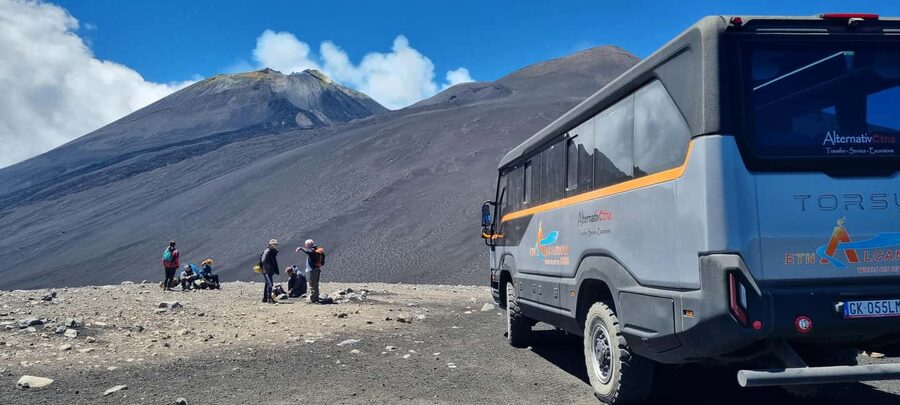
You start in Piano Provenzana on the north side of Mount Etna. From there, you climb aboard a comfortable 4×4 bus for the unpaved road up the volcano. The ride matters here, because Etna’s “surface” is not like a normal mountain drive. You’re moving through active-feeling terrain—uneven ground, volcanic rock, and frequent changes in what you can see.
This is a good style of outing if you want altitude and drama without committing to a full day of hiking. You still get to walk, but the vehicle does the heavy lifting (literally). The benefit is simple: you arrive at height with enough energy to enjoy the stops instead of arriving wiped out.
The top phase begins at Pizzi Deneri, an astrophysical observatory at roughly 2810m. Even before the walking, you start collecting the big visual clues: old craters, rough lava ground, and that moon-like feel that makes Etna so famous. If you’ve ever wondered why people call it otherworldly, this is where the question answers itself.
Practical note: the north side can mean a chill on the way up. Even in warmer months, you can still get cold up high. Bring layers you can actually move in, not just a fashion jacket.
The viewpoint trek around 2865m: where the coast comes into focus
After arriving around 2805m, you step out for a short trek that reaches roughly 2865m depending on volcano activity. That wording is important. Etna isn’t a theme park with fixed boundaries. Your guide will adjust where it’s safe and feasible based on current conditions.
This is the part of the tour that balances effort and reward. It’s not a long hike, so you’re not planning your day around fatigue. But it’s long enough to make you feel the altitude and to give you that moment where the terrain and the sky start to look unreal.
From this higher viewpoint, you’ll get a strong look at Valle del Bove, spread below the northeast crater. For me, the value of seeing Valle del Bove is that it turns Etna from a single peak into a bigger system. You begin to understand the scale of the volcano’s shape, and why eruptions can reshape what’s visible from miles away.
Your licensed guide plays a big role here. The volcanologist-style explanations help you connect what you’re seeing—lava fields, crater forms, and the logic of where certain views come from—to how Etna works. A few guides have been praised for patient, clear English in particular (names that came up include Giuseppe), and that matters because Etna’s terminology can otherwise feel like a jargon wall.
Learning Etna with a volcanologist: more than facts, it’s how you read the mountain
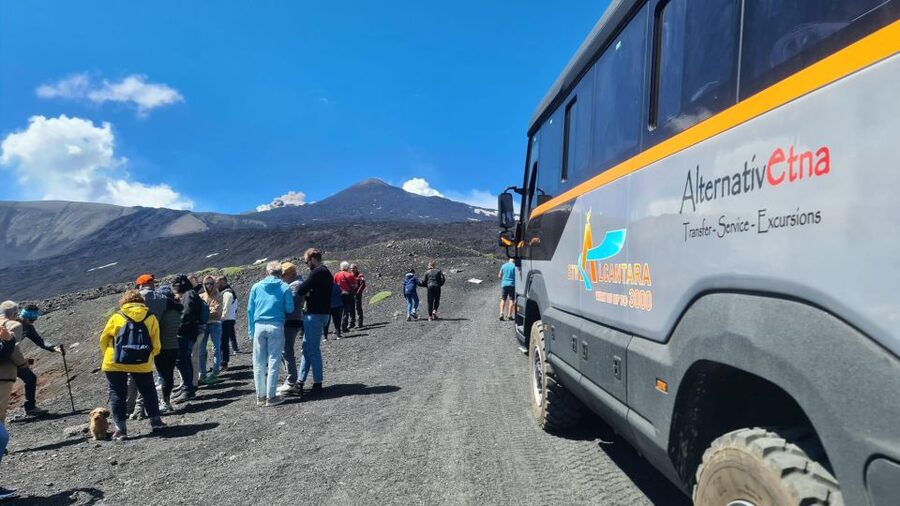
A big reason this tour earns a high rating is the guide quality. This isn’t just someone pointing out mountains and snapping photos. You’re learning from a licensed volcanological guide, which changes the whole tone of the walk. Instead of hearing random “fun facts,” you get explanations tied to visible evidence on the ground.
What I like about this approach is that it helps you see more. When you understand why you’re looking at one crater rim versus another, you notice details you’d otherwise miss: the texture of lava ground, the way craters sit in relation to each other, and why certain angles reveal structure.
You also get context for Etna’s current behavior. Several guides are described as explaining the situation and history clearly, and that’s exactly what you want on an active volcano. The goal is not fear. The goal is confidence: you should feel like you understand the rules of the day before you step into rougher areas.
Tip: if your guide asks everyone to stay aware—listen. Near crater views, the safest experience is the one where you’re relaxed and paying attention at the same time.
Valle del Bove plus panoramic coast views: why this stop hits hard
Once you’re at the high viewpoints, the views broaden. You’ll see sweeping scenes that reach out toward the Sicilian coastline. This is the payoff for the uphill work. From high altitude, the coast looks like a map, and the volcano looks like a sculpted machine.
The mix of features is what makes this stop memorable:
- a volcanic interior (craters and worn shapes)
- a natural “bowl” (Valle del Bove)
- and the human world beyond it (the coast)
That combo is also why a short hike works here. You don’t need 10 miles to get a meaningful “wow.” You need the right altitude and the right angles. This tour delivers both.
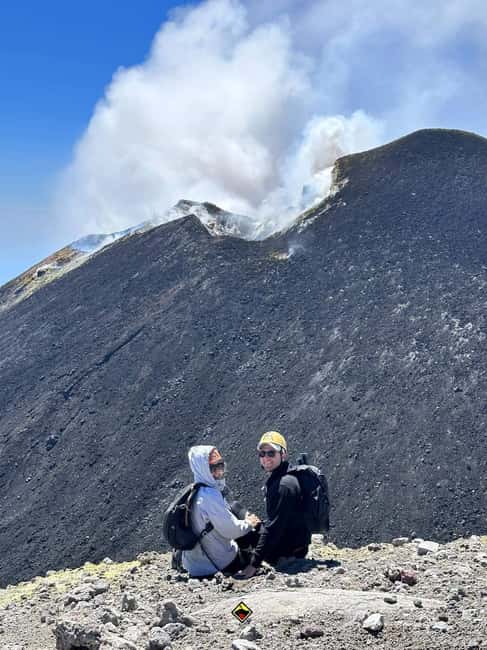
And yes, it can feel intense near the edges. One of the more practical considerations that came up in feedback is that crater rims can be close to where people walk. If you want a relaxed photo session, slow down, keep your footing sure, and follow the guide’s safety cues without rushing.
Descending to 2200m for the 2002 eruption crater edge
After your high-altitude segment, you re-board the 4×4 bus and descend to about 2200m. This change of altitude matters because it changes what you can understand about the volcano. Up high you see structure and horizons. At lower height you see more of the surface scars.
Then you take a short trek—about 20 minutes—to reach the edge of the crater left over from the 2002 eruption. This is one of the tour’s most compelling “here it is, up close” moments. Instead of hearing about an event from far away, you stand at a boundary created by real, recent change.
Why it’s valuable: it anchors Etna in time. An active volcano can sound abstract until you’re looking at evidence from a specific eruption year. Seeing the crater edge gives your earlier viewpoints a sharper meaning: the landscape isn’t just old rock; it’s a timeline written in stone.
Weather can shift quickly at altitude, so dress like conditions can turn. Some past departures have even included snow during the time spent up high, so don’t assume the base-town weather will match what you feel near 2800m.
Who should book this 2.5-hour Etna ascent?
This tour is designed for people who want Etna’s highlights without a long trek day. It’s especially good if:
- you want a short outing with real altitude
- you prefer the 4×4 approach over hours of hiking
- you like guided science explanations and asking questions
- you want to see both broad views and one close crater feature
It’s also a strong option for visitors who aren’t mobility-flexible enough for longer hikes, because the route uses a vehicle to reach key heights. Feedback has even noted the bus ride as helpful for less-mobile partners.
That said, the activity isn’t for everyone. It is not suitable for:
- pregnant women
- people with back problems
- people with heart problems
- people with high blood pressure
- babies under 1 year
- people over 95
If any of those apply, it’s worth choosing a different style of Etna visit that matches your body and risk level.
Price and value: is $100 a fair deal?
At about $100 per person for a 2.5-hour experience, this isn’t a bargain-basement outing. But the value comes from how the time is used and what you get for it.
Here’s what you’re paying for:
- 4×4 round-trip transportation up the volcano to high altitude
- a licensed volcanological guide (the explanation component is the point)
- short, targeted walks that hit the main viewpoints (around 2865m, plus the 2002 crater edge)
If you were trying to replicate this yourself, you’d face two problems: transportation constraints on Etna’s rough roads and the difficulty of getting trustworthy, real-time interpretation of what you’re seeing on an active volcano. The guide component alone is often the difference between a scenic ride and an experience that makes sense.
So for me, this price looks fair if you want the “Etna hits” without turning the day into a logistics project. If your goal is only photos and you’re happy with a do-it-yourself drive and zero geology guidance, you might choose something cheaper. But if you want to understand Etna while standing in front of it, the math usually works.
What to bring (and what to wear) for comfort at 2800m
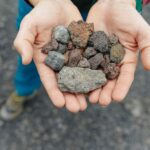
This is a practical list because altitude and wind can change your comfort fast:
- Sunglasses (light and glare can be intense at height)
- Hiking shoes (rocky ground is not sneaker-friendly)
- Daypack for water, a layer, and quick-grab items
- Hiking pants for better protection on uneven terrain
Also, think in layers. Even if the morning is mild, the top can be cold enough to surprise you. One recurring note from people who did this trip is that weather can shift quickly and even snow can happen while you’re up there. Pack for winter conditions just in case.
A few timing and safety notes that make the day go smoother
This is a short day—2.5 hours—so you’ll want to show up ready to move. The walking parts are brief, but you’ll still want a normal fitness base and good balance.
Safety is part of the experience, not an add-on. On crater rim areas, keep your attention on your steps and on the guide’s instructions. If you’re bringing children, be extra alert to where the rim is and how close people are expected to stand. A clear safety briefing is essential on this type of terrain.
Finally, languages are English and Italian, so you’ll have options depending on your group. If you’re traveling with someone who prefers one language, plan around the tour language availability when you choose your time slot.
Should you book Mount Etna: Ascent to 2800m by 4×4?
If your ideal Etna day is: high altitude, real crater views, and explanations from a volcanologist guide—this is a smart choice. The 4×4 ascent makes it efficient, the short hikes keep it fun instead of punishing, and the scenery is exactly the kind of geology you can’t fake with Google images.
Book it if you:
- want the core highlights in a tight window
- value clear guidance over self-guided guesswork
- are comfortable walking short distances on uneven volcanic ground
Skip it if you’re not able to handle the altitude and terrain, or if you’re in one of the listed “not suitable” categories.
Overall, I’d treat this as the best “first Etna” for people who want the volcano to make sense while you’re standing inside its story.
More Tour Reviews in Catania

More Etna Summit Treks We Have Walked
Just added: the newest Catania tours in our notebook
- Transfer Catania / Agrigento Airport★ 5.0 · 3 reviews
- Sicily private shore excursion – Etna and Taormina with personal driver★ 3.5 · 3 reviews
- Sunset Trekking on Mount Etna★ 5.0 · 3 reviews
- Private Transfer from Catania to Palermo or vice-versa with stop★ 5.0 · 3 reviews
- From Syracuse: Mount Etna Volcano Morning Trekking Tour★ 5.0 · 3 reviews
- Catania: Guided Street Food Tour with Tastings★ 5.0 · 3 reviews
Mount Etna Tours & Summit, compared.
 ★ 4.8Catania: Mount Etna Morning or Sunset Day Trip with TastingFrom $704,028 reviews
 ★ 4.8Catania: Sunset Jeep Tour of Mount Etna and Lava Flow CavesFrom $712,113 reviews
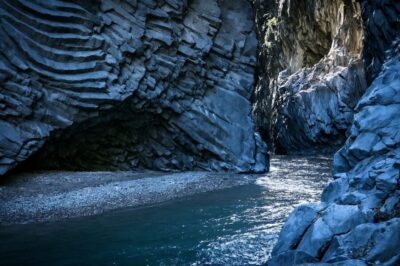 ★ 4.8Etna and Alcantara Gorges Full-Day Tour with LunchFrom $1051,766 reviews
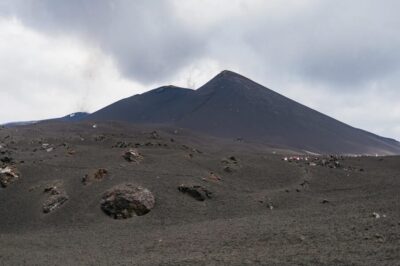 ★ 4.7Etna: summit craters trekking with volcano guide 3350mtFrom $771,712 reviews
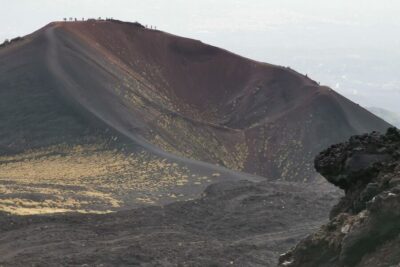 ★ 4.9Catania: Mount Etna Trekking Tour Beyond the Tourist TrailsFrom $811,596 reviews
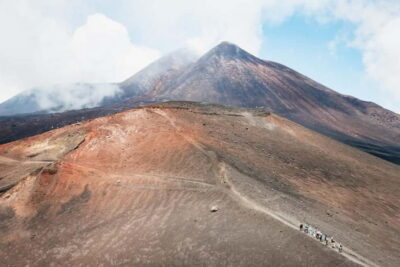 ★ 4.8Mount Etna: Guided Trek 3,000 Meters to the SummitFrom $1131,407 reviews
 ★ 4.8Catania: Etna Sunset Tour with Pickup and Drop-offFrom $711,348 reviews
 ★ 4.8Etna Sunset Tour: Volcano trek, Cave & tasting from CataniaFrom $701,290 reviews