
Reviewed · PALERMO LANDMARKS & MONUMENTS
Monreale: Guided tour of Cathedral, Monastery and Mosaics
Golden mosaics beat any postcard.
This 1-hour guided tour in Monreale (just 5 km from Palermo) focuses on what the town is famous for: UNESCO-listed cathedral mosaics and the story behind them. I like that the guide doesn’t just point at the gold tiles. You get a clear sense of why this building blends styles from different worlds.
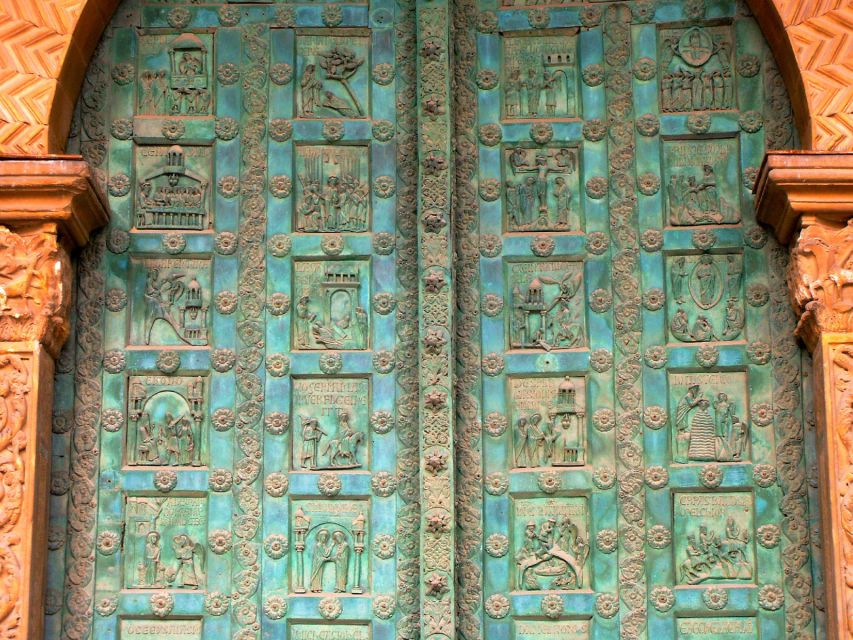
I also love the way the visit moves beyond the interior. You’ll hear about the cathedral’s landmark bronze doors outside, including the sculptors Bonanno da Pisa and Barisano di Trani, then continue to the monastery and cloisters that flank the church. The payoff is a viewpoint over the valley, where orange and citrus groves spread out below.
One consideration: the cathedral and cloister tickets aren’t included, so you’ll need to budget extra and plan a bit of time for entry. And since Monreale sits up on Mount Caputo at 310 meters, wear comfortable shoes for the walk between stops.
In This Review
- Key highlights you should know
- Golden Mosaics First: What the 1-Hour Pace Really Delivers
- Entering Monreale Cathedral: Styles That Explain the Power of the Normans
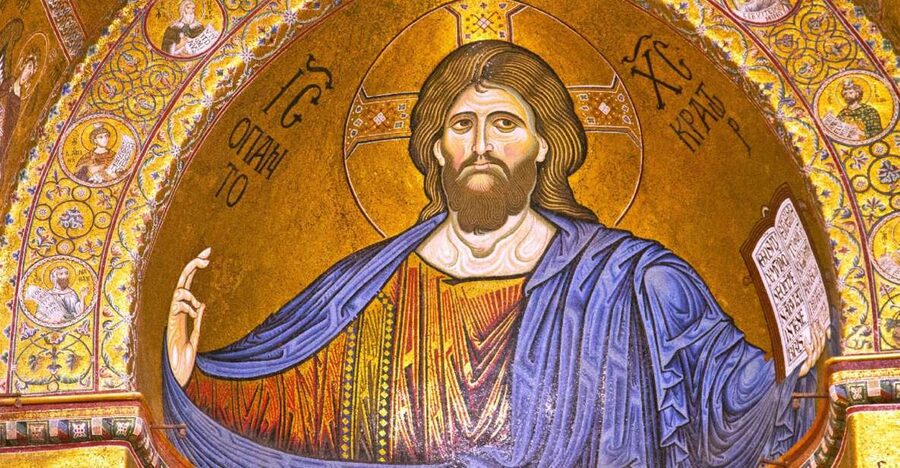
- Inside the Gold: Christ Pantocrator and the Apsidal Basin
- Outside Marvels: Bronze Doors by Bonanno da Pisa and Barisano di Trani
- Benedictine Monastery and Cloisters: Why Flanking Spaces Matter
- The Conca d’Oro Viewpoint: Orange Groves as a Sicilian Setting
- Price and Value: Is $344.39 Per Group Worth It?
- Who This Private Tour Suits Best (and Who Might Skip It)
- Quick Practicalities That Affect Your Experience
- Should You Book This Monreale Cathedral, Monastery, and Mosaics Tour?
- FAQ
- How long is the Monreale guided tour?
- Where does the tour start and end?
- Is this tour private?
- What languages are the live guides available in?
- What is included in the tour price?
- Do I need to buy tickets for the cathedral and cloister?
- Does the tour include the viewpoint over the Conca d’Oro valley?
- Is hotel pickup or drop-off included?
- Can I cancel for a full refund?
Key highlights you should know
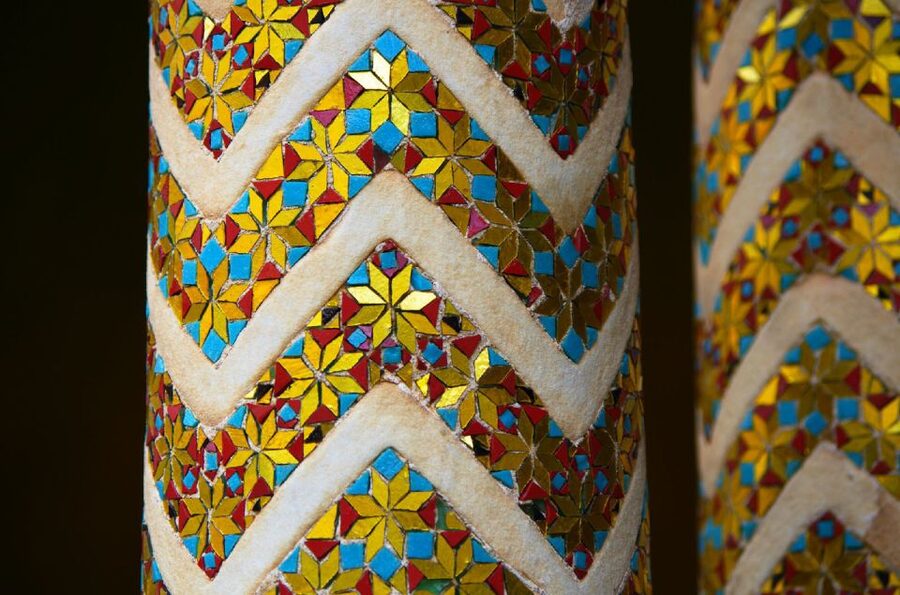
- UNESCO-listed cathedral (since 2012) with guided interpretation, not just sightseeing
- Golden mosaics inside the cathedral, topped by the Christ Pantocrator in the apsidal basin
- Bronze doors featuring Bonanno da Pisa and Barisano di Trani (plus Trani ties to other Italian cathedrals)
- 12th-century Benedictine monastery and cloisters directly alongside the cathedral
- Viewpoint over the Conca d’Oro valley, framed by orange and citrus groves
- Private group format (up to 25 people) with a licensed live guide
Palermo's palaces and chapels, up close
- Monreale: Guided tour of Cathedral, Monastery and Mosaics
★ 4.3 · 29 reviews
Golden Mosaics First: What the 1-Hour Pace Really Delivers
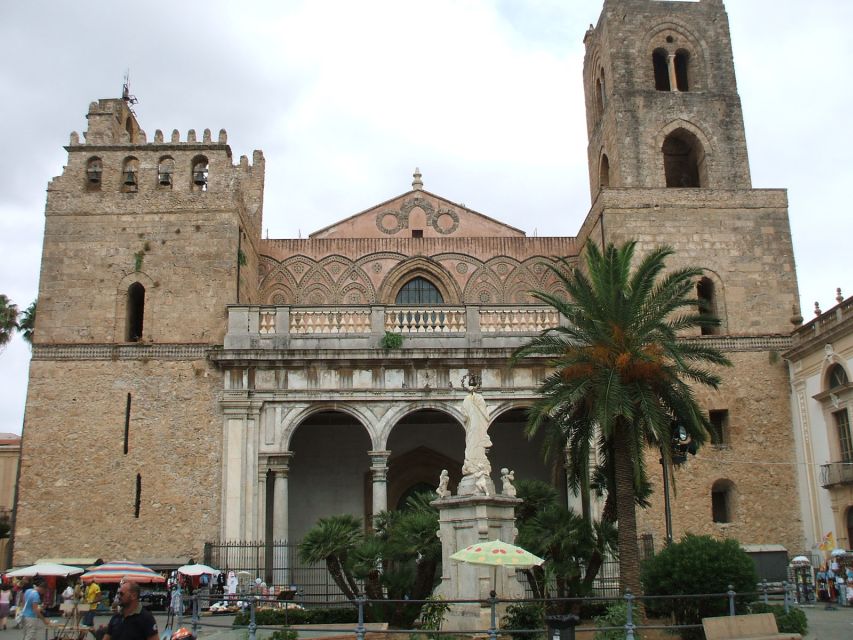
This tour is short by design: about an hour, starting at the cathedral entrance in Piazza Guglielmo II suare. That matters because Monreale’s main “must” is the cathedral mosaics, and the guide keeps the focus where your time will pay off most. If you’ve ever tried to do Monreale alone and felt rushed, this structure helps you get the meaning fast.
Think of it as a concentrated hit of Monreale. You won’t have hours to wander every corner at your own speed, and that can be either a plus or a drawback depending on your travel style. If you love mosaics and want the story behind them, you’ll appreciate how tightly the tour is packed.
The private group format is another practical win. You won’t be stuck in a loud swirl of strangers. You can ask quick questions and get straight answers from a licensed guide, which is the difference between seeing gold tile and understanding why it’s there.
Entering Monreale Cathedral: Styles That Explain the Power of the Normans
Your visit starts with the cathedral, the town’s symbol and a UNESCO World Heritage monument (inscribed in 2012). The cathedral is described as an architectural masterpiece of the 12th century, with different artistic traditions layered together. That’s not trivia. It’s the key to making sense of what you’re looking at inside.
The cathedral links three major influences: northern European architecture, Romanesque art, and Arabic art. When you see these styles in one place, the building stops feeling random and starts feeling like a political and cultural statement. It signals that Monreale wasn’t an isolated backwater—it was part of the larger power story shaping Sicily.
I like tours that explain the “why” while you’re still in position to look. Here, you get the narrative context as you enter, so the mosaics land with more impact. Instead of gold glassy patterns being just decoration, you can recognize them as a language of authority and belief.
Inside the Gold: Christ Pantocrator and the Apsidal Basin
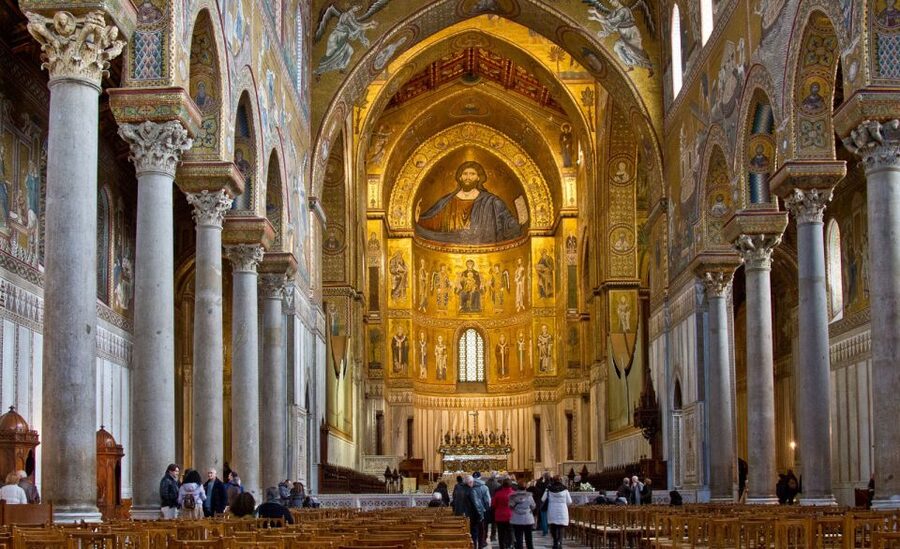
This is the heart of the experience: the interior is illuminated by magnificent gold mosaics. The standout is the Christ Pantocrator in the apsidal basin, described as the highest expression of figurative art.
If you’ve seen cathedral mosaics elsewhere in Italy, you know the effect can be huge—but it helps when someone points you to the main “anchor” scene. Here, you’re guided toward the focal point so you know where to look first. That changes how the rest of the walls make sense, because your eyes start reading the icon layout, not just admiring the shine.
Also, the tour doesn’t hide behind big vague statements. It tells you what the mosaics culminate in. That’s useful, because the mosaics are busy—after a while, the eye can lose its way. A guide’s pointing matters in a space like this, where every surface tempts you to stare.
One practical tip: give yourself a moment to slow down. Even on a 1-hour tour, it’s worth pausing so the mosaics’ lighting and details settle in your brain before you move on.
Outside Marvels: Bronze Doors by Bonanno da Pisa and Barisano di Trani
After you’ve taken in the cathedral interior, the tour shifts to what’s outside too. The cathedral is richly decorated by two bronze doors. That sounds like a small add-on until you realize doorwork is where craftsmanship becomes readable.
The first door is attributed to Bonanno da Pisa. The second is by Barisano di Trani. And here’s a nice extra layer: Barisano di Trani is also linked to doors at the cathedrals of Ravello and Trani.
So what’s the value for you? When the guide connects the doors to other sites, you start seeing the cathedral as part of a network of workshops and artistic exchange. Even if your trip only includes Monreale, the bronze doors turn it into a bigger Italy story.
This also gives you a breather from the bright interior. Bronze doors have a different kind of texture and rhythm. You get a chance to notice carving styles and placement without the same crowding of mosaic scenes.
Benedictine Monastery and Cloisters: Why Flanking Spaces Matter
Next, your tour continues to the ancient Benedictine monastery and cloister area. These flank the cathedral, which means you’re staying in the same core complex instead of hopping around town.
The 12th-century monastery and cloisters add another dimension to the experience. The mosaics are all about visual theology and royal ambition. The cloisters and monastic spaces are about daily rhythm—quiet movement, enclosed spaces, and devotion built into architecture.
Even if you’re not a deep architecture person, cloisters are usually where the mind relaxes. The guided connection between cathedral and monastery helps you see that these aren’t separate attractions. They were designed to work as one spiritual and institutional unit.
For some travelers, this segment is the relief after the intensity of the mosaics. For others, it’s where you’ll feel the time period more clearly, because the layout encourages a slower, more observational pace.
The Conca d’Oro Viewpoint: Orange Groves as a Sicilian Setting
Don’t skip the viewpoint. Part of the tour includes a look overlooking the Conca d’Oro valley—the “golden basin” of orange and citrus groves. Since Monreale sits on the hill of Mount Caputo at 310 meters above sea level, the view gives you a natural sense of where the town belongs in Sicily.
This is valuable because it adds scale. The cathedral complex is stone and story. The valley is the world that supported agriculture, travel, and wealth. Even on a short tour, seeing that setting can make the architecture feel less like a standalone museum piece.
I like that the viewpoint isn’t an afterthought. It’s listed as a highlight, which usually means the guide takes a moment to help you connect what you saw earlier to what you’re seeing now.
If you’re traveling in warm months, bring water and take your time at the edge. If it’s windy or cooler, you’ll still get the same idea—Monreale isn’t just about inside beauty.
Price and Value: Is $344.39 Per Group Worth It?
The price is $344.39 per group (up to 25 people) for a 1-hour private guided tour, with starting times varying by availability. Because it’s per group, your value depends on how many people you’re traveling with.
Here’s what you’re paying for, practically:
- A licensed live guide to interpret the cathedral mosaics and key architectural cues
- A structured route that hits cathedral, monastery/cloisters, and the viewpoint
- A private group setup (so you’re not stuck trying to hear over other groups)
What’s not included is important for your budget. Cathedral and cloister tickets aren’t included, and you also won’t get food or hotel pickup. That means your final cost may be a bit higher once you add tickets.
But even with tickets extra, this tour can be good value if you care about meaning, not just photos. Monreale’s mosaics are famous, but they’re also easy to misunderstand if you don’t know what to look for. A good guide gives you that map.
If you’re a solo traveler on a strict budget, the price-per-group model may feel steep. If you’re with family or friends, it can turn into a very sensible use of time near Palermo.
Who This Private Tour Suits Best (and Who Might Skip It)
This tour makes the most sense if you:
- Want the core Monreale highlights in one efficient hour
- Care about cathedral art and symbolism (especially mosaic storytelling)
- Prefer a guide who explains the blend of influences: northern European, Romanesque, and Arabic art
- Like a short, focused plan when you’re also visiting Palermo
It might be less ideal if you:
- Want a long, free-form cathedral visit where you can wander without time pressure
- Don’t want to handle separate ticket purchases at the cathedral and cloister
- Are extremely sensitive to stairs and uneven surfaces (Monreale is on a hill at 310 meters)
If you’re the type who likes to know the “why” behind what you see, you’ll get extra satisfaction here.
Quick Practicalities That Affect Your Experience
You start at the Monreale cathedral entrance: Piazza Guglielmo II suare. The tour ends back at the same meeting point, so you don’t need to worry about a complicated ending location.
The guide is available live in Spanish, English, French, and Italian. And since it’s a private group, you can keep the pacing tighter and more personal.
Also, plan for entry timing at the cathedral and cloister because tickets are not part of the tour price. That’s the one logistical detail that can make the experience feel smooth—or slightly frustrating—depending on how ready you are.
Should You Book This Monreale Cathedral, Monastery, and Mosaics Tour?
Yes, I’d book it if you want a high-impact Monreale experience without wasting hours figuring out the “important parts.” The combination of UNESCO mosaics, the monastery/cloister setting, and the Conca d’Oro viewpoint is a well-chosen trio for a one-hour visit.
Book especially if you’ll appreciate interpretive guidance—like understanding why the cathedral blends styles and why the Christ Pantocrator is the visual apex. And if you’re traveling with others, the per-group pricing model can make this feel like a smart shortcut.
Skip it only if you want a long independent visit or you really don’t want to manage separate ticket costs. In that case, you may prefer more time onsite.
FAQ
How long is the Monreale guided tour?
It lasts 1 hour.
Where does the tour start and end?
The tour starts at Piazza Guglielmo II suare at the Monreale cathedral entrance, and it ends back at the same meeting point.
Is this tour private?
Yes. It’s listed as a private group, with pricing given for groups up to 25 people.
What languages are the live guides available in?
The guide is available in Spanish, English, French, and Italian.
What is included in the tour price?
A licensed guide is included.
Do I need to buy tickets for the cathedral and cloister?
Yes. Cathedral and cloister tickets are not included.
Does the tour include the viewpoint over the Conca d’Oro valley?
Yes. The tour includes a look overlooking the Conca d’Oro valley.
Is hotel pickup or drop-off included?
No. Hotel pickup and drop-off aren’t included.
Can I cancel for a full refund?
The tour offers free cancellation up to 24 hours in advance for a full refund.
More Tour Reviews in Monreale
More Palermo Palaces and Chapels
Just added: the newest Monreale tours in our notebook
- Monreale: Guided tour of Cathedral, Monastery and Mosaics★ 4.3 · 29 reviews
Palermo Landmarks & Monuments, compared.
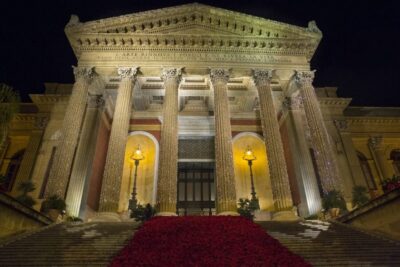 ★ 4.5Palermo: Teatro Massimo Opera House Guided TourFrom $141,573 reviews
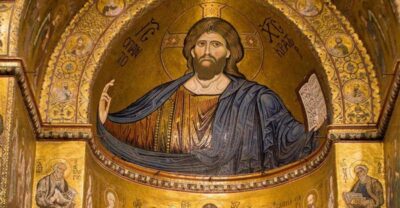 ★ 4.2From Palermo: Monreale and Cefalù Half-Day TripFrom $711,354 reviews
 ★ 4.9Palermo: Mondello, Capo Gallo Reserve Boat Tour, and SnackFrom $106694 reviews
 ★ 5.0Palazzo Conte FedericoFrom $18650 reviews
 ★ 4.7Palermo: Norman Palace and Palatine Chapel Tour with TicketsFrom $82298 reviews
 ★ 4.8Palermo: Cappella Palatina and Palazzo dei Normanni TourFrom $45214 reviews
 ★ 5.0In the province of Palermo Sicilian Cooking Class near CefaluFrom $120203 reviews
 ★ 4.8Tour Cappella Palatina e palazzo Reale: patrimonio UnescoFrom $14183 reviews
Browse the lists this tour appears in