
Reviewed · SYRACUSE & ORTIGIA
Guided tour of the Greek Theater and the Neapolis of Syracuse
Syracuse sounds better early in the day. This guided walk through Parco Archeologico della Neapolis lets you see one of the largest Greek theatres in the Mediterranean complex, plus famous nearby stops like the Ear of Dionysus. You also get a guide who connects the sites to the stories and history of ancient Syracuse, so it is not just looking at stones.
Two things I really like about this experience: first, the visit is timed for the morning, which helps you dodge the worst heat and makes the outdoor sections more pleasant. Second, the guide-led pacing turns a big archaeological park into something you can actually understand, with clear narration as you move from the theatre area toward the Latomie and Cordari Cave.
One drawback to plan around: there is some up-and-down walking, and parts of the route are outdoors. If you are heat-sensitive or prefer totally flat ground, go in with solid shoes and a slower attitude.
In This Review
- Key highlights at a glance
- Why Neapolis and the Greek Theatre feel different at 9:00 am
- Meeting point on Via Luigi Bernabò Brea: the first 15 minutes matter
- Parco Archeologico della Neapolis: your 2-hour guided route
- The Greek Theatre area: what you are really looking for
- Ear of Dionysus: the name you hear for a reason
- Latomie and Cordari Cave: why the tour leaves the comfort zone
- What makes the guide experience worth paying for
- Price and value: $51.66 for a guided park ticket
- Walking comfort and who should join
- Language options: English is available with an Italian parallel tour
- Timing, weather, and how to plan your day in Syracuse
- Should you book this Greek Theatre and Neapolis tour?
- FAQ
- How long is the Guided tour of the Greek Theater and the Neapolis of Syracuse?
- How much does the tour cost?
- Is the entrance ticket included?
- Where does the tour start?
- What time does the tour begin?
- What languages is the tour offered in?
- Is a mobile ticket used?
- How big is the group?
- What weather conditions are required?
- Is free cancellation available?
Key highlights at a glance
- 9:00 am start to beat the sun and make the walk more comfortable
- Neapolis Archaeological Park ticket included so you are not juggling extra steps
- Ear of Dionysus and the big theatre area as the main visual anchors
- Latomie and Cordari Cave for variety beyond the theatre itself
- Small group size (max 25) for a more personal guide experience
- English (and Italian at the same time) so you can join without fuss
Deeper into Ortigia and old Syracuse
- Syracuse: Tour of Ortigia Island & Caves with Local Skipper
★ 4.7 · 1,060 reviews - Tour of the island of Ortigia and exploration of sea caves with baths.
★ 5.0 · 668 reviews - Boat tour of Ortigia Island and sea caves
★ 5.0 · 407 reviews - Siracusa Boat excursion island of ortigia and sea caves
★ 5.0 · 147 reviews
Why Neapolis and the Greek Theatre feel different at 9:00 am
Ancient Syracuse is a real place with real weather, not a museum with climate control. The strongest reason to pick this tour is the early start. You begin at 9:00 am, when the day is still manageable and the outdoor walking does not feel like a nonstop workout.
This timing matters because the Neapolis park covers multiple zones. Even when the pace is not frantic, you will spend meaningful time in open air. That is where a good morning schedule pays off: less glare, less heat pressure, and an easier time taking in details as your guide points things out.
Also, this is a guided experience in a site that can feel sprawling if you arrive without a game plan. The guide helps you get your bearings fast, and that changes everything. Instead of wandering and guessing what you are looking at, you follow a route that builds understanding step by step.
Meeting point on Via Luigi Bernabò Brea: the first 15 minutes matter
You meet at the ticket office: Via Luigi Bernabò Brea, 96100 Siracusa SR, Italy. Plan to arrive about 20 minutes early. That buffer is not about being formal; it is about getting situated so you do not start rushing when the tour is about to begin.
This tour is near public transportation, which is handy if you are staying somewhere central. The check-in process is also designed to be straightforward: you use a mobile ticket, and the guide provides the entrance ticket to the Neapolis Archaeological Park at the meeting point.
One small but important detail: the tour ends back at the meeting point. That is useful because you are not stuck trying to figure out how to get out of the park area afterward. You finish where you started, with your day still flexible.
Parco Archeologico della Neapolis: your 2-hour guided route
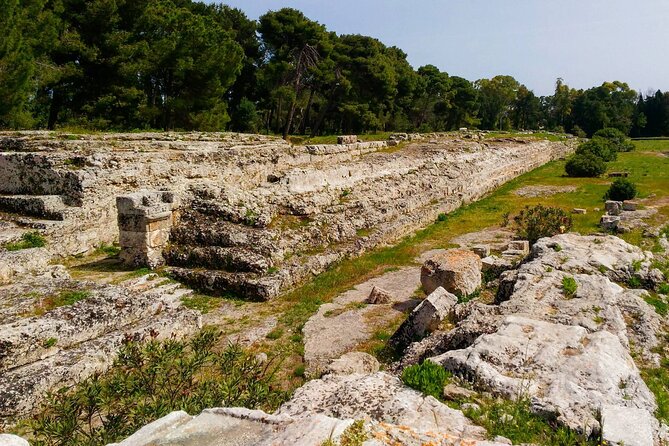
The heart of the tour is the Parco Archeologico della Neapolis, a major ancient area tied to the polis of Syracuse founded in the 8th century BC. The point is not just to see big ruins. It is to understand how this part of Syracuse worked as a connected space—dramatic performances, limestone quarries, and myth-heavy landmarks all in the same broader zone.
The total duration is about 2 hours (roughly 90 minutes of guided time inside the park area). With that time limit, you get focused coverage rather than a slow, wandering drift.
Here is what the flow feels like:
- You start in the park and move through the main theatre zone first.
- Then you branch out toward signature highlights that stand apart visually and narratively.
- By the end, you are not just tired—you are oriented. You know what each place is and how it connects.
This is the kind of tour where the guide matters a lot. If you like context, you will come away with the story of Neapolis more than the checklist of sights.
The Greek Theatre area: what you are really looking for
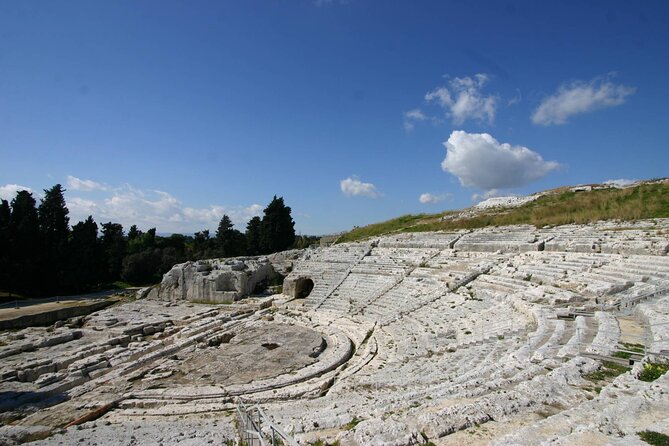
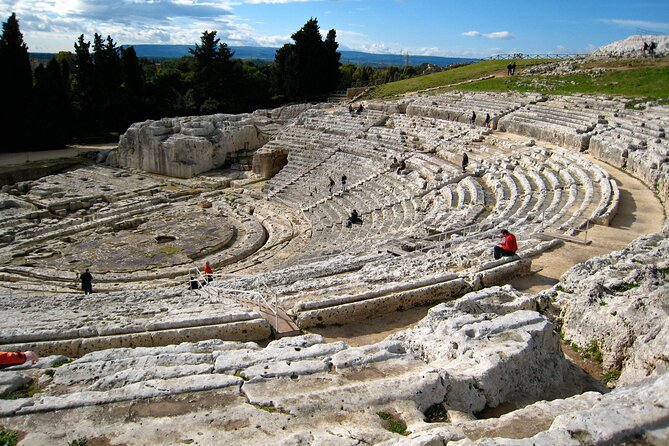
The tour spotlights one of the big reasons people come to Syracuse: the Greek theatre area, described as one of the largest Greek theatres in the Mediterranean. Even if you are not an expert on ancient performance spaces, this is easy to appreciate.
Look for how the site’s layout supports the scale of the theatre setting. A Greek theatre is not just an architectural object—it is part of a whole social ritual. Your guide’s job here is to connect what you see (structure and setting) with why it existed (civic life, entertainment, and story).
A key value in choosing a guided visit is that you do not have to work out the myths and historical context yourself. The tour description specifically notes that your guide shares history and myths related to Neapolis, and the difference is noticeable if you want your photos to match meaning.
If you prefer slow viewing, this is still doable. The pacing is not described as overly intense, and the group size cap helps keep things organized. Still, treat it as a structured walk, not a sit-down lecture.
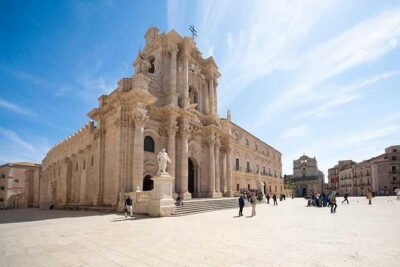
An evening at the theatre in Sicily
Ear of Dionysus: the name you hear for a reason
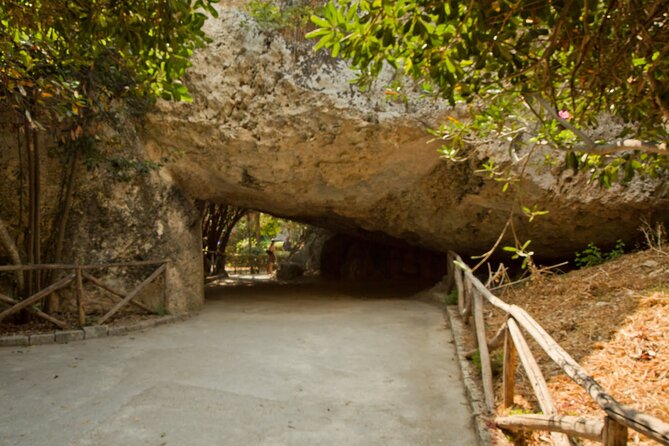
One of the signature stops on this route is the Ear of Dionysus. The value here is simple: it is memorable, and it is the kind of place where the name alone pulls you in. With a guide, you get the background that makes it more than a quirky label.
This stop also breaks up the experience. You are not only looking at open theatre space; you are moving toward a distinct feature that gives the tour a sharper storyline. Guides tend to use stops like this to explain how myths and local history get attached to real physical places—so by the time you reach the next area, you already have context.
One practical note: because you are moving across a historic park, you should wear comfortable shoes you trust. Even if the terrain is not extreme, archaeological grounds can be uneven, and you will be walking more than you think for a 2-hour tour.
Latomie and Cordari Cave: why the tour leaves the comfort zone
After the theatre highlights, the route continues toward the Latomie and Cordari Cave. This is where the tour earns its keep for people who think they only want Greek ruins.
These stops add variety. The theatre is the star, but the Latomie and cave areas help you see that Neapolis was not only about public spectacle. The park includes different kinds of spaces, and the guide’s storytelling helps you treat them as parts of the same historical landscape.
If you like travel that feels specific instead of generic, these names matter. They are not the kind of sights you bump into accidentally. They give the tour character, and they give you something to talk about after you leave.
Also, because some segments include up and down walking, go at a pace that feels comfortable. You can still enjoy the views and the narration without forcing speed. In this type of site, steady beats rushed.
What makes the guide experience worth paying for
This is where I would not cut corners. A guided visit is often the difference between seeing ruins and understanding ruins.
In the strongest examples of the experience, guides are praised for depth and clarity—especially for people who want the story of Syracuse from the earliest Greek period onward. One guide name that comes up is Rita, noted for wonderful knowledge and an ability to explain a long, varied history of Siracusa in a way that makes the site click.
That kind of guide skill matters because Neapolis is big. If you go alone, you can end up checking off highlights and missing the connective tissue. With a guide, you get explanations as you move, so things stick.
You can also expect a helpful narration style. The reviews you can hear in spirit point to friendly, experienced guiding and a solid focus on history and myths. If you like learning on the move, this fits.
Price and value: $51.66 for a guided park ticket
The price is $51.66 per person, and the good news is that the tour includes what you would otherwise have to pay separately: entrance to the Neapolis Archaeological Park plus a guided visit.
That bundled approach is the main value play. If you are trying to see the Greek theatre area and the standout nearby attractions in a tight window, paying for a guided route plus the ticket can cost less than piecing everything together yourself in the right order.
Also, the group size cap (maximum 25 travelers) keeps things from feeling like a factory line. A small group does not magically create perfect comfort, but it usually improves how smoothly the guide can manage questions and pacing.
One more practical angle: this is booked on average 44 days in advance, which suggests it is a popular slot. Booking ahead is smart if you are aiming for the morning start.
Walking comfort and who should join
The good: most travelers can participate. The overall format is a guided walk through key areas of the park, and it is designed for people who can handle standard sightseeing walking.
The practical caution: there can be some up and down climbing, and some parts are outdoors. The experience depends partly on your willingness to walk and on how the guide chooses to share information along the route.
Here is my take on who this suits best:
- You enjoy learning while you walk and want the myths/history stitched into what you see.
- You want a structured route so you do not waste time trying to plan inside the park.
- You prefer a morning tour because heat can be a real factor in Sicily.
If you are looking for a fully relaxed, minimal-walking visit, you might find it a bit more active than you want. If you are comfortable with some uneven ground and steps, you are set.
Language options: English is available with an Italian parallel tour
The tour is offered in English. It also states the activity could be carried out simultaneously in Italian and English. That usually means the group format is flexible, and you should be fine joining even if you see other languages around you.
If you like clear guidance, that is the best reason to choose the English option. You get the same structured narrative, not a self-guided scramble.
Timing, weather, and how to plan your day in Syracuse
This experience is dependent on good weather. If it is canceled due to poor weather, you are offered a different date or a full refund. That is useful to know when you are building your itinerary, especially if you have limited days.
Because this is an outdoor-heavy park, treat the morning slot as part of a larger plan rather than your only outdoor moment. Keep some flexibility for the rest of your day in Siracusa.
Should you book this Greek Theatre and Neapolis tour?
If you want the quickest way to turn Neapolis into a story you understand, I think it is a strong booking. The big positives are the morning timing, the park ticket included, and the guide-led connection between the theatre highlights and the sites like the Ear of Dionysus, Latomie, and Cordari Cave.
I would especially book it if:
- you like guided explanations and myths, not just photo stops
- you want an organized route through a major archaeological area
- you are trying to avoid the harshest part of Sicily’s daytime heat
I would think twice if:
- you want mostly flat walking with minimal climbing
- you are sensitive to outdoor conditions and do not like active sightseeing
Bottom line: for a 2-hour guided experience with the entrance ticket included, this is good value and a smart way to see the best-known Neapolis highlights without turning your day into logistics.
FAQ
How long is the Guided tour of the Greek Theater and the Neapolis of Syracuse?
It lasts about 2 hours (approx.), with 1 hour 30 minutes spent at the Neapolis Archaeological Park.
How much does the tour cost?
The price is $51.66 per person.
Is the entrance ticket included?
Yes. The tour includes the entrance ticket to the Neapolis Archaeological Park, provided by the guide at the meeting point.
Where does the tour start?
The meeting point is at the Ticket Office, Via Luigi Bernabò Brea, 96100 Siracusa SR, Italy.
What time does the tour begin?
The start time is 9:00 am.
What languages is the tour offered in?
The tour is offered in English, and it may also be carried out simultaneously in Italian and English.
Is a mobile ticket used?
Yes. The tour uses a mobile ticket.
How big is the group?
The tour has a maximum of 25 travelers.
What weather conditions are required?
This experience requires good weather. If canceled due to poor weather, you will be offered a different date or a full refund.
Is free cancellation available?
Yes. You can cancel for a full refund up to 24 hours before the experience’s start time.
More Tour Reviews in Sicily





More Opera and Live Performances
More of Syracuse and Ortigia

Just added: the newest Sicily tours in our notebook
- Etna / Taormina★ 5.0 · 3 reviews
- Bikes★ 5.0 · 3 reviews
- Taormina shore tour – for small group cruise passengers★ 5.0 · 3 reviews
- Vegan Cooking Class in Catania with Lunch and Dinner★ 5.0 · 3 reviews
- Make & Taste Sicilian Desserts in Palermo – Learn Cannoli & More★ 5.0 · 3 reviews
- Sicilian Villages & Ricotta Tasting – including Lunch from Cefalu★ 4.0 · 3 reviews
Syracuse & Ortigia, compared.
 ★ 4.7Syracuse: Tour of Ortigia Island & Caves with Local SkipperFrom $231,060 reviews
 ★ 4.7Syracuse: Boat Tour with Captain Mirko, Snorkeling & CavesFrom $35746 reviews
 ★ 4.7Siracusa: Ortigia Boat Tour with Marine Grotto & SnorkelingFrom $47726 reviews
 ★ 4.8Siracusa: Ortigia & Sea Caves Boat Tour w/ Prosecco & FruitFrom $35723 reviews
 ★ 5.0Tour of the island of Ortigia and exploration of sea caves with baths.From $24668 reviews
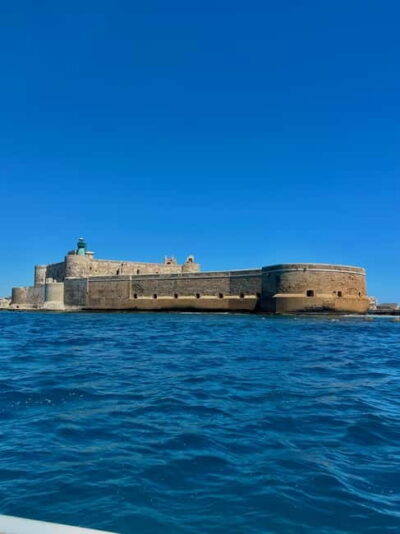 ★ 4.7Syracuse: Ortigia Island & Sea Cave Boat Tour with ProseccoFrom $23418 reviews
 ★ 5.0Boat tour of Ortigia Island and sea cavesFrom $24407 reviews
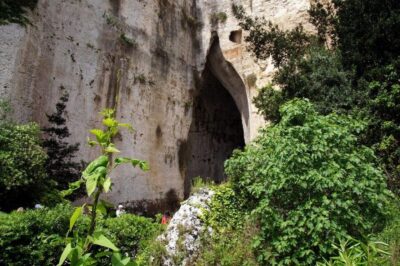 ★ 4.6Catania: Syracuse, Ortigia, and Noto Tour with BrunchFrom $112404 reviews
Browse the lists this tour appears in