
Reviewed · MOUNT ETNA TOURS & SUMMIT
Etna North Sunset: Summit area & Craters of 2002
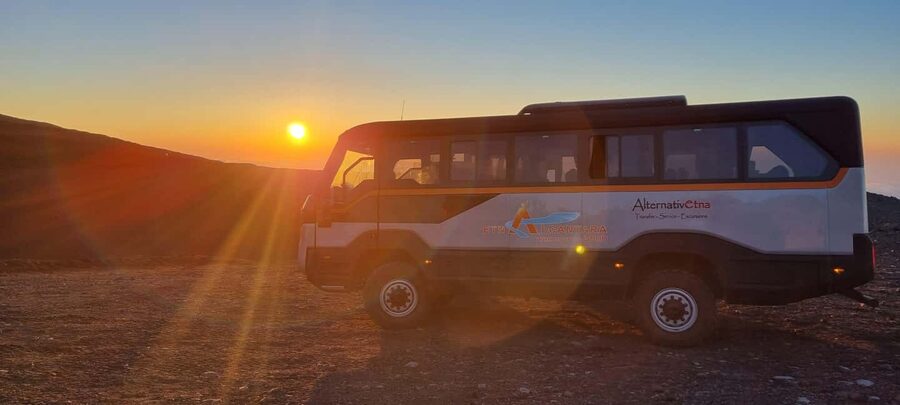
Etna feels close when the sun starts to drop. This 3-hour Etna North Sunset trip takes you toward the North-East crater area and the Craters of 2002, with a sunset payoff that’s hard to fake.
What I really like is the combo of rugged transportation and real access: you’re driven by off-road vehicles up into the high country, then you walk part of the way on volcanic terrain. I also love that the guide points out what you’re seeing in plain terms—lava, rift terrain, and the volcanic textures around you.
One thing to consider: the ride is very bumpy in a vehicle built for rough ground, and English quality can vary depending on your guide’s comfort level.
In This Review
- Key things to know before you go
- Why Etna’s north side at sunset hits harder than you expect
- The 4×4 ride: faster access to the crater zones
- From Piano Provenzana to the 2002 lava rift: what the terrain is telling you
- North-East crater and the Etna observatory area
- The 300 m walk through scoria and bombs (how to make it comfortable)
- Sunset waiting spot: views of the roof of Sicily
- Pace, group vibe, and motion-sickness reality
- Who should book Etna North Sunset (and who might not)
- Practicalities: meeting point, timing, and what to pack
- Value check: what you get for your 3 hours
- Should you book Etna North Sunset: Summit area & Craters of 2002?
- FAQ
- How long is the Etna North Sunset excursion?
- Where do I meet for the tour?
- How do we travel to the summit area and crater zones?
- Is there walking involved?
- What part of Etna’s 2002 eruption does the tour cover?
- Will I be near the volcano observatory?
- What views can I expect at the viewpoint during sunset?
- What languages are the guides?
- What should I bring with me?
Key things to know before you go
- North side at sunset: you wait for the light from the crater area.
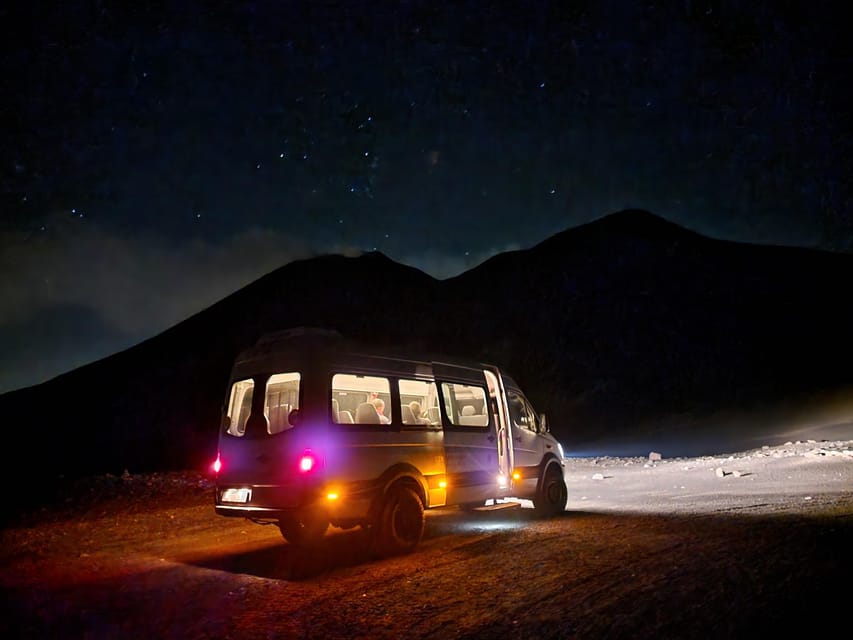
- 4×4 buses/off-road vehicles: they get you high fast, without wasting your evening.
- Craters of 2002 route: views are framed by lava and volcanic sand from the 2002 eruption.
- North-East crater area: this is where the volcano observatory is located.
- Short, serious hike: a walk with volcanic scoria and bombs, with about 300 m of climb.
- Clear-weather visibility: from the viewpoint, you may spot both the Lion and the Bove valleys.
More ways up the volcano from Catania
- Catania: Mount Etna Morning or Sunset Day Trip with Tasting
★ 4.8 · 4,028 reviews - Catania: Sunset Jeep Tour of Mount Etna and Lava Flow Caves
★ 4.8 · 2,113 reviews - Sicily: Etna and Alcantara Gorges Full-Day Tour with Lunch
★ 4.8 · 1,766 reviews - Mount Etna: Guided Trek 3,000 Meters to the Summit
★ 4.8 · 1,407 reviews
Why Etna’s north side at sunset hits harder than you expect
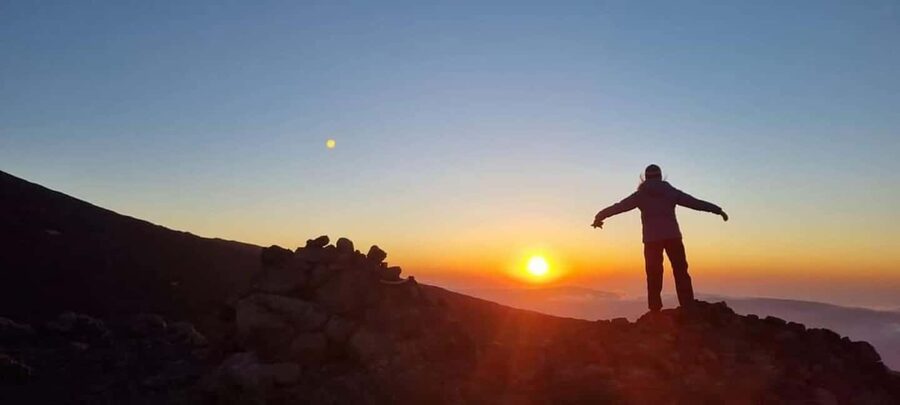
Etna is not just a mountain. It’s a living landscape of ash, lava shapes, and active geography. On the north side, the volcano’s scale feels different because you’re positioned around crater systems rather than staring at a wall from far below. The sunset timing matters, too. Shadows stretch across the volcanic ground and the terrain reads like a map.
This is also a tour for people who love nature as a sensory experience: heat in the light, texture underfoot, and the way the air changes as you climb. Even if geology isn’t your thing, the view is the main event—plus you’ll get an explanation of why the terrain looks the way it does.
The biggest reason I recommend this style of outing? You’re not doing a long day hike. You’re getting a concentrated hit of high-altitude crater views with just enough walking to make it feel real.
The 4×4 ride: faster access to the crater zones
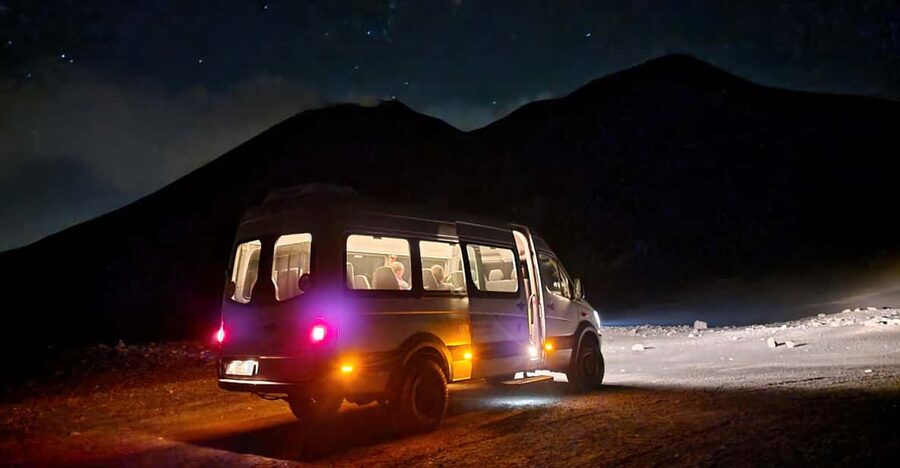
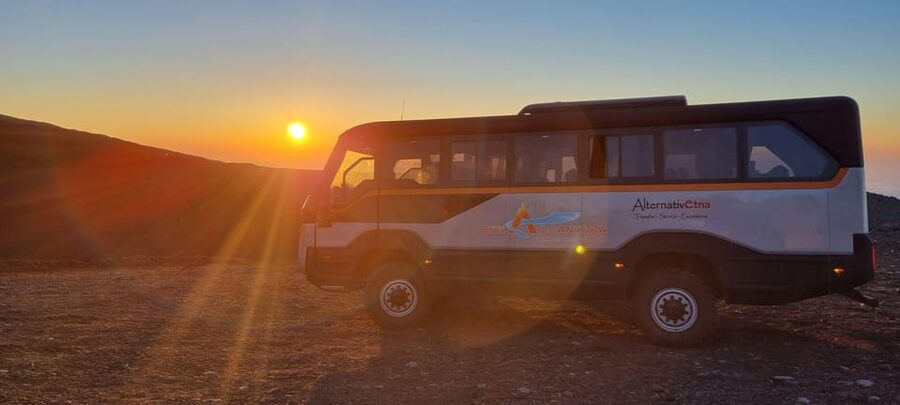
You start from Piano Provenzana and then use off-road transport to reach the higher slopes. The goal is straightforward: save the best light for your time near the craters. Instead of spending hours inching upward, the vehicles take you into the summit region so you can spend your energy where it counts—at the viewpoint and around the crater area.
Practical takeaway: don’t treat this like a smooth bus ride. This is rugged vehicle travel. If you’re the kind of person who gets carsick easily on bumpy roads, you’ll want to plan accordingly (and keep water and breathing easy).
Also, since your route uses off-road vehicles multiple times, you’ll feel the rhythm of Etna travel: drive up, step out, reorient, then drive again. It’s a good way to see more without burning your daylight just getting there.
From Piano Provenzana to the 2002 lava rift: what the terrain is telling you
The excursion begins at Piano Provenzana, at high altitude (the route references around 2900 meters). From there, you follow a mountain trail and then move via off-road vehicles into a high mountain slope framed by lava and volcanic sand.
This part is about the scar tissue of the mountain: the rift created in the 2002 eruption. Even without a science degree, you can read the ground visually. Volcanic sand looks loose and bright compared to older rock. Lava fields tend to look more structured—like the earth got frozen mid-sentence.
What you’re really doing here is getting context before you reach the crater systems. By the time you’re standing in the crater area later, the terrain won’t feel random. It’ll feel connected.
North-East crater and the Etna observatory area
Next comes the North-East crater area, at around the 2900-meter range. This is the zone where the volcano observatory is located, so you’re in the part of Etna that people study up close.
From a visitor’s point of view, this is where the tour shifts from scenery to meaning. You’ll walk around crater terrain and understand the volcanic processes at work in that zone—how eruptions shape what you see later.
A nice bonus: many guides are passionate about explaining what you’re viewing. In particular, you may get a guide who clearly knows the mountain and describes the surroundings with real enthusiasm—at times with humor, not just lectures. That matters, because crater walks can feel intimidating if you’re only given vague prompts.
A few we would gladly point a friend toward in Catania
The 300 m walk through scoria and bombs (how to make it comfortable)
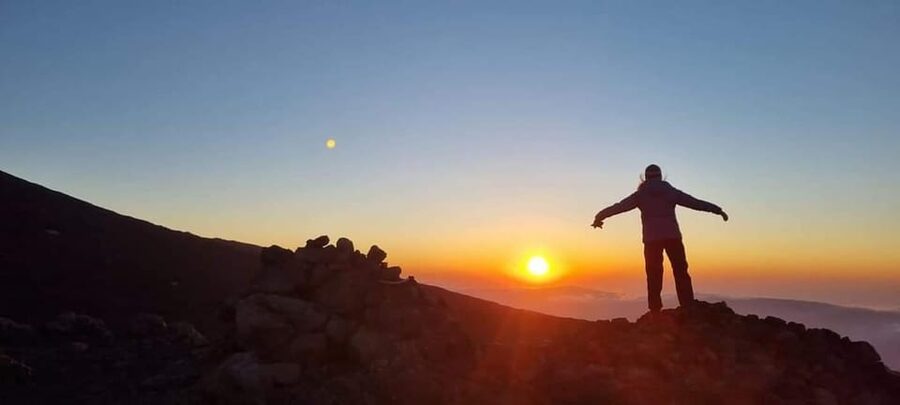
After reaching the crater area, the ascent includes a walk on a path surrounded by volcanic scoria and bombs. The climb is described as a total climb of about 300 meters before you arrive at the viewpoint height (the route references around 2900 m for the viewpoint).
This is not a casual stroll. The ground is volcanic—uneven, textured, and less forgiving than dirt paths. That’s why the basics matter: comfortable shoes and long pants aren’t optional here.
Here’s what will help you enjoy it:
- Take it slow on the first minutes of the hike, even if you feel fine. Altitude and volcanic uneven footing can surprise you.
- Use your daypack for the essentials only. You don’t want to fiddle with gear while you’re focusing on footing.
- Biodegradable sunscreen matters because you’ll be exposed to sun and wind at altitude.
If you’re bringing a hat or sunglasses, you’ll thank yourself later. Clear air near the summit makes light feel sharper.
Sunset waiting spot: views of the roof of Sicily
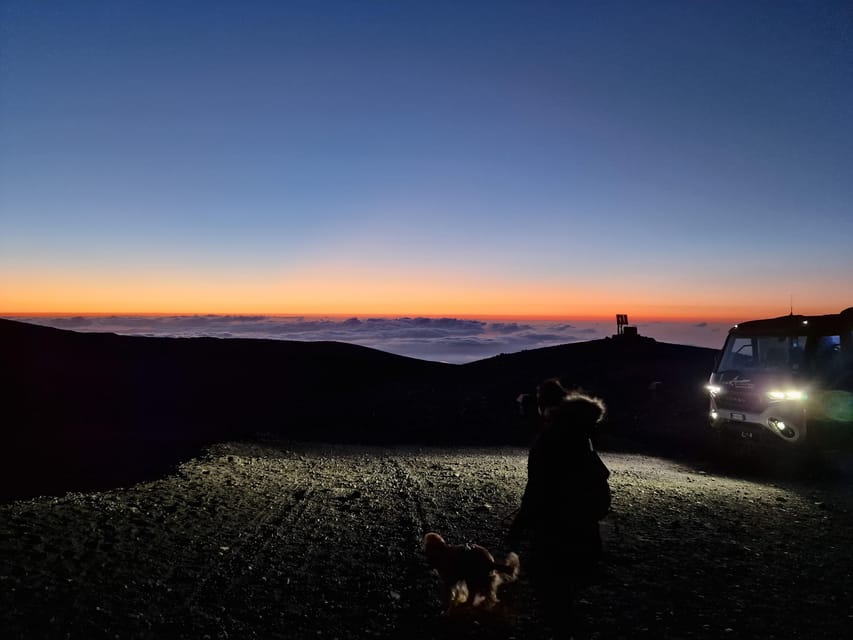
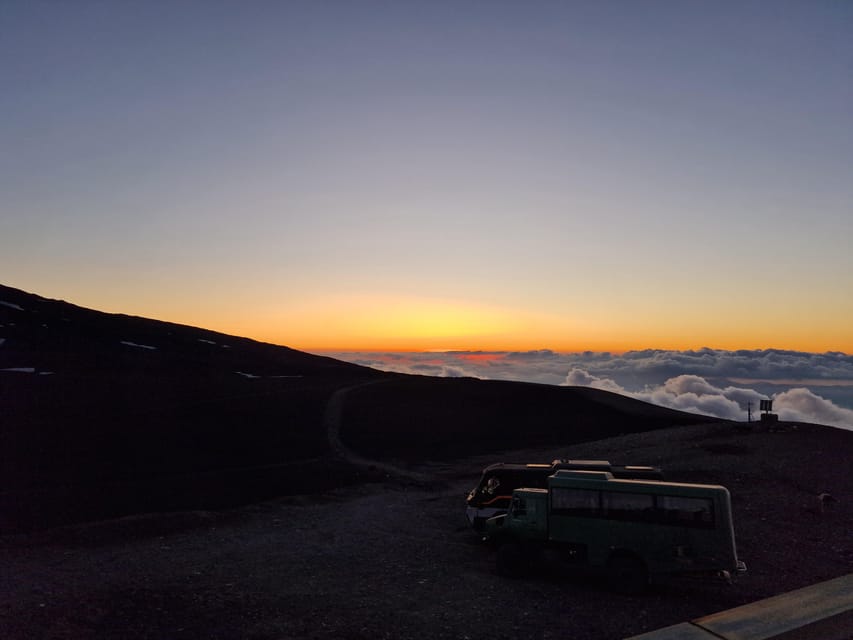
The tour is built around a stop at the viewpoint so you can admire the volcano’s processes and enjoy the big panorama from high ground. In clear weather, you can see both the Lion and the Bove valleys.
That detail is more than trivia. It gives you something to look for when the light changes. Instead of just watching the sky, you’re reading Etna’s position in the wider region—how crater systems relate to valleys beyond.
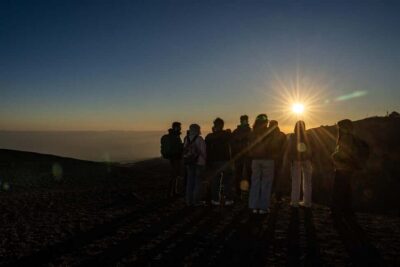
Sunset here also turns the volcanic colors up a notch. Shadows deepen in rifts and around crater edges. Even if you don’t catch dramatic activity in the moment, the terrain itself can still look alive.
And yes, the wait is part of the experience. This isn’t a “quick photo, then go.” You’re meant to stand still long enough that the scenery settles in.
Pace, group vibe, and motion-sickness reality
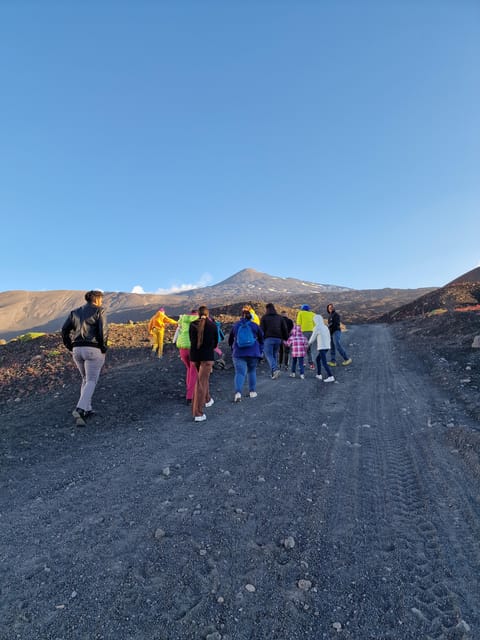
This is a short tour in time—about 3 hours total—but it packs multiple phases: drive up, crater-area walk, viewpoint stop, then the ride back. That makes it a solid choice if you’re on a tight schedule around Catania or Nicolosi-area sightseeing.
Group pace is generally steady rather than slow and lingering. You’ll move with the group on a mountain trail and during vehicle transfers. So it’s not the best fit if you want lots of unstructured wandering.
Two practical notes based on what people experience:
- The 4×4/off-road ride can be very bumpy. If you’re prone to nausea, plan ahead.
- The guide can be a strong part of the trip, but English clarity may vary. If you only feel comfortable with very detailed English explanations, it’s worth considering.
On the plus side, many guides are local and passionate, and you can get a lot of meaning out of what you see—not just “this is a crater,” but why it looks like it does.
Who should book Etna North Sunset (and who might not)
I think this tour works best for three types of travelers:
- Nature lovers who want a big view without spending a full day hiking.
- People who like real mountain terrain—lava ground, volcanic textures, crater systems.
- Anyone who wants an organized way to reach high altitudes and then enjoy sunset from the crater area.
It’s not ideal if:
- You get carsick easily on rough roads.
- You want a long, leisurely hike. The walking is short, but it’s on volcanic ground and includes an uphill climb.
- You need highly fluent English from the guide. If language clarity is a deal-breaker, you should ask about guide language comfort before you go.
Practicalities: meeting point, timing, and what to pack
The meeting point is listed as an office with coordinates 37.79744338989258, 15.03928279876709. From there, you’ll get organized for the climb toward Piano Provenzana and the crater areas.
Duration is 3 hours, and the tour includes a live tour guide in English and Italian. It also includes skip-the-ticket-line, so you spend more time on the mountain and less time waiting.
What to bring:
- Comfortable shoes
- Biodegradable sunscreen
- Long pants
- A daypack
One small smart tip: bring a thin layer even if it’s warm at lower elevations. Higher altitude air can feel colder fast once you’re standing near crater zones at sunset.
Also, the provider is ALTERNATIVETNA, and this tour is listed as wheelchair accessible. Still, because the route includes a walk with elevation gain, I’d suggest checking directly with the provider about how wheelchair access is handled for the hiking segment.
Value check: what you get for your 3 hours
This tour’s value isn’t about seeing one crater from far away. It’s about access: off-road transportation to high slopes, a walk through volcanic ground, and then a sunset viewpoint that can include the Lion and Bove valleys on clear days. In a short time window, that mix is hard to match with self-guided plans.
You’re also getting interpretation from a guide, which turns “cool rocks” into “I know what I’m looking at.” And because it’s structured around sunset, the schedule is built to deliver the moment—not just the route.
If you’re deciding between a longer Etna hike and something shorter, this is a good middle ground: you get altitude and crater access without committing to a full day.
Should you book Etna North Sunset: Summit area & Craters of 2002?
If you want a crater-focused Etna experience with a sunset payoff, I’d book it. The big draws—North-East crater access, 2002 eruption terrain, and crater-viewing from the high viewpoint—are exactly the kind of “worth it” moments that stick.
Do it especially if you:
- like your nature trips scenic and guided,
- want a short outing that still feels authentic,
- and enjoy the idea of walking on volcanic ground rather than only looking from a bus window.
Hold off or ask extra questions if you:
- get motion sickness on bumpy rides,
- need very clear English narration,
- or have mobility needs beyond what a short uphill crater walk might involve.
If you’re looking for a practical, high-impact Etna evening, this one fits the bill.
FAQ
How long is the Etna North Sunset excursion?
It lasts 3 hours total.
Where do I meet for the tour?
The meeting point is an office at these coordinates: 37.79744338989258, 15.03928279876709.
How do we travel to the summit area and crater zones?
You travel using off-road vehicles, including a rugged bus style ride, to reach the high slopes and the North-East crater area.
Is there walking involved?
Yes. After reaching the North-East crater area, the tour includes an ascent on foot along a path surrounded by volcanic scoria and bombs, with a total climb of about 300 meters.
What part of Etna’s 2002 eruption does the tour cover?
The route follows areas framed by lava and volcanic sand from the rift created in the 2002 eruption.
Will I be near the volcano observatory?
The North-East crater area you reach is the location where the volcano observatory is situated.
What views can I expect at the viewpoint during sunset?
From the viewpoint at the high elevation, you can admire the volcanic environment and the scenery over Sicily. In clear weather, you can see both the Lion and the Bove valleys.
What languages are the guides?
The live tour guide is available in English and Italian.
What should I bring with me?
Bring comfortable shoes, long pants, a daypack, and biodegradable sunscreen.
More Evening Experiences in Catania

More Tour Reviews in Catania
More Etna Summit Treks We Have Walked
Just added: the newest Catania tours in our notebook
- Transfer Catania / Agrigento Airport★ 5.0 · 3 reviews
- Sicily private shore excursion – Etna and Taormina with personal driver★ 3.5 · 3 reviews
- Sunset Trekking on Mount Etna★ 5.0 · 3 reviews
- Private Transfer from Catania to Palermo or vice-versa with stop★ 5.0 · 3 reviews
- From Syracuse: Mount Etna Volcano Morning Trekking Tour★ 5.0 · 3 reviews
- Catania: Guided Street Food Tour with Tastings★ 5.0 · 3 reviews
Mount Etna Tours & Summit, compared.
 ★ 4.8Catania: Mount Etna Morning or Sunset Day Trip with TastingFrom $704,028 reviews
 ★ 4.8Catania: Sunset Jeep Tour of Mount Etna and Lava Flow CavesFrom $712,113 reviews
 ★ 4.8Etna and Alcantara Gorges Full-Day Tour with LunchFrom $1051,766 reviews
 ★ 4.7Etna: summit craters trekking with volcano guide 3350mtFrom $771,712 reviews
 ★ 4.9Catania: Mount Etna Trekking Tour Beyond the Tourist TrailsFrom $811,596 reviews
 ★ 4.8Mount Etna: Guided Trek 3,000 Meters to the SummitFrom $1131,407 reviews
 ★ 4.8Catania: Etna Sunset Tour with Pickup and Drop-offFrom $711,348 reviews
 ★ 4.8Etna Sunset Tour: Volcano trek, Cave & tasting from CataniaFrom $701,290 reviews
Browse the lists this tour appears in