
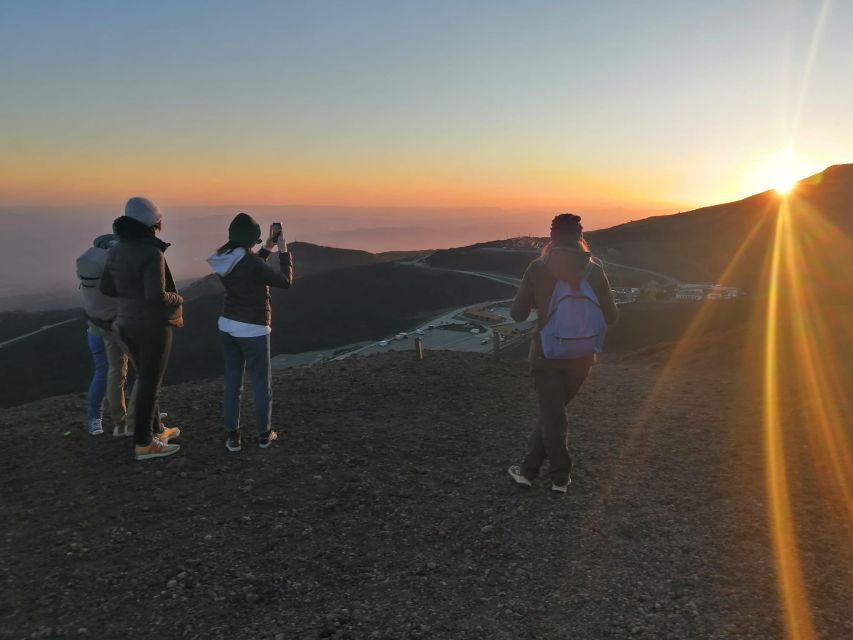
Reviewed · MOUNT ETNA TOURS & SUMMIT
Etna excursions at sunset ancient craters and lava flows
Etna at golden hour feels otherworldly. This 4-hour sunset excursion focuses on real volcanic terrain plus a calm, easy walk where you’ll learn how Etna connects to daily life on the island. I love that the guides keep it practical—why eruptions happen, what you’re seeing on the ground, and how local people live with the risk and the beauty. One consideration: it’s not a soft, all-view no-walk outing. You’ll do a short loop hike and you should plan for cooler late-afternoon air, especially with a jacket.
The best part for me is the timing: you reach the hiking area with enough light to understand the terrain, then you wait for sunset at the end of the trail. I also like the mix of stops—ancient side craters up front, then a route through both recent and older lava fields. The possible drawback is that it isn’t suitable for everyone; it’s not recommended if you have altitude sickness, respiratory issues, heart problems, or you’re pregnant.
If you want a guided Etna experience that’s more than bus sightseeing, this hits the mark. With pickup from Trecastagni, a guided component on the volcano, and a simple 2 km loop, it’s built for people who like nature but don’t want an all-day trek. Just don’t forget to dress for changing conditions—comfortable clothes plus a warm layer is the smart move.
In This Review
- Key things to know before you go
- Why Etna at sunset is a smart move (not just pretty light)
- Getting there from Trecastagni: time, van ride, and what it means
- Stop 1: ancient side craters and why starting here helps
- The main event: a guided hike on Etna’s 2 km easy loop
- Lava fields and vegetation: learning to read what Etna left behind
- Waiting for sunset at the end of the trail
- What the guide covers: eruptions, local life, and the human side
- Price and value: is $84.96 worth it?
- Who this fits best (and who should skip it)
- Quick packing and on-the-ground comfort tips
- Should you book this Etna sunset excursion?
- FAQ
- How long is the Etna excursion?
- What time does the tour start?
- Where does pickup happen?
- Does the tour include food and drinks?
- How much walking is involved?
- What languages are the guides available in?
- Is this tour private or small group?
- Is the tour suitable for people with altitude sickness or respiratory issues?
- What should I bring?
- Is it easy to change plans?
Key things to know before you go
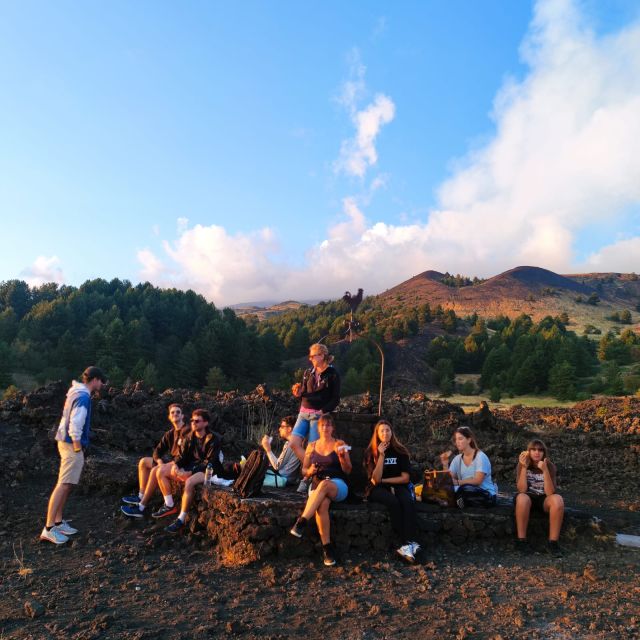
- Etna at sunset: the walk ends with time to watch the sky change over the volcano.
- Ancient side craters first: you start by seeing older volcanic features before the hike.
- A 2 km easy loop: short and manageable, designed for panoramic viewing.
- Recent and ancient lava fields: you learn to spot differences between older and newer flows.
- Local-life connection: the guide ties eruptions and volcano behavior to how people live nearby.
- Pickup from Trecastagni: included, with optional Catania pickup available for an extra fee.
More ways up the volcano from Catania
- Catania: Mount Etna Morning or Sunset Day Trip with Tasting
★ 4.8 · 4,028 reviews - Catania: Sunset Jeep Tour of Mount Etna and Lava Flow Caves
★ 4.8 · 2,113 reviews - Sicily: Etna and Alcantara Gorges Full-Day Tour with Lunch
★ 4.8 · 1,766 reviews - Mount Etna: Guided Trek 3,000 Meters to the Summit
★ 4.8 · 1,407 reviews
Why Etna at sunset is a smart move (not just pretty light)
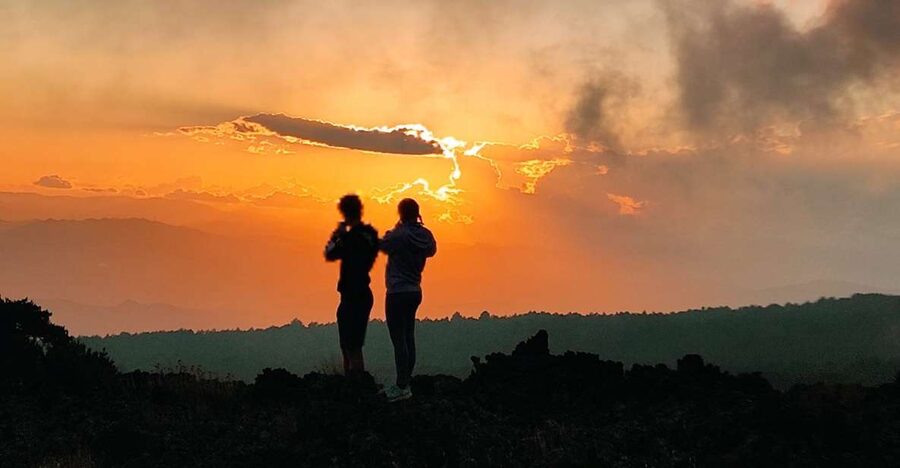
Etna changes with the sun. Late afternoon gives you the best of both worlds: you can still see details while the guide explains what you’re standing on, and then you get that dramatic shift when the horizon starts glowing. If you’ve ever looked at volcano photos and thought they look too perfect, sunset helps fix that—because you’re seeing it for real, with shadows that make the slopes and craters easier to read.
This tour also isn’t trying to be a long endurance challenge. The plan is built around a panoramic, easy trail and a short loop (2 km), so you can focus on the story the guide is telling rather than saving your energy for surviving the climb. You’ll still need to bring a jacket and comfy shoes, but it’s the kind of hike where you can actually enjoy looking around.
One more reason I like this approach: it’s UNESCO Etna, Europe’s highest active volcano. That’s not just a label. Etna’s ongoing activity shaped the island’s geography and culture for generations. A sunset timing turns that geological fact into something you can feel—the scale, the textures, and the sense that the mountain is alive, even when it’s quiet.
Getting there from Trecastagni: time, van ride, and what it means
The meeting point is near Saint Biagio Church (Piazza Stesicoro). Pickup is included from Trecastagni, and the van ride is about 45–50 minutes before the first stop. That matters because it helps you arrive before the light drops too far, which makes the later hike and waiting period much easier.
Your start time is listed as 3:30 PM, though it may shift a bit depending on sunset timing. That’s normal for this kind of outing. The key is simple: you’re not doing a random late tour. You’re doing a sunset-focused one, so plan to be ready at the start time even if it feels early.
Also note the ending. The activity says it ends back at the meeting point, but the program mentions drop-off at multiple nearby spots, including Chiesa di San Biagio in Sant’Agata alla Fornace and Piazza Sant’Alfio. In practice, that usually means you’ll be taken back to your area or one of the listed nearby locations depending on your option. Either way, you’re not stuck on your own at the far end of the day.
Stop 1: ancient side craters and why starting here helps
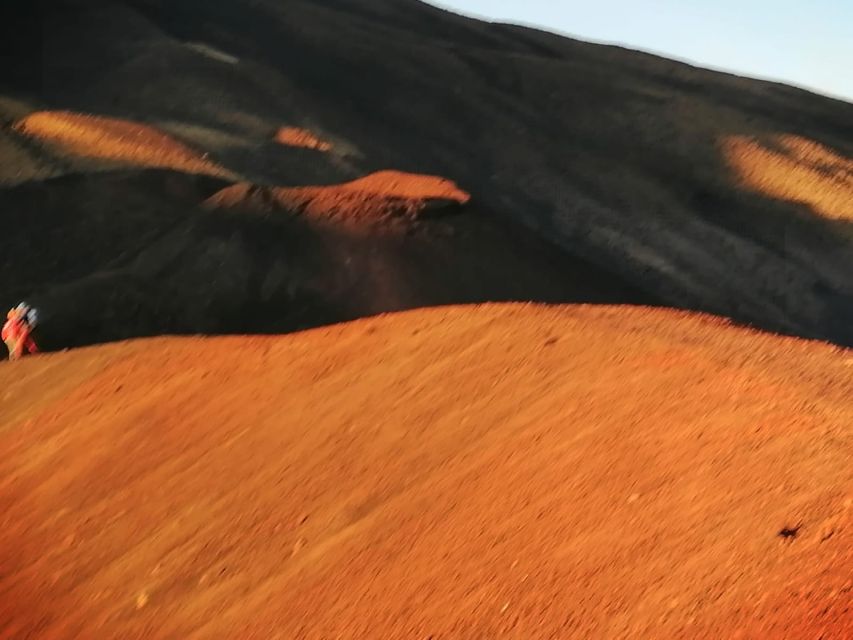
The tour begins with a first volcanic stop focused on ancient side craters. This is a smart order. If you start with lava flows and dramatic views, you can miss the bigger lesson: Etna has layers of history. Older volcanic features show you the mountain’s past activity, while later stops help you compare with newer terrain.
At this stage, expect a guided explanation of what makes a crater “side” and what it tells you about eruption paths. The goal isn’t just to point at a hole in the ground. It’s to help you build a visual vocabulary. Once you understand how craters and volcanic vents fit into the system, the rest of what you see—lava fields, trail textures, and changes in vegetation—makes more sense.
A small practical tip: this is your warm-up for looking. Take a few minutes to slow down and actually study the ground. Even though the walk is easy later, this first stop sets the stage for what you’ll be reading on the surface by the time you reach the trail.
The main event: a guided hike on Etna’s 2 km easy loop
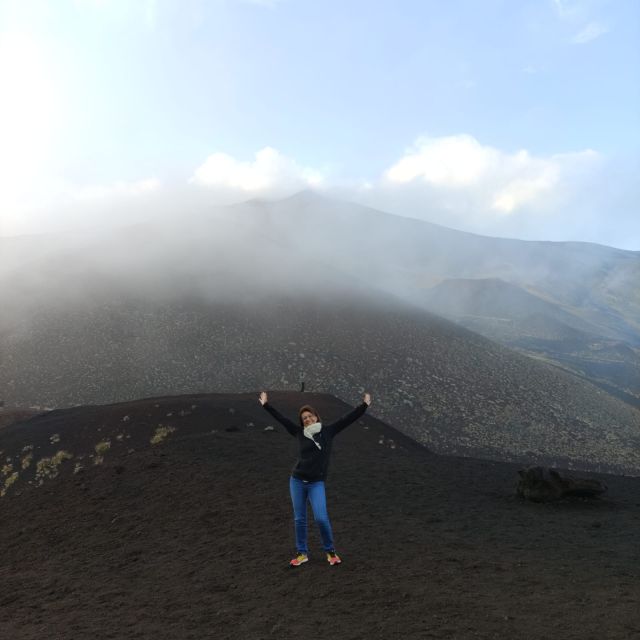
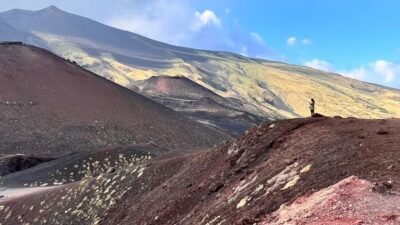
After the initial stop, you’ll continue with the guided portion and then do the main hike: a 2 km loop with an easy level rating. It’s described as a scenic trail with panoramic views, and you’ll be walking both through areas connected to recent activity and older lava fields.
What you’ll likely notice as you go is how the ground changes. Lava flows cool into rock, and over time life moves back in. The tour is designed to show you that progression: recent lava tends to look rougher and more exposed, while older flows often show different patterns of erosion and vegetation. The guide’s job is to turn what you’re seeing into a story about eruptions and recovery.
This hike is short, but it still has one “real-world” factor: volcanic terrain can be uneven, even on trails. That’s why comfortable clothes are essential. And because the tour is sunset-based, you might feel a temperature drop by the time you’re near the end of the route. Bring a jacket. You’ll be glad you did.
The big value here is that it’s not only scenery. The guide talks about the relationship between Etna and people, including how locals understand eruptions and how the volcano shapes local life. It’s a different way to see a famous natural site—less like a highlight reel, more like a lived environment.
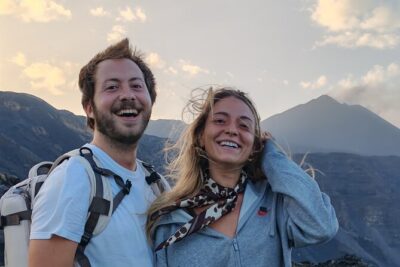
A few we would gladly point a friend toward in Catania
Lava fields and vegetation: learning to read what Etna left behind
Etna is often described with dramatic comparisons, but the best part of this tour is the practical learning. You’ll walk through both recent and ancient lava fields, so you can compare textures, colors, and how the mountain supports different flora over time.
The tour specifically frames Etna’s distinctive flora and the broader natural world. Even if you’re not a plant person, the guide’s explanations can help you spot what matters: growth patterns on cooled rock, the way life returns after disturbance, and how conditions change with exposure and slope.
This is also where you’ll understand the volcano as a system. Eruptions aren’t random events—they leave behind evidence, and you can often see clues of routes and phases. By the time you reach the trail’s end, the terrain isn’t just interesting. It becomes interpretable.
And yes, sunset helps. When the light comes in at an angle, the rock texture becomes clearer. That makes the educational parts land harder, because your eyes get the same message your guide is explaining.
Waiting for sunset at the end of the trail
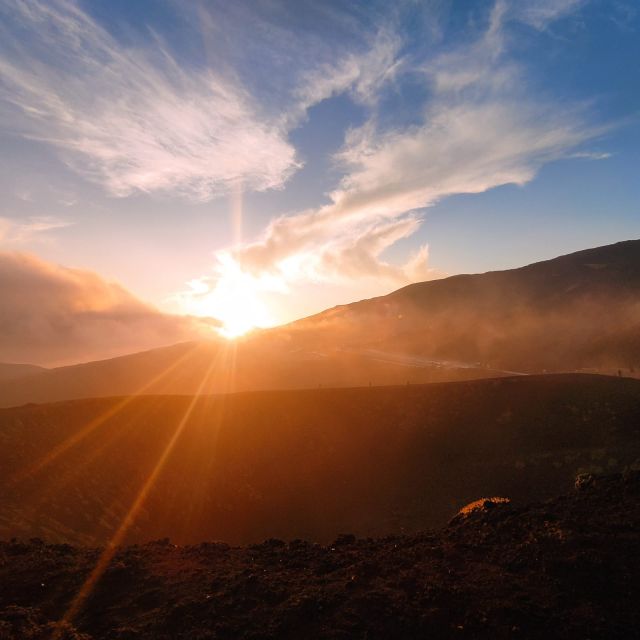
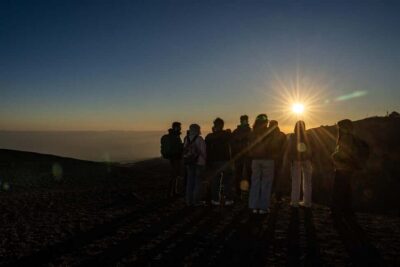
At the end of the 2 km loop, the group waits for sunset. This is not “walk fast, see quick, and leave.” It’s structured around letting the view happen. That’s why it feels different from a typical sightseeing stop.
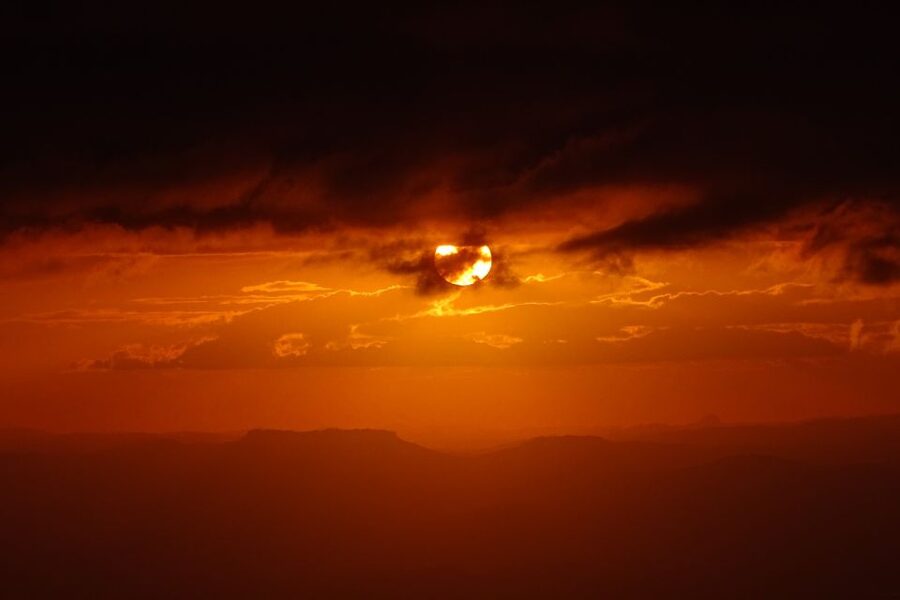
Sunset at Etna is often dramatic because you’re looking at volcanic geometry—craters, slopes, and the contrast between dark rock and a lighter sky. Even if the weather is only okay, you still get that shift that makes the whole mountain feel like a stage set.
Practical note: waiting can mean standing still for a bit. If you run cold, layers matter more than you’d think. Also, bring a calm mindset. Sunset timing is the point, and everyone moves on the same rhythm.
What the guide covers: eruptions, local life, and the human side
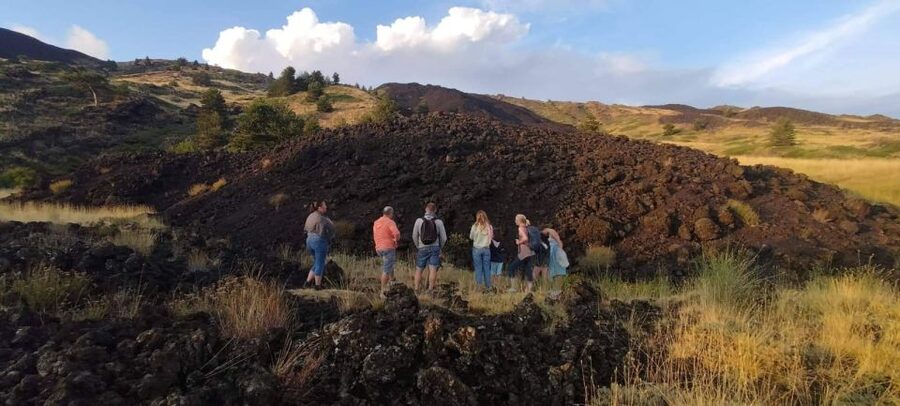
This is an education tour as much as it is a view tour. The description highlights expertise on eruptions and how Etna relates to local inhabitants, flora, and fauna. That’s the heart of what you’re paying for.
A good guide does two things well:
- They help you make sense of what you’re seeing.
- They translate the volcano from science into lived experience.
That translation is where the tour likely feels most authentic. Etna isn’t just a tourist target; it’s a daily factor in the lives of people nearby. Even with no dramatic eruption happening, the mountain shapes land, agriculture, and the way locals plan around risk and opportunity.
Language options are French, Italian, and English. So if you’re traveling with friends who don’t speak fluent English, this still has a fair chance of working for your group.
Price and value: is $84.96 worth it?
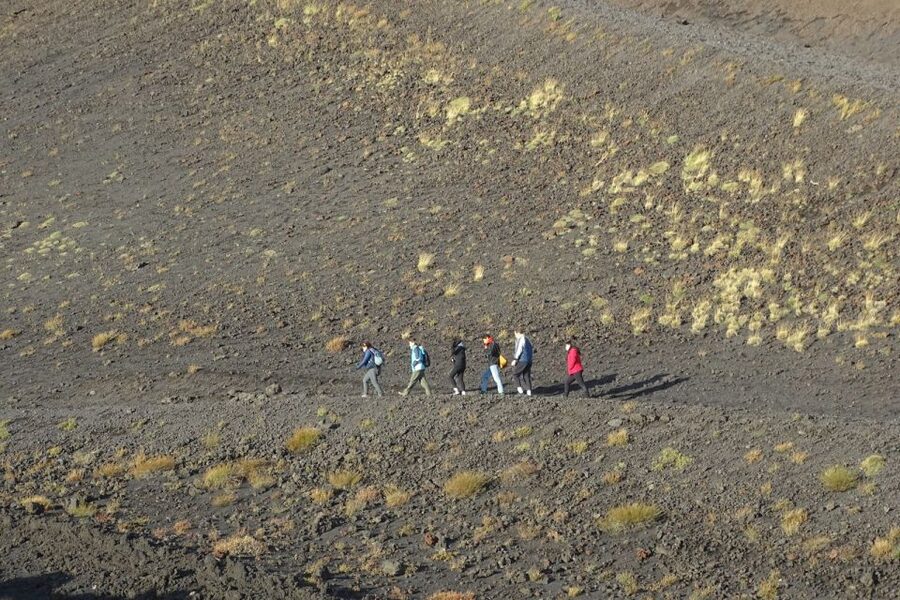
The price is listed at $84.96 per person, duration about 4 hours. On paper, that can look steep if you compare it to a basic bus tour. But this isn’t a bus-only outing. You’re paying for a guided program that includes:
- Pickup and drop-off from Trecastagni
- Visits around an extinct side crater area
- A guided hike on Etna’s trail system
- Time structured specifically for sunset viewing
- Interpretation of eruptions, vegetation, and the local relationship with the volcano
Also, the small group/private option is available. Small group tours often feel better at sites like Etna because you’re not constantly waiting while the crowd moves or losing your chance to ask questions.
The one obvious “not included” item: food and drinks. So if you’re coming straight from sightseeing, budget for a snack or plan to eat before or after. If you want to stay efficient, eat something light beforehand and keep water handy on the day.
Who this fits best (and who should skip it)
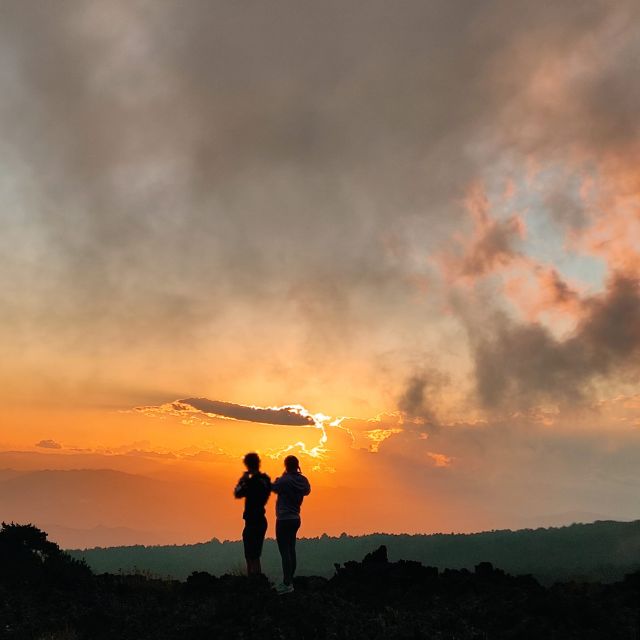
This excursion suits you if you want:
- A guided Etna visit with real explanations, not just photo stops
- A sunset-focused itinerary with a manageable hike
- A short program that still covers key volcanic features (ancient craters plus lava fields)
It’s also a good fit for couples and friends who like nature with context. Even if you don’t know much geology, the “what you’re seeing and why it matters” approach helps you follow along.
However, the activity is not suitable for people with altitude sickness, respiratory issues, pregnant women, or heart problems. That’s not a suggestion—it’s an important safety filter.
If you’re unsure because of health considerations, check with your doctor first. Volcanic areas can involve uneven ground, exertion, and conditions that might be harder for some bodies than a typical city walk.
Quick packing and on-the-ground comfort tips
You don’t need fancy gear for this. The essentials are simple:
- Comfortable clothes
- A jacket
That’s it, but don’t underestimate “comfortable.” You’ll be walking a 2 km loop on volcanic terrain. Even with an easy rating, your shoes and your ability to move comfortably matter for enjoying the view instead of focusing on your footing.
If you tend to get cold at dusk, bring a warmer layer than you think you’ll need. Sunset time often means a noticeable drop in temperature.
Should you book this Etna sunset excursion?
If you’re choosing between a quick Etna stop and a guided, sunset-timed experience, I’d lean toward booking this one—especially if you want the volcano explained while you’re standing in the right places. The combination of extinct side crater context, a short easy loop through lava fields, and actual sunset waiting time is exactly what makes Etna feel alive rather than just famous.
Book it if:
- You want sunset plus a guided walk
- You like learning how landscapes formed, tied to local life
- You prefer a 4-hour outing over a longer day trip
Skip or reconsider if:
- You fall into the listed health risk categories (altitude sickness, respiratory issues, heart problems, pregnancy)
- You’re looking for zero-walking sightseeing
If your goal is a guided Etna experience that’s scenic, readable, and timed for the sky to do its best work, this is a strong choice.
FAQ
How long is the Etna excursion?
The total duration is about 4 hours, including travel time.
What time does the tour start?
The starting time is listed as 3:30 PM, and it may shift depending on sunset timing.
Where does pickup happen?
Pickup is included from a meeting point in Trecastagni, near Saint Biagio Church (Piazza Stesicoro).
Does the tour include food and drinks?
No. Food and drinks are not included.
How much walking is involved?
The main hike is a 2 km loop on an easy trail.
What languages are the guides available in?
Live guides are offered in French, Italian, and English.
Is this tour private or small group?
Private or small groups are available.
Is the tour suitable for people with altitude sickness or respiratory issues?
No. The activity is not suitable for people with altitude sickness or respiratory issues, and it is also not suitable for pregnant women or people with heart problems.
What should I bring?
Bring comfortable clothes and a jacket.
Is it easy to change plans?
You can cancel up to 24 hours in advance for a full refund, and there’s a reserve now, pay later option.
More Tours in Catania


More Tour Reviews in Catania
More Etna Summit Treks We Have Walked
Just added: the newest Catania tours in our notebook
- Transfer Catania / Agrigento Airport★ 5.0 · 3 reviews
- Sicily private shore excursion – Etna and Taormina with personal driver★ 3.5 · 3 reviews
- Sunset Trekking on Mount Etna★ 5.0 · 3 reviews
- Private Transfer from Catania to Palermo or vice-versa with stop★ 5.0 · 3 reviews
- From Syracuse: Mount Etna Volcano Morning Trekking Tour★ 5.0 · 3 reviews
- Catania: Guided Street Food Tour with Tastings★ 5.0 · 3 reviews
Mount Etna Tours & Summit, compared.
 ★ 4.8Catania: Mount Etna Morning or Sunset Day Trip with TastingFrom $704,028 reviews
 ★ 4.8Catania: Sunset Jeep Tour of Mount Etna and Lava Flow CavesFrom $712,113 reviews
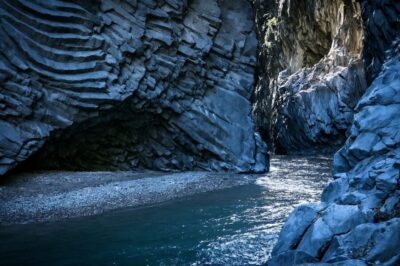 ★ 4.8Etna and Alcantara Gorges Full-Day Tour with LunchFrom $1051,766 reviews
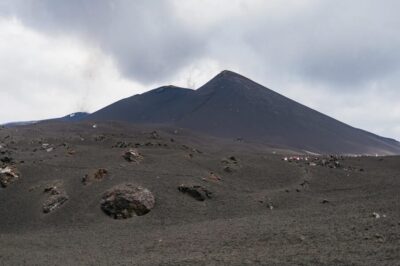 ★ 4.7Etna: summit craters trekking with volcano guide 3350mtFrom $771,712 reviews
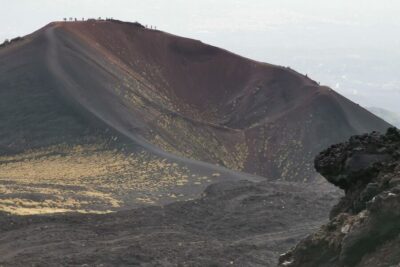 ★ 4.9Catania: Mount Etna Trekking Tour Beyond the Tourist TrailsFrom $811,596 reviews
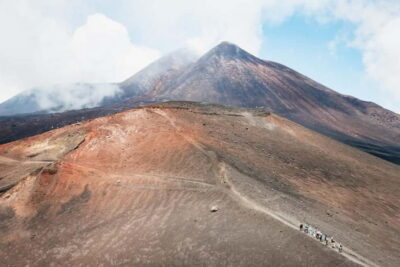 ★ 4.8Mount Etna: Guided Trek 3,000 Meters to the SummitFrom $1131,407 reviews
 ★ 4.8Catania: Etna Sunset Tour with Pickup and Drop-offFrom $711,348 reviews
 ★ 4.8Etna Sunset Tour: Volcano trek, Cave & tasting from CataniaFrom $701,290 reviews
Browse the lists this tour appears in