
Reviewed · PALERMO CITY TOURS
Discover the Charm of Palermo: A 3-Hour UNESCO Sites Walking Tour
Palermo can feel like three cities in one block. This 3-hour walk strings together UNESCO-class architecture, classic piazzas, and real street life, with a licensed English guide keeping it clear and easy to follow. You get the big names plus the little “wait, what is that?” details that make Palermo click.
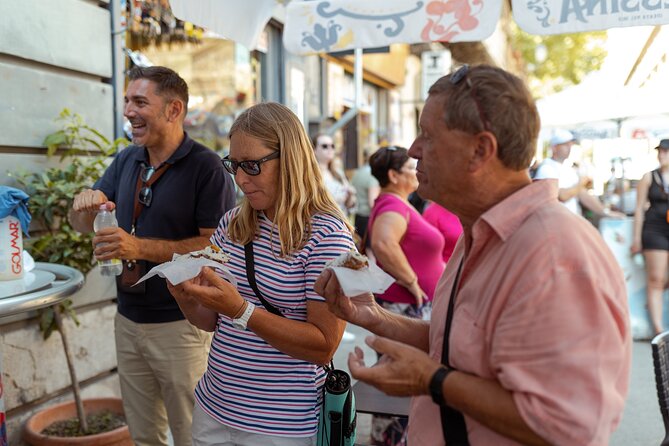
I especially like that the itinerary is built for quick orientation: Teatro Massimo, Quattro Canti, the cathedral area, and the Palazzo dei Normanni zone all fit in one compact route. And you also get a sweet spot at the end, with a typical Sicilian cannolo or granita included.
One thing to consider: not every major interior is automatically covered. Cathedral entry is included, but for the Palace complex (where the Palatine Chapel is), tickets are listed as not included—so plan for possible extra entry time if you’re chasing mosaics inside.
In This Review
- Key things that make this Palermo walk work
- How the 3-hour UNESCO walk is set up (and how to enjoy it)
- Teatro Massimo, a fading arcade, and the market reality check
- San Domenico and Piazza Caracciolo: faith, power, and street food lanes
- Garraffo Fountain, the Palermo Stock Exchange, and the Descent of the Judges
- La Martorana (Santa Maria dell’Ammiraglio) and the Greek-Byzantine connection
- Piazza Pretoria and Quattro Canti: the city’s most photogenic geometry
- Cattedrale di Palermo: Norman architecture layered over Muslim and Christian pasts
- Villa Bonanno and Palazzo dei Normanni: where the mosaics are waiting
- Price and value: what you’re really paying for at $31.88
- Small logistics that make or break a walking day in Palermo
- Should you book this Palermo UNESCO walking tour?
- FAQ
- How long is the Palermo UNESCO walking tour?
- What is the price per person?
- Is the Cathedral of Palermo ticket included?
- Are tickets included for the Palazzo dei Normanni or the Cappella Palatina?
- What’s included with the tour besides the guide?
- Where does the tour start?
- Does the tour require hotel pickup?
- Can I cancel for a full refund?
- Are service animals allowed?
Key things that make this Palermo walk work
- A tight route that still covers UNESCO-level sights without turning into a marathon
- Cathedral entry included, so you’re not just doing exterior photos
- Markets are part of the plan, including an open-air market crossing and the Piazza Caracciolo food streets
- Story-rich stops like the Descent of the Judges and the origins behind La Martorana
- Big-photo piazzas with real historical timelines: Piazza Pretoria and Quattro Canti
- Local-guide energy tends to matter here, and guides such as Valeria, Renata, Fabio, and Peter are specifically mentioned in past groups
The rest of what Palermo puts on
- Palermo: NO Mafia Walking Tour
★ 4.8 · 2,431 reviews - Palermo: Hop-on Hop-off Bus Tour 24-hour Ticket
★ 3.9 · 2,410 reviews - Palermo Original Street Food Walking Tour by Streaty
★ 5.0 · 2,105 reviews - Segesta, Erice and Salt Pans Full-Day Excursion from Palermo
★ 4.2 · 1,791 reviews
How the 3-hour UNESCO walk is set up (and how to enjoy it)
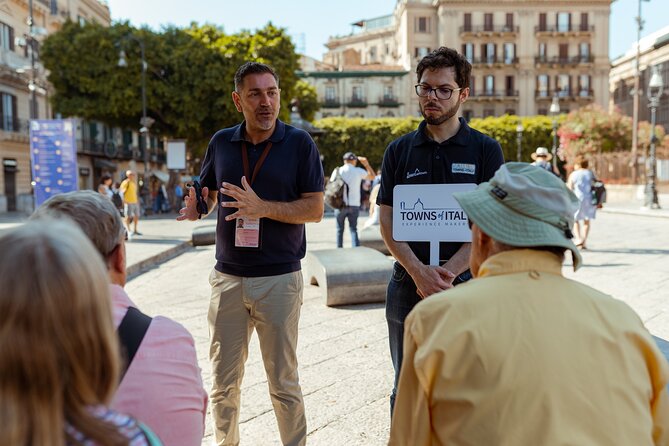
This is a 3-hour walking tour in Palermo’s historic center, designed to check off major highlights without eating your whole day. The route is compact, but it’s still Palermo: tight streets, traffic squeezing past pedestrians, and plenty of visual input.
You’ll move from one key landmark to the next, with stops long enough to absorb what you’re looking at and short enough to keep momentum. A big practical plus is the audio support reported on previous runs (amplification/headsets showed up in feedback), which helps when streets get noisy.
Group size is kept small—max 20 people—so you’re less likely to get lost in a crowd shuffle. Still, it’s a walking tour in a dense city, so wear good shoes and expect that you’ll be on your feet most of the time.
Teatro Massimo, a fading arcade, and the market reality check
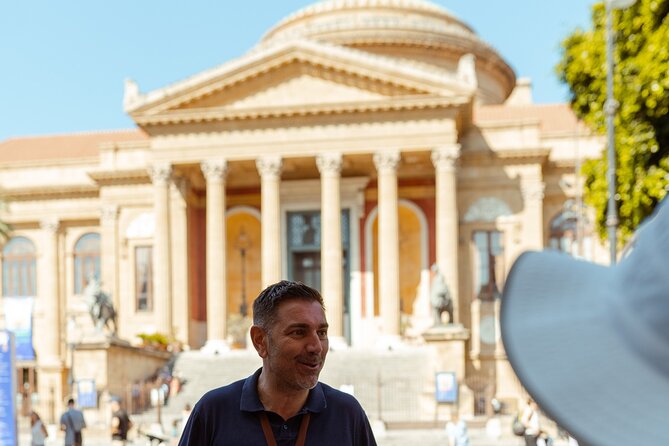
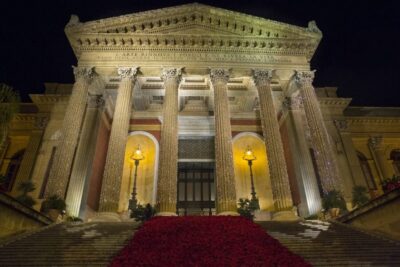
You start near Via Volturno and hit the cultural “big door” first: Teatro Massimo. It’s Palermo’s opera house, dedicated to King Victor Emanuel II, and it’s known for its perfect acoustics. Even if you don’t attend a performance, standing in the area gives you the sense of how seriously Palermo takes music and public life.
From there, you get a quieter contrast stop at Galleria delle Vittorie, a multi-story commercial arcade on Via Maqueda. It was built like a shopping center, and it has deteriorated over the decades with restoration efforts attempted. It’s one of those places that makes you look at the city’s “then and now” changes in a single glance.
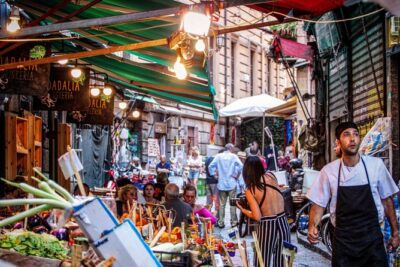
Then the tour switches gears into daily Palermo with a crossing on Via Bandiera—an area known for a typical open-air market feel. This matters because Palermo isn’t museum-only. The best way to understand the city’s architecture is to see it living in the same streets where people shop, snack, and argue about prices.
San Domenico and Piazza Caracciolo: faith, power, and street food lanes
Next up is Chiesa di San Domenico, in its square, which you’ll feel immediately because it sits like a statement in the city. This church is closely tied to the Cathedral area and is described as a “Pantheon of the illustrious men of Sicily”—a place where history and identity get embedded in architecture.
It also has a symbolic layer tied to the fight against the mafia, which changes how you read the building. Instead of only admiring, you understand why certain spaces in Palermo matter beyond religion or art.
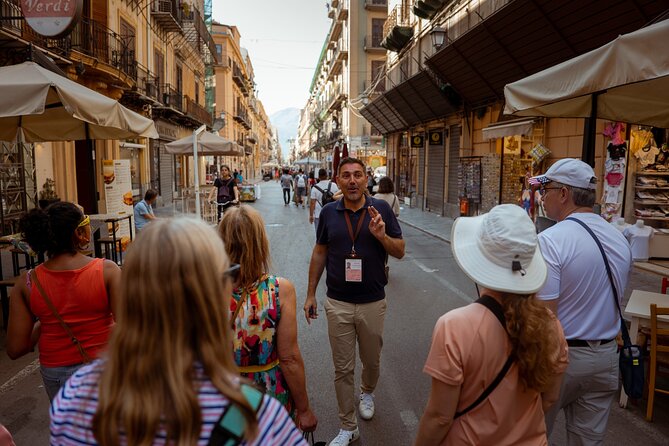
After that, you shift into the market streets around Piazza Caracciolo. This market winds through alleys and side streets and is described as capturing the city’s energy and cosmopolitan character. It even carries a naming history: it was formerly called La Bucceria, from the French boucherie, because it began as a meat-selling area.
Practical tip: markets can be loud and hot, and restrooms aren’t always easy to find in the center. If you need one, plan to use a café break when the guide naturally pauses, rather than hunting at random.
Garraffo Fountain, the Palermo Stock Exchange, and the Descent of the Judges
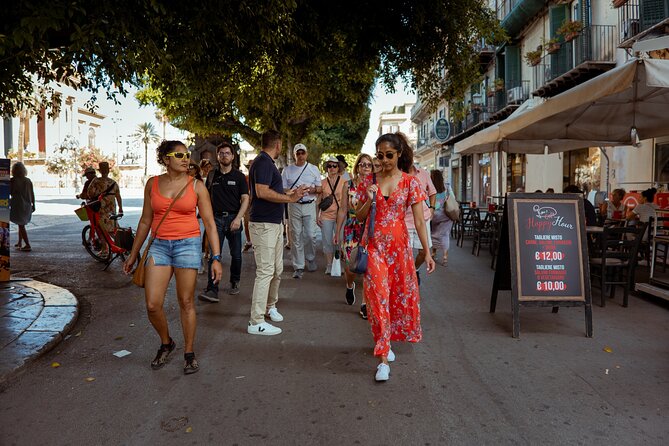
The walk brings in Baroque Palermo with the Garraffo Fountain in Piazza Marina, down the ancient Cassaro street (now tied to Via Vittorio Emanuele). Baroque fountains can look decorative until someone explains what they signal—power, wealth, and public pride. Here, the fountain acts like a visual marker that the old Palermo elites wanted water, light, and drama in the middle of everyday life.
Then there’s a smart detour into finance and civic history at the Palermo Stock Exchange. It operated until 1997, but the deeper story goes way back: trading opened in 1845, with brokers active as early as 1840. It was considered especially important in Sicily—second to Naples in the Kingdom of the Two Sicilies—and it was based for about a century in the Palazzo delle Finanze.
This stop might seem unexpected on a walking tour, but it helps explain why Palermo looks the way it does. Cities that traded and taxed and educated people often left physical evidence. You’re not only seeing buildings—you’re seeing the logic behind why those buildings were financed.
Finally, you reach the Descent of the Judges, which runs from Piazza Sant’Anna to Piazza Bellini. The street name is tied to the Judges of the Praetorian Court, who lived nearby in the monastery of S. Caterina. The guide’s explanation of how those judges were selected (chosen by the king, for one-year terms) turns a short street descent into a story about law, governance, and who held power.
A few we would gladly point a friend toward in Palermo
La Martorana (Santa Maria dell’Ammiraglio) and the Greek-Byzantine connection
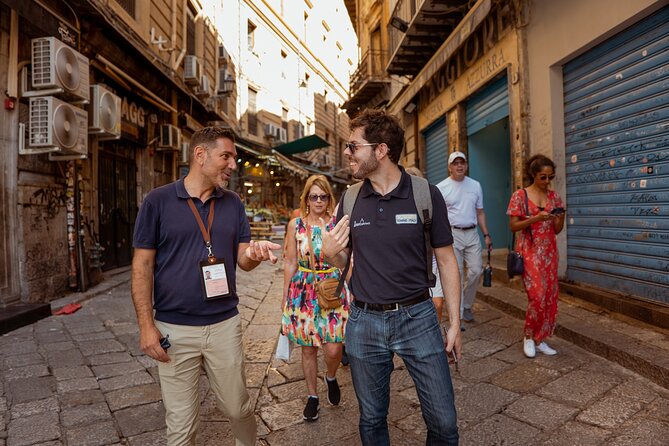
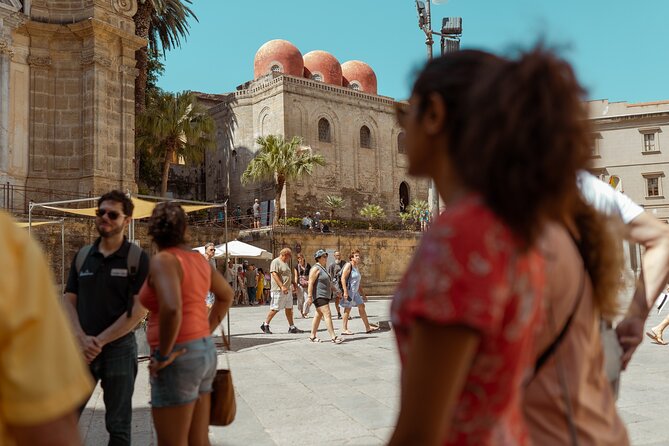
One of the most fascinating moments on this route is Santa Maria dell’Ammiraglio, also known as La Martorana. It sits over Piazza Bellini and is tied to the nearby Benedictine convent area.
The church’s timeline is 1143–1185, built by the Greek admiral George of Antioch, and the story is framed as thanks for help and protection from the Virgin Mary. But the truly unique angle is how the church is still connected to Greek-Byzantine clergy, with ceremonies in ancient Greek or Albanian language.
That detail changes your experience: you stop seeing La Martorana as a single-style monument. You see it as a cultural crossing that survived through centuries.
If you like religious art as “living history,” this is the kind of stop you remember long after the photos. Just give yourself a moment to look slowly; the layers matter.
Piazza Pretoria and Quattro Canti: the city’s most photogenic geometry
The tour moves to Piazza Pretoria, near the Kalsa district edge, close to Cassaro and Via Maqueda, not far from Quattro Canti. Piazza Pretoria is famous for its fountain and for the way it sits inside Palermo like a transplanted idea from elsewhere.
Here’s what makes it interesting: the fountain was created for the garden of Don Luigi de Toledo in Florence. Palermo’s specific plot wasn’t just empty space—it was originally connected to nuns of San Domenico al Maglio, and after pressure, it was obtained in 1551. Later, the Palazzo di San Clemente was built near the site in 1584, and the fountain work is linked to the Florentine sculptor Francesco Camilliani.
This stop is a good reset after market streets. You get breathing room, and the guide can help you spot why people call it unusual—this is a piazza that’s more about the idea of the place than about a single building.
Then you hit Quattro Canti—The Four Corners. Four buildings outline the square, built between 1608 and 1620, with sculptures and decorative elements completed in 1663. The square also goes by Piazza Vigliena, and it’s described as an ideal starting point for exploring Palermo’s streets.
Even if you’ve seen pictures, seeing it in person feels different. The crossing of ancient quarters gives you a natural “map moment.” After this, the rest of the walk stops feeling random.
Cattedrale di Palermo: Norman architecture layered over Muslim and Christian pasts
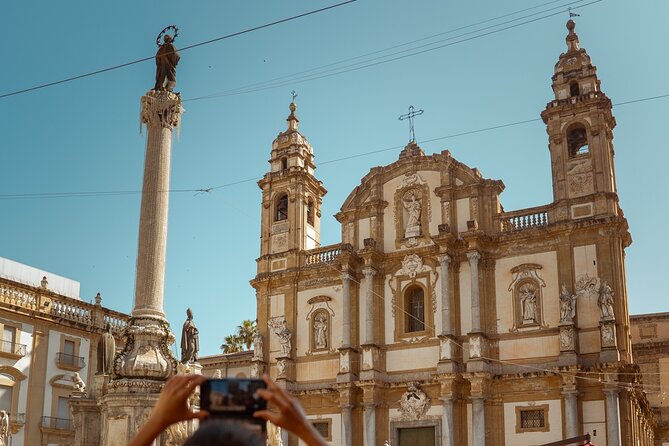
The heart of the UNESCO-era storytelling arrives at Cattedrale di Palermo. This is where the Norman influence becomes more than a label.
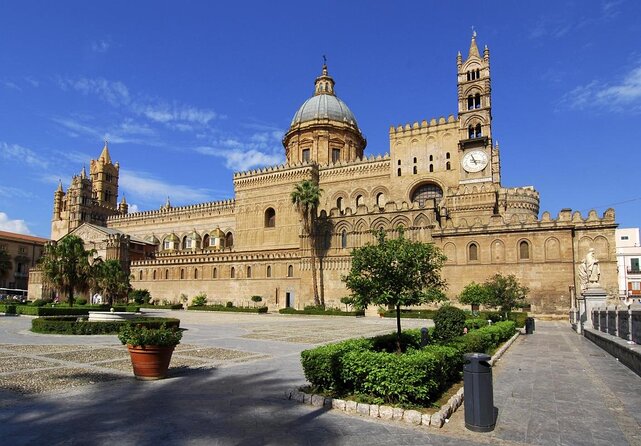
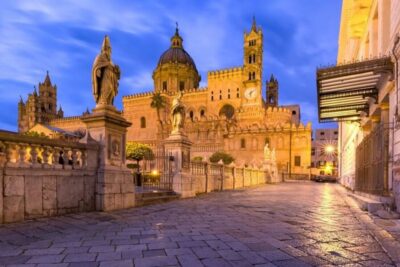
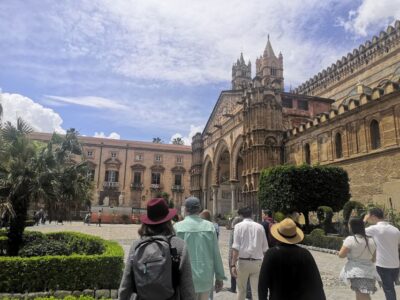
Built in 1184 by the Normans, it was a re-converted Christian church on a site that had layers before it: a Muslim mosque was built over an earlier Christian basilica. So yes, the building is a physical record of Palermo’s shifting rulers and beliefs.
You’ll also hear the competitive angle: the cathedral was built partly to surpass Monreale in beauty. That kind of rivalry helps explain why Palermo’s architecture can feel so determined and “overfull” with detail—people wanted to win.
What you notice with time is the stratification. Styles across centuries include Gothic to medieval elements, Arabic influence (including an engraved passage associated with the Koran on a column), and even later neoclassical touches. In other words, this cathedral isn’t one clean style. It’s layers—politics, faith, and artistry stacking up.
This tour includes entry, so you can go inside and see the interior rather than only orbiting the building from the outside. Plan on giving yourself that extra moment to look slowly at columns, chapels, and changes in ornament. This is the kind of place where the guide’s explanations help you notice things you’d otherwise miss.
Villa Bonanno and Palazzo dei Normanni: where the mosaics are waiting
After the cathedral, the tour heads into the zone behind the Palace complex: Villa Bonanno. It’s described as a magnificent always-open garden, built in 1905 by the mayor Bonanno. Palm trees and statues make it feel like a green pocket inside a stone city.
More importantly, there are archaeological traces here: remains of Roman patrician houses with mosaics, including the mosaics of the seasons and Orpheus—mosaics now kept in the National Archaeological Museum. That’s a useful detail for your future self, because you might want to seek the originals later.
There’s also a fountain nearby with a monument to Philip V, associated with Nuncio Morello, and there’s mention that it seems designed in 1661 with participation by Carlo d’Aprile and Serpotta. You’ll likely glance at it rather than deeply tour it, but the guide can help you connect the garden space to the larger Palace-era story.
Then comes Palazzo dei Normanni (the Royal Palace), the big historical building tied to Palermo’s long timeline—from Punic settlement origins to more modern eras. It’s where the Cappella Palatina sits, and that chapel is described as UNESCO World Heritage since 2015.
But here’s the practical catch: admission tickets for the Palace complex are listed as not included. So you’ll get context and likely exterior views and nearby stops, but if you specifically want to spend serious time inside the Cappella Palatina mosaics, you should be ready for separate ticket planning.
This isn’t a dealbreaker. It just means you should think about what you want most from this walk: orientation and storytelling, or a fully ticketed inside-day. This tour leans toward orientation plus one included interior (the cathedral).
Price and value: what you’re really paying for at $31.88
At $31.88 per person for about 3 hours, the value isn’t only the architecture. It’s the structure.
You’re paying for:
- a licensed English-speaking guide (not just a self-guided route)
- an itinerary that stitches multiple key squares and churches into one timeline
- Cathedral entry included
- a typical Sicilian treat: cannolo or granita
If you’ve ever arrived in a city like Palermo and spent the first day bouncing between tickets, opening hours, and confusing directions, you know how fast time disappears. This tour is designed to make that first morning simpler.
Also, with an average booking window of about 36 days in advance, the product clearly sells because it solves a common “I want to see the main stuff fast” problem. That doesn’t mean it’s touristy—it means the route is efficient.
Small logistics that make or break a walking day in Palermo
A few practical things help you enjoy this more.
- Expect warm street walking even if the day shifts. One guide style noted in past groups included shade management, which is smart in Sicily sun.
- Bring water and keep your treat excitement. Cannolo or granita can be the best little reward after churches and piazzas.
- If you care about interiors beyond the cathedral, be ready for the ticket-not-included reality at the Palace complex. If mosaics are your priority, ask the guide during the walk what’s realistic for your day.
- Don’t overpack your schedule afterward. This is a “get your bearings” tour. You’ll likely be tired in a good way and want an easy plan for dinner.
Should you book this Palermo UNESCO walking tour?
Book it if you want a fast, organized way to understand Palermo’s layers—Norman architecture, Arabic influence, Baroque civic flair, and street-level market life—without turning your first day into a navigation puzzle.
Don’t book it if your main goal is to spend hours inside every palace chapel and keep stopping long enough to sketch every mosaic. This walk is built for coverage and orientation, not for slow deep museum time.
If you’re the type who likes to see big landmarks and get the story behind why they matter, this is a strong start. And the included cathedral visit plus cannolo or granita makes the money feel like it’s going to the parts you can’t easily recreate on your own.
FAQ
How long is the Palermo UNESCO walking tour?
It runs for about 3 hours.
What is the price per person?
The price is $31.88 per person.
Is the Cathedral of Palermo ticket included?
Yes, entry to the Cathedral of Palermo is included.
Are tickets included for the Palazzo dei Normanni or the Cappella Palatina?
No. The tour notes admission tickets are not included for Villa Bonanno and Palazzo dei Normanni.
What’s included with the tour besides the guide?
You get a walking tour with a licensed English-speaking guide, you’ll visit/see major monuments, and you’ll receive a typical Sicilian cannolo or granita.
Where does the tour start?
The meeting point is Via Volturno, 44, 90138 Palermo PA, Italy.
Does the tour require hotel pickup?
No. Hotel pick up and drop off are not included.
Can I cancel for a full refund?
Yes. You can cancel up to 24 hours in advance for a full refund.
Are service animals allowed?
Yes, service animals are allowed.
More Tours in Palermo
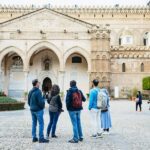
More Tour Reviews in Palermo
More Palermo, Start to Finish
Just added: the newest Palermo tours in our notebook
- Private Transfer from/to Trapani★ 5.0 · 3 reviews
- Private Tour from Palermo to Monreale, Santa Rosalia and Mondello★ 5.0 · 3 reviews
- Palermo: Cannolo & Cassata MasterClass★ 5.0 · 3 reviews
- Camporeale: Sallier de La Tour Wine Discovery Tour★ 4.6 · 3 reviews
- Sicily … A Love of a Lifetime★ 4.5 · 3 reviews
- Sicilian Cooking Class in Palermo – Private Option★ 5.0 · 3 reviews
Palermo City Tours, compared.
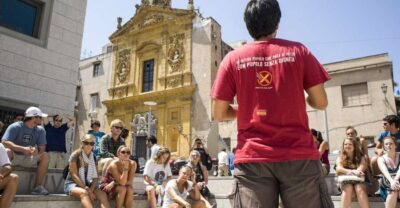 ★ 4.8Palermo: NO Mafia Walking TourFrom $402,431 reviews
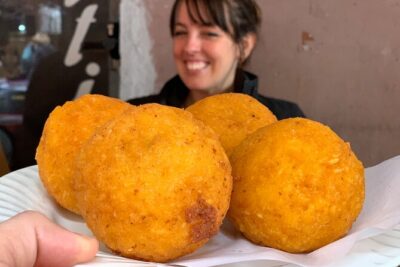 ★ 5.0Palermo Original Street Food Walking Tour by StreatyFrom $832,105 reviews
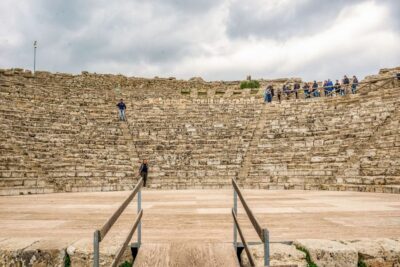 ★ 4.2Segesta, Erice and Salt Pans Full-Day Excursion from PalermoFrom $821,791 reviews
 ★ 4.5Palermo: Teatro Massimo Opera House Guided TourFrom $141,573 reviews
 ★ 4.9Palermo: Street Food and History Walking TourFrom $571,486 reviews
 ★ 4.2From Palermo: Monreale and Cefalù Half-Day TripFrom $711,354 reviews
 ★ 4.2Palermo: Agrigento and the Valley of the Temples Day TourFrom $771,240 reviews
 ★ 5.0Palermo No Mafia walking tour: discover the Anti-mafia culture in SicilyFrom $391,011 reviews
Browse the lists this tour appears in