
Reviewed · PALERMO LANDMARKS & MONUMENTS
Cefalù: Guided Walking Tour & Cefalu Cathedral Mosaics
Cefalù’s cathedral is only half the story. This 2-hour guided walk strings together Cefalù’s Jewish quarter with the town’s most famous Norman sights, so you understand what you’re looking at instead of just snapping photos. When the guide, like Marisa (who’s mentioned as friendly and funny), slows things down with clear local context, the streets feel alive fast.
Two things I’d put at the top of your list: the way the route traces daily life through places like Porta Giudecca and the fishing port, and the cathedral interior—especially the Christ Pantocrator—where gold mosaics do the heavy lifting. You’ll walk away with a simple story of how this town became what it is.
One possible drawback: it’s still a walking tour. If you’re not into cobblestones, hills, and stopping for a few minutes at multiple points (cathedral included), you might prefer a longer visit where you can move at your own pace.
In This Review
- Key highlights worth showing up for
- Jewish Quarter to Porta Giudecca: how the old city explains itself
- The lighthouse and Sicilian alleys: short route, strong payoff
- Porta Pescara and the fishing port: the harbor everyone wants to photograph
- Palazzo Martino’s wash house: the weirdly fascinating plumbing of the Middle Ages
- Palazzo Mandralisca (outside) and the “portrait of the Unknown”
- Cefalù Cathedral: Norman power, Arab influence, and Christ Pantocrator in gold
- Guide style: fast facts, human stories, and one real heads-up
- Price and value: what you’re really paying for
- Who this tour fits best (and who might want a different plan)
- Should you book Cefalù: Guided Walking Tour & Cefalu Cathedral Mosaics?
- FAQ
- How long is the Cefalù guided walking tour?
- Where does the tour take place?
- What’s included in the tour?
- What will we see during the walk?
- Is the tour available in English?
- Is this a private group tour?
- Is there free cancellation?
- Can I reserve without paying right away?
Key highlights worth showing up for
- Jewish quarter and Porta Giudecca: history you can picture as you follow the street plan
- Fishing port with Porta Pescara: colorful harbor views, plus movie-set trivia like New Cinema Paradiso and Indiana Jones 5
- Medieval wash house at Palazzo Martino: lion-head water spouts and a lava-stone staircase detail you’ll actually remember
- Palazzo Mandralisca area focus: museum connections to Byzantine icons and Antonello da Messina’s portrait of the Unknown
- Norman Cathedral mosaics: two-tower facade symbolism and the apse view of Christ Pantocrator
More hours to spend in Cefalu
- Boat Excursions in Cefalù with Snorkeling & Aperitif
★ 4.8 · 457 reviews - Cefalù: History and Legends Guided Walking Tour
★ 4.8 · 132 reviews - Cefalù: Tandem Paragliding Flight and GoPro13 Video
★ 4.9 · 131 reviews - Cefalù: boat ride with swimming and aperitif and snorkeling
★ 4.8 · 100 reviews
Jewish Quarter to Porta Giudecca: how the old city explains itself
Cefalù isn’t big, but it can feel layered. That’s why I like starting near the historic center’s edge, where you ease into the older geography before jumping into the postcard streets. The tour begins by walking into the area where Jews lived for almost 200 years, and you get help seeing the traces of that community as part of the town’s physical layout—not just as a date in a book.
Porta Giudecca is the anchor point here. You’ll learn how this gate connected the neighborhood to the rest of town, and why the seafood-oriented side of Cefalù still matters to understanding where people worked and went. It’s the kind of context that makes the next turns feel logical. Instead of chasing views, you’re reading the town.
Also, the vibe stays human-sized. You’re not stuck on a bus plan. You’re moving through narrow lanes where the details—street rhythm, doorways, the way light hits stone—help you absorb Cefalù at walking speed.
The lighthouse and Sicilian alleys: short route, strong payoff
After Porta Giudecca, the walk flows into Sicilian alleys. This section is less about one single monument and more about orientation. You’ll see the “in-between” streets that locals use, which is exactly what helps you later when you wander on your own.
One practical reason this matters: Cefalù can be confusing if you only visit the cathedral area. By the time you reach the seafront, you’ll understand how the older lanes feed into the harbor side, and that makes the views feel earned instead of random.
There’s also a lighthouse reference along the way. Even if you don’t stop for a long photo, it gives you a mental landmark for where you are in relation to the coast.
Porta Pescara and the fishing port: the harbor everyone wants to photograph
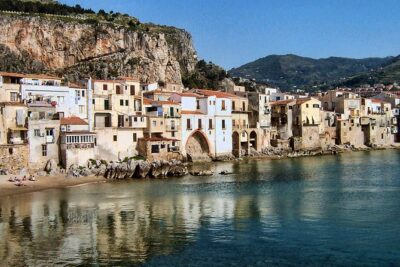
Then you hit the small fishing port—framed by the ancient medieval Porta Pescara gate. This is one of those moments where the tour earns its keep. The gate and the harbor aren’t separate sights; together they explain how the town’s “front door” faced the sea.
You’ll see colorful fishing boats and get the kind of harbor view that filmmakers like for a reason. The tour also points out that this port has been used as a set for major productions, including New Cinema Paradiso and Indiana Jones 5. That’s not just trivia. It helps you understand why the place looks the way it does—tight, picturesque, and story-friendly.
Practical tip: if you’re the type who likes photos, keep your camera ready near Porta Pescara. Once you enter the busiest corner of the port, it’s harder to stop without holding up the group.
Palazzo Martino’s wash house: the weirdly fascinating plumbing of the Middle Ages
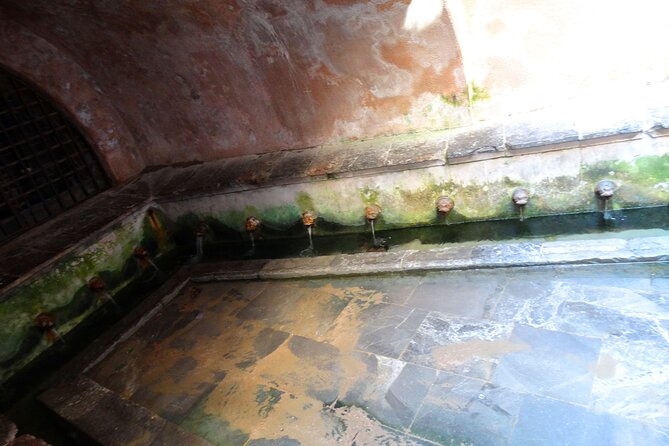
Most short tours do the big churches and forget the everyday civic spaces. This one doesn’t. Next comes the medieval wash house, located in the atrium of Palazzo Martino—once a public wash area.
Here’s what makes this stop genuinely memorable: you get to picture the workflow, not just the architecture. The description includes a lava stone staircase and basins designed for washing, with water that flows from mouths shaped like lion heads. Those lion-head supports were used for rubbing clothes, which turns what could be a quick glance into a real “oh wow” moment.
If you like historical details, this stop is gold. It’s the kind of place where you can stand still for a few minutes and really look around. And because it’s less crowded than the cathedral, you get a calmer break in the middle of the tour.
Small consideration: you might want a moment to slow down here if you’re traveling with kids. The subject matter is simple and visual, but it’s still a stop where the guide will likely explain how the space worked.
Palermo's palaces and chapels, up close
Palazzo Mandralisca (outside) and the “portrait of the Unknown”
The tour then shifts to Palazzo Mandralisca, seen externally. Even from the outside, it’s a smart inclusion because it connects you to what’s inside the town’s museum world without asking you to cram too much into two hours.
The museum housed in Palazzo Mandralisca is tied to Byzantine icons and also to Antonello da Messina’s portrait of the Unknown. You may not step inside on this particular walk, but knowing what the building contains changes how you look at it. You’ll start asking yourself: why would this collection matter to Cefalù? That question is exactly what makes the cathedral mosaics land better later.
Cefalù Cathedral: Norman power, Arab influence, and Christ Pantocrator in gold
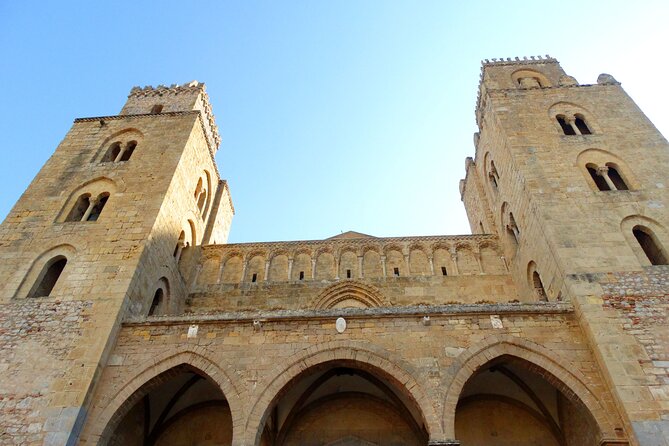
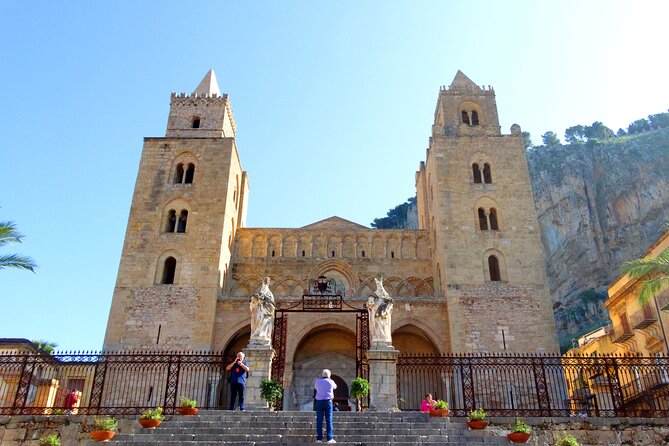
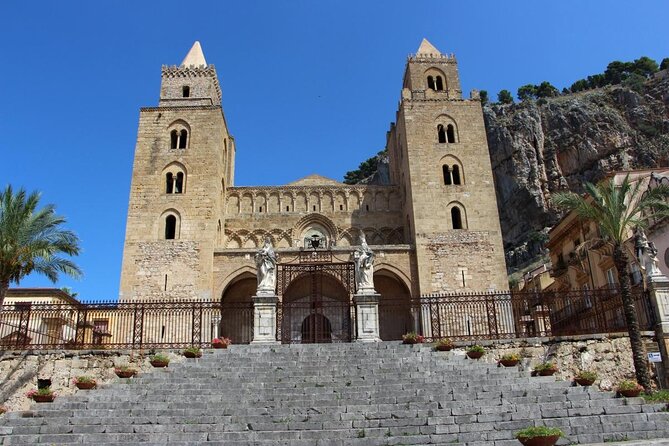
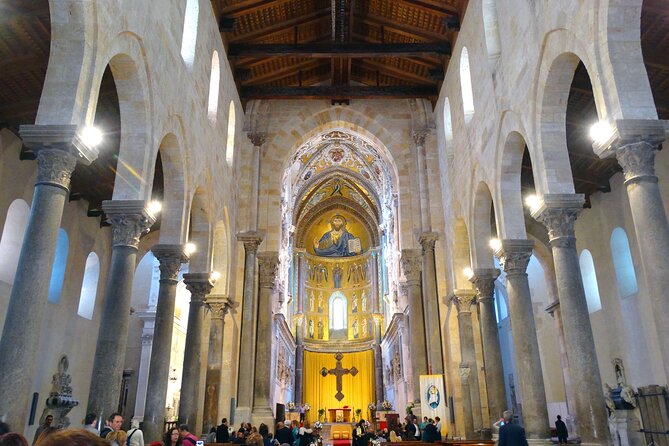
Now we get to the main event: the Norman Cathedral, a UNESCO World Heritage Site, with two towers and Byzantine-style mosaics inside. The guide focuses on the cathedral like it’s a message written in stone.
First, the facade. You’ll notice the imposing marble portal and the two towers on either side. The symbolism matters: one tower reflects the power of the Church with a square plan, while the other points to the power of the kings and nobility with an octagonal plan. It’s a clear way to understand why the cathedral is more than a pretty stop. It’s built to communicate authority.
The cathedral style is also worth keeping in mind as you look around: it’s Norman with Arab influences. That fusion is part of why the cathedral feels different from other churches you might see elsewhere in Sicily.
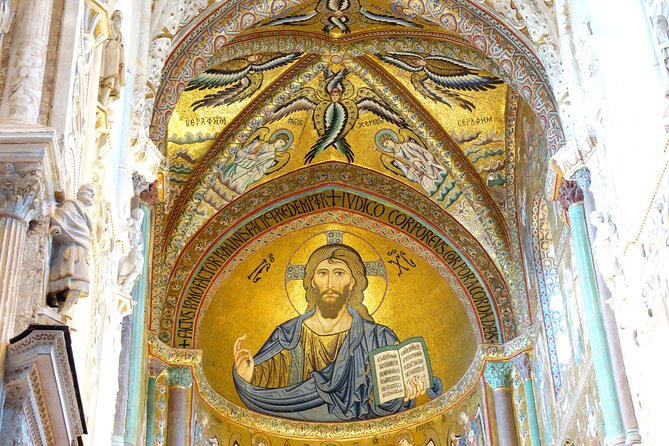
Inside, you’ll visit the apse area for the highlight everyone talks about: Christ Pantocrator. The idea is that Christ overlooks the faithful, and the setting pushes that effect. Surrounding gold mosaics create a bright, Byzantine-style visual field, with the mosaics doing most of the emotional work.
When it’s at its best: go in ready to look up and not rush. Even if you’re not a “mosaic person,” the scale of the gold and the face-focused composition tends to grab most people. If you like art but hate lectures, this is a good compromise because the images carry the story.
Guide style: fast facts, human stories, and one real heads-up
This tour seems to rise or fall on the guide. In the experiences shared, the guide is described as pleasant, friendly, and funny, with solid city history and current facts woven in. Marisa comes up by name in that regard, and the overall tone is professional even when a child is being silly.
One heads-up if you’re traveling with kids: some storytelling can include dramatic mythology. If your family needs a strictly Disney-style ending every time, you may want to set expectations for darker plot points or gore-y details. For many families, it’s part of the fun and helps kids remember the stop instead of forgetting it five minutes later.
Price and value: what you’re really paying for
The price is listed as $325.13 per group (up to 25 people) for a 2-hour guided experience. That structure can be either a bargain or not, depending on group size.
- If you’re in a full group, the effective cost per person drops a lot, and you’re basically paying for a licensed guide plus a tight plan through major sights.
- If your group is smaller, the per-person cost rises, and you’ll want to make sure you’re actually using the guide’s context (Jewish quarter history, gate meanings, wash house details, and the cathedral symbolism).
Either way, I think the value is strongest because the tour isn’t only “see a church.” You get a connected route: gate → neighborhood → harbor → civic daily life → museum connections → cathedral.
Time value is real here. With only two hours, you can’t realistically map this yourself and still absorb the meaning. This tour helps you get your bearings fast.
Who this tour fits best (and who might want a different plan)
This is a great fit if you:
- want a fast, structured way to understand Cefalù’s old-town layout
- care about the cathedral’s mosaics and what the architecture is signaling
- like walking through real neighborhoods, not just viewpoints
It may feel less perfect if you:
- have very limited mobility or can’t handle cobblestones
- prefer to linger for long stretches inside major sites (two hours is tight by design)
If you do like options, this tour pairs well with free time after the cathedral so you can revisit the spots you cared about most—port for photos, or the cathedral area for quiet looking.
Should you book Cefalù: Guided Walking Tour & Cefalu Cathedral Mosaics?
I’d book it if you want a compact route that explains Cefalù in plain language—starting with the Jewish quarter and Porta Giudecca, moving through the fishing port and wash house details, and ending with the cathedral mosaics and Christ Pantocrator. The strongest reason is that the guide’s storytelling and interpretation turn multiple stops into one clear picture of the town.
If you’re someone who hates guided stops and would rather wander solo, you might skip it. But if you want your short visit to feel purposeful, this one is a solid choice. Bring comfy shoes, be ready to look up inside the cathedral, and you’ll get more than the typical checklist.
FAQ
How long is the Cefalù guided walking tour?
The tour lasts 2 hours.
Where does the tour take place?
It’s in Cefalù, Sicily, Italy.
What’s included in the tour?
A licensed tour guide is included.
What will we see during the walk?
You’ll visit the Jewish quarter and Porta Giudecca area, the fishing port area with Porta Pescara, a medieval wash house at Palazzo Martino, Palazzo Mandralisca externally, and the Cefalù Cathedral mosaics including Christ Pantocrator.
Is the tour available in English?
Yes. The live guide offers Italian and English.
Is this a private group tour?
Yes, it’s listed as a private group, up to 25 people.
Is there free cancellation?
Yes, you can cancel up to 24 hours in advance for a full refund.
Can I reserve without paying right away?
Yes. The listing offers reserve now & pay later.
More Tour Reviews in Cefalu



More Palermo Palaces and Chapels
More Hours in Cefalu
Just added: the newest Cefalu tours in our notebook
- Boat trip to Cefalù★ 5.0 · 3 reviews
- I Briganti by night by jeep★ 5.0 · 4 reviews
- Capo D’Orlando: Salina, Panarea, Stromboli Tour with Boat★ 4.5 · 4 reviews
- Private boat excursion along the coast of Cefalù★ 5.0 · 4 reviews
- Cefalú: La Rocca Archaeological Park Guided Hiking Tour★ 5.0 · 4 reviews
- Private Transfer from Palermo Airport to Your Hotel in Cefalu★ 5.0 · 5 reviews
Palermo Landmarks & Monuments, compared.
 ★ 4.5Palermo: Teatro Massimo Opera House Guided TourFrom $141,573 reviews
 ★ 4.2From Palermo: Monreale and Cefalù Half-Day TripFrom $711,354 reviews
 ★ 4.9Palermo: Mondello, Capo Gallo Reserve Boat Tour, and SnackFrom $106694 reviews
 ★ 5.0Palazzo Conte FedericoFrom $18650 reviews
 ★ 4.7Palermo: Norman Palace and Palatine Chapel Tour with TicketsFrom $82298 reviews
 ★ 4.8Palermo: Cappella Palatina and Palazzo dei Normanni TourFrom $45214 reviews
 ★ 5.0In the province of Palermo Sicilian Cooking Class near CefaluFrom $120203 reviews
 ★ 4.8Tour Cappella Palatina e palazzo Reale: patrimonio UnescoFrom $14183 reviews
Browse the lists this tour appears in