
You can see Syracuse’s highlights fast. This 1-hour Calessino/Tuk-tuk tour strings together the big sights of Syracuse and Ortigia with photo stops, so you get a clean sense of the layout without spending your whole day on logistics. I love that it’s private (up to 4), and I love that the compact vehicle can handle the tight, shaded streets. One drawback: the stops are brief, so you won’t get long, slow browsing time like you would on foot.
The route is built for “look, snap, move.” You’ll pass the Piazza del Duomo for cathedral photos, then the Piazza Archimede area with the Diana fountain, before reaching Aretusa Spring and crossing toward Ortigia over the old stone bridges. It’s a practical way to get oriented, especially if this is your first day.
The big question for you is timing and comfort. If it’s hot or you prefer deep exploration, you may want a longer walking plan. But if you want value per minute, this is a strong pick—especially as a first pass at Syracuse.
In This Review
- Key points to know before you go
- Syracuse in 1 Hour: the real point of this Calessino tour
- Price and value: $144.49 per group (up to 4)
- Pickup on Ortigia: how to make logistics smooth
- Stop 1: Piazza del Duomo (cathedral photos first)
- Piazza Archimede and the Diana fountain: classic Syracuse angles
- Aretusa Spring: the papyrus spot you shouldn’t miss
- The old stone bridge connection: how Syracuse and Ortigia link
- Passing the Temple of Apollo: scenic structure without the ticket drama
- The guide factor: fast, friendly, and built for small groups
- Who this tour fits best (and who should skip it)
- Planning your day around this 1-hour loop
- Should you book the Calessino/Tuk-tuk tour?
- FAQ
- How long is the Calessino/Tuk-tuk tour?
- How much does the tour cost?
- Is it a private tour?
- Do you offer pickup?
- What language is the tour offered in?
- Do I need a paper ticket?
- What sights will we pass during the tour?
- Is service animal access allowed?
- What if the weather isn’t good?
- What’s the cancellation policy?
Key points to know before you go
- Compact Calessino/Tuk-tuk style vehicle: made for side streets and narrow lanes, including shaded shortcuts
- Photo stops built into the route: Duomo, Diana fountain, Aretusa Spring, and bridge viewpoints
- Private tour for up to 4: easier pacing and no waiting on strangers
- English-speaking guide option: straightforward tour with a short, guided orientation feel
- Pickup arranged within Ortigia: plan your meeting address during booking
- Weather matters: the experience needs good weather to run well
Deeper into Ortigia and old Syracuse
- Syracuse: Boat Tour with Captain Mirko, Snorkeling & Caves
★ 4.7 · 746 reviews - Siracusa: Ortigia Boat Tour with Marine Grotto & Snorkeling
★ 4.7 · 726 reviews - Siracusa: Ortigia & Sea Caves Boat Tour w/ Prosecco & Fruit
★ 4.8 · 723 reviews - Syracuse: Ortigia Island & Sea Cave Boat Tour with Prosecco
★ 4.7 · 418 reviews
Syracuse in 1 Hour: the real point of this Calessino tour
This tour is basically a fast orientation pass. In about an hour, you get placed in the geography of Syracuse: where the cathedral area sits, how Ortigia connects, and how key viewpoints line up. If you’re the type who likes to return later for longer walks, this kind of short ride can be a smart first step.
I especially like that it’s not trying to be everything. It passes key landmarks and gives you quick chances to stop for photos. That keeps it light, and it usually means less fatigue than a half-day planning shuffle.
Price and value: $144.49 per group (up to 4)
At $144.49 per group, the value depends on how many people you’re sharing with. If you book as a couple, it can feel a bit steep per person. If you can fill out a small group of four, it becomes much easier to justify.
Think of it like this: you’re paying for time savings and comfort. Instead of bouncing between viewpoints with spotty timing, you get an efficient route that covers major sights in a tight loop. For many visitors, that’s exactly what makes it worth it.
Pickup on Ortigia: how to make logistics smooth
Pickup is offered, but you’ll need to give an exact pick-up address within Ortigia during reservation. That’s the one logistics rule that affects your planning the most.
Also, the tour is private, and you only share it with your group. So if you like a calm pace—pause for photos, then keep moving—you’re set. And since there’s a mobile ticket, you can travel with less paper clutter.
If you’re staying in or near Ortigia, you’ll likely find this setup straightforward. If you’re elsewhere, you’ll want to double-check your accommodation location during booking so pickup stays easy.
Stop 1: Piazza del Duomo (cathedral photos first)
The tour begins with a pass in front of Piazza del Duomo, the square that centers the cathedral area. The good part is timing: you get a quick hit right away, when your eyes are still fresh and you’re ready to orient.
For photos, this stop works because the square acts like a natural “stage.” You can usually get a clean perspective without needing to commit to a long stop.
The only catch is that the tour is short. So while you can stop for pictures, it won’t turn into a full cathedral experience. If you’re hoping for a slow, indoor visit, you’ll need a separate plan.
A few we would gladly point a friend toward in Syracuse
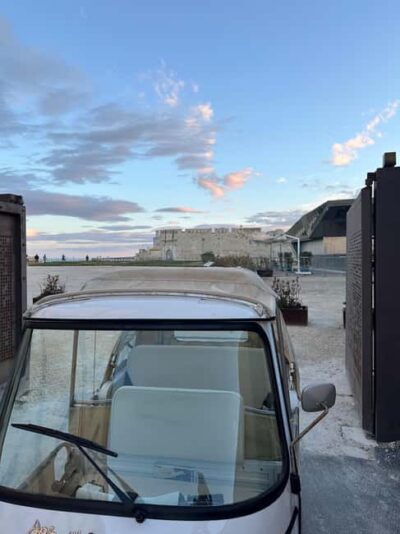
Piazza Archimede and the Diana fountain: classic Syracuse angles
Next you’ll pass Piazza Archimede and the Diana fountain. This area is great for understanding the rhythm of Ortigia life—how open spaces connect to the rest of the island.
This is also where the vehicle choice starts to make sense. The smaller Calessino/Tuk-tuk style ride can slip through side streets and tighter sections, rather than forcing you into long detours. One review notes the little vehicle can go up all the side streets and into shaded narrow streets, which is exactly what makes this feel effortless.
Drawback to consider: since it’s a pass with photo opportunities, the fountain is more of a “see it, frame it, move on” moment than a lingering one.
Aretusa Spring: the papyrus spot you shouldn’t miss
Then comes the pass in front of Aretusa Spring, where papyrus grows. This is the moment that adds a little texture beyond stone and squares. It’s also the kind of sight that makes you pause, even if you only have a short stop.
Why it’s worth your attention: papyrus isn’t just a pretty detail. It signals the wetland character of the area and adds a softer, greener contrast to the urban stone scenes you’ve already seen.
If you’re a photo person, this is a good target. Even in a brief stop window, it’s visually distinctive. Just keep expectations aligned: you’re getting the highlight, not a long guided walk around the full area.
The old stone bridge connection: how Syracuse and Ortigia link
As the route moves toward Ortigia viewpoints, you’ll pass the old stone bridge that connects Syracuse to the island. This is one of those “infrastructure views” that ends up being useful later. After this ride, you’ll understand where the crossing sits and how easy it is to hop between sides.
From a traveler standpoint, bridges matter because they explain city flow. When you can visualize the link, you navigate better afterward.
Potential consideration: if you want a big panorama session, the stops here are still short. You’ll likely get the view, then you’ll roll onward quickly.
Passing the Temple of Apollo: scenic structure without the ticket drama
The tour includes passage near the Temple of Apollo area. Even if you don’t go inside, the route gives you a sense of where these ancient landmarks sit relative to modern streets and the bridge connection.
This stop is especially helpful if you’re building a day plan. A quick pass can tell you whether you want to return later for a longer look or a dedicated photo session.
Downside: you won’t get a full historical deep-dive in a one-hour tour format. It’s a “see and orient” approach first. If you want longer explanations, you’ll need a separate visit or longer experience later.
The guide factor: fast, friendly, and built for small groups
The reviews highlight great guides and a fun, efficient way to see the sights in one go. That matters here because the whole tour lives or dies by pacing. In a short timeframe, a guide’s timing can make the difference between feeling rushed and feeling in control.
Since it’s private, you’re not stuck in a large group rhythm. If your group moves slower or wants a quick extra photo, you’ll likely feel more flexibility than you would in a larger shared tour.
Who this tour fits best (and who should skip it)
This is a strong match if:
- you want an easy first pass at Syracuse and Ortigia
- you prefer guided photo stops over solo navigation
- you’re traveling with a small group and want privacy
- you like compact vehicle routes that work well on tight streets
It may be less ideal if:
- you want long stops, museum time, or indoor visits
- you’re hoping for a walking-focused itinerary
- weather is unpredictable during your visit window (good weather is required)
If you like a plan that sets you up for later exploration, this one-hour ride can do that job well.
Planning your day around this 1-hour loop
Since the tour is about 1 hour, think of it as your “day warm-up.” Do it early to learn the layout, then spend later hours returning to the places you liked best—maybe the fountain area, Aretusa, or the Apollo zone.
Also, because this is often booked ahead (on average 61 days in advance), it’s a sign the timing slots can fill. If your trip dates are set, I’d book before you leave home.
One more practical tip: if you’re sensitive to heat, schedule around cooler hours. The route does use narrow lanes and shaded sections, but your comfort still depends on the day.
Should you book the Calessino/Tuk-tuk tour?
I’d book it if you want efficient sightseeing with minimal stress. The value is strongest for small groups, and the route hits the big Syracuse/Ortigia visual markers—Duomo, Diana fountain, Aretusa Spring, bridges, and Apollo passage—without requiring you to piece together complicated timing.
Skip it if your priority is deep, slow exploration. This isn’t a museum day. It’s a fast, guided overview that helps you understand the city so you can enjoy it more later.
If you’re deciding between this and a longer walking tour, ask yourself one question: do you want orientation now or immersion now? This tour answers orientation.
FAQ
How long is the Calessino/Tuk-tuk tour?
It lasts about 1 hour.
How much does the tour cost?
The price is $144.49 per group (up to 4).
Is it a private tour?
Yes. It’s a private tour/activity, and only your group participates.
Do you offer pickup?
Yes, pickup is offered. During reservation, you need to indicate the exact pick-up address exclusively within Ortigia.
What language is the tour offered in?
The tour is offered in English.
Do I need a paper ticket?
No. It uses a mobile ticket.
What sights will we pass during the tour?
You’ll pass Piazza del Duomo, Piazza Archimede and the Diana fountain, the Aretusa Spring, the old stone bridge connecting Syracuse to Ortigia, and the Temple of Apollo area.
Is service animal access allowed?
Yes. Service animals are allowed.
What if the weather isn’t good?
The experience requires good weather. If it’s canceled due to poor weather, you’ll be offered a different date or a full refund.
What’s the cancellation policy?
You can cancel for a full refund if you cancel up to 24 hours in advance of the experience’s start time.
More Tours in Syracuse
More Tour Reviews in Syracuse
More of Syracuse and Ortigia
Just added: the newest Syracuse tours in our notebook
- Tour of Syracuse by Ape Calessino★ 3.0 · 3 reviews
- Syracuse Showdown Scavenger Hunt★ 5.0 · 3 reviews
- Sicily Boats Avola: Plemmirio boat tour 4 people 4 hours★ 5.0 · 3 reviews
- Groovy Geneva Scavenger Hunt★ 5.0 · 3 reviews
- Syracuse: Ortigia & Sea Caves Boat Tour with Local Skipper★ 5.0 · 3 reviews
- Siracusa: Neapolis’s Archaeological Park small group tour★ 5.0 · 3 reviews
Syracuse & Ortigia, compared.
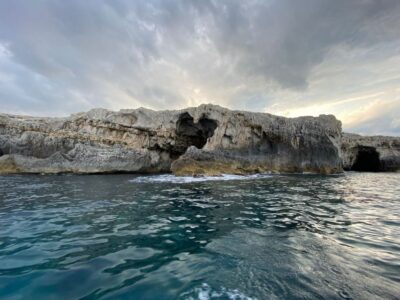 ★ 4.7Syracuse: Tour of Ortigia Island & Caves with Local SkipperFrom $231,060 reviews
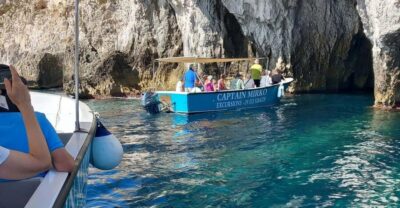 ★ 4.7Syracuse: Boat Tour with Captain Mirko, Snorkeling & CavesFrom $35746 reviews
 ★ 4.7Siracusa: Ortigia Boat Tour with Marine Grotto & SnorkelingFrom $47726 reviews
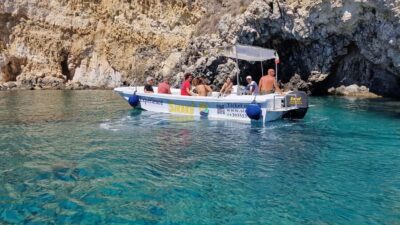 ★ 4.8Siracusa: Ortigia & Sea Caves Boat Tour w/ Prosecco & FruitFrom $35723 reviews
 ★ 5.0Tour of the island of Ortigia and exploration of sea caves with baths.From $24668 reviews
 ★ 4.7Syracuse: Ortigia Island & Sea Cave Boat Tour with ProseccoFrom $23418 reviews
 ★ 5.0Boat tour of Ortigia Island and sea cavesFrom $24407 reviews
 ★ 4.6Catania: Syracuse, Ortigia, and Noto Tour with BrunchFrom $112404 reviews
Browse the lists this tour appears in