
Reviewed · SYRACUSE & ORTIGIA
Tour Syracuse Ortigia Noto
Sicily in one long baroque day. This tour strings together three major stops—Neapolis, Ortigia, and Noto—so you get a strong taste of what makes eastern Sicily so distinctive. It’s built for a full schedule, with comfortable minivans or minibuses and a walk-focused route that keeps you moving between viewpoints and monuments.
I especially like the efficiency: you spend real time at the Archaeological Park and still get the island stroll in Ortigia and the core streets of Noto. I also like that it’s comfortable, with air-conditioned transport and a small maximum group size of 24, plus the option for pickup and drop-off from your accommodation.
The main thing to consider is how this runs on the ground: it’s a “go, see, go” style day. If you’re hoping for long explanations at each site, you may need to ask questions and help direct your own focus.
In This Review
- Key Highlights You’ll Feel on the Day
- Price and What You Really Get for $113.74
- 8 Hours Across Three Stops: How the Timing Shapes Your Day
- Parco Archeologico della Neapolis: Greek Theater, Ear of Dionysius, and Latomie
- Ortigia on Foot: Aretusa Fountain and the Maniace Area
- Noto in One Hour: Porta Reale and the UNESCO Baroque Core
- Getting There: Minivans, Small Group Size, and Pickup/Drop-Off
- How Much Guidance Should You Expect?
- Who This Tour Fits Best (and Who Might Want Something Different)
- Should You Book the Syracuse, Ortigia, and Noto Tour?
- FAQ
- How long is the Syracuse, Ortigia, and Noto tour?
- What time does the tour start?
- Is the ticket for Parco Archeologico della Neapolis included?
- Is there an admission fee for Ortigia and Noto stops?
- Is pickup and drop-off from accommodation available?
- Can I cancel for a full refund?
Key Highlights You’ll Feel on the Day
- Neapolis Archaeological Park with the Greek Theater, the Ear of Dionysius, and the Latomie
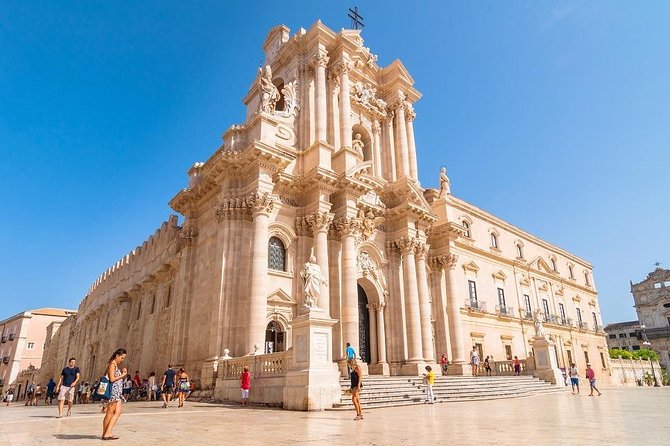
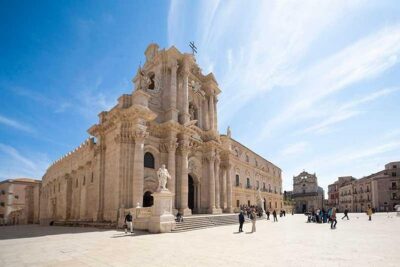
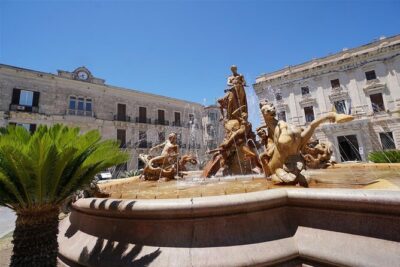
- Ortigia seafront walk plus major landmarks like the Aretusa fountain and the Maniace area
- Noto’s UNESCO baroque core with a guided introduction around Porta Reale and C.so Vittorio Emanuele
- Air-conditioned mini-coach comfort during transfers, capped at 24 people
- Tickets split up so you’ll plan for the Neapolis entry separately
Deeper into Ortigia and old Syracuse
- Syracuse: Tour of Ortigia Island & Caves with Local Skipper
★ 4.7 · 1,060 reviews - Tour of the island of Ortigia and exploration of sea caves with baths.
★ 5.0 · 668 reviews - Boat tour of Ortigia Island and sea caves
★ 5.0 · 407 reviews - Siracusa Boat excursion island of ortigia and sea caves
★ 5.0 · 147 reviews
Price and What You Really Get for $113.74
The price is $113.74 per person, and the biggest “value” piece here is transport plus an organized route. You’re paying for a full day plan that handles the driving, the timing between stops, and getting you to the right areas without you coordinating buses or transfers yourself.
What’s included is straightforward: an air-conditioned vehicle. What’s not included is equally important. The admission ticket for Neapolis isn’t included, and any other paid sites or museum entries you choose to add are on you. Ortigia and the Noto stop are listed as free for admission, but that doesn’t mean every church or site you might want to step into is automatically included—just expect that paid entrances can pop up depending on what you decide to do once you’re there.
So, here’s the practical way to judge value: if you’re confident you want to see Neapolis and you like a well-run “highlights” day, this price makes sense. If you’re the type who wants to linger in each place and pay for fewer admissions, you might prefer a slower-paced alternative.
8 Hours Across Three Stops: How the Timing Shapes Your Day
The tour runs about 8 hours, starting at 10:00 am and ending back at the meeting point. The schedule is built around three timed blocks at the destinations:
- Neapolis (2 hours)
- Ortigia (2 hours)
- Noto (1 hour)
That leaves the rest of the time for driving and transitions, so it’s not a “museum crawl with breathing room” plan. You’ll want comfortable walking shoes and a mindset of short stops and quick resets: photo breaks, quick orientation, then back on the move.
One more small but useful thing: because it’s a mobile ticket tour, plan to have your ticket accessible on your phone before you leave. When schedules are tight, fumbling with apps or weak Wi‑Fi can throw off your day faster than you’d think.
Parco Archeologico della Neapolis: Greek Theater, Ear of Dionysius, and Latomie
This is the anchor stop. You get 2 hours at the Parco Archeologico della Neàpolis, and the highlights are big-name and clearly identified: the Greek Theater, the Ear of Dionysius, and the Latomie.
Neapolis matters because it sets the tone for the whole day. It’s one of the best places in the Syracuse area to understand how the ancient Greeks shaped this landscape—then you immediately go from that ancient world to the baroque streets later, which makes the contrast really hit.
A practical note: the entry ticket isn’t included, so you’ll be adding that to your total cost. Since you only have two hours, aim to be ready at the entrance so you don’t lose time inside. If the weather is hot (Sicily often is), bring water and plan for some sun exposure. There’s plenty to look at, but you’ll be walking between key spots rather than doing one long, slow loop.
Also, because the tour can feel more transport-and-route focused than lecture-style, I recommend using your time there actively:
- pick what you want most (the Greek Theater vs. the Ear of Dionysius vs. the Latomie)
- ask the guide to point out the best route through the park for your priorities
- if you’re interested in a specific area, say so early so your focus doesn’t get lost in the shuffle
Ortigia on Foot: Aretusa Fountain and the Maniace Area
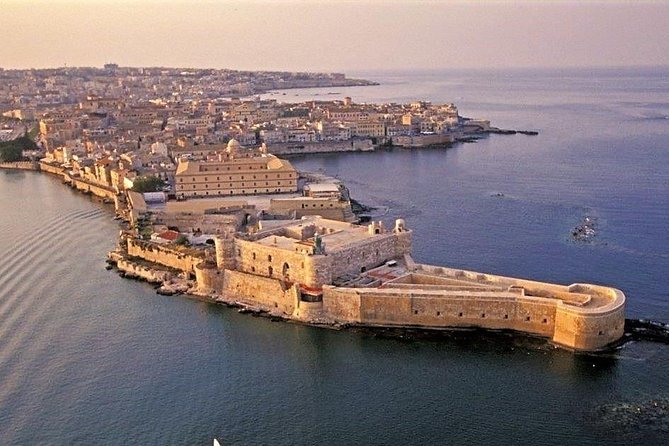
Ortigia is the part of the day that tends to feel lighter and more scenic. You’ll spend 2 hours on the island, and the highlights are the ones you actually want to walk toward: along the seafront you’ll see the Aretusa fountain and the Castle of Maniace area, then the route continues through the historic center.
This is also where the tour’s “baroque theme” shows in daily life. Even if you’re not memorizing dates, you’ll feel it in the facades, the church fronts, and the way streets open toward the water.
The admission at this stop is listed as free, which is great for budgeting and for flexibility. Still, I’d treat those two hours as a walking window, not a sit-down window. The itinerary is designed to keep you moving, so be ready for a steady pace with breaks for photos and quick landmark moments.
If you want your day to feel smoother, do this: during the Ortigia walk, choose one direction to “follow” rather than trying to cover every street. Ortigia rewards wandering, but on a timed tour you want to wander with purpose.
More of the baroque south-east

Noto in One Hour: Porta Reale and the UNESCO Baroque Core
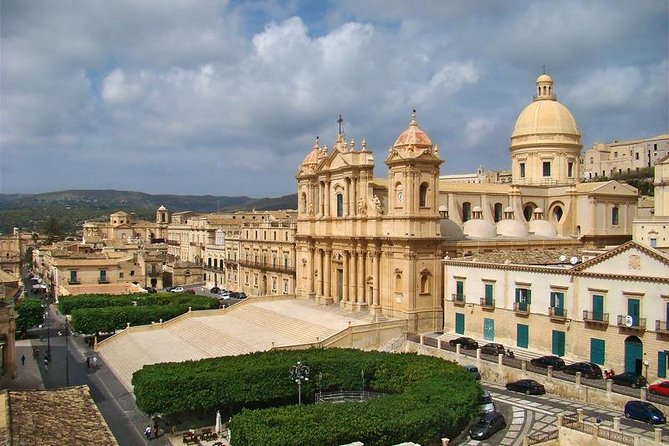
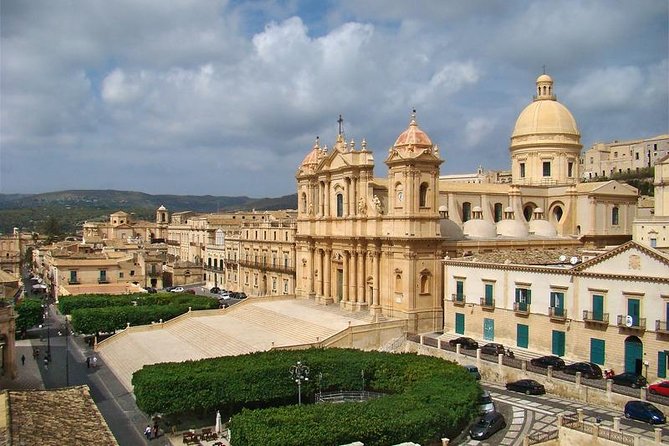
Noto is the shortest stop at 1 hour, but it’s also the one with the strongest label: UNESCO heritage and famous Sicilian baroque. Your time is structured around key introductions—specifically Porta Reale, the entrance to C.so Vittorio Emanuele (the main street).
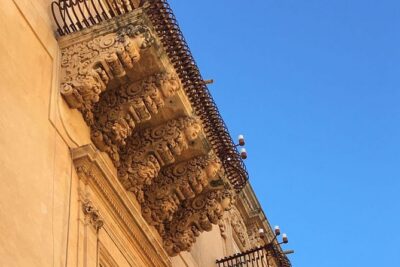
Even with only an hour, Noto can still land well if you focus on what baroque does best: it makes architecture feel theatrical. You’ll likely be looking at churches and stonework from the street, and that’s enough to get the idea even if you don’t go inside everything.
Here’s the main trade-off: because the stop is short, you’re not meant to “complete” Noto. You’re meant to see the center and get oriented. You’ll likely pass sites of interest along C.so Vittorio Emanuele, including the Church of San Fran… (the listing truncates the name, but it’s presented as part of the highlights).
If you’ve never been to Noto before, this tour can be a strong sampler. If you already love baroque, you’ll probably want more time after the tour ends—plan for a return visit or an extension day if Noto is your top priority.
Getting There: Minivans, Small Group Size, and Pickup/Drop-Off
Transfers are often where tours go either right or wrong, and this one leans toward “right.” You’ll ride in an air-conditioned vehicle, described as comfortable and aimed at being modern (minivans or minibuses).
The max group size is 24, which is small enough that the route usually stays manageable. It also helps when pickup and drop-off are involved—because coordinating many cars or vans for a big crowd can get chaotic fast.
Pickup and drop-off from accommodation facilities is a nice advantage. It reduces the hassle of finding a separate meeting point across town, and it can save time you’d otherwise spend lining up transportation on your own. If you’re staying outside the most central areas, this option can make the tour much more practical.
How Much Guidance Should You Expect?
One thing I’d be honest about: this day can feel like a fast sequence of sights. The tour format is clear—organized stops with timed walking—but the level of site-by-site explaining may be more limited than some people want.
What this means for you: if you prefer lots of narration, stories, and deep interpretation at each stop, come prepared with a little self-guided structure. Before you go, decide what you care about most at Neapolis and in Ortigia. During the day, ask direct questions early rather than waiting for the guide to read your mind.
A simple tactic: at each stop, pick one landmark you want answered. For Neapolis, it could be how the theater and carved areas relate to the ancient setting. On Ortigia, it might be how Aretusa and the waterfront area shaped the island’s identity. With Noto, it might be why C.so Vittorio Emanuele is the main spine for seeing baroque concentration.
Even if the explanations are brief, asking targeted questions helps you get the value out of the guide time that’s available.
Who This Tour Fits Best (and Who Might Want Something Different)
This works best for you if:
- you want a highlights route across Syracuse’s ancient anchor (Neapolis), the island atmosphere (Ortigia), and the baroque statement (Noto)
- you value comfort during transfers and appreciate an organized schedule
- you don’t need every site to become a long museum visit
- you’re fine adding the Neapolis admission separately
It may be less ideal if:
- you expect long, detailed guiding at each stop
- you dislike tight time windows (especially with only 1 hour in Noto)
- you want a more unhurried pace for churches and indoor entries
If your heart is set on Noto, I’d treat this as an introduction rather than a full Noto experience. If your heart is set on Neapolis, this tour can be a great way to prioritize it, since it gets the most time and includes major ancient highlights.
Should You Book the Syracuse, Ortigia, and Noto Tour?
Book it if you want an organized, efficient day with air-conditioned comfort, a well-chosen sequence of major sights, and a baroque-heavy taste of eastern Sicily. The price is fair for what’s included—especially the transportation and the planning—while you can manage costs easily by knowing Neapolis entry isn’t included.
Don’t book it if your ideal tour is slow, deeply narrated, and built around long pauses. This is structured to cover a lot. If you want that, great. If you want the kind of day where you stay at each spot until you feel done, you may end up wishing you had more time.
My rule of thumb: if you’re visiting Sicily for the first time or you’re short on days, this is a smart “see the big stuff” option. If you’re returning to the region and already know you want to linger in Noto or in specific Ortigia corners, you’ll probably do better with a slower, more flexible plan.
FAQ
How long is the Syracuse, Ortigia, and Noto tour?
It’s listed as approximately 8 hours.
What time does the tour start?
The start time is 10:00 am.
Is the ticket for Parco Archeologico della Neapolis included?
No. The Neapolis archaeological site admission ticket is not included.
Is there an admission fee for Ortigia and Noto stops?
Ortigia is listed as free for admission, and the Noto stop is also listed as free for admission.
Is pickup and drop-off from accommodation available?
Yes, pickup and drop-off from and to accommodation facilities is possible.
Can I cancel for a full refund?
Yes. You can cancel up to 24 hours in advance for a full refund.
More Tour Reviews in Sicily






More Baroque Towns to Reach





More of Syracuse and Ortigia


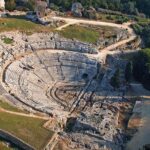
Just added: the newest Sicily tours in our notebook
- Etna / Taormina★ 5.0 · 3 reviews
- Bikes★ 5.0 · 3 reviews
- Taormina shore tour – for small group cruise passengers★ 5.0 · 3 reviews
- Vegan Cooking Class in Catania with Lunch and Dinner★ 5.0 · 3 reviews
- Make & Taste Sicilian Desserts in Palermo – Learn Cannoli & More★ 5.0 · 3 reviews
- Sicilian Villages & Ricotta Tasting – including Lunch from Cefalu★ 4.0 · 3 reviews
Syracuse & Ortigia, compared.
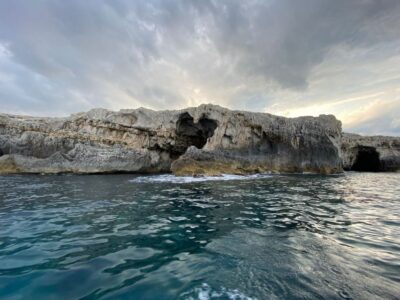 ★ 4.7Syracuse: Tour of Ortigia Island & Caves with Local SkipperFrom $231,060 reviews
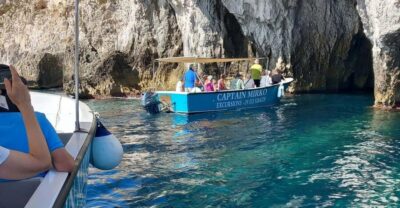 ★ 4.7Syracuse: Boat Tour with Captain Mirko, Snorkeling & CavesFrom $35746 reviews
 ★ 4.7Siracusa: Ortigia Boat Tour with Marine Grotto & SnorkelingFrom $47726 reviews
 ★ 4.8Siracusa: Ortigia & Sea Caves Boat Tour w/ Prosecco & FruitFrom $35723 reviews
 ★ 5.0Tour of the island of Ortigia and exploration of sea caves with baths.From $24668 reviews
 ★ 4.7Syracuse: Ortigia Island & Sea Cave Boat Tour with ProseccoFrom $23418 reviews
 ★ 5.0Boat tour of Ortigia Island and sea cavesFrom $24407 reviews
 ★ 4.6Catania: Syracuse, Ortigia, and Noto Tour with BrunchFrom $112404 reviews
Browse the lists this tour appears in