

Reviewed · SYRACUSE & ORTIGIA
Syracuse tour
Three stops, one great Syracuse day.
This small-group tour runs from Catania with an air-conditioned vehicle and a full 8.5 hours to see Neapolis, Ortigia, and Noto.
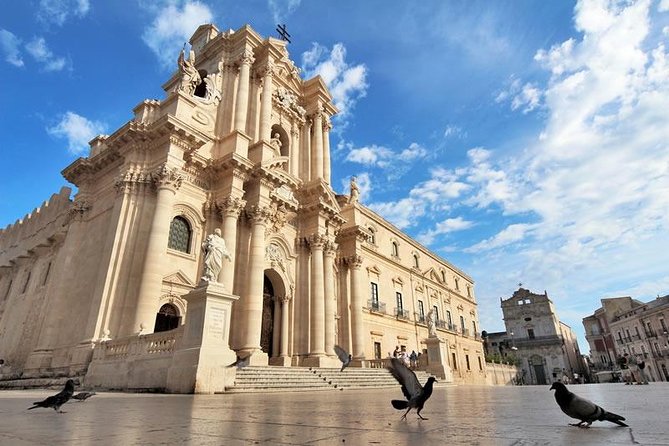
I especially like the chance to step into the Greek-Roman ruins at Parco Archeologico della Neapolis with a solid stretch of time there. I also enjoy the long Ortigia free-time block, where you can choose your own route around the Duomo area, Diana’s Fountain, and the Maniac Castle plus the Archimedes Museum.
The main trade-off is that extra entrance fees are on you, and the pacing can feel more like drop-off time than constant narration—so you’ll want to be ready to ask questions and move with purpose.
In This Review
- Key highlights worth knowing
- How this Syracuse-Ortigia-Noto day is paced
- Stop 1: Parco Archeologico della Neapolis Greek-Roman ruins
- Stop 2: Ortigia free time for the Duomo area, Diana’s Fountain, and Maniac Castle
- Stop 3: Porta Ferdinandea and Noto Antica’s baroque entrance effect
- Price and logistics: what you’re actually paying for
- Getting the most from a tour that gives you time, not constant guidance
- Who this tour suits best (and who should skip it)
- Should you book this Syracuse tour?
- FAQ
- FAQ
- What’s the duration of the Syracuse-Ortigia-Noto tour?
- Where does the tour start and what time does it begin?
- How many people are in the group?
- What’s included in the price?
- Are monument and archaeological site entrances included?
- How much free time do you have in Ortigia?
- Can I cancel for a full refund?
Key highlights worth knowing
- Neapolis on arrival: You get entry and time (about 2 hours) to explore the Greek-Roman ruins in Parco Archeologico della Neapolis.
- Ortigia without a script: Roughly 2h30 of flexible time to hit the sights you care about most.
- A focused Noto stop: A short visit at Porta Ferdinandea, the entrance area to baroque Noto Antica.
- Small group cap: Limited to a maximum of 24 travelers, which usually makes transfers feel less chaotic.
- Only the vehicle is included: The tour price covers transport, but monument tickets are extra.
- Guide help can be light: Expect a smoother experience if you’re comfortable navigating on your own for part of the day.
Deeper into Ortigia and old Syracuse
- Syracuse: Tour of Ortigia Island & Caves with Local Skipper
★ 4.7 · 1,060 reviews - Tour of the island of Ortigia and exploration of sea caves with baths.
★ 5.0 · 668 reviews - Boat tour of Ortigia Island and sea caves
★ 5.0 · 407 reviews - Siracusa Boat excursion island of ortigia and sea caves
★ 5.0 · 147 reviews
How this Syracuse-Ortigia-Noto day is paced
This is a “see more in one day” tour with a relaxed feel. You’re not locked into a tight museum-by-museum march. Instead, you’re transported between three zones, with substantial time breaks—especially in Ortigia. That structure works well if you like culture but also like steering your own interests once you’re on the ground.
The day starts in Catania at 10:00 am from Via Vittorio Emanuele II, 188, 95028 Catania CT, Italy. You return back to the same meeting point. Total time is about 8 hours 30 minutes, which is long enough to feel like you traveled, but not so long that you’re exhausted before you even reach the highlights.
The “comfortable” part comes from the air-conditioned vehicle, plus the fact the group size stays under 24 travelers. In practice, that usually means fewer delays at pick-ups and drop-offs. Still, the rhythm is important: if you’re the type who likes lots of stop-by-stop commentary, you might find the experience relies more on your own exploration once you arrive.
One more practical detail: paid entries are not included for monuments and archaeological sites. So you’ll want to budget time and money for tickets at the sites that require them, and keep some cash or a card ready for last-minute purchases.
Stop 1: Parco Archeologico della Neapolis Greek-Roman ruins
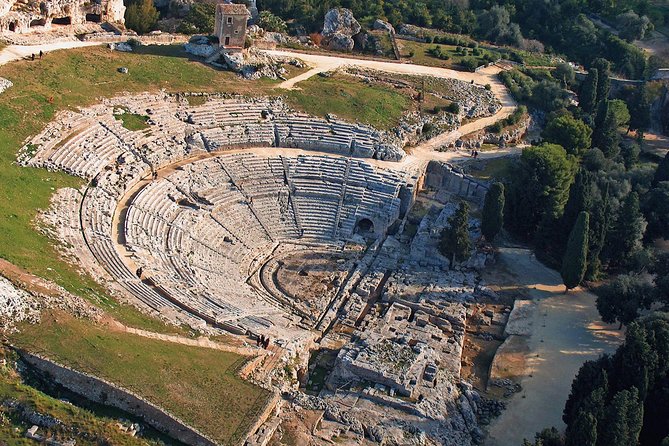
The day kicks off at Parco Archeologico della Neapolis, where you can enter and explore the Greek-Roman ruins. You get about 2 hours on site, which is a fair amount for an archaeological park—long enough to walk key areas, pause for photos, and still not feel like you’re racing through.
This stop is the one that feels most “tour-like” in a good way. It’s a clear theme: you’re going to ruins, and you’re there for long enough to actually notice how the place is laid out. If you enjoy seeing layers—Greek roots, Roman influence—this is where the day earns its cultural weight.
What to watch for: the park visit is not ticket-included. That means you should plan to handle entrance fees on arrival. It also means you’ll want to protect your momentum. When you arrive, don’t spend your first 20 minutes wondering where tickets go—get oriented quickly, then start walking.
If you’re traveling in hotter weather, treat this like any outdoor archaeological park: wear shoes that handle uneven ground and bring sun protection. Two hours sounds generous until you hit long shaded stretches and then suddenly you’re back in full sun.
Stop 2: Ortigia free time for the Duomo area, Diana’s Fountain, and Maniac Castle
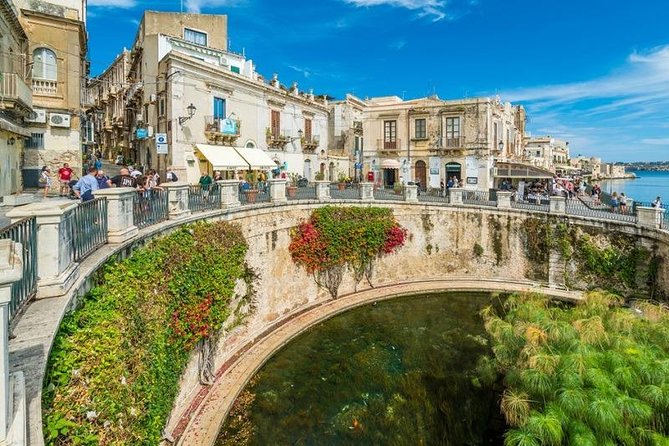
Ortigia is where this tour turns into a choose-your-own-adventure. You’ll have about 2h30 of free time, and the sights you can target include:
- Maniac Castle
- Archimedes Museum
- the Duomo area
- Diana’s Fountain
- plus other nearby wonders you’ll discover while walking
This is the stop that tends to feel most satisfying for people who like wandering with a plan. It’s also why Ortigia can work even if you’re not an “archaeology-only” traveler. The mix of major landmarks and street-level exploring gives you options. Want quick photo stops and iconic architecture? You can do that. Want museums? You can pivot to the Archimedes Museum. Want to feel the place with your feet? That’s built into the schedule too.
Now, the practical consideration: because the time is flexible, you need to manage your own route. One downside seen on tours like this is that you can arrive with minimal direction besides when to return. So I’d come prepared with a short list of 2–3 targets. That way, you don’t lose time deciding on the fly, especially if crowds slow you down.
A smart tactic in Ortigia is to treat it like a walking day and build in small breaks. People often save time by eating on the move, not by sitting for a full meal. If you want a low-stress approach, plan for a snack between landmarks and keep your energy steady for the return trip.
And yes, this is also where the “local color” hits. Ortigia has lively market energy, and even if you’re just browsing, it makes the day feel less like a checklist.
Stop 3: Porta Ferdinandea and Noto Antica’s baroque entrance effect
The last stop is shorter by design: Noto Antica, focusing on Porta Ferdinandea. The baroque city is the idea here, but the schedule stays focused on the entrance area and first impressions.
You’ll have about 1h30 for this part of the day (the overview calls it 1h30, while some schedules list it as roughly 1 hour—so treat it as short either way). That’s not enough time to fully see Noto’s best streets and churches the way you’d do on a dedicated day trip. Instead, it gives you a taste, a sense of the scale, and a visual hit of baroque drama.
If you’ve never seen Noto in person, this stop helps you understand why baroque lovers travel here. The architecture is expressive, and even from the entrance zone you can feel how much effort went into creating a city that looks designed for the eye.
How to make it work with limited time:
- arrive ready to walk a bit
- choose one direction, not five
- take photos early, then explore without constantly stopping
Also note: entrance at Porta Ferdinandea is free. That’s a nice bonus because it reduces the amount of “ticket friction” right at the end of the day.

Price and logistics: what you’re actually paying for

At $116.36 per person, this tour isn’t priced like a full-day guided tour with included museum tickets. The real value is the transport and the itinerary design: you get an organized structure connecting Catania → Neapolis → Ortigia → Noto, in about 8h30, with an air-conditioned vehicle and a max group size of 24.
What you don’t get is the “tickets included” safety net. The tour price covers the vehicle, but paid entrances to monuments and archaeological sites are not included. That matters for your budget. Neapolis, in particular, will require an entrance payment on site.
So the best way to think about value is simple: if you plan to visit the major sites anyway, the transport saves you time and stress. If you only want one or two stops, or you’re trying to keep costs down on tickets, you might feel the total spend adds up.
Also keep expectations realistic about the guiding style. The format is relaxed, and the stops may not include heavy narration. That’s not automatically bad—some people prefer freedom over lectures—but it does change the kind of traveler this tour fits.
Getting the most from a tour that gives you time, not constant guidance
This is a “you manage your time at stops” kind of tour. And honestly, that can be great if you’re prepared.
Here’s how I’d optimize it:
- Pick your must-sees before you leave the vehicle. In Ortigia, have a shortlist ready: maybe one landmark, one museum option, and one scenic wander zone.
- Use the return time as your anchor. If the stop includes free time, your biggest enemy is drifting without noticing the clock.
- Ask one clear question early. If you meet the driver or guide on arrival and you can ask what’s easiest to reach first, do it right away.
- Bring a plan for tickets. Because paid entrances aren’t included, you don’t want your trip to stall at the ticket gate while others are already walking.
One small silver lining from the overall vibe: guides can be helpful in showing you which way to go and pointing you toward what to see. Some people even specifically thank guides by name—Nino comes up—so if your day includes a guide like that, you’ll likely get practical recommendations that make Ortigia and the ruins feel easier.
But don’t count on long explanations at every stop. If you’re the kind of traveler who wants deep commentary, you may need to switch gears and treat the tour as transport plus a structured schedule.
Who this tour suits best (and who should skip it)

This tour is a good fit if you:
- like culture with flexibility
- want to cover Syracuse, Ortigia, and Noto in one day
- appreciate the comfort of an air-conditioned vehicle
- enjoy walking and choosing what to do at free-time stops
It’s less ideal if you:
- want a fully guided, step-by-step experience at every site
- hate dealing with extra tickets
- need lots of on-arrival explanation to navigate confidently
Also, this tour runs with a max group of 24, which generally keeps things manageable. And the experience notes that most travelers can participate, which suggests it isn’t built around extreme activities. Still, you should expect walking—archaeological parks and historic centers aren’t built for strolling in flip-flops.
If your travel style is “I want the story told to me,” you might find the free-time segments are more independent than you expect. If your travel style is “I want to see places and still roam,” you’ll likely have a better time.
Should you book this Syracuse tour?
I’d book it if you’re aiming for a classic highlights day and you’re comfortable handling your own time in Ortigia. The itinerary does a strong job of grouping three major areas—ruins, island-town landmarks, and baroque Noto—without forcing you into an exhausting nonstop schedule.
I’d think twice if you’re extremely budget-sensitive or if you want included entrances and a lot of guided narration. Because the price covers transport, not tickets, your final cost will rise once you’re on site. And if you rely on the guide to get you oriented at each stop, the experience may feel too independent for your taste.
If you do book, go in with a short plan for Ortigia and a readiness to buy entrance tickets. Do that, and this tour can feel like a smart way to spend your time in Sicily—without wasting your day stuck between places.
FAQ
FAQ
What’s the duration of the Syracuse-Ortigia-Noto tour?
The tour runs for about 8 hours 30 minutes.
Where does the tour start and what time does it begin?
It starts in Catania at Via Vittorio Emanuele II, 188, 95028 Catania CT, Italy at 10:00 am.
How many people are in the group?
The tour has a maximum of 24 travelers.
What’s included in the price?
The tour includes an air-conditioned vehicle.
Are monument and archaeological site entrances included?
No. Paid entrances to monuments and/or archaeological sites are not included, though the entrance at Porta Ferdinandea is free.
How much free time do you have in Ortigia?
You have about 2h30 of time in Ortigia.
Can I cancel for a full refund?
Yes. You can cancel up to 24 hours in advance for a full refund.
More Tours in Sicily





More Tour Reviews in Sicily


More of Syracuse and Ortigia

Just added: the newest Sicily tours in our notebook
- Etna / Taormina★ 5.0 · 3 reviews
- Bikes★ 5.0 · 3 reviews
- Taormina shore tour – for small group cruise passengers★ 5.0 · 3 reviews
- Vegan Cooking Class in Catania with Lunch and Dinner★ 5.0 · 3 reviews
- Make & Taste Sicilian Desserts in Palermo – Learn Cannoli & More★ 5.0 · 3 reviews
- Sicilian Villages & Ricotta Tasting – including Lunch from Cefalu★ 4.0 · 3 reviews
Syracuse & Ortigia, compared.
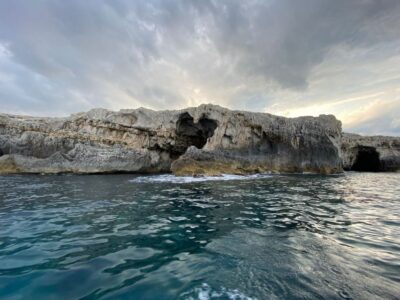 ★ 4.7Syracuse: Tour of Ortigia Island & Caves with Local SkipperFrom $231,060 reviews
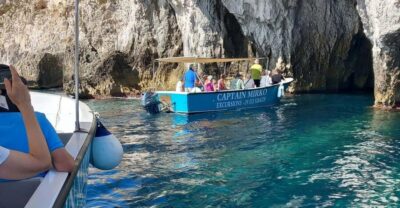 ★ 4.7Syracuse: Boat Tour with Captain Mirko, Snorkeling & CavesFrom $35746 reviews
 ★ 4.7Siracusa: Ortigia Boat Tour with Marine Grotto & SnorkelingFrom $47726 reviews
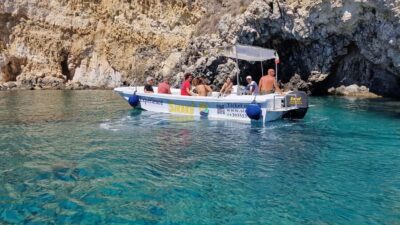 ★ 4.8Siracusa: Ortigia & Sea Caves Boat Tour w/ Prosecco & FruitFrom $35723 reviews
 ★ 5.0Tour of the island of Ortigia and exploration of sea caves with baths.From $24668 reviews
 ★ 4.7Syracuse: Ortigia Island & Sea Cave Boat Tour with ProseccoFrom $23418 reviews
 ★ 5.0Boat tour of Ortigia Island and sea cavesFrom $24407 reviews
 ★ 4.6Catania: Syracuse, Ortigia, and Noto Tour with BrunchFrom $112404 reviews
Browse the lists this tour appears in