
Reviewed · SYRACUSE & ORTIGIA
Syracuse: Ortigia Deep Dive Cultural Tour (max 6 Guests)
Ortygia clicks fast with the right guide. This 90-minute, English-language walking tour is interesting because you can shape it toward history or food-focused stops, without losing time to figuring things out. I especially like how the guide keeps the story moving street by street, and how you get real time to ask questions instead of a rushed lecture.
I also love the flexible timing. You can pick a meet-up time that works with your day, and the group stays tiny—max 6 guests—so the walk feels like a conversation more than a parade.
One thing to consider: the tour depends on decent weather, and most of the experience is outdoors. If you hate walking in sun or wind, you’ll want to time it well and dress for the elements.
In This Review
- Key highlights you’ll feel right away
- Why Ortygia is best with a guide (and not just a map)
- Pick your focus: history sites or gastronomy-flavored options
- Stop 1: Temple of Apollo (Tempio di Apollo) what you’re really looking at
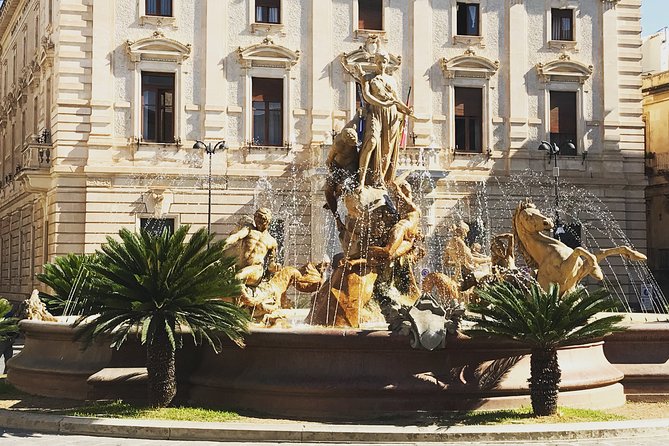
- Stop 2: Piazza Archimede and the view from the Diana Fountain area
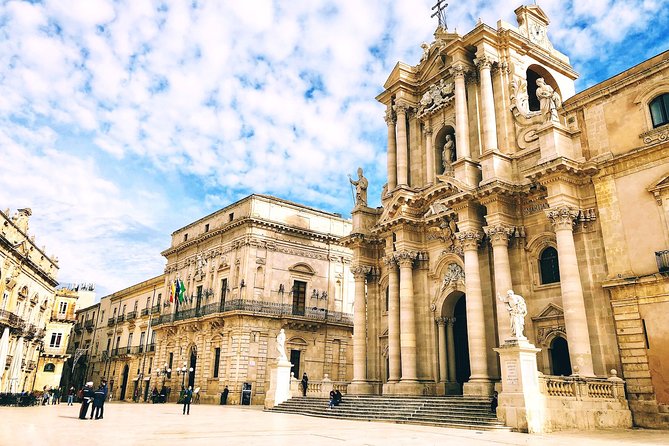
- Stop 3: Piazza Duomo what makes the square worth your time
- Stop 4: Temple of Athena inside the Cathedral (optional interior entry)
- Stop 5: Arethusa Spring the mythic finish line
- Practical details that actually affect your day
- What kind of traveler should book this?
- Should you book this Ortygia walking tour?
- FAQ
- How long is the Syracuse: Ortygia walking cultural tour?
- Is the tour offered in English?
- What’s the maximum group size?
- Where does the tour start and end?
- Are any admissions required during the stops?
- Can I choose what time of day to meet?
- Is the tour customizable?
- What should I wear?
- What if the weather is bad?
- Is free cancellation available?
Key highlights you’ll feel right away
- Small group size (max 6): questions stay easy, not awkward.
- Customizable focus: history sites, or gastronomy-flavored choices.
- Mobile ticket: less fuss when you arrive.
- Most admissions are free: only one stop has a potential paid interior.
- Classic Ortygia anchors: Apollo, Duomo square sites, and Arethusa Spring.
Deeper into Ortigia and old Syracuse
- Syracuse: Tour of Ortigia Island & Caves with Local Skipper
★ 4.7 · 1,060 reviews - Tour of the island of Ortigia and exploration of sea caves with baths.
★ 5.0 · 668 reviews - Boat tour of Ortigia Island and sea caves
★ 5.0 · 407 reviews - Siracusa Boat excursion island of ortigia and sea caves
★ 5.0 · 147 reviews
Why Ortygia is best with a guide (and not just a map)
Ortygia is the old heart of Syracuse, and it rewards slow walking. The problem is that the island layers itself—Greek ruins, later buildings, and the cathedral all overlap in one tight space. A good guide helps you read the place without you needing to be a part-time archaeologist.
In a small group, you don’t get steamrolled by the schedule. Instead, you get to pause at the right spots, look where you’re told to look, and connect the dots in your head while you’re still standing there. That is the big value: you leave with understanding, not just photos.
The tone also matters. This tour leans practical and conversational, with clear explanation at each stop. And because you’re offered time for questions, you can ask the stuff that actually bugs you—like what you’re seeing, why it’s placed there, and what changed over time.
Pick your focus: history sites or gastronomy-flavored options
This is not a one-size-fits-all walk. You can choose from a range of options, including gastronomy-themed activities or history site priorities, so the tour can match your interests and energy level.
That flexibility is useful if you’re doing other things in Syracuse. Maybe you want more context about the Greek-era landmarks, or maybe you’d rather spend more time on how Ortygia’s life and food culture developed around the old streets. Either way, the structure still keeps you moving through the most iconic core areas.
You’ll also be walking with an English-speaking guide, which makes a difference in a place like Ortygia. Even if you already read a few guidebooks, local explanations help you notice details you’d otherwise miss.
Stop 1: Temple of Apollo (Tempio di Apollo) what you’re really looking at
The tour starts at the Temple of Apollo (Apollonion), a strong opening because it anchors the Greek side of Syracuse early on. You’ll spend about 15 minutes here, and there’s no admission ticket fee for this stop.
The key is to look at it like an early marker of the city’s story. The explanation focuses on the temple as an early VI century BC Greek structure. Even from the outside, you can start building a mental timeline: what Greek design meant in this part of the Mediterranean and why Syracuse’s old identity is tied to these monuments.
A practical tip: don’t rush your photos here. Use the time to orient yourself—once you understand what Apollo represents, the rest of Ortygia’s squares and buildings make more sense as part of the same urban “map.”
Stop 2: Piazza Archimede and the view from the Diana Fountain area
Next comes Piazza Archimede, where you’ll get about 10 minutes of explanation. This is another free stop, and it works well because it’s a square—meaning you can actually take in the layout.
The guide points out historic buildings that overlook Archimedes Square, with the Diana’s Fountain as a visual anchor. This is where you get more than architecture talk. You start seeing how the civic center feels designed for public life: squares as meeting points, views that matter, and monuments that tell you where attention should go.
I like this kind of stop because it breaks the heaviness of ruins. You’re not buried in stones—you’re standing in a living square with layers around you, and the guide helps you understand those layers without turning it into a textbook.
A few we would gladly point a friend toward in Sicily

Stop 3: Piazza Duomo what makes the square worth your time
Then you’ll move to Piazza Duomo, also about 10 minutes, also free. The Duomo area is important because it’s one of those Syracuse spots where eras overlap so tightly that it’s hard to sort out unless someone points it out.
You’ll get a guided explanation of the beautiful and important historic buildings looking out onto the square. The value here is learning how the space “frames” the monuments. A lot of historic centers feel scenic no matter where you stand, but Duomo Square is especially good for understanding why certain buildings ended up becoming focal points over centuries.
If you’re the type who likes to understand city planning—how streets funnel people toward landmarks—this stop will click for you. It’s short, but it gives you a mental scaffold for what you’ll see at the next stop.
Stop 4: Temple of Athena inside the Cathedral (optional interior entry)
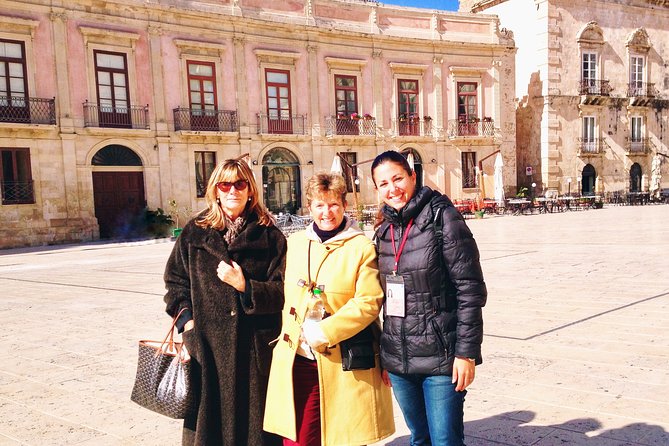
Here’s where the tour gets extra interesting: Temple of Athena, included into the Cathedral. You’ll spend around 15 minutes, with the explanation coming from both the exterior and the interior.
The exterior part is included, but interior entry is optional and involves an extra fee. That “optional” detail is a smart setup. If you prefer quick outdoor orientation, you can focus on what you see from the Cathedral’s outside blend. If you want the full experience, you can add the interior and keep the story going.
Why it matters: the explanation connects how sacred spaces evolve. You’re seeing a place where an older religious identity and a later cathedral setting share the same physical stage. That kind of transformation is exactly why Ortygia feels unlike other coastal towns. It’s not just pretty—it’s layered in a way you can actually grasp while you’re there.
Small caution: if you choose the interior, plan to be a bit patient with lines and timing. The tour is only about 90 minutes total, so the guide will help manage pacing, but you’ll still want to commit to the optional entry decision early.
Stop 5: Arethusa Spring the mythic finish line
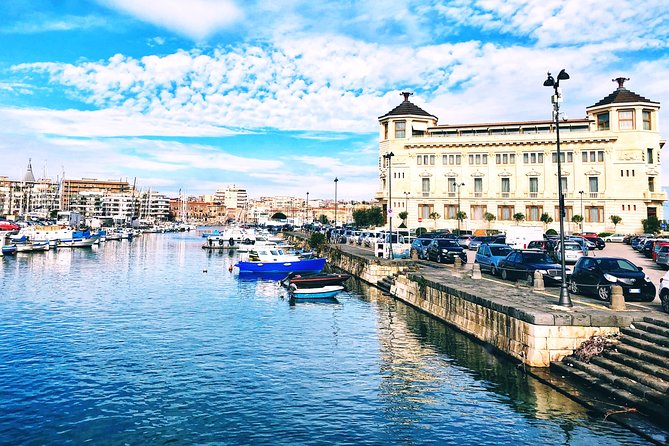
The last stop is Arethusa Spring at Largo Aretusa, where the tour ends. You’ll spend about 7 minutes, and this stop is free.
This is the ending that makes the whole walk feel like a story with a closing paragraph. The guide explains Arethusa’s mythical connection to the spring. It’s a short stop, but it lands because you’ve already built context from Apollo, the Greek civic symbols near Archimedes Square, and the Cathedral-era blend at Athena.
If you want a practical takeaway, it’s this: use Arethusa Spring to “check your understanding.” After the guided stops, you’ll likely notice how much of Ortygia’s identity is tied to water, myth, and civic space.
Practical details that actually affect your day
This experience runs for about 1 hour 30 minutes. With a compact route through the historic center, it’s ideal when you want big context without sacrificing your afternoon.
You’ll receive a mobile ticket, which is convenient in a place where paper confirmations can turn into lost-paper panic. The tour is offered in English, and the meeting point is at the Temple of Apollo (Apollonion). It ends at Arethusa Spring.
Dress code is listed as smart casual. That doesn’t mean dress up—just wear comfortable shoes and layers. Ortygia streets can be uneven, and you’ll be happier if you treat it like real walking, not an indoor museum visit.
The tour also notes service animals allowed and that most travelers can participate. Since it’s a walking itinerary in the center, it’s best for people who can handle steady foot travel around historic areas.
One more practical perk: you can pick whatever time of day you want to meet. That’s excellent for aligning with your other Syracuse plans, especially if you’re doing anything timed elsewhere.
What kind of traveler should book this?
I think this tour suits you best if you want clarity and momentum. If Ortygia feels overwhelming when you arrive with only a phone map, this kind of guide-led path helps you get your bearings fast.
It also fits travelers who like interactive guides. The inclusion of time to ask questions is a big part of why this tour’s style works. You can steer the conversation toward what you care about—Greek temples, cathedral layers, square landmarks, or how local stories connect to the setting.
If you’re traveling as a couple, this still feels personal because of the max 6 limit. If you’re solo, it’s a nice middle ground: structured enough to guide you, relaxed enough that it doesn’t feel like you’re being herded.
If you dislike optional entry fees, remember only the Athena interior is optional. The rest of the major stops here are free.
Should you book this Ortygia walking tour?
I’d book it if you want a time-efficient way to understand Ortygia without missing its main signals. The mix of iconic landmarks, short focused explanations, and the ability to ask questions makes it a strong value—especially because most stops don’t require paid entry.
You might skip it if your main goal is wandering totally independently, or if you strongly dislike walking outdoors. In that case, you’d get less value from the structured stops and guided context.
But if you’re aiming for “I want to understand what I’m looking at,” this is a smart choice. You’ll finish at Arethusa Spring with a clearer picture of Syracuse’s layers—and that’s the kind of souvenir that lasts longer than a postcard.
FAQ
How long is the Syracuse: Ortygia walking cultural tour?
It’s approximately 1 hour 30 minutes.
Is the tour offered in English?
Yes, the tour is offered in English.
What’s the maximum group size?
The group is limited to a maximum of 6 travelers.
Where does the tour start and end?
It starts at the Temple of Apollo (Apollonion) in Syracuse and ends at Arethusa Spring, Largo Aretusa, Siracusa.
Are any admissions required during the stops?
Temple of Apollo, Piazza Archimede, and Piazza Duomo are listed as free. Temple of Athena interior entry is optional and not included (a fee may apply).
Can I choose what time of day to meet?
Yes. You can pick whatever time of day you’d like to meet.
Is the tour customizable?
Yes. You can choose options, including gastronomy-themed activities or a focus on historical sites.
What should I wear?
The dress code is smart casual.
What if the weather is bad?
This experience requires good weather. If it’s canceled due to poor weather, you’ll be offered a different date or a full refund.
Is free cancellation available?
Yes. You can cancel up to 24 hours in advance for a full refund.
More Tours in Sicily





More Tour Reviews in Sicily

More of Syracuse and Ortigia

Just added: the newest Sicily tours in our notebook
- Etna / Taormina★ 5.0 · 3 reviews
- Bikes★ 5.0 · 3 reviews
- Taormina shore tour – for small group cruise passengers★ 5.0 · 3 reviews
- Vegan Cooking Class in Catania with Lunch and Dinner★ 5.0 · 3 reviews
- Make & Taste Sicilian Desserts in Palermo – Learn Cannoli & More★ 5.0 · 3 reviews
- Sicilian Villages & Ricotta Tasting – including Lunch from Cefalu★ 4.0 · 3 reviews
Syracuse & Ortigia, compared.
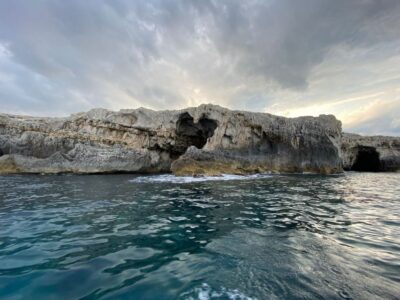 ★ 4.7Syracuse: Tour of Ortigia Island & Caves with Local SkipperFrom $231,060 reviews
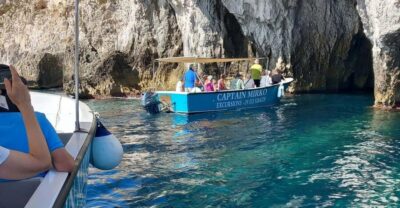 ★ 4.7Syracuse: Boat Tour with Captain Mirko, Snorkeling & CavesFrom $35746 reviews
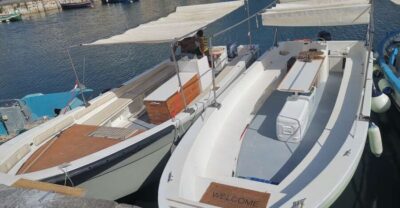 ★ 4.7Siracusa: Ortigia Boat Tour with Marine Grotto & SnorkelingFrom $47726 reviews
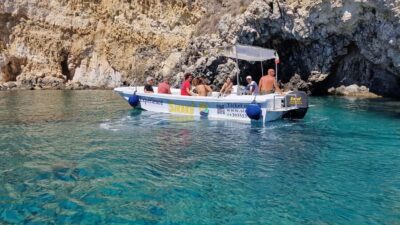 ★ 4.8Siracusa: Ortigia & Sea Caves Boat Tour w/ Prosecco & FruitFrom $35723 reviews
 ★ 5.0Tour of the island of Ortigia and exploration of sea caves with baths.From $24668 reviews
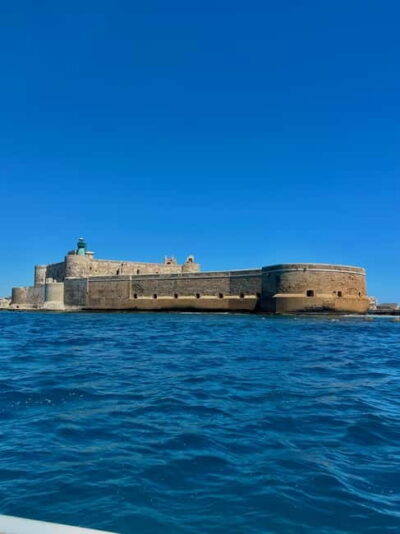 ★ 4.7Syracuse: Ortigia Island & Sea Cave Boat Tour with ProseccoFrom $23418 reviews
 ★ 5.0Boat tour of Ortigia Island and sea cavesFrom $24407 reviews
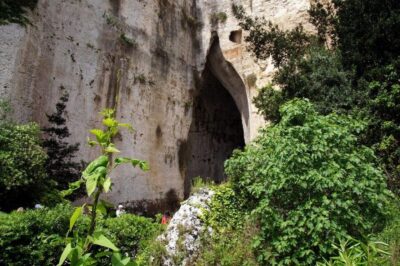 ★ 4.6Catania: Syracuse, Ortigia, and Noto Tour with BrunchFrom $112404 reviews
Browse the lists this tour appears in