
Reviewed · SYRACUSE & ORTIGIA
Private Tour of Syracuse in 6 hours with Enrica De Melio
Syracuse history hits fast. This private half-day with PhD archaeologist Enrica De Melio turns major ruins and everyday island streets into one connected story, and I especially love the chronological, expert-guided approach at Neapolis. You’ll see iconic sites like the Ear of Dionysius and the big Greek and Roman structures, but explained in a way that makes them feel real.
I also love how the tour finishes on Ortigia, where the pace shifts from excavations to the feel of the city. The Ortigia walk focuses on standout landmarks like the Temple of Apollo area and Duomo Square, plus Arethusa’s Spring. One possible drawback: it’s still a walking tour in a historic site, and the experience calls for moderate physical fitness and smart-casual attire.
In This Review
- Key things that make this tour worth your morning
- Syracuse in one walk: how this tour is put together
- Neapolis Archaeological Park: your 90 minutes of ancient Syracuse
- Quarry of Paradise, the Ear of Dionysius, and the Rope-makers’ Cave
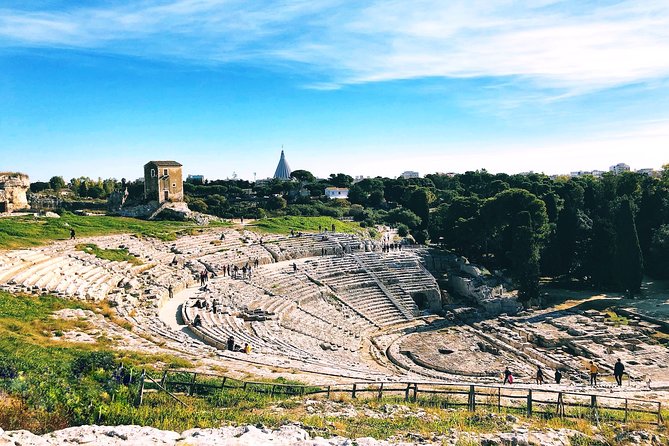
- Greek Theatre, Altar of Hiero II, and Roman Amphitheater
- Ortigia Island: turning ruins into a real city walk
- Temple of Apollo and Duomo Square with the Cathedral/Temple of Athena
- Arethusa’s Spring: the tour’s smart finishing point
- The guide matters here: what Enrica De Melio brings to the route
- Tickets, timing, and what to budget (without surprises)
- How to prepare: shoes, pace, and the smartest meeting plan
- Who this tour fits best (and when you might choose differently)
- Should you book this private Syracuse and Ortigia tour?
- FAQ
- How long is the private tour of Syracuse and Ortigia with Enrica De Melio?
- What time does the tour start, and where does it begin?
- Is this tour private, and how many people can be in my group?
- What’s included and what isn’t included in the price?
- Do I need to pay entrance fees for the sites?
- What happens if weather is poor?
- What should I wear, and what fitness level do I need?
Key things that make this tour worth your morning
- PhD archaeologist guide (Enrica De Melio): you’re not just looking at stones, you’re getting context.
- Neapolis in chronological order: you’ll connect the quarry areas to the theatres and amphitheater without getting lost.
- Ear of Dionysius and cave details: the “wow” factor is built into the walk, not added later.
- Ortigia’s compact, landmark-filled island: you get ancient worship sites and a lively center in one route.
- Private group up to 8: it feels personal, with time for questions.
- Tickets are partly on you: Neapolis and some religious sites have extra fees, so plan for that.
Deeper into Ortigia and old Syracuse
- Syracuse: Tour of Ortigia Island & Caves with Local Skipper
★ 4.7 · 1,060 reviews - Tour of the island of Ortigia and exploration of sea caves with baths.
★ 5.0 · 668 reviews - Boat tour of Ortigia Island and sea caves
★ 5.0 · 407 reviews - Siracusa Boat excursion island of ortigia and sea caves
★ 5.0 · 147 reviews
Syracuse in one walk: how this tour is put together
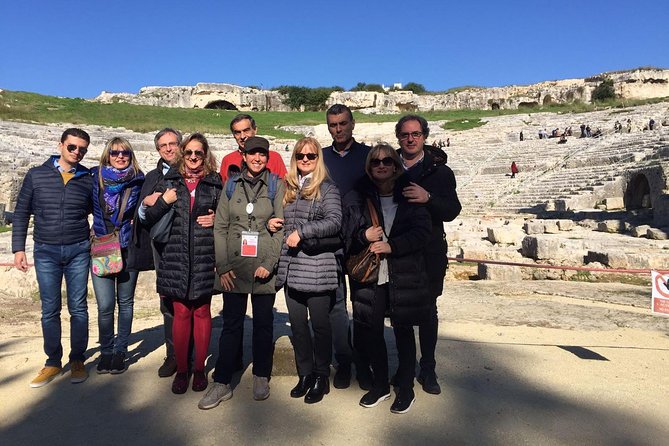
This is designed as a 5 to 6 hour private walking route that links two sides of Syracuse. You start at Neapolis Archaeological Park at 9:30 am, then move to Ortigia (the island connected by bridges), ending at Arethusa’s Spring in the city center area.
What I like about this structure is that you don’t spend the whole day bouncing around. You get a clear arc: ancient Syracuse at Neapolis first, then the living, smaller-scale Syracuse on Ortigia right after. For many visitors, that pacing is what makes the ruins stick, instead of turning into a blur of impressive but separate sites.
Neapolis Archaeological Park: your 90 minutes of ancient Syracuse
Your first stop is Parco Archeologico della Neapolis, one of the most important areas for understanding Syracuse’s Greek and Roman layers. Your guided walk there is built to move chronologically, and that matters because the park includes a mix of quarry spaces, theatres, altars, and Roman adaptations.
You’ll cover roughly 1 hour 30 minutes, starting with a key set of underground and rock-cut places. Then you work your way through major public structures, so you can see how the city’s culture shifted from Greek civic life to later Roman use.
Quarry of Paradise, the Ear of Dionysius, and the Rope-makers’ Cave
The highlight list here isn’t random. It’s tied to how Syracuse used stone, built spaces, and later became a place full of stories.
- Quarry of Paradise: you’ll hear how these rock-cut areas relate to the city’s resources and early shaping of the landscape.
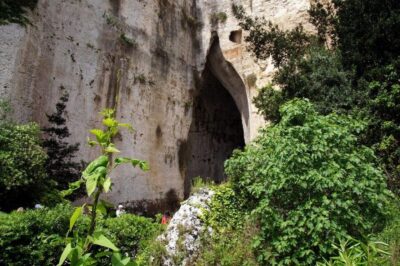
- Ear of Dionysius: this is the famous rock-cut feature known for how sound behaves in that space. It’s exactly the kind of stop where an explanation makes the experience better, not just louder.
- Cave of the Rope-makers: another rock-cut stop that adds a different human angle. Instead of only big monuments, you get a sense of how people used these spaces.
A practical note: cave-like areas can involve steps or uneven ground, so wear shoes that don’t slip and don’t rely on slick soles.
Greek Theatre, Altar of Hiero II, and Roman Amphitheater
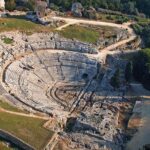
After the rock-cut stops, the tour shifts into the big open-air structures. You’ll visit the Greek Theatre, which gives you the visual sense of how performances and civic life would have worked in Syracuse. Then comes the Altar of Hiero II, described as the largest in the world, which is a good moment to pause and understand scale.
Finally, you’ll see the Roman Amphitheater. This is where the guided part pays off most. You’re not just seeing “Greek then Roman.” You’re seeing how later Syracuse reused and reinterpreted earlier spaces.
If you only have half a day, Neapolis is the portion that gives the strongest “I truly get the city now” feeling. The ruins are the headline, but the guide’s organization is the reason you’ll remember them.
A few we would gladly point a friend toward in Sicily
Ortigia Island: turning ruins into a real city walk
After Neapolis, you move to Ortigia, the smaller island where Syracuse’s center has been built and rebuilt over time. Your Ortigia portion also runs about 1 hour 30 minutes, and the focus shifts from archaeology to landmarks you can actually stand in front of and imagine daily life around.
This stop is ideal if you want ancient sights without making your whole day only about museums and ticket lines. Ortigia feels like a place you could wander on your own, but the guide helps you connect what you see to what came before.
Temple of Apollo and Duomo Square with the Cathedral/Temple of Athena
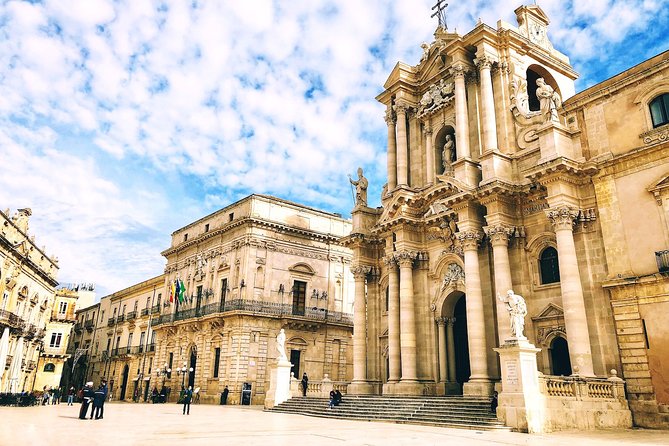
On Ortigia, you’ll see the Temple of Apollo (dating to the VI century BC). Then you’ll move to Duomo Square, where you’ll find baroque palaces and the Cathedral/Temple of Athena.
That combination can be a little mind-bending in the best way: ancient religious roots expressed through later architecture. It’s one of the reasons Ortigia works so well as a second act after Neapolis. You’re not abandoning history—you’re watching it reappear in new forms.
One practical detail: the Cathedral of Syracuse has a listed entrance fee of 2 euros per person, so budget for it and don’t assume it’s included just because it’s part of the walk.
Arethusa’s Spring: the tour’s smart finishing point
The walk ends at Arethusa’s Spring (Largo Aretusa). This is a great ending choice because it’s both a recognizable landmark and a natural way to keep your momentum after the guided portion.
If you have plans later in the day, starting and ending in different but walk-connected parts of central Syracuse can help you avoid backtracking. You’ll want to think about how you’ll get from Arethusa’s Spring to your next stop, since transportation to and from attractions isn’t included.
The guide matters here: what Enrica De Melio brings to the route
This tour is led by Enrica De Melio, a PhD archaeologist guide. That’s not just a credential; it shows up in how the tour is structured and explained.
The most praised elements from her style are easy to recognize in what you experience during the walk: she connects facts to the “why” behind the site, and she does it with upbeat, friendly energy. You’re far less likely to feel like you’re being rushed through stonework.
There’s also a helpful practical angle: one traveler highlighted that Enrica checked accessibility for their disability. That doesn’t mean the tour is custom-built for every need, but it signals that she’s aware of real-world constraints on historic paths.
For you, the takeaway is simple: if you have specific questions about pace, stairs, or which areas might be hardest, it’s worth asking. A private guide can adapt the flow more than a big-group tour.
Tickets, timing, and what to budget (without surprises)
The tour price is $361.11 per group, up to 8 people. That’s for a private guide and the timed walking experience from Neapolis to Ortigia.
What’s not included is where planning starts:
- Neapolis Archaeological Area entrance tickets cost 17 euros per person (free under 18).
- Cathedral of Syracuse entrance is listed at 2 euros per person.
- Lunch isn’t included.
- Transportation to and from attractions isn’t included.
So, is it good value? For families or small groups, it often is, because the cost is per group rather than per person for the guiding time. The added ticket fees can be meaningful, but they’re fairly straightforward: you know the Neapolis fee ahead of time, and the Cathedral fee is small.
Timing-wise, this runs about 5–6 hours and starts at 9:30 am. Going earlier helps you beat some of the crowds and gives you more comfortable daylight for walking between Neapolis and Ortigia.
Also note: good weather is required. If the tour is canceled due to poor weather, you’ll be offered another date or a full refund.
How to prepare: shoes, pace, and the smartest meeting plan
Because Neapolis and Ortigia are historic areas with walking routes, you should plan around moderate physical fitness. You don’t need to be an athlete, but you should be ready for walking, likely uneven surfaces, and some stairs or changing ground levels near the ruins and rock-cut areas.
Dress code is smart casual. I’d interpret that as comfortable layers you can move in, plus a jacket if morning feels cool in Sicily. Bring water and keep an eye on the sun, especially if you’ll be outside in the Neapolis park portion.
You’ll meet at Neapolis Archaeological Park, Via Luigi Bernabò Brea, 14 (96100 Siracusa). You’ll end at Arethusa’s Spring, Largo Aretusa (96100 Siracusa). Since transportation isn’t included, it helps to have a plan for how you’ll continue your day after the finish.
Who this tour fits best (and when you might choose differently)
This works especially well if you want:
- a private guide with time to ask questions,
- a tight half-day schedule that still feels substantial,
- major ancient highlights plus a real sense of Ortigia’s center.
It’s also a solid choice for people who like archaeology but get frustrated by “look-and-go” tours. The walking route is structured, and the guide’s explanations give you the connections that make the sites memorable.
If you prefer minimal walking, or if you’re trying to avoid steps and uneven terrain as much as possible, you might want to consider a less walking-heavy option. The tour calls for moderate physical fitness, so don’t treat it as a fully sedentary experience.
Should you book this private Syracuse and Ortigia tour?
Book it if you want the best shot at understanding Syracuse in one morning and you value expert guidance. The mix of Neapolis’s major ancient structures and Ortigia’s central landmarks is a smart use of time, especially if this is your only deep dive into eastern Sicily.
Skip it or rethink it if your day requires very low walking tolerance, or if you’d rather not handle extra entrance fees for Neapolis and the Cathedral. Also, since the experience depends on good weather, have flexibility in your schedule.
If your priority is a personal, well-explained tour with Enrica De Melio leading the way, this is the kind of experience that tends to feel worth it long after you leave Syracuse.
FAQ
How long is the private tour of Syracuse and Ortigia with Enrica De Melio?
It lasts about 5 to 6 hours total, with two main guided parts of roughly 1 hour 30 minutes each.
What time does the tour start, and where does it begin?
The start time is 9:30 am, and the meeting point is Neapolis Archaeological Park, Via Luigi Bernabò Brea, 14, 96100 Siracusa SR, Italy.
Is this tour private, and how many people can be in my group?
Yes, it’s a private tour, and your group size can be up to 8 people.
What’s included and what isn’t included in the price?
Included is a PhD archaeologist guide. Not included are transportation to/from attractions, entrance tickets to the Neapolis Archaeological Area (17 euros per person), entrance tickets to the Cathedral of Syracuse (2 euros per person), and lunch.
Do I need to pay entrance fees for the sites?
Yes. The Neapolis Archaeological Area has an entrance ticket fee of 17 euros per person (free under 18). The Cathedral of Syracuse has a listed fee of 2 euros per person.
What happens if weather is poor?
This experience requires good weather. If it’s canceled due to poor weather, you’ll be offered a different date or a full refund.
What should I wear, and what fitness level do I need?
Wear smart casual clothing. The tour is listed as requiring moderate physical fitness.
More Tours in Sicily




More Tour Reviews in Sicily

More of Syracuse and Ortigia
Just added: the newest Sicily tours in our notebook
- Etna / Taormina★ 5.0 · 3 reviews
- Bikes★ 5.0 · 3 reviews
- Taormina shore tour – for small group cruise passengers★ 5.0 · 3 reviews
- Vegan Cooking Class in Catania with Lunch and Dinner★ 5.0 · 3 reviews
- Make & Taste Sicilian Desserts in Palermo – Learn Cannoli & More★ 5.0 · 3 reviews
- Sicilian Villages & Ricotta Tasting – including Lunch from Cefalu★ 4.0 · 3 reviews
Syracuse & Ortigia, compared.
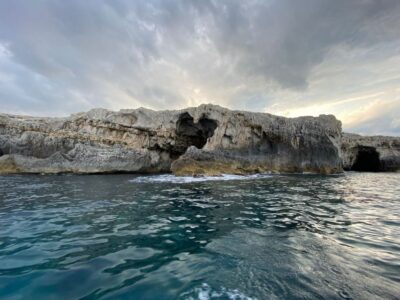 ★ 4.7Syracuse: Tour of Ortigia Island & Caves with Local SkipperFrom $231,060 reviews
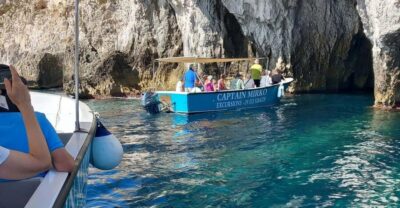 ★ 4.7Syracuse: Boat Tour with Captain Mirko, Snorkeling & CavesFrom $35746 reviews
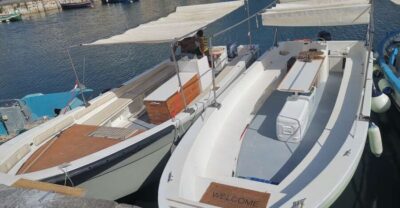 ★ 4.7Siracusa: Ortigia Boat Tour with Marine Grotto & SnorkelingFrom $47726 reviews
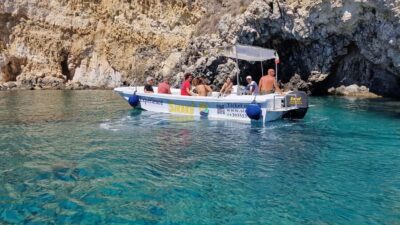 ★ 4.8Siracusa: Ortigia & Sea Caves Boat Tour w/ Prosecco & FruitFrom $35723 reviews
 ★ 5.0Tour of the island of Ortigia and exploration of sea caves with baths.From $24668 reviews
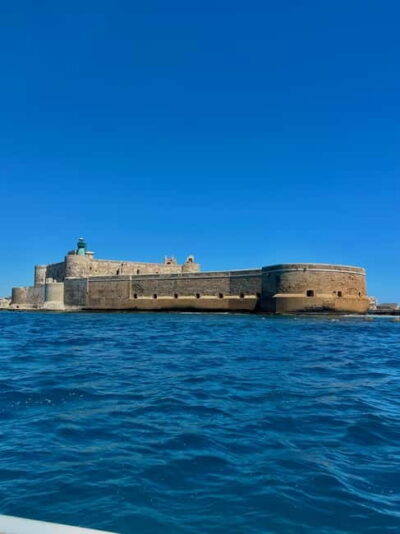 ★ 4.7Syracuse: Ortigia Island & Sea Cave Boat Tour with ProseccoFrom $23418 reviews
 ★ 5.0Boat tour of Ortigia Island and sea cavesFrom $24407 reviews
 ★ 4.6Catania: Syracuse, Ortigia, and Noto Tour with BrunchFrom $112404 reviews
Browse the lists this tour appears in