
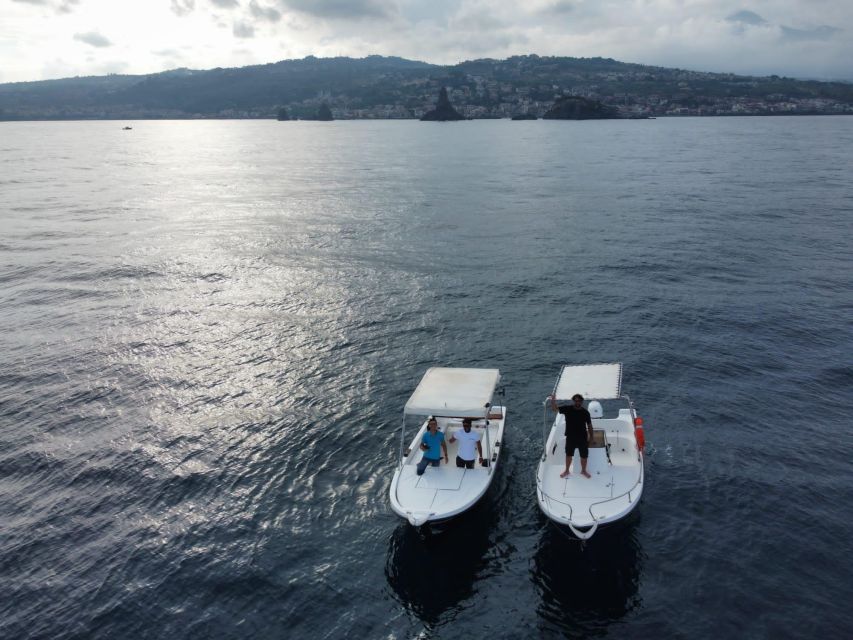
Reviewed · CATANIA TOURS
boat tour exploring and searching for dolphins in Acitrezza
Dolphins can turn any ride magical. This Aci Trezza boat outing is built around a real search for cetaceans—plus turtles and typical Sicilian fish—while you cruise through the Cyclops seascape at sunset.
What I like most is the on-board focus on respecting marine life and spotting animals the right way, with an included briefing and cetacean identification cards to help you make sense of what you’re seeing. I also like the fact it’s a small group (limited to 8), so the skipper and guides can actually pay attention as you scan the water.
One important consideration: it’s not wheelchair accessible and it’s not suitable if you have heart problems or other serious illnesses. If you’re in good health and you’re comfortable on open water, it’s a fun, very “Sicily” way to spend two hours.
In This Review
- Key things to know before you go
- Hunting for dolphins at Aci Trezza: what the 6:30pm timing does for you
- From the centenary port: where you start and how the vibe feels
- Stop one: Lachea Island (and why it’s more than a quick photo break)
- Stop two: the Faraglioni and the Cyclops myth you’ll actually see
- A practical drawback to keep in mind
- The dolphin marine protected area: where the real search happens
- What the included tools mean for you
- The guided setup: skipper + guide, plus real-world wildlife talk
- Swimming time in the Ionian Sea: when it’s worth it
- Time on the water: how long is long enough?
- Price and value at about $67.97 per person
- What to bring so the ride stays comfortable
- Health and mobility notes you should take seriously
- Who this tour fits best
- Should you book this Aci Trezza dolphin search tour?
- FAQ
- How long is the boat tour?
- What time does the tour start?
- Where do I meet for the tour?
- What marine animals are the tour searching for?
- What does the itinerary include besides the boat ride?
- Is swimming included?
- What’s included in the price?
- What languages are spoken during the tour?
- Who is the tour not suitable for?
- What should I bring with me?
Key things to know before you go
- Up to 8 people keeps the boat hunt from feeling crowded or rushed
- You head about 3 nautical miles (around 5 km) offshore before the best scanning
- Stops include Lachea Island and the Faraglioni in a protected marine area
- You get binoculars and cetacean ID cards as part of the price
- The vibe is sunset spotting, with the dolphin area search timed for light and sightings
What else Catania has going on
- Catania: Mount Etna Morning or Sunset Day Trip with Tasting
★ 4.8 · 4,028 reviews - Catania: Sunset Jeep Tour of Mount Etna and Lava Flow Caves
★ 4.8 · 2,113 reviews - Catania: Etna Sunset Tour with Pickup and Drop-off
★ 4.8 · 1,348 reviews - Etna Sunset Tour: Volcano trek, Cave & tasting from Catania
★ 4.8 · 1,290 reviews
Hunting for dolphins at Aci Trezza: what the 6:30pm timing does for you
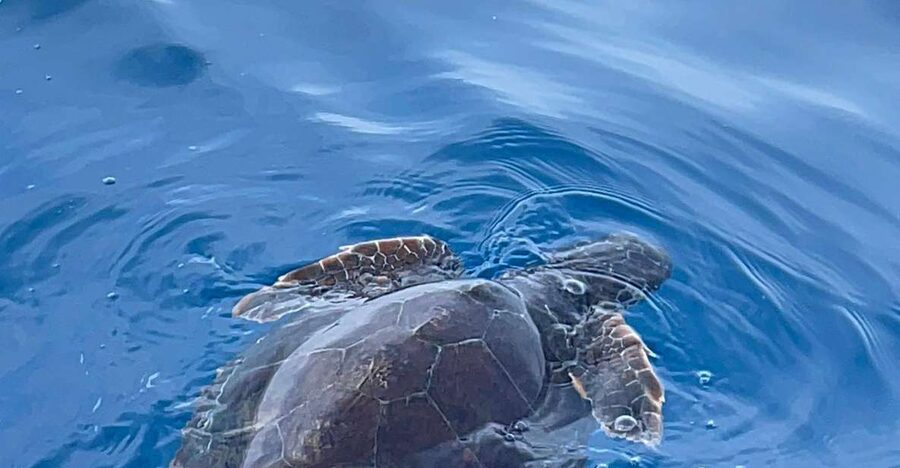
This tour runs in the evening, with a 6:30pm start time. That matters because marine spotting is often about light, calm water, and when animals are actively moving near the surface. In the Ionian Sea off Catania and around Aci Trezza, the sunset timing gives you long, gentle viewing windows instead of the harsh midday glare.
It’s also a practical way to plan your day. You can spend your afternoon exploring town, then shift to the coast for a focused outing that’s long enough to feel like a real experience, but short enough that you’re not stuck on a boat all evening.
One more detail I appreciate: the boat moves away from the coast for about 3 nautical miles (about 5 km). That isn’t just a transfer—it’s what creates the “go look for them” context, where a skipper can position you in the right waters rather than just cruising along the shoreline.
From the centenary port: where you start and how the vibe feels
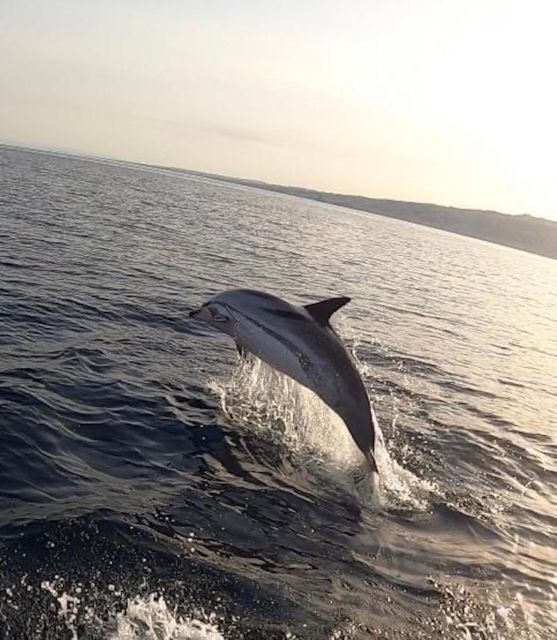
You depart from the centenary port of Aci Trezza, with the meeting point listed at Via Lungomare Dei Ciclopi, 177. The meeting point is also shown as bazar del mare, and the activity ends back at the same general meeting area.
Expect a small, guided trip rather than a big tourist cattle call. The tour is set up for English, Spanish, and Italian (your guide and skipper handle multiple languages), and that’s useful because it makes the wildlife talk easier to follow even if your Italian is basic.
This is also the kind of activity where you can keep your head in the game. With only a small group, everyone can look out effectively when dolphins surface—because there’s less jostling, less noise, and fewer people trying to film at the same exact angle.
Stop one: Lachea Island (and why it’s more than a quick photo break)
The first major highlight takes you toward Lachea Island, which sits just off the coast and is part of the Lachea Island and Cyclops stacks nature reserve. The island isn’t huge, but it’s the largest outcrop of the Cyclops archipelago, so it gives the boat something solid to orient around.
You’ll also learn what makes the place geologically interesting: the island (and the archipelago) is described as subvolcanic, formed by magma intruding into older seabed rocks. Even if you don’t get technical with it, this kind of context helps the scenery click. Instead of seeing random rocks, you start to understand that the coastline you’re staring at has a story written in volcanic pressure and time.
As a stop, Lachea works for two reasons. First, it’s early in the ride when your eyes are fresh and you’re ready to scan. Second, it’s in a protected area connected to the wider reserve—so the whole route feels like it’s built around wildlife care, not just a checklist.
Stop two: the Faraglioni and the Cyclops myth you’ll actually see
Next comes the famous Faraglioni—those dramatic rock stacks associated with the Cyclops story from the Odyssey. You’ll hear the legend about Polyphemus, Ulysses, and the rocks thrown into the sea, which is exactly the kind of local storytelling that helps the landscape feel alive.
But there’s also a very real-world angle to it: these are natural formations shaped over thousands of years by wind and rain, and they sit within a protected marine zone. In other words, the myth is fun—but the rocks are genuinely worth your attention even if you ignore the Homer part.
This is a spot where I think a “dumb moment” is easy to avoid. If you’ve got time only for one scenery stop, this is the one. You get wide views, rock drama, and a clear sense of the Cyclops theme that gave Aci Trezza its identity.
Back on the water off Catania
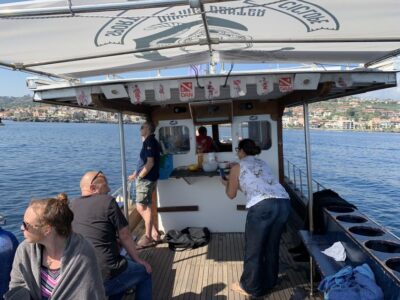
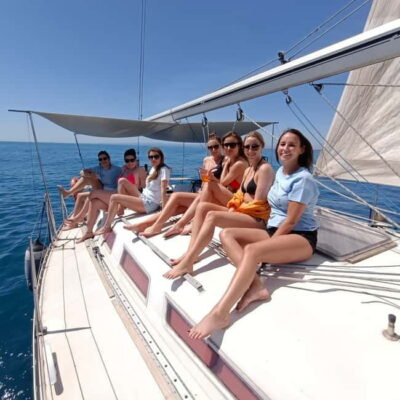
A practical drawback to keep in mind
These kinds of view-heavy coastal formations can tempt you to look back and forth between the rocks and the open water. If you’re hoping for dolphin sightings, keep your scanning rhythm steady. It’s not always rocks or dolphins—it’s both, and you want to spend enough time with your eyes on the sea.
The dolphin marine protected area: where the real search happens
The tour’s main mission is searching for cetaceans—especially dolphins, but also turtles—in the marine protected area of Catania. The experience is specifically framed around sunset spotting, which is exactly when you may notice more movement near the surface.
I like how the tour’s messaging stays grounded in what you’re doing: you’re not just “watching marine life.” You’re learning the monitored area, listening to what to look for, and using tools to identify sightings.
Also, the tour highlights typical Sicilian fish such as bluefin tuna. You might not see tuna every time (wildlife depends on nature), but the fact that the trip positions you in an active ecosystem is a good sign. It means your time offshore isn’t random; it’s oriented around where marine life tends to show up.
What the included tools mean for you
The boat includes binoculars and cetacean identification cards. That turns the experience from pure luck into something you can participate in. You’re not relying only on someone pointing and saying dolphins. You can actually look, compare, and learn what you’re seeing as it happens.
The guided setup: skipper + guide, plus real-world wildlife talk
You’ll travel with a skipper and guide, and they’re described as speaking Italian and English. The overall live tour guide languages are listed as Italian, English, and Spanish, so you can expect that explanations are designed for multiple groups.
This is a big deal for value. Wildlife spotting is more enjoyable when you know what you’re looking at. The tour includes an information briefing on cetaceans and the monitored area, which helps you understand the “why” behind the route and what the protected status means in practice.
It’s also where those small group limits pay off. With only up to 8 participants, the guide can answer questions without a chaotic scramble. That kind of attention increases your odds of catching the details—like how dolphins behave when they’re feeding, traveling, or surfacing more frequently.
One name that stands out from the experience feedback is Andrea. On the best outings, the time with dolphins can become the whole point, with close enough viewing to feel like you’re part of the moment rather than just watching from far away.
Swimming time in the Ionian Sea: when it’s worth it
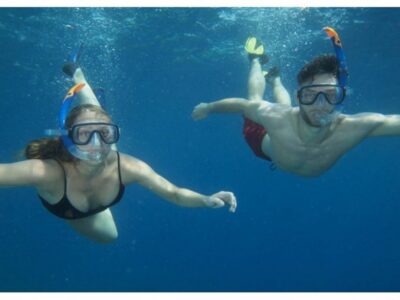
The tour indicates you can stop for a swim during the stages of the boat tour in the Sicilian Ionian Sea. That’s a fun bonus because it changes the outing from purely visual to sensory—moving from looking at marine life to feeling the sea yourself.
Just keep it practical. If the water feels cool, don’t try to force it. The tour is only 2 hours, and your best dolphin-spotting window depends on being alert and ready with eyes on the water.
If you like swimming in calm water, this is a great add-on. If you don’t, you’ll still get the main experience: guided scanning, wildlife interpretation, and the protected-area route.
Time on the water: how long is long enough?
The whole experience is listed as 2 hours. That’s a balanced length for this kind of activity in Aci Trezza. You get enough time to move offshore, reach the key nature areas, and still have a realistic window for wildlife viewing at sunset.
A detail that helps you set expectations: the tour includes visitor center time and a guided tour combined with the boat cruise, with opportunities for swimming and dolphin watching. In plain terms, it’s not only “boarding and hoping.” There’s structured time before and during the water segment so you don’t feel like you’re just sitting.
Also, keep in mind the tour will only happen in favorable weather conditions. When conditions are rough, it can be canceled in order to keep things safe. If you’re flexible, that’s part of the game with sea-based wildlife experiences.
Price and value at about $67.97 per person
At $67.97 per person for a 2-hour outing, you’re paying for more than a boat ride. The price includes:
- Skipper and guide (Italian/English, plus multilingual guide support listed as Italian/English/Spanish)
- Civil liability insurance
- Binoculars and cetacean identification cards
- An educational briefing on cetaceans and the monitored area
That’s good value because the “tools + interpretation” aren’t free add-ons. Many wildlife trips charge a similar rate but leave you with little context. Here, you get the kind of guidance that helps you understand the sighting, even if it’s not constant.
And because the group is capped at 8 participants, you’re not subsidizing a huge crowd. You’re paying for a more personal wildlife search.
What to bring so the ride stays comfortable
This is a sea-and-sunset trip, so comfort is simple but important. The tour lists what you should bring:
- Sunglasses
- Sunscreen
- Water
- Jacket
- Waterproof bag
That jacket suggestion is underrated. Even if it’s warm on shore at 6:30pm, sea air can cool fast. Waterproof storage is also smart because you’ll likely be looking out, shifting positions, and dealing with occasional spray during the time offshore.
Health and mobility notes you should take seriously
The activity is not suitable for people with heart problems or other serious illnesses and it’s not wheelchair accessible. On a short, lively boat outing, safety depends on how comfortably you can move and handle normal boat conditions.
If you’re traveling with strollers, it’s listed as accessible for strollers, and service animals are allowed. Newborns must sit on an adult’s lap, so plan accordingly if you’re traveling as a family.
Who this tour fits best
This is ideal if you want an evening activity that feels genuinely connected to the sea. It’s also a good choice if you like learning while you travel, because the tour isn’t only about “spot the animal,” it’s about understanding the monitored area and using identification tools.
You’ll probably like it most if:
- you enjoy wildlife spotting with guidance
- you’re comfortable on a boat and want a compact outing
- you want a sunset plan that’s not just another dinner reservation
You might skip it if:
- you need wheelchair access
- you have health conditions that make open water unsafe
- you’re the type who hates uncertainty (wildlife can’t be scheduled like a museum ticket)
Should you book this Aci Trezza dolphin search tour?
If you’re in Sicily and you can spare two hours at sunset, I’d book it—especially if you care about doing wildlife viewing thoughtfully. The combination of protected-area routing, briefing + ID cards, and a small group makes it more than a random cruise.
Still, keep expectations realistic: this is a search, not a guaranteed animal show. If weather is favorable and you’re in good health, it’s a strong way to experience Aci Trezza beyond the waterfront photos—because the best part is when you’re actively scanning and learning, not just watching time pass.
If you want a simple rule: book it when you can be flexible and when your schedule allows that 6:30pm start. That’s when the whole plan lines up best.
FAQ
How long is the boat tour?
The duration is listed as 2 hours.
What time does the tour start?
The experience lists the start time as 6:30pm.
Where do I meet for the tour?
The meeting point is shown as bazar del mare, and the tour also lists Via Lungomare Dei Ciclopi, 177 as the start and end location.
What marine animals are the tour searching for?
The tour says it goes in search of cetaceans, mainly dolphins, and also turtles. It also mentions typical Sicilian fish such as bluefin tuna.
What does the itinerary include besides the boat ride?
It includes a visitor center component with a guided tour, plus the boat cruise. It also notes opportunities for dolphin watching and swimming during the stages.
Is swimming included?
Yes, the tour states that in the Sicilian Ionian Sea you can stop for a swim during the boat tour stages.
What’s included in the price?
The included items are listed as: skipper and guide, civil liability insurance, binoculars and cetacean identification cards, and an information briefing on cetaceans and the monitored area.
What languages are spoken during the tour?
The staff guide languages are listed as English, Spanish, and Italian.
Who is the tour not suitable for?
The tour is not suitable for people with heart problems or other serious illnesses and it’s not wheelchair accessible.
What should I bring with me?
Bring sunglasses, sunscreen, water, a jacket, and a waterproof bag.
More Tour Reviews in Catania




More Boat Tours and Sea Caves
Keep Exploring Catania

Just added: the newest Catania tours in our notebook
- Transfer Catania / Agrigento Airport★ 5.0 · 3 reviews
- Sicily private shore excursion – Etna and Taormina with personal driver★ 3.5 · 3 reviews
- Sunset Trekking on Mount Etna★ 5.0 · 3 reviews
- Private Transfer from Catania to Palermo or vice-versa with stop★ 5.0 · 3 reviews
- From Syracuse: Mount Etna Volcano Morning Trekking Tour★ 5.0 · 3 reviews
- Catania: Guided Street Food Tour with Tastings★ 5.0 · 3 reviews
Catania Tours, compared.
 ★ 4.8Catania: Mount Etna Morning or Sunset Day Trip with TastingFrom $704,028 reviews
 ★ 4.8Catania: Sunset Jeep Tour of Mount Etna and Lava Flow CavesFrom $712,113 reviews
 ★ 4.9Catania: Mount Etna Trekking Tour Beyond the Tourist TrailsFrom $811,596 reviews
 ★ 4.8Catania: Etna Sunset Tour with Pickup and Drop-offFrom $711,348 reviews
 ★ 4.8Etna Sunset Tour: Volcano trek, Cave & tasting from CataniaFrom $701,290 reviews
 ★ 4.8Catania: Etna Morning Excursion with Tasting and PickupFrom $711,224 reviews
 ★ 5.0Mt. Etna and Taormina village full day tour from CataniaFrom $1181,155 reviews
 ★ 4.9Catania: Amazing Etna Morning Tour with Pickup and Drop-OffFrom $81799 reviews
Browse the lists this tour appears in