
Ortigia is easier at tuk-tuk speed. This private 4-hour run across Syracuse and Ortigia is built for seeing a lot without turning your feet into dust, with a guide who can steer you around tight lanes fast. I love that the route mixes big-photo sights like the Duomo and the Neapolis park with smaller stops such as Fonte Aretusa and the Diana fountain. I also like the practical pacing: short sightseeing bursts plus one longer block at the Mercato di Ortigia.
One possible drawback: the transport part is included, but you still handle short walks and any inside-site entry on your own. The Neapolis archaeological ticket costs extra, and a few stops have paid entry (like the Cathedral and optional castle areas), so you’ll want to budget a little on top.
If you want a low-effort way to get your bearings on your first day in Siracusa, this is a strong choice. You’ll usually cover many classic viewpoints and churches in a single afternoon, and you can tell from the stop list that it’s designed to be efficient.
In This Review
- Key things to know before you go
- Why a tuk-tuk makes sense for Ortigia and Syracuse
- The 4-hour route that doesn’t waste your time
- Piazza Duomo, St Lucia alla Badìa, and Fonte Aretusa
- Castello Maniace, the Diana fountain, and the Temple of Apollo
- Giudecca church stops plus Mercato di Ortigia and F.LLI BURGIO
- Santa Lucia port, Africa monument views, and Madonna delle Lacrime
- Caravaggio in Santa Lucia al Sepolcro and the Neapolis archaeology hour
- Price and logistics: does $415.42 per group make sense
- Picking the right guide style for your day
- Small practical tips so the day feels easy
- Should you book this Ape-TUK Tour?
- FAQ
- How long is the Ape-TUK Tour of Ortigia and Syracuse?
- Is this tour private?
- What’s the group size limit?
- Where does the tour start?
- Is pickup available?
- What language is the tour in?
- What is included in the price?
- What tickets or entry fees are not included?
- Are there any other paid entrances on the route?
- Are service animals allowed?
- What are the operating hours?
Key things to know before you go
- Private tuk-tuk for up to 4: your group stays together and the route is easier with a driver handling the turns.
- Market time that actually matters: a longer stop inside the Mercato di Ortigia plus a visit to F.LLI BURGIO for traditional local preserves.
- Neapolis gets a full hour: you’ll have time for the Greek Theater, the Ear of Dionysus, and the Roman Amphitheater.
- Optional paid entrances are part of the plan: Duomo has a fee, and the Maniace Castle interior costs extra if you choose it.
- Guides can shape the day: some drivers (like Marco or Francesco) are especially good at pacing requests and making tight streets work.
Deeper into Ortigia and old Syracuse
- Syracuse: Tour of Ortigia Island & Caves with Local Skipper
★ 4.7 · 1,060 reviews - Tour of the island of Ortigia and exploration of sea caves with baths.
★ 5.0 · 668 reviews - Boat tour of Ortigia Island and sea caves
★ 5.0 · 407 reviews - Siracusa Boat excursion island of ortigia and sea caves
★ 5.0 · 147 reviews
Why a tuk-tuk makes sense for Ortigia and Syracuse
Ortigia looks like it was designed for wandering, but the walking can add up fast—especially in summer heat or when streets get crowded. A tuk-tuk gives you the best of both worlds: you still get out for photos and short strolls, but you aren’t constantly recalculating routes on foot.
I also like the way this tour handles variety. You get religious sites, myth-and-legend stops, a classic marketplace, and a chunk of archaeology, all without feeling like you’re doing one long museum line after another.
And yes, you will still need to walk a bit at each stop. One practical heads-up: while the driver guides you to sites, they may not join you inside every building. In practice, that means you’ll either rely on what you can read on-site or use an audio guide if you want more depth while you’re walking around.
The 4-hour route that doesn’t waste your time
This is scheduled for about 4 hours, and the timing is structured so you don’t just “pass by” everything. Many stops are short—around 10 to 15 minutes—which keeps the day moving while still giving you real moments at each highlight.
The standout timing block is the 40-minute Mercato di Ortigia stop. That’s enough time to walk through the market vibe, look closely at the fish stalls, and then take a breather for the local-produce visit.
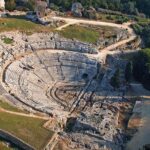
Then you get 1 full hour at Parco Archeologico della Neapolis, where you’ll see three major ancient landmarks: the Greek Theater, the Ear of Dionysus, and the Roman Amphitheater. For a 4-hour tour, that hour is the difference between a quick photo stop and a meaningful archaeology visit.
Piazza Duomo, St Lucia alla Badìa, and Fonte Aretusa
Your first anchor point is Piazza Duomo, the heart of the old center. Here you can visit the Syracuse Cathedral, but plan on a small entry cost: the Cathedral is listed with €2 per person. You’ll also be in the right spot to see the church of St Lucia alla Badìa, and the square itself is one of those classic Mediterranean stages where it’s worth pausing even if you’re not paying for every interior.
Even if you skip one paid interior, this stop is still useful because it gives you instant geography. From here, you’ll understand how Ortigia’s streets funnel toward viewpoints and why the sea plays such a big role in the city’s layout.
Next comes Fonte Aretusa, the mythological spring tied to local legend. This is a quick stop, but it’s memorable because it connects the city’s modern life with the stories people have told here for centuries. You get a compact taste of the “why this place matters” feeling without it turning into a lecture.
Castello Maniace, the Diana fountain, and the Temple of Apollo
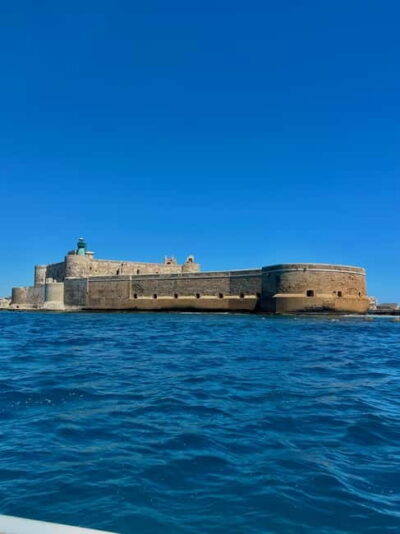
The route then swings to Castello Maniace. The nice detail: the terrace entrance is free, and from there you can take in the views without committing to every ticketed option. If you want to go further inside the castle itself, that part can require a fee, so you’re free to choose based on your energy level.
After that, you’ll stop at Piazza Archimede for the Diana fountain. This is short on time, but it’s a perfect “get your camera ready” pause. It also helps you reset your eyes after churches and older structures—fountains and open squares give you that breathing space.
Then the tour hits Temple of Apollo (Tempio di Apollo), a 6th-century BC temple site. Even with only around 10 minutes, it works well if you’ve ever looked at ancient ruins from a distance and wanted to see one closer. You’ll be able to spot the scale and placement in the neighborhood context, not just as a standalone postcard.

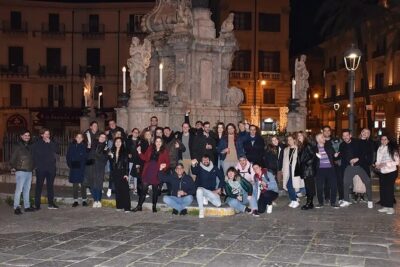
Giudecca church stops plus Mercato di Ortigia and F.LLI BURGIO
The day leans into local culture with the Giudecca area churches. You’ll visit Chiesa di San Giovanni Battista and Chiesa di San Filippo Apostolo, each with about 10 minutes at the stop. These aren’t just quick exterior shots—they’re part of the story of Syracuse as a layered city, where religious and community history overlaps in the same streets.
The biggest culture-and-flavor block is Mercato di Ortigia. Expect 40 minutes, including time to step inside the market and look at the characteristic fish stalls. This is the point where the tour shifts from monuments to everyday life, and it’s also where you can slow down enough to actually notice details.
Then there’s a practical food-and-souvenir stop at F.LLI BURGIO, a local family operation producing preserves using traditional methods for decades. This isn’t just a shop photo op in spirit—it’s a chance to bring home something tied to local production methods. If you like Sicilian food gifts that aren’t just generic packaged souvenirs, this is the kind of stop that makes sense.
If you want extra flavor moments, some guides have arrangements that can add small tasting breaks with local specialties like cheeses, cured meats, or sweets during the old-town portions. That’s not guaranteed, but it’s part of the overall feel of how some drivers run the day—friendly, food-forward, and tuned to what you want to spend time on.
Santa Lucia port, Africa monument views, and Madonna delle Lacrime
Between the market and the later church stops, you’ll also make a brief appearance at the small port Sbarcedero Santa Lucia. It’s a quick coastal scene, but it helps you understand why Ortigia’s sea edges feel so central—views change your sense of direction instantly.
Next is Monument to Syracuse Fallen in Africa, placed at a panoramic point. You get around 10 minutes, which may feel short, but if you use it well you’ll get the “Syracuse spread out below” effect that turns a city map into something real.
After that comes Santuario Madonna delle Lacrime, a sanctuary inaugurated by Pope John Paul II in honor of a miracle in 1953. You’ll have about 15 minutes here. This stop is valuable even if you’re not a devotee because it shows how modern Syracuse honors events that shaped community faith—and it gives you a calm interior contrast after market energy.
Caravaggio in Santa Lucia al Sepolcro and the Neapolis archaeology hour
Your next church stop is Basilica Santa Lucia al Sepolcro in the Borgata district, again about 15 minutes. The key detail here is the Caravaggio painting exhibited at the basilica. This is one of those “if you care about art, don’t rush” stops, so even though the stop is timed, give yourself enough attention to understand what you’re seeing rather than sprinting to the next photo.
Finally, you land on the big ancient stage: Parco Archeologico della Neapolis. You’ll get about 1 hour, and you’ll focus on:
- the Greek Theater
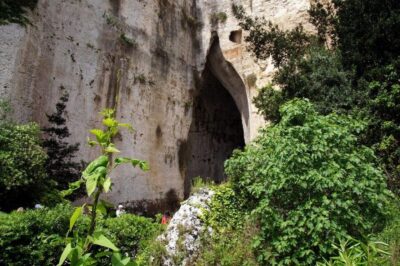
- the Ear of Dionysus
- the Roman Amphitheater
The important money point: Neapolis tickets are not included, and the ticket is listed as €10 to €20 per person. If you hate surprise costs, this is where you’ll want to mentally prepare.
This hour is also where the tour format really helps. On your own, Neapolis can turn into a “where do I start” scramble. Here, you get a set of targets, so even if you only manage a quick circuit through them, you’ll still feel like you got the core experience.
Price and logistics: does $415.42 per group make sense
The price is listed as $415.42 per group (up to 4) for about 4 hours. That sounds high until you think about who’s actually sharing it: for a family or a small group of friends, the cost can translate into a manageable per-person outing that covers private transport for an entire afternoon.
Here’s where the value shows up:
- You avoid the “too many rides, too many stairs” problem. The tuk-tuk reduces walking transfers between key zones.
- You save time on an efficient route. The itinerary is built so you can hit many recognizable places within one session.
- The group size stays small. Private means you’re not stuck with strangers deciding the pace.
Still, it’s not a magic wand. You will still pay additional entry costs for certain stops, and you may still have walking on cobblestones. If you’re traveling solo and don’t need the private vehicle, you might feel the cost more than a group would.
Picking the right guide style for your day
You can’t always choose your driver, but you can choose your expectations. The tour includes pickup and a driver who navigates narrow streets and gets you from stop to stop.
If you can request a certain person, some names are associated with smooth navigation and flexible pacing in old-town areas. For example, guides such as Marco or Francesco are described as patient and good at making tight lanes and alleyways work, especially when you want a little extra time near the Duomo or old streets.
Other drivers like Angelo and Andrea are described as fun, friendly, and strong on city context. And one note to keep in your mind: some guides may use translation tools when needed, which can be helpful if your Italian is limited.
Small practical tips so the day feels easy
- Bring a bit of cash or a card for the Cathedral and Neapolis ticket. Those are the clearly listed paid pieces.
- Wear shoes you can walk in for 10–15 minutes at a time. Even if most stops are short, cobblestones add up.
- If you care about Caravaggio in Santa Lucia al Sepolcro, slow down at that stop. The tour timing is short, but the artwork is the kind of thing you shouldn’t rush past.
- Plan your photos around the open-sky spots. Fountains, terraces, and the Neapolis panoramas are where the camera will reward you.
Also, if you like food shopping, the market stop at Mercato di Ortigia is your window. The rest of the day is great for sightseeing, but that’s where you can really browse at a comfortable pace.
Should you book this Ape-TUK Tour?
I’d book it if you want a high-coverage first-day plan in Syracuse and Ortigia that mixes monuments, churches, seaside stops, and one meaningful market visit. It’s especially good for groups of up to four who value private transport and want to spend their energy on seeing rather than on figuring out logistics.
Skip or rethink if you want a slow, museum-style experience where someone stays with you inside every site. Also think twice if you strongly dislike paying extra for entries like Neapolis and the Cathedral.
If you want a practical, fun way to get oriented and see the city’s highlights in one go, this tour is a solid fit.
FAQ
How long is the Ape-TUK Tour of Ortigia and Syracuse?
It runs for about 4 hours (approx.).
Is this tour private?
Yes. It is a private tour/activity, and only your group participates.
What’s the group size limit?
The price is per group up to 4.
Where does the tour start?
The meeting point is Piazza Emanuele Pancali, 17, 96100 Siracusa SR, Italy.
Is pickup available?
Pickup is offered. If you’re inside Syracuse city and Ortigia, you indicate the exact point where you want to be picked up by tuk tuk (ape calessino).
What language is the tour in?
English is offered.
What is included in the price?
Private transportation is included.
What tickets or entry fees are not included?
The Parco Archeologico della Neapolis ticket is not included and is listed as about €10 to €20 per person.
Are there any other paid entrances on the route?
Yes. The Syracuse Cathedral is listed with an admission fee of €2 per person. Maniace Castle terrace access is free, but visiting the castle can require a fee.
Are service animals allowed?
Yes, service animals are allowed.
What are the operating hours?
It runs daily from 8:30 AM to 9:00 PM, during the listed season dates.
More Tours in Sicily





More Tour Reviews in Sicily

More of Syracuse and Ortigia
Just added: the newest Sicily tours in our notebook
- Etna / Taormina★ 5.0 · 3 reviews
- Bikes★ 5.0 · 3 reviews
- Taormina shore tour – for small group cruise passengers★ 5.0 · 3 reviews
- Vegan Cooking Class in Catania with Lunch and Dinner★ 5.0 · 3 reviews
- Make & Taste Sicilian Desserts in Palermo – Learn Cannoli & More★ 5.0 · 3 reviews
- Sicilian Villages & Ricotta Tasting – including Lunch from Cefalu★ 4.0 · 3 reviews
Syracuse & Ortigia, compared.
 ★ 4.7Syracuse: Tour of Ortigia Island & Caves with Local SkipperFrom $231,060 reviews
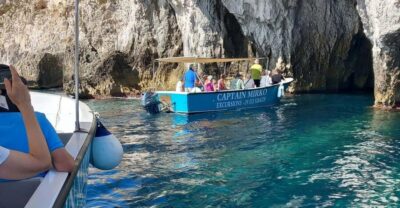 ★ 4.7Syracuse: Boat Tour with Captain Mirko, Snorkeling & CavesFrom $35746 reviews
 ★ 4.7Siracusa: Ortigia Boat Tour with Marine Grotto & SnorkelingFrom $47726 reviews
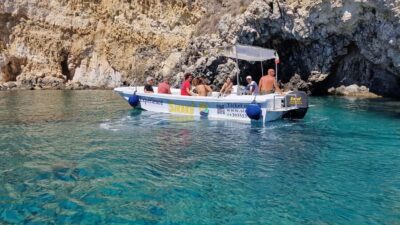 ★ 4.8Siracusa: Ortigia & Sea Caves Boat Tour w/ Prosecco & FruitFrom $35723 reviews
 ★ 5.0Tour of the island of Ortigia and exploration of sea caves with baths.From $24668 reviews
 ★ 4.7Syracuse: Ortigia Island & Sea Cave Boat Tour with ProseccoFrom $23418 reviews
 ★ 5.0Boat tour of Ortigia Island and sea cavesFrom $24407 reviews
 ★ 4.6Catania: Syracuse, Ortigia, and Noto Tour with BrunchFrom $112404 reviews
Browse the lists this tour appears in