
Reviewed · AGRIGENTO & VALLEY OF THE TEMPLES
Agrigento: Private Tour of Ancient Akragas with Local Guide
Doric temples, big views, and clear explanations. This private tour through Ancient Akragas feels focused and personal, with a licensed local guide that helps you read what you’re looking at. I love the chance to see Temple of Juno and Temple of Concordia up close, plus the dramatic stop tied to Icarus. One thing to plan for: tickets entry are not included, so you’ll need to buy them on the spot before you start.
You’ll spend about 2 hours walking the Valley of the Temples path at a steady pace, ending back where you began at the Juno temple meeting area. The tour is private, and your guide can explain in English, Italian, French, German, or Spanish.
Key Temple Stops and Why They Matter
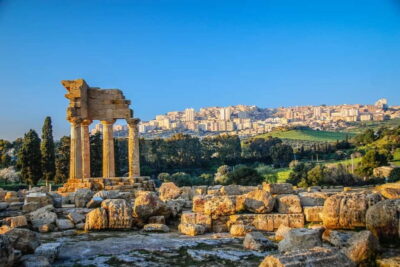
- Temple of Juno (Hera Lacinia): Built around 450 BC on the hill of Rupe Atenea, with Doric columns and a story tied to a wedding setting
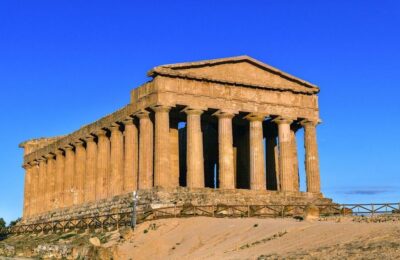
- Temple of Concordia: The second best-preserved temple after the Parthenon in Athens, helped by its transformation into a Christian church
- Icarus by Igor Mitoraj: A striking bronze statue linked to the fall of Icarus, right in front of Concordia
- Temple of Hercules (Heracles): Named for a bronze Hercules statue, bringing the gods down to human scale
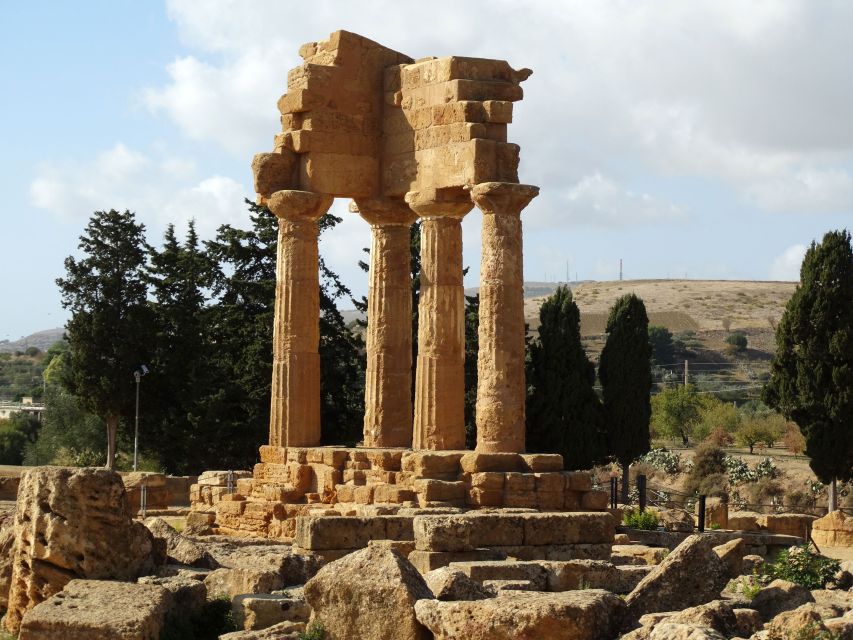
- Temple of Jupiter (Zeus) and Telamons: Earthquake damage turned it into a quarry, but reconstructed giants over 7 meters help you picture what it once was like
- Prickly pear trees + panoramic paths: Small landscape touches, big long-view payoff across the valley
In This Review
- Why Agrigento’s Valley of the Temples Still Feels So Big
- Meeting at the Juno Temple: Start Here, Not Later
- Temple of Hera Lacinia (Juno): The Best Opening Act for the Valley
- Temple of Concordia and the Bronze Icarus Statue
- Temple of Hercules (Heracles): The Oldest Doric Stop on the Route
- Temple of Jupiter (Zeus): Quarrying History and Giants Over 7 Meters
- The 2-Hour Pace: How the Guide Keeps It Clear and Worth It
- Price and Value: $326.26 Per Group Up to 25
- Who Should Book This Private Tour in Agrigento?
- Should You Book? My Practical Take
- FAQ
- What does this tour include?
- Are tickets included in the price?
- How long is the tour?
- Where do I meet the guide?
- What languages are available?
- Is there free cancellation?
Why Agrigento’s Valley of the Temples Still Feels So Big
Agrigento’s archaeological zone, Ancient Akragas, ranks among the largest archaeological areas in the world. On this tour, you’re not just looking at ruins like they’re a list. You’re walking a route where each temple builds on the last, so the valley starts to make sense fast.
I especially like the emphasis on the Doric temples of the Hellenic period. You also get that classic “oh wow” moment when you see how much of the original grandeur still comes through in stone and scale, even after earthquakes and time.
And yes, it’s a tour you can do without needing to be an expert beforehand. The guide’s job is to help you see details like statues, temple placement, and preservation clues as meaningful—not random.
Among the temples at Agrigento
- Agrigento: Valley of the Temples Skip-the-Line Sunset Tour
★ 4.5 · 1,512 reviews - Agrigento: Valley of the Temples Ticket & App Audioguide
★ 4.3 · 1,160 reviews - Agrigento: Valley of the Temples E-Scooter Tour
★ 4.6 · 557 reviews - Palermo: Valley of the Temples and Scala dei Turchi Day Trip
★ 4.1 · 463 reviews
Meeting at the Juno Temple: Start Here, Not Later
The meeting point is outside the ticket office and car parking by the Juno temple (the biggest). Your licensed guide will have a badge visible around their neck, which makes it easier to spot the right person right away.
Because tickets entry are not included, plan to handle that before the tour begins. If you arrive right at start time without tickets, you’ll waste the best part of the schedule: the first temple with the best orientation.
This is also an easy format: the tour ends back at the same meeting spot. No confusing transfers, no last-minute reroutes, no guessing where everyone ends up.
Temple of Hera Lacinia (Juno): The Best Opening Act for the Valley
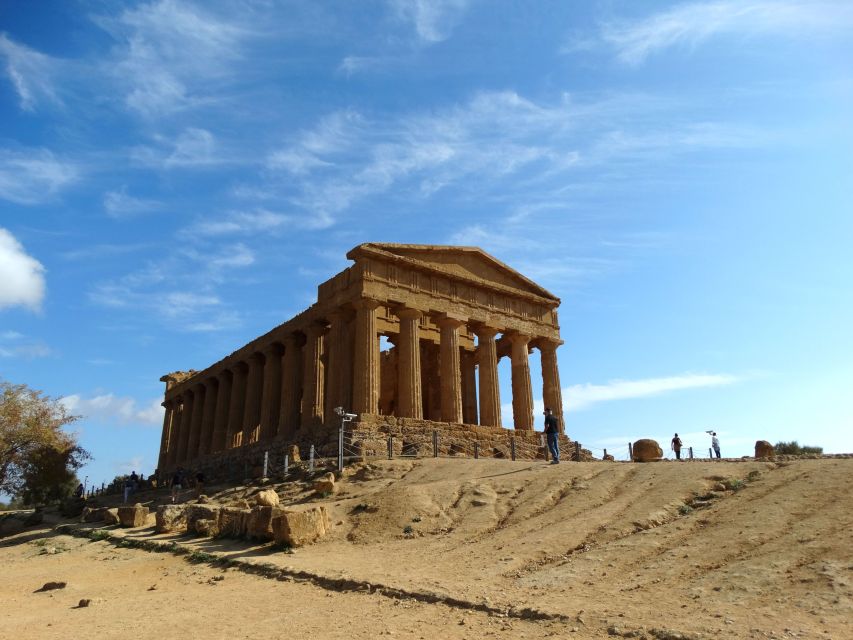
You start with the Temple of Hera Lacinia, also called the Temple of Juno, erected around 450 BC. It sits on the hill of Rupe Atenea, and the tour description highlights it as having a striking presence—listed as 120 meters high in the materials. Even if you don’t focus on the number, the point is clear once you’re there: you’re starting at a temple that dominates the space.
Inside the tour narrative, the guide connects the temple to a wedding context. It’s dedicated to Juno because a painting inside the temple likely depicted the goddess protector of women and fertility. That kind of detail changes the way you look at the columns. You stop seeing only stone shapes and start seeing symbolism.
Another reason I like starting here: the viewpoint. The tour moves from this elevated feel into the valley stroll, so the first stop helps you orient your brain for everything that comes next.
Temple of Concordia and the Bronze Icarus Statue
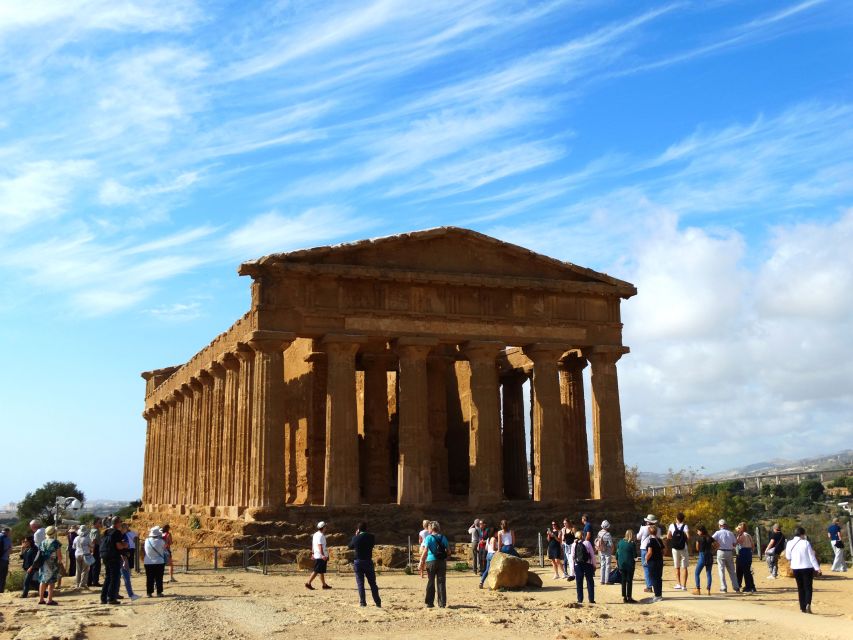
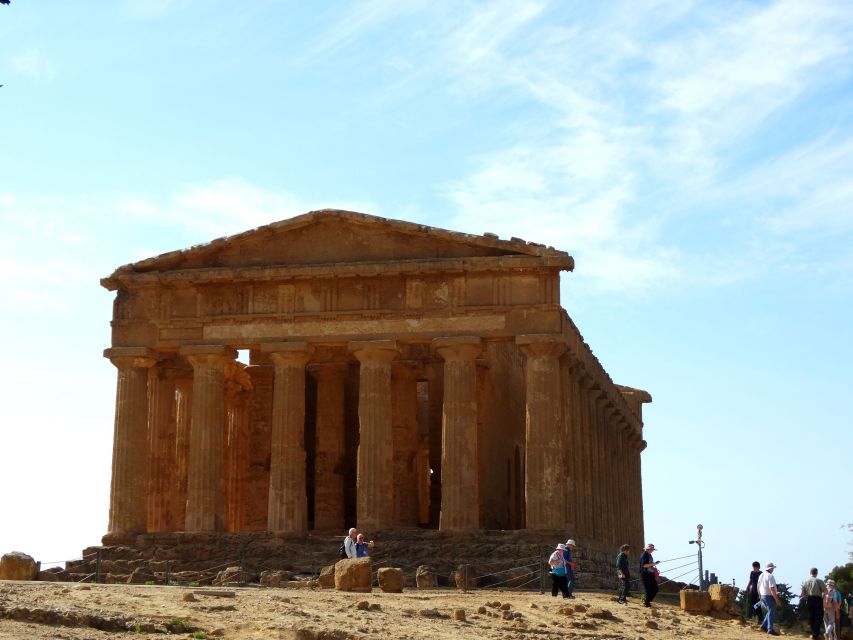
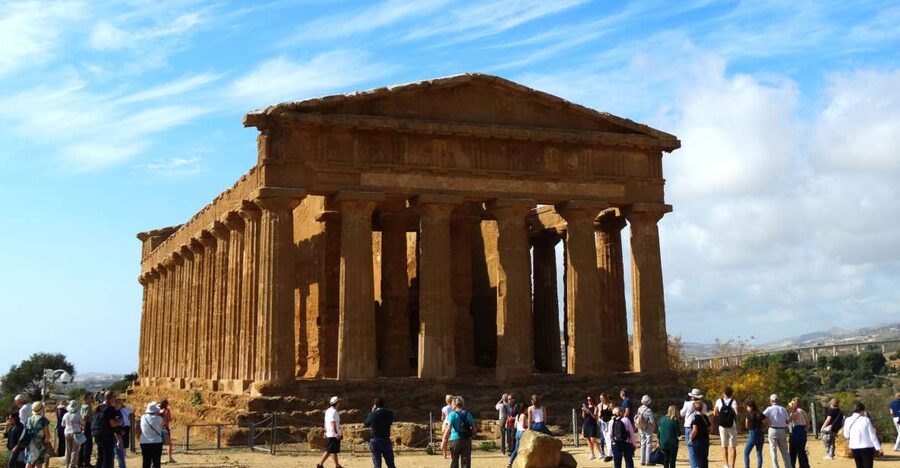
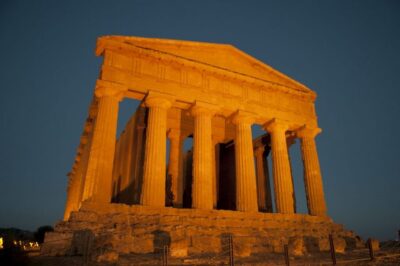
A few steps away is the Temple of Concordia, described as the second best preserved temple in the world after the Parthenon in Athens. That’s a big claim, but you can also understand it practically on-site: this temple has held its structure so well that it still reads as a temple, not just a pile of fragments.
Here’s why the tour makes this stop especially worth it: the temple’s strong preservation is tied to a transformation into a Christian church. That’s not just an interesting footnote. It’s a real clue for why some temples survive better than others, and it helps you understand what conservation can look like through history.
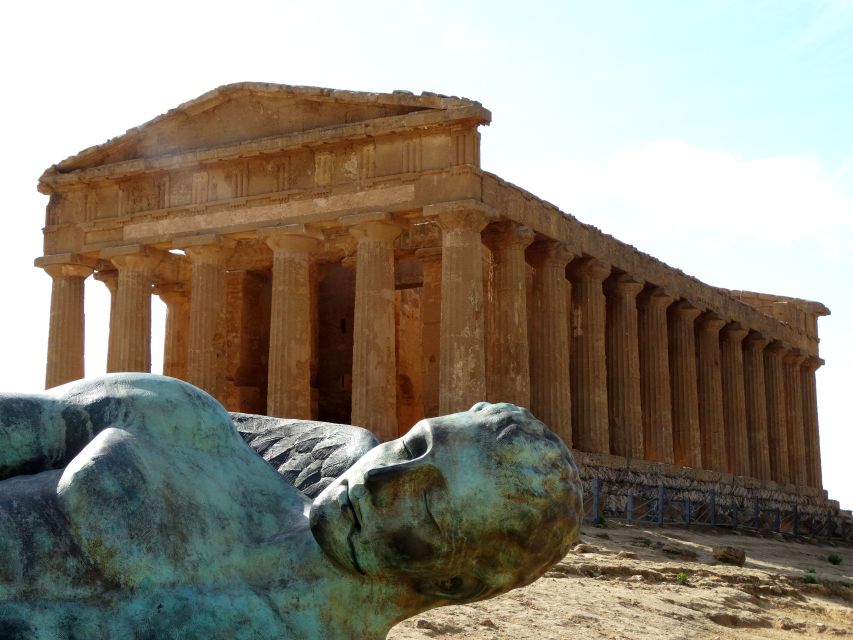
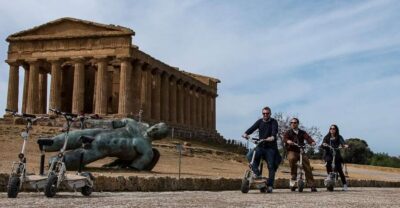
And then there’s Icarus. In the front part of the temple, you’ll see the bronze statue of Icarus donated by the Polish sculptor Igor Mitoraj. The statue represents the fall of Icarus, who disobeyed his father and flew too close to the sun. If you like mythology, this is the kind of visual story that makes the rest of the ancient world feel more human.
Tip for your photos: try angles that show the statue with enough temple structure behind it. Without that, Icarus can look like a standalone modern element. With the right framing, it connects directly to the temple’s setting.
Temple of Hercules (Heracles): The Oldest Doric Stop on the Route
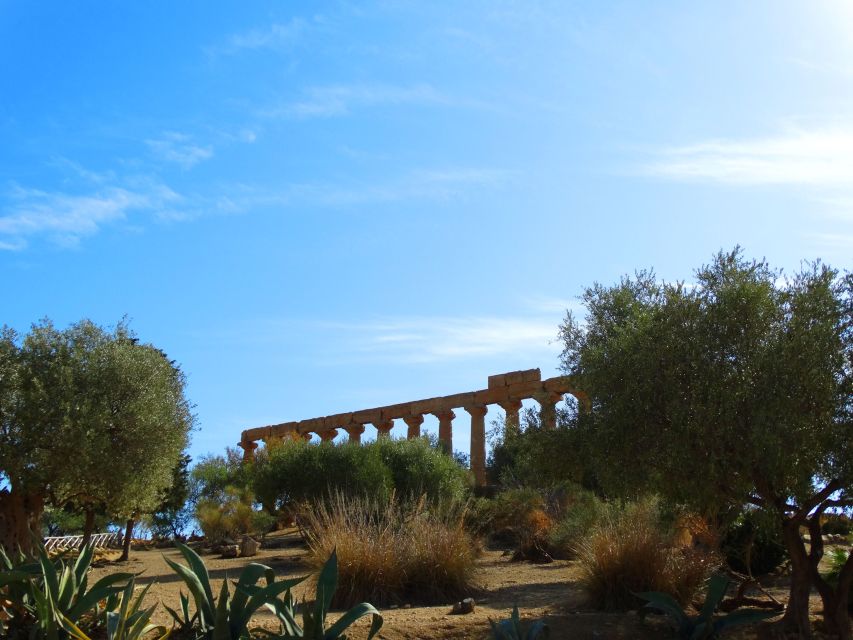
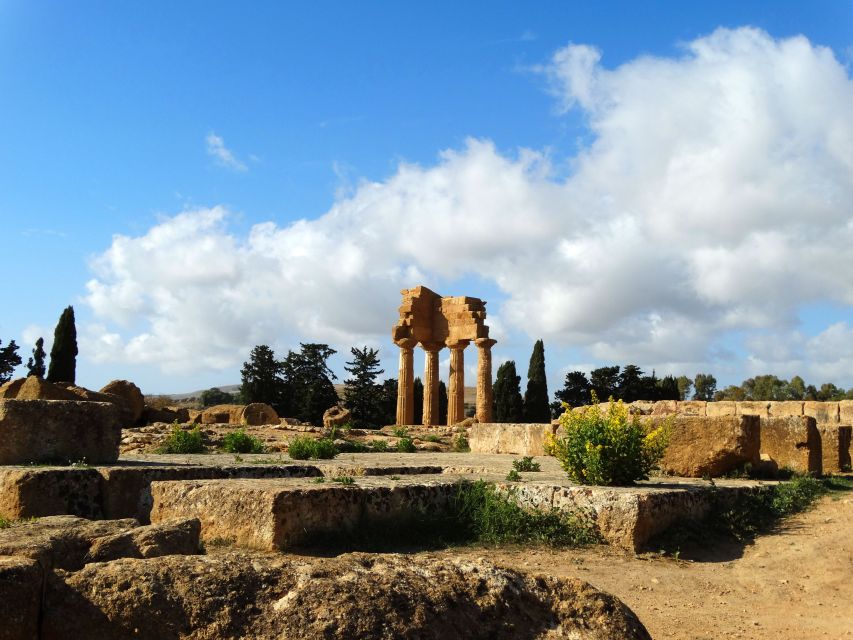
Next comes the Temple of Hercules, known as Heracles for the Greeks. This is described as the oldest of the Doric temples of Agrigento on the tour route, and it’s named for a bronze statue of Hercules inside the temple area.
What I like about this stop is the simplicity. It’s not overloaded with extra moving parts. You get the core idea—bronze Hercules, temple setting, and a name that’s tied to what you can actually see.
As you move along the paths, the tour also points out natural details like prickly pear trees. It sounds small, but it helps you keep the experience from feeling like only monuments. The valley still looks and feels like a working place, not a museum room.
A few we would gladly point a friend toward in Agrigento
Temple of Jupiter (Zeus): Quarrying History and Giants Over 7 Meters
The big finale stop is Temple of Jupiter (Zeus). Originally, it’s described as one of the largest temples of classical antiquity. Over time it suffered damage due to earthquakes, and the ruins were used as a quarry for construction of the Porto Empedocle pier.
That “quarry” detail is a gut check. It tells you that what you’re seeing isn’t frozen at the moment of ancient glory. Nature and later building projects reshaped it, and the result is a mix of ruin and reconstruction.
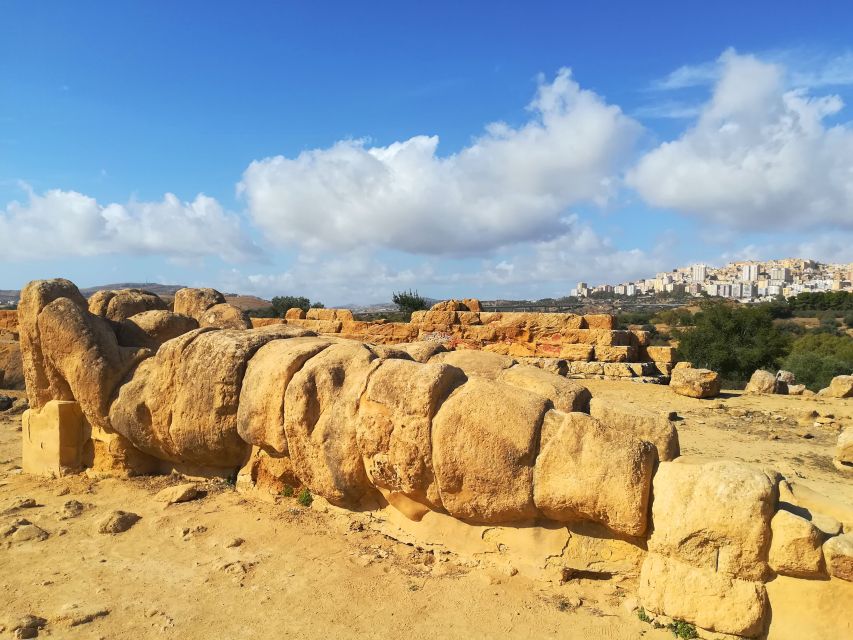
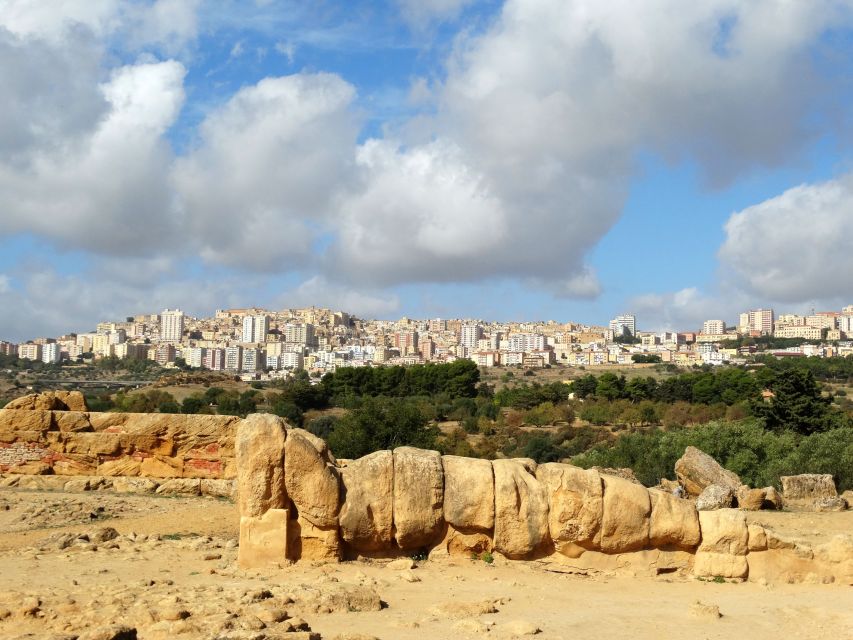
Among the ruins, the tour includes a key highlight: the reconstruction of one of the Telamons, stone sculptures of giants over 7 meters high. These were placed outside the temple to protect the divinity, and seeing them gives you a stronger sense of how monumental the original setting must have been.
If you’re the type who likes to picture the past, this is your stop. Telamons are basically architecture with attitude. They turn the space from empty stone into something that feels guarded and intentional.
The 2-Hour Pace: How the Guide Keeps It Clear and Worth It
This tour is built to run at about 2 hours, which is perfect if you want a real guided experience without spending your whole day in a single archaeological zone.
The tour format also matters: it’s private, and you’re with a local licensed guide. Even when you’re learning multiple stops—Juno, Concordia, Icarus, Hercules, Zeus—the guide keeps the storyline moving so you don’t end up with five random photo locations.
This is also where the tour seems to score best for value. The overall ratings reflect something consistent: people feel the information is solid and the experience justifies the cost. When a guide can explain the why behind each temple—preservation, placement, and symbolism—you don’t just collect sights. You understand what you’re looking at.
A small practical move: bring water and plan for sun. The tour includes panoramic walking and open-air viewing. Even if the temples are your main focus, you’ll still feel the pace across the valley.
Price and Value: $326.26 Per Group Up to 25
The price is $326.26 per group (up to 25) for about 2 hours. That pricing structure is important because it changes how you should think about value.
If your group can spread the cost—say you’re traveling with several people—the per-person value becomes much easier to stomach. If you’re traveling solo or as a couple, the total price can feel steep compared with self-guiding. In that case, you’re paying for a private, guided walkthrough and the time-saving structure of a route with a licensed guide.
Also remember what’s not included: tickets entry are not included, and the museum is not included. So your real cost is the tour price plus whatever entry tickets you purchase on the spot.
Where this tour can still make sense even for smaller groups: if you want a clear, efficient route through the valley and you care about understanding why specific temples are preserved or reconstructed, a good guide is more than a translator. It becomes your shortcut to interpretation.
Who Should Book This Private Tour in Agrigento?
This experience fits best if you want:
- A guided walk through Valley of the Temples with a licensed local guide
- Strong temple-to-temple context, not just a list of sites
- A route that includes the major highlights: Juno, Concordia, Icarus, Hercules, and Zeus
- An easy start and end point at the Juno temple meeting area
It also works well for travelers who don’t want to spend hours planning temple sequences. The tour covers the oldest and most characteristic area of Agrigento, and the route is built around what you’ll most likely remember.
Should You Book? My Practical Take
Book this tour if you want a high-impact, organized visit to Agrigento’s top Doric temples and you value explanation. The Icarus element and the Telamons over 7 meters add real visual punch, and the guide-led pacing helps you connect the dots in about 2 hours.
Skip it only if you’re committed to self-guided wandering and you’re comfortable buying tickets yourself and piecing together what each stop means. If you want structure plus clear answers on-site, this private format is a strong match.
FAQ
What does this tour include?
It includes a licensed tour guide. Ticket entry and the museum are not included.
Are tickets included in the price?
No. Tickets entry are not included, and you can buy them on the spot at the ticket office.
How long is the tour?
The tour takes about 2 hours. Starting times depend on availability.
Where do I meet the guide?
Meet your guide at the Valley of the Temples, outside the ticket office/car parking at the Juno temple (the biggest). The guide has a visible license badge.
What languages are available?
The live guide is available in Italian, English, French, German, and Spanish.
Is there free cancellation?
Yes. Free cancellation is available up to 24 hours in advance for a full refund.
More Tours in Agrigento
More Tour Reviews in Agrigento
More at the Valley of the Temples
Just added: the newest Agrigento tours in our notebook
- Scala dei Turchi: Aperitif on a boat at sunset★ 4.3 · 3 reviews
- From Agrigento to Siracusa: Valley of Temples & Roman Villa★ 5.0 · 3 reviews
- Private Tour : Agrigento & Scala dei Turchi★ 5.0 · 3 reviews
- Wine tasting under the Stars in the vineyards of Agrigento★ 5.0 · 3 reviews
- Private tour from Palermo to Agrigento and Piazza Armerina★ 4.0 · 4 reviews
- E-BIKE TOUR AGRIGENTO: Valley of the Temples & Old Town with meal included★ 5.0 · 4 reviews
Agrigento & Valley of the Temples, compared.
 ★ 4.5Agrigento: Valley of the Temples Skip-the-Line Sunset TourFrom $511,512 reviews
 ★ 4.2Palermo: Agrigento and the Valley of the Temples Day TourFrom $771,240 reviews
 ★ 4.3Agrigento: Valley of the Temples Ticket & App AudioguideFrom $191,160 reviews
 ★ 4.6Agrigento: Valley of the Temples E-Scooter TourFrom $68557 reviews
 ★ 4.1Palermo: Valley of the Temples and Scala dei Turchi Day TripFrom $79463 reviews
 ★ 5.07 hours Boat trip to Lampedusa lunch, SUP and SnorkelingFrom $86453 reviews
 ★ 4.5Catania: Valley of the Temples and Turkish Steps with SnackFrom $129346 reviews
 ★ 4.1Agrigento: Valle dei Templi Fast-Track Ticket & Smart GuideFrom $24344 reviews
Browse the lists this tour appears in